

Telecom
Pantami Addresses BTAF with First-Ever 5G Hologram Display in West Africa


The Federal Minister of Communications and Digital Economy, Prof. Isa Ali Ibrahim Pantami has again stressed the importance of the Nigerian National Broadband Plan (NNBP) for nation-building.

Prof. Isa Ali Ibrahim Pantami
The Honourable Minister was speaking at the Broadband Technical Awareness Forum (BTAF) for Governors which held on Thursday, October 20, 2022, at the Transcorp Hilton, Abuja where stakeholders witnessed first-hand, the power of 5G connectivity.
Powered by the low latency of 5G enabled by MTN Nigeria, Pantami delivered the keynote speech from a different section of the venue, and attendees were able to interact with him as he was beamed onto a platform as a three-dimensional projection in real-time.
Organised by the Nigerian Communications Commission (NCC), the BTAF is a forum that discusses the importance of internet broadband penetration by highlighting its various benefits across different sectors of the economy for increased revenue generation, employment opportunities, and the efficiency its impacts across various fields such as education, medicine, and agriculture.
According to data released by the NCC on September 26, 2022, there is a 44.68 per cent broadband penetration in Nigeria and up to 79.8 per cent of the population has access to the internet.
Pantami says these figures reflect a progression from data released in 2019. Despite this marked growth, he insists that there is a need to view broadband penetration as a necessity and no longer as a luxury.
According to the Minister, research carried out by the World Economic Forum and Oxford Economies revealed that a 10 per cent increase in broadband penetration resulted in a minimum of 2.5 per cent increase in GDP sampled countries.
“There is no way we can attain economic development without broadband penetration, and there is no way we can acquire knowledge effectively and deliver content effectively to our students without broadband access,” Pantami asserted.
He continued: “Broadband penetration today is no more luxury, but rather it becomes necessary for security, for economic development, and education among many, many others. For example, when it comes to security, if you look at all the service systems that have been deployed by security institutions, today you cannot manage all this service effectively without broadband penetration.”
Also speaking at the forum, the Chairman, NCC, Prof Adeolu Akande noted that “it would be difficult to achieve faster and desired broadband penetration level without effective collaboration of state governors.”
The Edo State Governor, Godwin Obaseki in his remarks called for trust and open dialogue between the Federal Government and State Governments while assuring stakeholders of state governors’ commitment to broadband deployment in their respective states.
The BTAF played host to stakeholders in the communications and information sector, governors and their representatives.



Spacecoin, US-based, has announced the signing of recent agreements with local authorities and operators to launch satellite connectivity pilot projects in Africa.

The initiatives, focused on Kenya and Nigeria, aim to serve areas where terrestrial networks remain limited or unavailable.
n Kenya, Spacecoin has obtained a transmission license from the Communications Authority, allowing it to test satellite-based solutions for connectivity and Internet of Things (IoT) monitoring, particularly in rural and peri-urban areas with limited internet access.
According to the Kenyan regulator, internet penetration remains below 50% of the population, despite mobile penetration exceeding 130%.
In parallel, the company is continuing operations in Nigeria under an existing license issued by the Nigerian Communications Commission (NCC).
This authorization supports initiatives aimed at delivering affordable broadband connectivity to isolated and underserved communities.
Spacecoin’s approach is based on a decentralized satellite network using nanosatellites in low Earth orbit (LEO).
Combined with blockchain-based protocols, this architecture is intended to offer more flexible and cost-effective connectivity services than traditional networks, while also enabling the integration of IoT solutions for a range of uses, from smart agriculture to infrastructure monitoring.
These projects are part of a broader strategy to help narrow Africa’s digital divide, where a significant share of the population still lacks access to reliable internet services.
Satellite technology is increasingly viewed as a complement to terrestrial infrastructure, particularly in hard-to-reach areas where deployment costs and geographic constraints remain high.
Beyond Africa, Spacecoin is also running pilot projects in Asia, working with local partners to test the viability of its model across different regulatory and geographic environments.
According to the company’s management, growing interest from regulators reflects a shift toward solutions capable of reaching populations that have long been excluded from internet access.
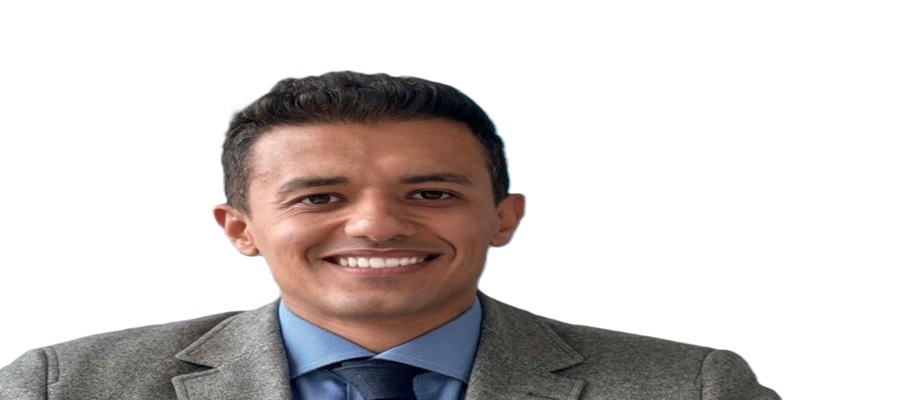
AVEVA, a global leader in industrial software, driving digital transformation and sustainability, today announces the appointment of Khaled Salah, 37 years old, as Vice President of Africa.

Khaled Salah
In this new role, he will be responsible for about 30 employees to ensure the successful implementation of AVEVA’s growth strategy. Khaled Salah will report directly to Jesus Hernandez, SVP of the EMEA region.
A 15-years + career across different industries and domains
With a MBA in management from the Warwick business school, UK, and a master’s degree in engineering from Ain Shams university in Egypt, Khaled Salah is an active advocate for driving sustainable progress in the industrial sector. With Sustainability in mind, Khaled is keen on making a positive business impact, while fostering progress for people and the planet.
He started his career at Schneider Electric, in 2013 in the global supply chain and evolved through various roles such as Europe procurement and supply chain strategy Manager, and Global Commercial strategy Director for the industrial automation business. Khaled Salah has developed a strategic understanding of all those fields.
After 12 years in Schneider Electric, Khaled joined AVEVA in 2022 to lead AVEVA and Schneider Electric global strategic partnership, across all industries managing a team of 30 people.
He has led the introduction of new AVEVA software solutions to initiate and develop significant growth areas across all Schneider Electric verticals.
Ambitious plans for AVEVA in Africa
In addition to his current role as AVEVA and Schneider Electric partnership Vice-President, Khaled now takes over the management of AVEVA’s activities in Africa.
Jesus Hernandez, SVP of the EMEA region says: “Africa is a strategic region for AVEVA. In this major industrial market, customers, world leaders in the fields of Energy, Metal & Mining, Chemicals, and Water, are looking for AVEVA’s expertise to accelerate and drive their digital transformation and sustainability strategies, as well as their energy transition projects.
“Khaled Salah’s qualities of leadership in a global environment will benefit his team spread across 12 countries including Algeria, Morocco, Egypt, Kenya, Nigeria, and South Africa.”
Motivated by the prospect of capitalizing on the talent of his team to strengthen AVEVA’s presence in Africa in the years to come, Khaled Salah says: “Helping my team realize their professional potential is close to my heart.
“We will work together to support and accelerate the digital transformation of industries in Africa, in particular through CONNECT, our industrial intelligence platform, with the support of our ecosystem of partners. »

A Google-Ipsos report reveals Nigerians topping global AI usage at 88%, surpassing the 62% worldwide average, with sharp rises in education and business applications.

“Our Life with AI: Helpfulness in the hands of more people” shows 93% of Nigerians using AI for learning complex topics versus 74% globally, 91% for work assistance, and 80% for new ventures—nearly double the 42% global rate.
Taiwo Kola-Ogunlade, Google’s West Africa Communications Manager, stated: “Nigerians are creatively using AI to unlock opportunities for learning, growth, and economic empowerment, shaping their future with technology.”
Key findings highlight 91% viewing AI positively for learning access, 95% expecting benefits for students and educators, and strong optimism—80% excited versus 20% concerned, compared to global 53%-46% split. Frequent users show 90% excitement

Spacecoin Secures Licenses to Roll Out Satellite Connectivity in Nigeria, Kenya

What the Retail and E-commerce Sector Should Expect in 2026 in Era of AI-driven Shopping and Privacy

Taraba Adopts Electronic Case Management System

AVEVA Names Khaled Salah Vice President for Africa to Drive Growth

Google Report: Nigeria Leads Global AI Adoption in Learning, Entrepreneurship

Banks quietly move to enforce new ₦50 transfer levy from Jan. 1

FIRS says NIN, CAC Numbers to Serve as Tax IDs from 2026

FIRS Declares NIN, CAC Numbers as Tax IDs from 2026

US Begins Partial Visa Ban on Nigerians January 1

Galaxy Backbone Tops FG’s Website Performance Ranking




 E-Financial2 days ago
Here Are Nigerian Banks That Have Secured Their Licences

 Telecom2 days ago
MTN CEO Toriola Hails Nigeria’s Telecom Transformation at MIPAD

 E-Financial2 days ago
Zenith Bank Top Nigerian Bank Pick Ahead of GTCO, AccessCorp

 News2 days ago
ICPC Charges Ozekhome with Forgery, Corruption Over London Property

 E-Financial2 days ago
Nigeria Processed $92.1Bn Crypto Transactions in 12 Months — PwC

 E-Financial2 days ago
How Crypto Criminals Stole $700m from People – often Using Age-Old Tricks

 Telecom2 days ago
Lebara Launches Agent Registration Portal

 E-Business2 days ago
Elon Musk Seeks $134Bn from OpenAI, Microsoft for ‘Wrongful Gains’