

News
SERAP Urges Tinubu to Probe Payment of N585.2m Grant into Private Account


Socio-Economic Rights and Accountability Project (SERAP) has urged President Bola Ahmed Tinubu to direct the Attorney General of the Federation and Minister of Justice Mr Lateef Fagbemi, SAN, and appropriate anti-corruption agencies to promptly and thoroughly probe the alleged payment by the Minister of Humanitarian Affairs, Betta Edu of N585.2 million meant for disbursement to vulnerable people in Akwa Ibom, Cross River, Lagos, and Ogun states into a private account.”

SERAP also urged him “to direct Mr Fagbemi and appropriate anti-corruption agencies to promptly and thoroughly investigate whether the N585.2 million has been paid into any private account, and to identify and publish the names of anyone who may have received the money.”
SERAP said, “Anyone suspected to be involved in any improper payment or diversion of public funds should be brought to justice and any diverted public funds returned to the public treasury and paid directly to the rightful beneficiaries.”
In the letter dated 6 January 2024 and signed by SERAP deputy director Kolawole Oluwadare, the organisation said: “Paying public funds into private accounts may create the perception or appearance of impropriety and give cover to any potential wrongdoing or diversion.”
According to SERAP, “Investigating these allegations and ensuring that the public funds meant to take care of the poor are transparently and accountably spent and recovering any diverted public funds are serious and legitimate public interests.”
The letter, read in part: “The public interests in safeguarding against the perception or appearance of impropriety or corruption also require your government to remove the opportunity for abuse inherent in the payment of public funds into private accounts.”
“The Nigerian Constitution 1999 [as amended], the country’s financial regulations and international obligations impose a fundamental obligation on your government to ensure transparency and accountability in the spending of public funds meant for socially and economically vulnerable Nigerians.”
“Your government has a legal responsibility to ensure full compliance with the Financial Regulations 2009, prohibiting the payment of public funds into private accounts, to reduce vulnerability to corruption or risks of the funds being diverted for personal ends or other unlawful purposes.”
“Government officials hold positions of public trust. Public officials are expected to ensure compliance with Nigerian laws and international standards in the discharge of their public functions.”
“The persistent lack of transparency and accountability in the spending of public funds meant to take care of the poor raises issues of public trust, makes the funds vulnerable to corruption or mismanagement, and undermines the integrity of poverty intervention programmes.”
“Your government has a legal obligation to probe and prosecute allegations of abuse of office and corruption in the spending of public funds meant to improve the conditions of vulnerable Nigerians.”
“SERAP is concerned that successive governments have failed to ensure transparency and accountability in the spending of public funds budgeted for social safety-nets and poverty alleviation programmes and projects.”
“Any risks of corruption in the spending of public funds meant to take care of the poor would erode the effectiveness of the government’s oft-repeated commitment to address the impact of the removal of fuel subsidy on vulnerable Nigerians.”
“We would be grateful if the recommended measures are taken within 7 days of the receipt and/or publication of this letter. If we have not heard from you by then, SERAP shall consider appropriate legal actions to compel your government to comply with our request in the public interest.
“Any failure to investigate these grave allegations, bring suspected perpetrators to justice and recover any diverted public funds would undermine the integrity of the government’s poverty intervention programmes”.
“It would also create cynicism, and eventually citizens’ distrust about the ability of your government to prevent corruption or the appearance of corruption in the programmes.”
“Nigerians have the right to be free from poverty. Any risks of diversion of public funds budgeted to lift vulnerable Nigerians out of poverty would pose both direct and indirect threats to human rights and exacerbate extreme poverty in the country.”
“It would also undermine your government’s legal obligations to effectively and progressively address and combat extreme poverty as a matter of human rights.”
“SERAP also urges you to direct Betta Edu to publish details of spending of public funds drawn from the account of the National Social Investment Program (NSIPA), an agency under the Ministry of Humanitarian Affairs and Poverty Allegation, including the names of beneficiaries and details of the amounts received by them since 29 May 2023.”
“SERAP urges you to instruct the Economic and Financial Crimes Commission (EFCC) and Independent Corrupt Practices and Other Related Offences Commission (ICPC) to jointly track and monitor the spending of any public funds drawn from the account(s) of the National Social Investment Program (NSIPA).”
“According to our information, the Minister of Humanitarian Affairs, Betta Edu, in a memo dated 20 December 2023 reportedly requested the Accountant General of the Federation, Oluwatoyin Madein, to transfer public fund – N585.2 million – into a private account of an official in her ministry.”
“According to the memo, the money was transferred from the National Social Investment Program office account and is meant for disbursement to vulnerable people in Akwa Ibom, Cross River, Lagos, and Ogun states, under the federal government poverty intervention project called Grants for Vulnerable Groups. N219.4 million is to be transferred to the vulnerable people in Akwa Ibom State, N73.8 million to Cross River State, N219.4 million to Lagos State, and N72.4 million to Ogun State.”
“SERAP is seriously concerned that years of allegations of corruption and mismanagement in the spending of public funds meant to support and assist vulnerable Nigerians and entrenched impunity of perpetrators have undermined the ability of successive governments to support those most in need.”
“Section 15(5) imposes the responsibility on your government to ‘abolish all corrupt practices and abuse of power’ in the country.”
“Under Section 16(1) of the Constitution, your government has a responsibility to ‘secure the maximum welfare, freedom and happiness of every citizen on the basis of social justice and equality of status and opportunity.’ Section 16(2) further provides that, ‘the material resources of the nation are harnessed and distributed as best as possible to serve the common good.’”
“Chapter 7, Section 713 of the Federal Government’s Financial Regulations 2009, provides: ‘Personal money shall in no circumstances be paid into a government bank account, nor shall any public money be paid into a private account.’”
“Articles 5 and 9 of the UN Convention against Corruption also impose legal obligations on your government to ensure proper management of public affairs and public funds, and to promote sound and transparent administration of public affairs.”


News
Stakeholders Demand Stronger Governance and Infrastructure to Drive Tech Adoption @ Lagos AI Summit

As AI adoption accelerates across Nigeria, leaders at the “AI in Action Now” conference 2026 have called for a balance between rapid innovation and strict regulatory governance. The event, held at the Lagos Oriental Hotel, highlighted both the doggedness of Nigerian builders and the risks of unregulated data usage.

Dotun Adeoye, Co-Founder of AI Nigeria, raised alarms over “Shadow AI”, a trend where employees upload sensitive official documents to public AI platforms. He praised the Nigerian Data Protection Commission (NDPC) for its recent aggressive stance, including multi-million-dollar fines against major banks and social media brands.
“Innovation without governance is dangerous. The regulator now has the job of educating players. We are working in partnership with them to ensure players don’t just get fined, but actually understand how to protect data locally rather than storing it abroad, ” Adeoye noted.
Addressing issues of lack of infrastructure to carry AI adoption, Conference Convener Debola Ibiyode admitted that while Nigeria lacks the traditional foundation for AI adoption, the tech community cannot afford to wait.

“The simple answer is we don’t have the infrastructure, but Nigeria has never really had infrastructure to drive anything, and we still thrive, ” Iboyode said, encouraging students and builders to look beyond current limitations. “Once we start to build based on what we have now, it will encourage those who need to provide the infrastructure to do their part. The world will not wait for us,” she insisted.
To bridge this gap, she highlighted the AI Foundry Africa, an incubator designed to mentor ideas into market-ready products.
Meanwhile, speaking to journalists on the sidelines, Biodun Ogunleye, the Lagos State Commissioner of Energy and Mineral Resources, echoed the sentiment that the government’s role is to facilitate the right environment through partnership. He emphasized that data generated from interactions with the government must have long-term value.
“We must ensure that in all facets from production to interaction with government, the tools required to ensure data has value are appreciated,” Ogunleye stated.
He concluded that through private-sector collaboration, the government can focus on its primary functions while leveraging AI to ensure the nation aspires for the future.

About 35 million Nigerians face acute hunger risks in 2026, including three million children battling severe malnutrition, the United Nations has warned, attributing the crisis to collapsing global aid budgets and escalating violence in the northeast.

UN Resident and Humanitarian Coordinator Mohamed Malick Fall disclosed this on Thursday during the launch of the 2026 humanitarian plan in Abuja, noting that the traditional foreign-led aid model proves unsustainable amid Nigeria’s escalating needs.
He highlighted dire conditions in Borno, Adamawa and Yobe states, where over 4,000 people perished in the first eight months of 2025 from surging suicide bombings and attacks—equalling the entire previous year’s toll.
The UN now targets $516 million to deliver lifesaving aid to 2.5 million people this year, a sharp drop from 3.6 million in 2025 and half of prior levels, forcing prioritisation of only the most critical interventions.
Fall stressed, “These are not statistics. These numbers represent lives, futures and Nigerians,” as shortfalls last year compelled the World Food Programme to halt support for over 300,000 children after resources dried up in December.
Yet, Fall acknowledged Nigeria’s increasing national ownership, including local funding for lean-season food assistance and proactive flood early-warning systems, signalling a shift toward self-reliant crisis response.
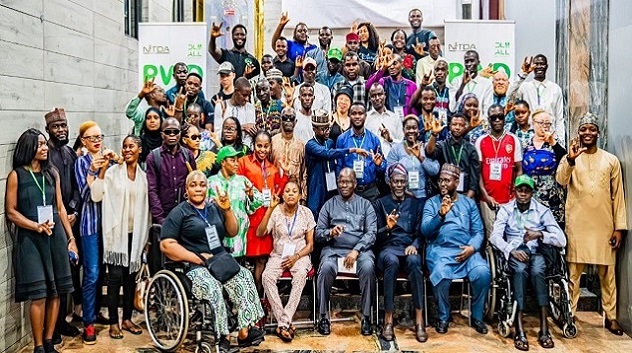
The National Information Technology Development Agency (NITDA) has reaffirmed its commitment to inclusive digital development following the completion of a two-day digital literacy training for persons with disabilities (PWDs) in Abuja.

The programme, organised under NITDA’s Digital Literacy for All (DL4ALL) initiative, the programme trained 50 participants in practical digital skills to enhance their participation in Nigeria’s expanding digital economy.
In his remarks, the Director-General, Kashifu Inuwa CCIE, stated that the programme reflects the agency’s determination to ensure accessibility remains a core component of national digital transformation efforts.
He explained that genuine digital advancement cannot be realised without the inclusion of persons with disabilities, adding that millions of Nigerians remain constrained by limited access to accessible and inclusive digital platforms.
“In many cases, the problem is not the absence of digital tools but the lack of accessibility. Platforms that do not support assistive technologies, non-captioned content and inaccessible websites effectively shut people out and limit opportunities,” he added.
Inuwa further explained that the initiative aligns with President Bola Ahmed Tinubu’s Renewed Hope Agenda, which prioritises inclusivity as a driver of national development. He stressed that persons with disabilities should be recognised as active contributors to economic growth rather than dependants.
“When equipped with the right skills and technologies, persons with disabilities become innovators, entrepreneurs and professionals who contribute meaningfully across sectors,” he added.
He acknowledged the role of Inclusive Friends Association (IFA) and SIMBED in delivering the training, describing the collaboration as a model of how government and civil society partnerships can advance inclusive development.
Highlighting NITDA’s broader digital literacy drive, the Director-General said the DL4ALL programme is a key component of the agency’s Strategic Roadmap and Action Plan, which targets 70 per cent digital literacy by 2027 and 95 per cent by 2030.
He explained that the initiative operates through three main tracks: an informal sector programme that has trained more than 480,000 Nigerians across 30 states and the Federal Capital Territory since September 2024; an education sector programme focused on embedding digital skills into learning institutions; and a workforce readiness programme designed to strengthen digital competence in both public and private sectors.
“This programme is not merely a pilot. It is proof that inclusive and intentional training works, and that persons with disabilities can excel when given equal opportunities,” Inuwa stated.
Also speaking, the Managing Director and Chief Executive Officer of SIMBED, Mr Daniel Onunkwo, described the training as a significant step towards closing the digital inclusion gap for persons with disabilities.
Onunkwo added that the initiative sends a strong message about equity and national progress, adding that SIMBED remains committed to expanding digital empowerment for persons with disabilities.
Similarly, the Executive Director of Inclusive Friends Association, Grace Jerry, represented by Tracy Agbamu, commended NITDA for demonstrating intentional leadership in promoting inclusion under the Renewed Hope Agenda.
She urged participants to continue applying the skills acquired and to serve as digital inclusion advocates within their communities.
The training programme further strengthens NITDA’s vision of building a digitally inclusive Nigeria where access to digital opportunities is determined not by physical ability but by empowerment and innovation.

PalmPay User Shares Experience on Fintech Apps to Trust in Nigeria

Stakeholders Demand Stronger Governance and Infrastructure to Drive Tech Adoption @ Lagos AI Summit

Nigerians Target Self-Improvement, Business Startups in 2026 Google Data

35 Million Nigerians Face Acute Hunger in 2026, UN Warns

How Inside Jobs and Policy Shocks Trigger Nigeria’s Rising Loan Crisis

Banks quietly move to enforce new ₦50 transfer levy from Jan. 1

Jumia CEO says Black Friday Signals Nigeria’s E-Commerce Maturity

Galaxy Backbone Celebrates the Federal Government’s Paperless Civil Service Milestone

19 Nigerian Banks Meet CBN Recapitalization Targets Ahead of March Deadline

Nigeria’s Internet Usage Hits 1.24m Terabytes – NCC




 E-Business2 days ago
Firm Detected a Scam Exploiting OpenAI’s Teamwork Features

 Broadcasting2 days ago
DG NCC Tasks University Dons on Research Commercialization, IP Management to Build Global Competitive Ecosystems

 E-Financial2 days ago
MoMo PSB Expands Cross-Border Transfers Across Africa

 E-Financial2 days ago
Banks to Cut Fraud Response Times to Under 30 Minutes

 Telecom2 days ago
FG Expands 3MTT Programme Across the Country

 News2 days ago
Firms Face Gaps Between AI Ambition and Execution

 Telecom2 days ago
MTN Foundation Trains 2,000+ Young Nigerians in ICT for SME Growth

 General News2 days ago
Kuda Unlocks Instant Online Accounts for NGOs and Religious Bodies