

News
SERAP Urges Tinubu to Probe Payment of N585.2m Grant into Private Account


Socio-Economic Rights and Accountability Project (SERAP) has urged President Bola Ahmed Tinubu to direct the Attorney General of the Federation and Minister of Justice Mr Lateef Fagbemi, SAN, and appropriate anti-corruption agencies to promptly and thoroughly probe the alleged payment by the Minister of Humanitarian Affairs, Betta Edu of N585.2 million meant for disbursement to vulnerable people in Akwa Ibom, Cross River, Lagos, and Ogun states into a private account.”

SERAP also urged him “to direct Mr Fagbemi and appropriate anti-corruption agencies to promptly and thoroughly investigate whether the N585.2 million has been paid into any private account, and to identify and publish the names of anyone who may have received the money.”
SERAP said, “Anyone suspected to be involved in any improper payment or diversion of public funds should be brought to justice and any diverted public funds returned to the public treasury and paid directly to the rightful beneficiaries.”
In the letter dated 6 January 2024 and signed by SERAP deputy director Kolawole Oluwadare, the organisation said: “Paying public funds into private accounts may create the perception or appearance of impropriety and give cover to any potential wrongdoing or diversion.”
According to SERAP, “Investigating these allegations and ensuring that the public funds meant to take care of the poor are transparently and accountably spent and recovering any diverted public funds are serious and legitimate public interests.”
The letter, read in part: “The public interests in safeguarding against the perception or appearance of impropriety or corruption also require your government to remove the opportunity for abuse inherent in the payment of public funds into private accounts.”
“The Nigerian Constitution 1999 [as amended], the country’s financial regulations and international obligations impose a fundamental obligation on your government to ensure transparency and accountability in the spending of public funds meant for socially and economically vulnerable Nigerians.”
“Your government has a legal responsibility to ensure full compliance with the Financial Regulations 2009, prohibiting the payment of public funds into private accounts, to reduce vulnerability to corruption or risks of the funds being diverted for personal ends or other unlawful purposes.”
“Government officials hold positions of public trust. Public officials are expected to ensure compliance with Nigerian laws and international standards in the discharge of their public functions.”
“The persistent lack of transparency and accountability in the spending of public funds meant to take care of the poor raises issues of public trust, makes the funds vulnerable to corruption or mismanagement, and undermines the integrity of poverty intervention programmes.”
“Your government has a legal obligation to probe and prosecute allegations of abuse of office and corruption in the spending of public funds meant to improve the conditions of vulnerable Nigerians.”
“SERAP is concerned that successive governments have failed to ensure transparency and accountability in the spending of public funds budgeted for social safety-nets and poverty alleviation programmes and projects.”
“Any risks of corruption in the spending of public funds meant to take care of the poor would erode the effectiveness of the government’s oft-repeated commitment to address the impact of the removal of fuel subsidy on vulnerable Nigerians.”
“We would be grateful if the recommended measures are taken within 7 days of the receipt and/or publication of this letter. If we have not heard from you by then, SERAP shall consider appropriate legal actions to compel your government to comply with our request in the public interest.
“Any failure to investigate these grave allegations, bring suspected perpetrators to justice and recover any diverted public funds would undermine the integrity of the government’s poverty intervention programmes”.
“It would also create cynicism, and eventually citizens’ distrust about the ability of your government to prevent corruption or the appearance of corruption in the programmes.”
“Nigerians have the right to be free from poverty. Any risks of diversion of public funds budgeted to lift vulnerable Nigerians out of poverty would pose both direct and indirect threats to human rights and exacerbate extreme poverty in the country.”
“It would also undermine your government’s legal obligations to effectively and progressively address and combat extreme poverty as a matter of human rights.”
“SERAP also urges you to direct Betta Edu to publish details of spending of public funds drawn from the account of the National Social Investment Program (NSIPA), an agency under the Ministry of Humanitarian Affairs and Poverty Allegation, including the names of beneficiaries and details of the amounts received by them since 29 May 2023.”
“SERAP urges you to instruct the Economic and Financial Crimes Commission (EFCC) and Independent Corrupt Practices and Other Related Offences Commission (ICPC) to jointly track and monitor the spending of any public funds drawn from the account(s) of the National Social Investment Program (NSIPA).”
“According to our information, the Minister of Humanitarian Affairs, Betta Edu, in a memo dated 20 December 2023 reportedly requested the Accountant General of the Federation, Oluwatoyin Madein, to transfer public fund – N585.2 million – into a private account of an official in her ministry.”
“According to the memo, the money was transferred from the National Social Investment Program office account and is meant for disbursement to vulnerable people in Akwa Ibom, Cross River, Lagos, and Ogun states, under the federal government poverty intervention project called Grants for Vulnerable Groups. N219.4 million is to be transferred to the vulnerable people in Akwa Ibom State, N73.8 million to Cross River State, N219.4 million to Lagos State, and N72.4 million to Ogun State.”
“SERAP is seriously concerned that years of allegations of corruption and mismanagement in the spending of public funds meant to support and assist vulnerable Nigerians and entrenched impunity of perpetrators have undermined the ability of successive governments to support those most in need.”
“Section 15(5) imposes the responsibility on your government to ‘abolish all corrupt practices and abuse of power’ in the country.”
“Under Section 16(1) of the Constitution, your government has a responsibility to ‘secure the maximum welfare, freedom and happiness of every citizen on the basis of social justice and equality of status and opportunity.’ Section 16(2) further provides that, ‘the material resources of the nation are harnessed and distributed as best as possible to serve the common good.’”
“Chapter 7, Section 713 of the Federal Government’s Financial Regulations 2009, provides: ‘Personal money shall in no circumstances be paid into a government bank account, nor shall any public money be paid into a private account.’”
“Articles 5 and 9 of the UN Convention against Corruption also impose legal obligations on your government to ensure proper management of public affairs and public funds, and to promote sound and transparent administration of public affairs.”


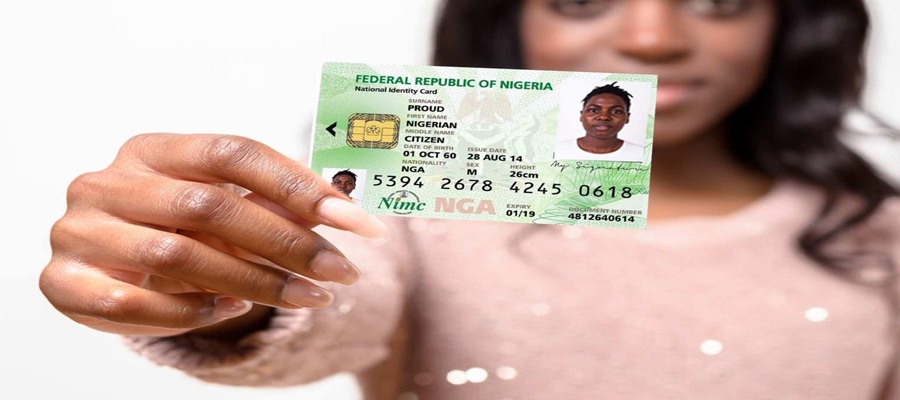
Federal Inland Revenue Service (FIRS) has announced that the National Identification Number (NIN) issued by the National Identity Management Commission (NIMC) will automatically serve as the Tax Identification Number (Tax ID) for all Nigerian citizens, while registered businesses will use their Corporate Affairs Commission (CAC) registration numbers.

FIRS
The disclosure was made during a public awareness campaign on the new tax laws posted on X (formerly Twitter) on Monday.
According to the Service, the Nigeria Tax Administration Act (NTAA), which comes into force in January 2026, mandates the use of Tax IDs for certain financial and commercial transactions, including bank account ownership.
FIRS explained that the measure is part of efforts to unify all previously issued Tax Identification Numbers (TINs) by both the federal and state revenue services into a single identifier.
“For individuals, your NIN automatically serves as your Tax ID, while for registered companies, your CAC RC number is used. You do not need a physical card; the Tax ID is a unique number linked directly to your identity,” the Service stated.
The agency noted that the requirement has been in place since the Finance Act of 2019 but has now been strengthened under the NTAA to ensure compliance and ease of administration.
Officials emphasized that the reform would simplify tax processes, reduce duplication, and improve transparency in Nigeria’s tax system.
The Service added that the integration of NIN and CAC numbers into the tax framework would also enhance data accuracy, curb tax evasion, and streamline the monitoring of taxable activities across the country.
Tax experts have described the development as a significant step toward modernizing Nigeria’s revenue administration, noting that it aligns with global best practices where national identity systems are linked to tax compliance.
The FIRS urged Nigerians to ensure that their NINs and CAC registration details are up-to-date, stressing that the identifiers would be required for transactions such as property purchases, contract awards, and access to certain financial services once the NTAA takes effect

The United States will begin a partial suspension of visa issuance to Nigerians from January 1, 2026, following a new presidential proclamation aimed at strengthening border and national security.

The US Mission in Nigeria announced on Monday that the restriction will take effect at 12:01 a.m. Eastern Standard Time in accordance with Presidential Proclamation 10998, titled ‘Restricting and Limiting the Entry of Foreign Nationals to Protect the Security of the United States.’
According to the mission, Nigeria is one of 19 countries affected by the measure.
Others listed are Angola, Antigua and Barbuda, Benin, Burundi, Cote d’Ivoire, Cuba, Dominica, Gabon, The Gambia, Malawi, Mauritania, Senegal, Tanzania, Togo, Tonga, Venezuela, Zambia and Zimbabwe.
The proclamation provides for a partial suspension of visa issuance covering nonimmigrant B-1/B-2 visitor visas, as well as F, M and J student and exchange visitor visas.
It also applies to immigrant visas, though with limited exceptions.
The statement read in part, “Effective January 1, 2026, at 12:01 a.m. EST, in line with Presidential Proclamation 10998 on “Restricting and Limiting the Entry of Foreign Nationals to Protect the Security of the United States,” the Department of State is partially suspending visa issuance to nationals of 19 countries – Angola, Antigua and Barbuda, Benin, Burundi, Cote D’Ivoire, Cuba, Dominica, Gabon, The Gambia, Malawi, Mauritania, Nigeria, Senegal, Tanzania, Togo, Tonga, Venezuela, Zambia, and Zimbabwe – for nonimmigrant B-1/B-2 visitor visas and F, M, J student and exchange visitor visas, and all immigrant visas with limited exceptions.”
US officials clarified that the policy does not apply to all travellers. Exemptions include immigrant visas for ethnic and religious minorities facing persecution in Iran, dual nationals applying with passports from countries not affected by the suspension, and Special Immigrant Visas for eligible US government employees.
Other exempted categories include lawful permanent residents of the United States and participants in certain major international sporting events.
The US government emphasised that the proclamation applies only to foreign nationals who are outside the United States on the effective date and who do not hold a valid US visa as of January 1, 2026.
“Foreign nationals, even those outside the United States, who hold valid visas as of the effective date are not subject to Presidential Proclamation 10998. No visas issued before January 1, 2026, at 12:01 a.m. EST, have been or will be revoked pursuant to the Proclamation,” the statement added.
Visa applicants from affected countries may continue to submit applications and attend interviews. However, the US Mission noted that such applicants “may be ineligible for visa issuance or admission to the US” under the new rules.
The announcement comes amid a series of recent US policy decisions that have raised concerns among Nigerians seeking to travel, study or migrate to the country.
In October, the United States added Nigeria back to its list of countries accused of violating religious freedom, citing persistent insecurity and attacks on Christian communities. This was followed by Nigeria’s inclusion on a revised US travel ban list that imposed partial entry restrictions on Nigerians.
The US has also tightened immigration and visa policies affecting Nigerians. Earlier this year, the validity of most non-immigrant visas issued to Nigerians was reduced to single-entry visas with a three-month duration.

The pre-action notice was signed by Emmanuel Okpara, Esq., Litigation and Compliance Director, and Mus’ab Awwal Mu’az, Esq., secretary of the Association’s Steering Committee.
The dispute stemmed from a consent judgment delivered on November 3, 2025, by Justice J.K. Omotosho of the Federal High Court, Abuja, in Suit No: FHC/ABJ/CC/355/2025 between Meta Platforms, Inc. and the NDPC.
Following investigations conducted under the Nigeria Data Protection Act (NDPA), 2023, the NDPC had issued a Final Order against Meta Platforms, Inc., finding “widespread violations of the data protection and privacy rights of approximately 61 million Nigerians,” and imposing a remedial fine of USD 32,800,000.
The pre-action notice was signed by Emmanuel Okpara, Esq., Litigation and Compliance Director, and Mus’ab Awwal Mu’az, Esq., Secretary of the Association’s Steering Committee.
The dispute stemmed from a consent judgment delivered on November 3, 2025, by Justice J.K. Omotosho of the Federal High Court, Abuja, in Suit No: FHC/ABJ/CC/355/2025 between Meta Platforms, Inc. and the NDPC.
Following investigations conducted under the Nigeria Data Protection Act (NDPA), 2023, the NDPC had issued a Final Order against Meta Platforms, Inc., finding “widespread violations of the data protection and privacy rights of approximately 61 million Nigerians,” and imposing a remedial fine of USD 32,800,000.
The NDPC investigation stemmed from a petition filed at the commission on August 14, 2023, against Meta Platforms Inc. by the convener of Personal Data Protection Awareness Initiative, Ozoemena Nwogbo, regarding violation of the Nigeria Data Protection Act.
After its investigation, NDPC found Meta Platforms Inc. wanting and, on February 18, 2025, issued nine Final Orders against Meta Platforms Inc.
NDPC’s Order
The NDPC’s order nine reads, “Meta shall pay the naira equivalent of 32,800,000 USD (Thirty-two million, eight-hundred thousand United States Dollars) as a remedial fee. The naira equivalent shall be at the rate determined by the Central Bank of Nigeria.
“The details of the account for payment of the remedial fee are as follows: Account Name: Nigeria Data Protection Commission Fund Account. Account Number: 0020331265048 (300131267). Use RTGS for payment.”
The NDPC added, “Note that Meta has a right to seek a judicial review of this decision. The Commission will closely monitor Meta’s remediation process and its impact on data subjects for upwards of six months.”
However, the Final Order was subsequently set aside through Terms of Settlement, which were adopted by the court as a consent judgment on November 3, 2025, following a suit marked FHC/ABJ/CS/355/2025, filed by Meta Platforms Inc. against the NDPC.
Part of the Terms of Settlement entered between NDPC and Meta Platforms Inc. reads, “The applicant (Meta Platforms Inc.) and the respondent (NDPC) have come to a mutual settlement agreement that resolves the dispute underlying the applicant’s originating Summons.
“Pursuant to this agreement: (I) the applicant has agreed to provide specific remedial consideration to the respondent in support of protecting the rights of data subjects in Nigeria; and (II) the respondent has inter alia agreed to set aside and waive any rights to enforce or take steps to enforce the Final Orders against the applicant.”
The settlement terms specifically read, “In the light of the foregoing: The applicant wholly and completely terminates, abandons, withdraws, and discontinues the Originating Summons as well as any and all claims against the respondent connected to or arising from the matters or the subject matter thereof, except as the parties have otherwise agreed.
“The respondent: (I) sets aside the Final Orders against Meta; and (II) save and except as the parties have otherwise agreed, fully and firmly releases and discharges Meta from any and all claims, demands, actions, causes of action, contracts, obligations, suits, debts, costs, liabilities, which the respondent ever had, may now have, or May hereafter claim to have against Meta in respect of the matters.”
Association Alleges Illegality In Settlement
But the Data Privacy Lawyers Association contended that the consent judgment was entered into unlawfully, arguing that it was done without lawful statutory authority, in violation of the Nigeria Data Protection Act, 2023, and in derogation of the constitutional right to privacy guaranteed under Section 37 of the Constitution of the Federal Republic of Nigeria, 1999 (as amended).
The Association further said the action was taken “to the grave prejudice of millions of affected Nigerians and the public interest, as well as the Federal Government of Nigeria.”
In the notice, the Association warned that unless the issues raised are urgently addressed within the statutory notice period, it would approach the Federal High Court to seek multiple reliefs.
These include an order setting aside, vacating, and nullifying the consent judgment on grounds of fraud, collusion, material non-disclosure, lack of statutory authority, and violation of the NDPA, 2023.
It is also seeking a declaration that the consent judgment is “null, void, unconstitutional, and of no legal effect,” as well as a declaration that the NDPC lacks statutory authority to waive, compro
Other reliefs sought include an order restoring and reviving the Final Order against Meta Platforms, including the $32.8 million fine, and an order restraining any further reliance on or enforcement of the consent judgment.
The Association also asked the court for other orders the Court may deem fit in the interest of justice, public accountability, and the protection of constitutional rights.
In the interest of transparency and accountability, the Association urged the NDPC to provide a written explanation of the legal basis for entering into the Terms of Settlement, clarify the statutory authority relied upon to waive the remedial fine and set aside the Final Order, and take steps to remedy the issues raised.
The letter, the Association said, constitutes the requisite pre-action notice under applicable law.
It warned that unless the concerns are satisfactorily addressed within 30 days of receipt of the notice, it will proceed to institute legal proceedings without further recourse.
mise, or extinguish liabilities, sanctions, or remedial fines arising from established violations of the Act.

World Bank Reveals Obstacles to Growth of Mobile Money Accounts in Sub-Saharan Africa

NCC Ranked Among Top 3 MDAs for Best Website Performance in 2025

FIRS Declares NIN, CAC Numbers as Tax IDs from 2026

Woherem Proposes Pragmatic Roadmap to End Terrorism and Banditry in Nigeria

AfDB Group Mobilises Global Private Capital to Close Africa’s Financing Gap

Nigeria Records Highest Weekly Cyberattacks in Africa — Report

Cyber Tsunami Hits Nigeria as Breaches Surge 1,047%, esentry Q3 Report Reveals

Minister Claims Bandits Exploit Poor Network, Bounce Calls Off Multiple Towers

GenAI Adoption Among African workers Outpace Global Peers

Jumia’s Data Shows Nigerians Turning to Digital Retail to Navigate Inflation Pressures




 E-Financial2 days ago
FIRS says NIN, CAC Numbers to Serve as Tax IDs from 2026
 E-Financial2 days ago
AfDB Group Mobilises Global Private Capital to Close Africa’s Financing Gap

 Telecom2 days ago
Oyedele Dismisses Claims Bank Accounts Without TIN Will Be Frozen

 E-Financial2 days ago
Fidelity Bank Bolsters Ikoyi Fire Station with Hoses, Pumps for Safer Communities

 Telecom2 days ago
Amazon Blocks 1,800 North Koreans From Job Applications
 General News2 days ago
Woherem Proposes Pragmatic Roadmap to End Terrorism and Banditry in Nigeria

 E-Financial2 days ago
After the Capital Rush: Who Really Wins Nigeria’s Bank Recapitalisation?

 General News2 days ago
REDAN Seals Landmark MoU, Validates Sytemap’s Real Estate Infrastructure