

Telecom
Sophos CEO Kris Hagerman Steps Down as Joe Levy Takes Helm

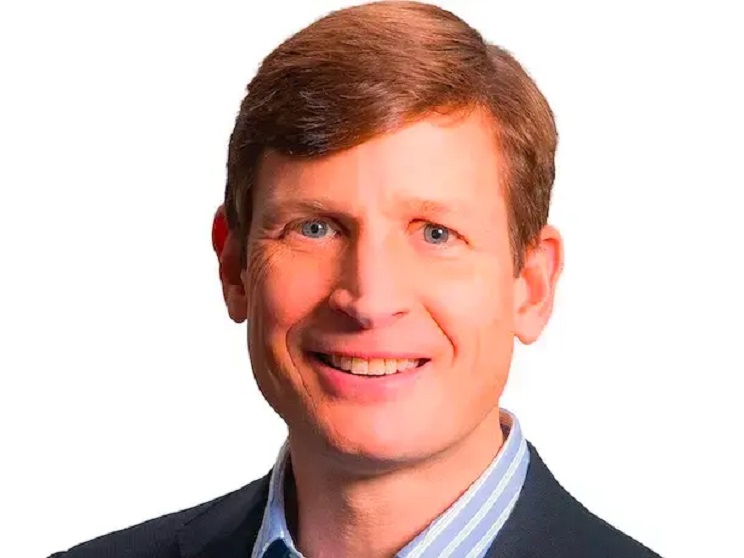
Sophos announced Thursday that Kris Hagerman has stepped down as CEO of the cybersecurity giant after more than a decade, and a top executive has been named as acting CEO.
The vendor didn’t disclose a reason for Hagerman’s departure, which is “effective immediately,” with Sophos President Joe Levy named as acting CEO in addition to his current duties.
Hagerman will remain as an advisor to Sophos through April 1, the company said.
CRN has reached out to Sophos for any further details on Hagerman’s departure.
A former Symantec executive, Hagerman became CEO of Sophos in late 2012 and led the company through its 2015 initial public offering in London and a tripling of its revenue, ultimately surpassing $1 billion, Sophos said in a news release. He also oversaw the take-private sale of the company to private equity investor Thoma Bravo for $3.9 billion in 2020.
In the release, Hagerman is quoted as saying he is “excited to pass the baton to Joe Levy as President and acting CEO to lead Sophos into the future.” Levy “has my full and enthusiastic support,” Hagerman said.
Hagerman added that he is “proud” to have led the team that has “transformed Sophos into a true next-generation cybersecurity leader.”
In an interview with CRN last year, Hagerman said he was focused on making sure that Sophos is at the forefront of enabling the shift to cybersecurity delivered via a service model—or “security as a service.”
Sophos has begun its shift in this direction by emphasizing its managed detection and response (MDR) service, which has excelled even in the highly competitive market, he told CRN.
“I think in many respects, we’re already at the front of that [MDR] wave,” Hagerman said. “We have more MDR customers than any other vendor that we’re aware of.”
Levy has spent more than two decades in the cybersecurity industry, including previously as CTO at SonicWall and Blue Coat Systems before joining Sophos in 2015.
In April 2023, Levy was promoted to serve as president of the Sophos Technology Group, a title which he has held in addition to being the company’s CTO and chief product officer.
In the release Thursday, Sophos said that Levy has spearheaded “the transformation of Sophos from a product-only vendor into the global cybersecurity as a service company it is today.”
Levy said in the release that Sophos has massive opportunities ahead in the realm of helping to secure “neglected” midmarket and small businesses.
“Our immediate goal is to work with our partners to further expand our collective ability to secure organizations that are unprotected or need stronger cyber defenses,” he said in the release.
In an interview a year ago, Levy said that the surge in demand for MDR — coming amid a massive global shortage of cybersecurity talent — is helping to prove the company’s thesis that services are the future of security. Ultimately, “I believe that services are going to become the primary consumption model of cybersecurity in the industry over time,” he told CRN.


Telecom
Airtel Africa Foundation Launches Airtel Green Schools to Promote Sustainability Education in Nigeria

Airtel Africa Foundation, through Airtel Nigeria, has launched the Airtel Green Schools initiative, a sustainability-focused programme designed to create environmental learning spaces in primary and secondary schools.

The spaces, which are branded Airtel Garden, have been introduced as part of Airtel Nigeria’s activities to commemorate the 2026 World Environment Day, themed “Climate Action”.
According to Airtel Nigeria’s schedule, the company’s 10 adopted schools, located in nine states across country’s six geopolitical zones, have been onboarded as Green Schools.
Each of the schools now features an Airtel Garden, with dedicated sections for edible crops, fruit trees and shade trees, enabling pupils to learn firsthand about food cultivation, biodiversity and the importance of increasing green cover to help mitigate the effects of climate change.
The gardens also incorporate composting stations where organic waste generated within the school environment can be converted into nutrient-rich compost. To boost circular economy practices, plastic recycling segments have also been built in to repurpose common wastes such as plastic bottles and tyres.
The beneficiary schools of the programme include St. George’s Nursery and Primary School, Ipaja, Lagos; Yahaya Primary School, Zaria; Iyeru-Okin Primary School, Iyeru-Okin, Kwara; St. John Primary School, Ijebu Igbo, Ogun State, and Community Primary School, Amumara, Imo State.
Others are Presbyterian Primary School, Ediba, Cross-River; Migrant Farmers Community Primary School, Umuahia, Abia State; Gwange III Primary School, Maiduguri, Borno State; Mayflower Secondary School, Ikenne, Ogun State; and Government Day Primary School, Gombe State.
Segun Ogusanya, Chairman of the Airtel Africa Foundation, highlighted the developmental focus of Airtel Garden. “We are excited to inaugurate Airtel Green Schools, which are designed to go beyond awareness and create real behavioural change within Nigeria’s school communities.
“Through the Restore, Reduce and Educate pillars, we are equipping young people with practical tools such as gardens, recycling awareness, and environmental learning resources.
2Our goal is to create a replicable Green School model that can be scaled and sustained over time, ensuring that environmental education becomes part of everyday learning for the children in our adopted schools,” he said.
A key feature of the launch programme is the signature “Read, Engage, Plant” experience, an immersive environmental learning model that combines storytelling, practical engagement and environmental action.
At the launch, Airtel staff from the Employee Volunteer Programme (EVP) led pupils of the adopted schools in the reading “Jojo and Jade, Heroes of Mother Earth” before joining in interactive environmental activities such as crop planting. The programme also featured a recitation of the climate action pledge and the inauguration of Airtel Garden Eco Club.
Speaking on the flag-off of Airtel Green Schools and Airtel Garden, the Chief Executive Officer of Airtel Nigeria, Dinesh Balsingh, said, “Climate action becomes meaningful when awareness is translated into action.
“Through the Airtel Garden, we are creating living classrooms where pupils can learn practical lessons about environmental stewardship, sustainable agriculture, waste management and the importance of protecting our planet. We believe that empowering young people with these experiences today will help shape a more environmentally responsible generation tomorrow.”
The Airtel Green Schools campaign is built on the telecom giant’s sustainability theme of Reuse, Educate, and Restore. Through tree planting and garden development, the programme seeks to establish green spaces within school communities while promoting waste reduction and responsible environmental practices via composting and plastic recycling.
Telecom
GSMA Launches Global Satellite Regulatory Playbook to Help Policymakers Build Future-Ready Connectivity Frameworks

The GSMA has launched its new Satellite Regulatory Playbook, a practical guide designed to help policymakers develop clear, consistent and future-ready policy frameworks for the rapidly evolving satellite connectivity sector.

As Low Earth Orbit (LEO) satellite services expand globally and begin to complement terrestrial mobile and broadband networks, the Playbook provides governments with a structured framework to modernise satellite regulation in ways that support societal needs, protect consumers, and encourage investment in the next generation of communications networks.
Developed in collaboration with Access Partnership, the Playbook focuses on emerging satellite broadband and direct-to-device (D2D) services delivered directly to end users without mobile operator partnerships, where existing regulatory frameworks often leave gaps.
Where mobile operators are involved, existing regulations typically provide sufficient safeguards. The playbook offers practical guidance that policymakers can adapt to their national circumstances. It is designed to support technology-neutral regulation while promoting greater consistency in regulatory outcomes across markets.
The GSMA emphasises that no single connectivity technology can meet all of society’s long-term communications needs. Instead, resilient and inclusive digital societies require multiple forms of connectivity working together, including mobile, fixed and satellite networks. Regulatory frameworks therefore need to evolve to address all connectivity services consistently, ensuring users receive comparable protections and benefits regardless of how services are delivered.
Michaela Angonius, Head of Policy & Regulation at the GSMA, said: “As satellite connectivity becomes an increasingly important part of the global communications landscape, policymakers have an opportunity to create regulatory frameworks that are fit for the future.
“The Satellite Regulatory Playbook gives policymakers practical guidance to create frameworks that protect people, ensure law enforcement can always do their job, attract investment into the whole communications sector and keep pace with innovation.”
“Connectivity is not a choice between terrestrial and satellite networks. Meeting the needs of citizens, businesses and governments requires a diverse and complementary connectivity ecosystem. Regulation should therefore be technology-neutral and focused on delivering consistent outcomes for consumers and society, regardless of how services are provided.”
The Playbook identifies eight key regulatory pillars that policymakers should consider when developing or modernising frameworks for satellite services:
- Local establishment rules
- National security
- Consumer protection and operational measures
- Infrastructure and facility requirements
- End-user terminal deployment
- Fiscal considerations
- Emergency services and public safety
- Enforcement
The guidance is underpinned by the GSMA’s principles of transparency, regulatory parity, harmonisation, collaboration and balanced innovation. Together, these principles aim to support regulatory certainty, encourage investment, strengthen consumer trust and promote fair competition across the broader connectivity ecosystem.
Recognising that regulatory frameworks vary significantly between countries, the Playbook does not prescribe a one-size-fits-all model. Instead, it provides a flexible framework that regulators can tailor to national priorities while helping to reduce fragmentation and promote greater international alignment.
As satellite services continue to evolve and expand, the GSMA believes that forward-looking and harmonised regulatory approaches will be essential to unlocking the full benefits of next-generation connectivity for consumers, businesses and societies worldwide.
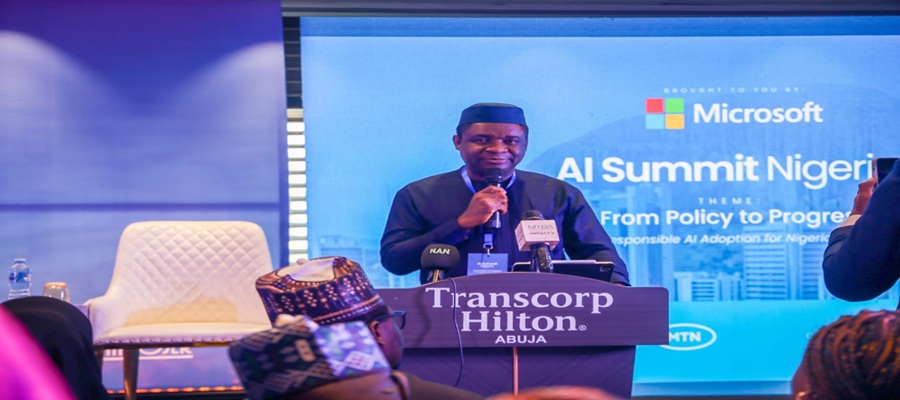
National Information Technology Development Agency (NITDA) has reaffirmed its commitment to establishing Nigeria as a frontrunner in Africa’s artificial intelligence economy, emphasizing that the country’s digital future relies heavily on responsible AI adoption, digital sovereignty, and homegrown innovation.

Represetative of Kashifu Inuwa Abdullahi, the DG NITDA, Barrister Emmanuel Edet, Ag. Director, Regulation and Compliance Department, delivering a remark at the AI Summit Nigeria 2026.
Speaking at the AI Summit Nigeria 2026—hosted by Microsoft in Abuja—NITDA’s Director-General, Kashifu Inuwa CCIE, described AI as a transformative force capable of revolutionising every economic sector.
His insights were delivered by Barr. Emmanuel Edet, NITDA’s Acting Director of Regulation and Compliance, who highlighted that trust serves as the bedrock for any sustainable AI rollout. Without a firm commitment to accountability and transparency, he warned, widespread innovation simply cannot scale.
“Without public trust, AI adoption will be stalled,” Inuwa noted. “Without accountability, innovation will not scale sustainably, and without transparency, citizens will lose confidence in the systems designed to serve them.”
Themed “From Policy to Progress: Accelerating Responsible AI Adoption for Nigeria’s Digital Decade,” the summit was a collaborative effort between Microsoft, NITDA, and MTN.
The event brought together a diverse group of public and private sector stakeholders to map out actionable strategies for embedding AI into the fabric of Nigeria’s economy.
A central theme of Inuwa’s address was the critical need for Nigeria to achieve true digital sovereignty. He urged the nation to pivot from being mere consumers of global technology to becoming active creators of it.
“We must become creators of intelligence rooted in our realities and responsive to our aspirations,” Inuwa urged.
“We must build local talent, strengthen research ecosystems and create an enabling environment where Nigerian and African solutions can thrive.”
He added that Africa needs to play a defining role in shaping the global future of AI, rather than just adapting to technologies built elsewhere.
Microsoft’s Director of Government Affairs for West Africa, Nonye Ujam, also spoke at the event, praising Nigeria’s proactive steps in AI governance, particularly through the National AI Strategy and ongoing regulatory reforms.
However, she challenged attendees to move past the paperwork and focus on executing AI solutions that yield measurable benefits for everyday citizens, businesses, and government operations.
Ujam pointed out that truly effective AI adoption hinges on robust governance frameworks, solid infrastructure, and institutional capacity, all while anchoring new innovations to the core principles of fairness, security, transparency, and accountability.
The summit sparked vital conversations around regulatory clarity, digital sovereignty, and the delicate balance between fostering innovation, driving collaboration, and maintaining strategic control over Nigeria’s fast-evolving tech landscape.
The event drew active participation from key institutions, including the Nigeria Customs Service, the National Identity Management Commission, and Galaxy Backbone, all signaling a unified front for Nigeria’s digital future.

Privacy Crisis May Undermine Local Hosting of Data by Banks, Fintechs

AI-Powered Scams are Biggest Payment Fraud Threat -Visa Report

How to Build a Safer Cyberworld for People, Business, and Society

Nestlé Commits to Boosting West Africa Solar Rollout Through Partnership

Airtel Africa Foundation Launches Airtel Green Schools to Promote Sustainability Education in Nigeria

CBN Extends PoS Geo-Fencing Enforcement Deadline to August 2026

London Strengthens Global Investment Ties with Africa @ First Ever London-Africa Business Summit

FG Targets Alleged N3tn Capital Flight, Opens Airtime Credit Market to Nigerian Fintechs

Japan, UNESCO Boost Digital Learning in 15 CoEs with Donation of ICT Equipment

Mobile Internet Gender Gap Widest in Africa – GSMA




 E-Business2 days ago
Kaspersky Discovered a Malware Campaign Targeting Steam Users Through Infected Wallpaper

 Telecom2 days ago
Big Tech Shake-Up: Zuckerberg Announces Sudden WhatsApp Leadership Change

 General News2 days ago
Fiona Ahimie Launches LEADHER Mentorship Session to Inspire the Next Generation of Female Leaders

 Broadcasting2 days ago
CANAL+ Partners Samsung to Pre-Load DStv Stream on New Samsung TVs In Nigeria, Other African Countries

 News2 days ago
NESREA Defends Plastic Waste Rules, Says Policy Targets Pollution

 E-Financial2 days ago
FG Engages Banks on RevOp, New Digital Platform for Revenue Generation

 Telecom2 days ago
Irvine Partners CEO Rachel Irvine Sweeps Top Industry Honours in the UK and EMEA

 News2 days ago
Arridex Floats West Africa’s First Multi-tech 3D Industrial Omnifactory in Lagos