

News
South Africa Offers GMB Seized Nigerian $15m

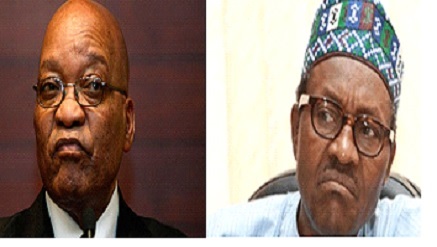
South Africa has indicated her willingness to return the more than $15 million seized from some Nigerians last year in a move designed to please the country’s new president.
This is contrary to claims earlier by South African Ambassador to Nigeria, Lulu Mnguni, that the money seized by the South African Government had been released to Nigeria.
It would be recalled that the South African Government had, on September 5, 2014, seized $9.3m cash belonging to Nigeria and a month later seized another $5.7m, claiming that both funds were to be used for illegal purchase of arms.
But The Mail & Guardian reported yesterday that, Muhammadu Buhari, president-elect made positive overtures to Jacob Zuma of South Africa before the elections and relations between the two countries are likely to improve.
“South Africa is considering returning the Nigerian money that it confiscated last year, or clearing the way to sell arms to the West African country” The Mail & Guardian reported.
The newspaper also has learned through diplomatic sources that South Africa has begun talks to work out a process to return the money in an effort to start off on a clean slate with the recently elected government of the Nigerian president-elect, Muhammadu Buhari.
South African law enforcement agencies seized $15 million in two batches: $5.7-million that had been wired to Standard Bank and $9.3-million in cash, which was confiscated.
It was brought into the country through Lanseria airport in Johannesburg in three suitcases by a delegation said to represent the Nigerian government. In both cases, the money was suspected to be for illegal use.
Now South Africa wants to use the money to extend an olive branch to Buhari’s government and mend relations between the two countries, which became strained during the tenure of outgoing president Goodluck Jonathan.
“The positive thing about [Buhari] is that one of the people who supported him is Atiku Abubakar. That makes him our man and he will automatically work well with [President Jacob] Zuma,” a government source said.
Close connection
Abubakar is close to Zuma. He was Nigeria’s deputy president during the presidency of Olusegun Obasanjo, at the time when Zuma was Thabo Mbeki’s deputy.
“Also, this man [Buhari] is a [retired] military general. It is true that the military needs some beefing up to fight Boko Haram and we should help,” the source added.
So how will Nigeria know that it stands to benefit from an otherwise controversial transaction that had exacerbated tensions between the two countries?
Explained the government source: “Diplomatically you send a signal. Obviously they will have to make a request once they receive a positive signal, but the request will just be an official step to finalising the transaction.”
Buhari is due to take over the leadership of the country after winning the recent elections. Formal talks have not yet begun but South Africa has apparently started sending “positive signals” through its diplomats in Nigeria and to the Nigerian embassy in Pretoria.
Diplomatically favourable
To ensure that the process of returning the money or regularising the sale of arms looks as clean as possible, the Hawks investigation will continue, the source said, but will be managed politically to reach a conclusion that is diplomatically favourable.
“One way is to make the investigators say: ‘Yes, a law has been broken, but it’s true that the government [of Nigeria] is the owner of that money and genuinely wanted to buy arms legally. They might have flouted the rules, but it’s a genuine transaction.’ [We will say] this money does not come from dirty hands or rebels or arms dealers,” the source said.
“We will find a way to regularise the transaction and either return the money or give them arms.”
Nigeria wanted to buy arms such as helicopters and ammunition to strengthen its fight against Islamic extremist group Boko Haram.
Last year, the M&G reported that the head of the national conventional arms control committee, Jeff Radebe, who is also the minister in the presidency, was blamed by his colleagues in government for taking a unilateral decision to try to regularise the sale of arms to Nigeria to facilitate the release of bodies of South Africans who were killed when the TB Joshua church building collapsed in Nigeria.
At the time, Radebe denied it and said the committee had met in October and decided to propose unlocking the Nigerian arms trade.
‘Bona fide error’
The M&G quoted from two letters that Radebe had written to JP “Torie” Pretorius of the Hawks and Dumisani Dladla, the head of the arms control committee’s secretariat, in which he said the failed attempt on September 5 to pay an arms dealer in South Africa “was, in fact, a legitimate requirement from the government of Nigeria”. “Although the required administrative processes were not adhered to at the time, the government of South Africa deems it a bona fide error,” he wrote.
This week a government source told the M&G: “What Jeff did may have been unilateral, but it is now an avenue that South Africa is willing to explore. Even when we were doing damage control after your story, the discussion centred around how we can get a positive outcome out of this.”
The committee apparently met after the article was published in November last year and decided to use the return of the money or the sale of arms to appease the new government of Nigeria after the elections.
“After the story, they had to regroup and say: ‘How do we deal with this situation?’ You cannot let it hang forever; you must find a way to conclude it in a way that will satisfy both sides,” the source said.
Zuma has apparently been briefed by ministers who serve on the committee and has warmed to the idea. Efforts to get comment from Zuma’s spokesperson Mac Maharaj and from Radebe were unsuccessful.
Improved relations
Relations between Nigeria and South Africa have not been at their best, particularly between the Zuma and Jonathan administrations.
“[By returning this money] you get friendship, loyalty and an opportunity where he [Buhari] is willing to work with us to lead the continent and speak with one voice.
“Instead of Nigeria second-guessing us all the time, we will compare notes and stop fighting for things like the United Nations Security Council seat that’s not even permanent,” the source said.
“Nigeria is a strategic country that South Africa cannot ignore. It’s a big market. It’s possible South African companies make more money in Nigeria than in South Africa.”
When Buhari took on Jonathan in last month’s elections, Pretoria was already positioning itself for refreshed relations with Abuja.
‘Contributions to democracy’
The M&G has seen a letter that Buhari wrote to Zuma a few days before the elections, in which he complained about Jonathan’s alleged delaying tactics over the poll and the use of violence in an attempt to sway the vote in his favour.
“I thank your government and your mission in Nigeria for your contributions to Nigeria’s democratic process. While Nigeria’s democracy must be established and secured by the commitment to fairness and the rule of law of Nigerians, the goodwill and positive influence of your government have helped us on this difficult yet vital journey,” Buhari wrote. “It is not your business who wins elections in Nigeria, but we seek your help in making sure the election is a free and fair one for us to win or lose according to the people’s will.”
He is expected to hold a one-on-one meeting with Zuma on the sidelines of the African Union summit that South Africa is hosting in June, and it’s anticipated that the issue of the seized money will be discussed.
Either Zuma or Deputy President Cyril Ramaphosa will attend Buhari’s inauguration in May.
Asked for comment, department of international relations and co-operation spokesperson Nelson Kgwete said the department had not been in talks with Nigeria over the confiscated money and knew nothing about a proposal to either return the money or sell arms to that country.



The African Development Bank Group last week approved an investment of €6.5 million in the Saviu II fund in order to support technology start-ups through their seed phase and first institutional fundraising, mainly in French-speaking Central and West Africa.

The Bank will invest €4.5 million as equity and €2 million as a first-loss hedging tranche on behalf of the European Commission, under the Boost Africa Programme.
This participation of the Bank Group will enable the Saviu II fund to give priority to companies with a strong technological or digital component.
Saviu II, the second investment vehicle of Saviu Partners, plans to invest between €500,000 and €3 million in about 20 technology or technology-oriented business-to-business start-ups in the seed phase or carrying out first institutional fundraising.
The Saviu II venture capital fund aims to make at least 60% of its commitments in the French-speaking countries of West and Central Africa: Côte d ‘Ivoire, Cameroon, Benin, Senegal, Togo, Burkina Faso and Mali.
The fund can also co-invest in promising technology companies in East Africa that have a strong team and business model, and whose strategy includes entering the market in French-speaking West African countries and establishing a strong presence there.
In addition, the fund will devote a dedicated envelope to pre-seed investments, focusing on minority equity investments, usually in co-investment with studios, incubators or other ecosystem partners.

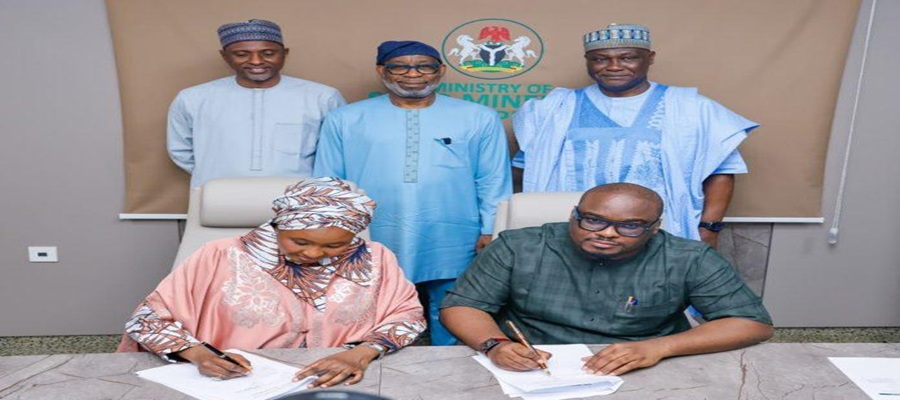
Nigerian Government has signed a $1.3 billion Memorandum of Understanding (MoU) with Africa Finance Corporation (AFC) via the Solid Minerals Development Fund (SMDF) to fund an alumina refinery, national geoscience mapping, and a strategic investment vehicle for mining growth.

Special Assistant to the Minister of Solid Minerals Development, Segun Tomori, said the refinery will process one million tonnes of bauxite yearly using a modern Bayer process, powered by an on-site gas-fired cogeneration plant.
Minister Dele Alake called it a transformative milestone boosting GDP, aligning with reforms that improve investment climate, regulations, and licensing to attract private capital. He directed agencies to fast-track permits.
The 20-year project at 95% utilization eyes 19 million tonnes total output, $1.2 billion annual GDP addition, $25 billion economic impact, and $8 billion forex earnings, per feasibility studies.
SMDF Executive Secretary Fatima Shinkafi termed it the agency’s biggest funding deal, supporting value-addition policy.
The partnership extends to geoscience mapping for mineral data, de-risking exploration, and a joint vehicle for mining assets.
Permanent Secretary Engr. Farouk Yabo praised the reforms. Shinkafi signed for government; AFC’s Franklin Edochie for the corporation, witnessed by AFC CEO Samaila Zubairu.
Tomori positioned it as Nigeria’s largest private mining investment and FDI magnet.
TeamApt Ltd., a subsidiary of Moniepoint Inc. and a leading financial infrastructure provider, has partnered with Awabah, the National Pension Commission’s first licensed Accredited Pension Agent, to expand pension access for millions of Nigerians in the informal economy.

The partnership was unveiled in Abuja at the launch of Awabah’s agent licence, themed “Building Financial Resilience: Securing the Future with Personal Pensions.”
At the event, PenCom Director-General Omolola Oloworaran underscored a major imbalance in Nigeria’s pension system, noting that while pension assets have grown to over ₦27 trillion, the benefits remain largely concentrated among formal-sector workers. She observed that most informal-sector workers—who make up the majority of Nigeria’s workforce—still retire without any form of savings.
This challenge is further highlighted in Moniepoint’s 2025 Informal Economy Report, which reveals that although 65 per cent of informal businesses recorded revenue growth, most lack the structural resilience required for long-term sustainability and succession.
Through the partnership, TeamApt—a Central Bank of Nigeria–licensed switching and processing company—will enable seamless pension registration and contributions for Awabah users via its Direct Debit service on Point of Sale (POS) terminals nationwide. Informal workers can enrol for personal pensions, tokenize their cards, and automate periodic contributions in just a few steps.
The initiative simplifies pension savings by turning what was once a complex, bureaucratic process into a routine transaction, enabling business owners and workers to build financial security beyond their productive years.
“When we started Awabah, we were driven by one core belief—that no African worker should be one accident or crisis away from poverty,” said Tunji Andrews, Chief Executive Officer of Awabah.
“This partnership with TeamApt allows us to scale that vision. By leveraging their Direct Debit service and extensive POS network, we are meeting informal workers where they already operate—markets, workshops, kiosks, and roadside businesses. With small, regular contributions, workers can now access personal pensions bundled with health, accident, and life insurance,” he added.
TeamApt CEO Dennis Ajalie said the collaboration aligns with the company’s long-standing mission to power Nigeria’s informal economy.
“At TeamApt and Moniepoint Inc., our focus has always been on enabling the informal sector,” Ajalie said. “Today, working within our licence framework and alongside our co-subsidiary, Moniepoint Microfinance Bank, we operate across all 774 local government areas, serving millions of Nigerians who drive economic activity.”
He described the partnership as a critical step toward pension inclusion, adding that it demonstrates how financial infrastructure can deliver real, long-term value to everyday Nigerians.
Ajalie also praised PenCom’s leadership for creating an enabling environment for innovation, noting that Oloworaran’s reforms have opened the door for partnerships capable of delivering sustainable pension coverage for informal workers.
The initiative is powered by TeamApt’s robust financial technology ecosystem, which has supported banks, fintechs, and financial institutions for more than a decade. Its omni-channel Direct Debit service allows automated recurring collections—such as pension contributions, subscriptions, and repayments—directly from customers’ bank accounts with their consent.
Beyond pensions, the platform enables informal workers to automate investments in the capital market, access healthcare through HMOs, and secure insurance coverage for themselves and their families—extending financial security far beyond retirement.

Sunil Bharti Mittal Conferred GSMA Lifetime Achievement Award for Transforming Global Telecommunications

Jumia Tech Week 2026 Begins with Tech Deals on Smartphones, Electronics, and Everyday Technology

AfDB Supports Francophone Africa Start-ups with €6.5M

Krishnan Exits Africa Data Centre to Embark on Professional Chapter

House Probes Fintech Regulation via Public Hearing on New Commission Bill

Accidental Billionaire Opts for Jail Instead of Returning Money Credited Him by Mistake

New Horizons Nigeria Breaks Ground: First to Fuse Mandarin into ICT Curriculum

Kaspersky Brings more Transparency to Threat Detection with New Hunt Hub

Dr. Cairo Ojougboh Foundation Bolsters Nigeria’s Education Drive with ₦2.7m Student Support

NDPC Commits to Balancing Data Privacy, Protection Information




 E-Financial2 days ago
Iran-Israel-US Conflict and CBN’s FX Gains: A Stress Test for Nigeria’s Monetary Stability

 E-Financial2 days ago
Mutual Benefits Assurance Reaffirms Full Regulatory Compliance, Enhanced Governance

 General News2 days ago
JAMB Uncovers AI-Driven Fraud Targeting UTME Candidates, Warns Parents

 General News2 days ago
SERAP Asks FCCPC to Investigate Google, Meta, Others over Alleged Rights Abuses

 News2 days ago
FlashChange CEO, Bidemi Oke, Urges Startups to Build Strong Governance Structures Early

 News2 days ago
TeamApt, Awabah Partner to Boost Pension Drive for Nigerians

 General News2 days ago
Capelli Institute Commits to Advancing Trichology in Nigeria

 General News1 day ago
Leo Stan Ekeh at 70; thanks Tinubu, Obasanjo, Nigerians, Global Tech Community