

News
The Economist, UK Newspaper Calls Jonathan “an Ineffectual Buffoon”


The Economist, an English-language weekly newspaper owned by the Economist Group, has described Nigeria’s former president Goodluck Jonathan “an ineffectual buffoon”.
In an article titled “Nigeria’s economy Crude tactics”, the newspaper said: Buhari’s government has cracked down on corruption, which had flourished under the previous president, Goodluck Jonathan, an ineffectual buffoon who let politicians and their cronies fill their pockets with impunity.”
Below is the full article:
“MORE than 30 years ago, a young general swept to power in the fifth of Nigeria’s military coups since independence in 1960. The country he inherited was a mess: bled dry by pilfering politicians within and hammered by falling oil prices without. Last year that general, Muhammadu Buhari, became president again—this time in a democratic vote. The problems he has inherited are almost identical. So are many of his responses.
In the eight months since Mr Buhari arrived at Aso Rock, the presidential digs, the homicidal jihadists of Boko Haram have been pushed back into the bush along Nigeria’s borders. The government has cracked down on corruption, which had flourished under the previous president, Goodluck Jonathan, an ineffectual buffoon who let politicians and their cronies fill their pockets with impunity. Lai Mohammed, a minister, reckons that just 55 people stole $6.8 billion from the public purse over seven recent years.
Mr Buhari, who—unusually among Nigeria’s political grandees—is said to have just $150,000 and a couple of hundred cattle to his name, abhors such excess. As military ruler he jailed, fired or forced into retirement thousands of bureaucrats whose fingers had been in the till.
This time, the Economic and Financial Crimes Commission (EFCC) has arrested dozens of bigwigs, including a former national security chief accused of diverting $2.2 billion.
The EFCC has a poor record of securing convictions; but a single treasury account has been introduced to try to stop civil servants siphoning off cash.
And agencies which may not be remitting their fair share to the state are having their books trawled by Kemi Adeosun, the finance minister.
Such measures are doubly important because the economy is swooning along with the oil price. The sticky stuff directly accounts for only 10% of GDP, but for 70% of government revenue and almost all of Nigeria’s foreign earnings.
Oil’s price has fallen by half, to $32 a barrel, in the months since the new government came to power, sending its revenues plummeting.
Income for the third quarter of 2015 was almost 30% lower than for the same period the year before, and foreign reserves have dwindled by $9 billion in 18 months.
Ordinarily there would be buffers to cushion against such shocks, but Mr Jonathan’s cronies have largely squandered them. Growth was about 3% in 2015, almost half the rate of the year before and barely enough to keep pace with the population. The stockmarket is down by half from its peak in 2014.
Domestic oil producers are feeling the pinch worst. Many borrowed heavily to buy oilfields when crude was worth more than $100 a barrel, and are now struggling to pay the interest on loans, says Kola Karim, the founder of Shoreline Group, a Nigerian conglomerate.
This, in turn, threatens to create a banking crisis. About 20% of Nigerian banks’ loans were made to oil and gas producers (along with another 4% to underperforming power companies).
Capital cushions are plumper than they were during an earlier banking crisis in 2009; but, even so, bad debts are mounting and banks that are exposed to oil producers may find themselves in trouble. “It wouldn’t surprise me if one or two went down,” says a senior banker in Nigeria.
The government’s response to the crisis has been three-pronged. First, it is trying to stimulate the economy with a mildly expansionary budget.
At the same time, it is trying to protect its dwindling hard-currency reserves by blocking imports. Third, it is trying to suppress inflation by keeping the currency, the naira, pegged at 197-199 to the dollar. Only the first of these policies seems likely to work.
The budget, which includes a plan to spend more on badly needed infrastructure, is a step in the right direction. Although government revenues are under pressure from the falling oil price, Mr Buhari hopes to offset that by plugging “leakages” (a polite term for theft) and taxing people and businesses more. That seems reasonable. At 7%, Nigeria’s tax-to-GDP ratio is pitifully low. Every percentage point increase could yield $5 billion of extra cash for the coffers, reckons Kayode Akindele of TIA Capital, an investment firm. Mr Buhari also plans to save some $5 billion-$7 billion a year by ending fuel subsidies—a crucial reform, if he sticks with it. Even so he will be left with a deficit of $15 billion (3% of GDP) that will have to be filled by domestic and foreign borrowing.
Yet his policies on the currency seem likely to stymie that. The central bank has frozen the naira at its current overvalued official rate for almost a year.
The various import bans (on everything from soap to ballpoint pens) are supposed to reduce demand for dollars, but have little effect.
Businesses that have to import essential supplies to keep their factories running complain that they have been forced into the black market, where the naira currently trades at 300 or more to the dollar.
Several local manufacturers have suspended operations. International investors, knowing that the value of their assets could tumble, have slammed on the brakes and some have pulled money out of the country just as their dollars are most needed (see chart).
Nigeria is fortunate in having low levels of public debt (less than 20% of GDP), but it is not helped by high interest rates, which mean that 35% of government revenue goes straight out of the door again to service its borrowings. It would not take much to push it into a debt crisis.
Frustratingly, this crunch is one that Nigeria has been through before—under the then youthful Mr Buhari. Then, as now, he refused to let the market set the value of the currency. Instead he shut out imports, causing the legal import trade to fall by almost 50% and killing much of Nigeria’s nascent industry in the process. Between 1980 and 1990, carmaking fell by almost 90%. Today, as in the 1980s, the president is making a bad situation worse.”


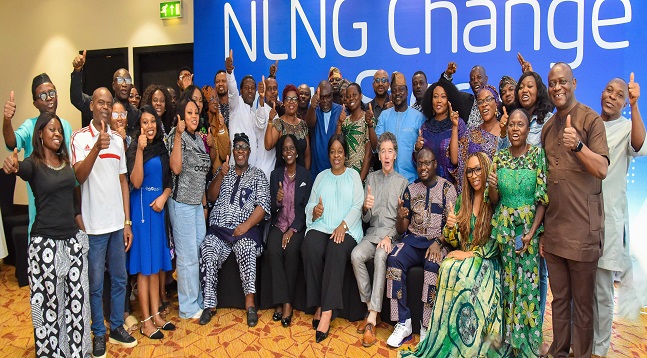
NLNG has demonstrated its dedication to media development in Nigeria through the successful completion of the second edition of the #NLNGChangeYourStory workshop for 2026, which took place in Lagos.

The workshop convened 40 participants representing diverse media outlets to examine the changing landscape of journalism shaped by artificial intelligence and digital communication. Discussions centered on how new media technologies can support real-time reporting, extend audience reach across borders, and foster deeper, more effective engagement on digital platforms.
Speaking at the event, the General Manager, External Relations and Sustainable Development at NLNG, Sophia Horsfall, described the workshop as part of the company’s broader effort to strengthen engagement with the media while supporting professional excellence in journalism. She noted that the initiative reflects NLNG’s belief that well-informed reporting plays an important role in shaping public understanding of critical sectors such as energy, economic development, and sustainability.
She encouraged participants to leverage the insights and practical knowledge gained during the workshop to elevate the quality, depth, and credibility of their reporting.
“NLNG views this engagement as a strategic partnership. We provide the energy that powers nations and generates revenue for our nation; you provide the information that powers our minds. We have been proud to host you, but our pride will only be justified when we see the ‘New Standard’ in your next feature, your next broadcast, and your next investigative report.
As you head back to your various stations, I urge you to take the spirit of this workshop with you.”
The programme combined expert-led discussions with hands-on learning. Digital communication specialist Dan Mason guided participants through key aspects of digital storytelling, while veteran journalist Taiwo Obe led a practical Journalism Clinic. Together, the sessions equipped participants with practical skills in data visualisation, online verification, audience engagement, and managing a strong digital presence.
Through the workshop, NLNG reiterated its commitment to promoting journalistic excellence and supporting the media industry’s digital transformation. The #NLNGChangeYourStory programme has now empowered over 400 journalists with enhanced digital communication and social media skills across its various editions.


Cosmetic products are widely used in Nigeria, but many consumers remain unaware of the chemicals they may contain.

Federal government has therefore approved the first national policy on cosmetics safety and health after nearly two decades of stalled attempts.
The policy was launched at the Sixty sixth National Council on Health in Calabar.
It establishes a clear system to regulate how cosmetic products are manufactured, imported, sold, used and disposed of.
The new policy supports major government priorities.
It aligns with the National Strategic Health Development Plan II, the National Chemical Safety Policy and the National Environmental Health Action Plan.
It also advances the Nigeria Health Sector Renewal Investment Initiative and strengthens the country’s commitments under the International Health Regulations and the Minamata
Convention on Mercury.
By improving regulation and surveillance, the policy strengthens health security, protects consumers and supports economic diversification.
It also responds to state level priorities, since implementation will take place across all thirty six states and the Federal Capital Territory.
Everyday products, real health risks
Cosmetics are part of daily life for millions of Nigerians, but many people do not know what is inside the products they use.
Amina Yusuf, a shop attendant in Tarauni local government area, Kano State, said she developed skin irritation after using a product sold as a “natural toning oil”.
“I thought it was safe because it was called organic,” Yusuf said. “But my skin became sensitive, and small cuts took longer to heal.”
A health worker later explained that the product likely contained harmful chemicals.
In Kura local government area, community members described how some traders repackage creams without labels. One resident said a neighbour developed rashes after using a mixture bought at a weekly market.
“People buy what they can afford,” she said.
“Most of us do not have access to formally regulated shops.”
In Sabon Gari market, Kano State, an expectant mother, Gloria Okafor, learned during an antenatal visit that a cream she used for stretch marks might contain heavy metals.
“I was careful with food and medicine during pregnancy,” Okafor said. “I never imagined body cream could be a risk.”
These experiences reflect wider challenges: limited consumer awareness, informal distribution systems and economic pressures that make unregulated products common.
The scale of the problem
Recent national and global assessments highlight both the scale and the safety concerns within Nigeria’s cosmetics sector.
Nigeria’s cosmetics industry has grown into a dynamic and increasingly sophisticated sector, with a market valuation exceeding US$ 7.8 billion¹.
Globally, the cosmetics market is valued at over US$ 429.2 billion², presenting both economic opportunity and regulatory challenges, particularly in low and middle income countries (LMICs) such as Nigeria.
Since 2022, Nigeria has registered close to 9 000 cosmetic products that meet national regulatory requirements under the oversight of the National Agency for Food and Drug Administration and Control³, reflecting strengthened compliance efforts.
However, toxicological evidence remains concerning. Globally, over 100 known carcinogens and at least 15 endocrine disrupting chemicals have been identified in cosmetic formulations². In Nigeria, a study conducted in Anambra State found lead contamination in 62% of tested cosmetic products, with concentrations ranging from 0.10 to 42.12 mg/kg⁴ (exceeding the World Health Organization permissible limit of 10 mg/kg). Additional investigations in Ibadan and Lagos confirmed cadmium, lead and nickel levels above international safety limits in personal care products⁵⁻⁶.
These findings underscore the urgent need for strengthened surveillance, consumer awareness and enforcement to protect public health.
Why regulation matters
Studies in Nigeria have found high levels of lead, cadmium and other harmful substances in some cosmetic products.
These chemicals can cause kidney problems, skin damage and complications during pregnancy.
Market surveillance efforts in Kurmi market, Kano Municipal local government area, reveal widespread mislabelling and repackaging practices.
According to Audu Tanimu, National Agency for Food and Drug Administration and Control officer, “Some products are intentionally labelled to avoid suspicion, but laboratory testing shows restricted substances. Enforcement efforts are ongoing, yet informal supply chains continue to complicate traceability.”
Turn the vision to reality
After years of Nigeria’s vision to develop a cosmetic policy, World Health Organization (WHO) worked with the Federal Ministry of Health and Social Welfare, the National Agency for Food and Drug Administration and Control, the Nigeria Economic Summit Group, state governments, Resolve to Save Lives (RTSL), civil society and industry groups in 2025 to turn this into reality.
It provided technical guidance, reviewed evidence, supported meetings with partners and helped strengthen surveillance and reporting systems.
This support built on years of collaboration to improve chemical safety and International Health Regulations core capacities.
This work was supported by funding from the Foreign, Commonwealth and Development Office (FCDO) and RTSL.
What will change
The new policy introduces three main areas of action:
- Regulatory oversight and governance — A unified national system will ensure all cosmetic products meet safety and quality standards and improve coordination across agencies.
- Cosmetics vigilance and health intelligence — A national early warning system will help detect harmful products faster and support quicker public health responses.
- Strengthening the cosmetics value chain — The policy supports safer manufacturing and responsible trade. It also aligns with African Continental Free Trade Area opportunities, helping local industries grow while protecting workers and consumers.
These changes are expected to reduce exposure to harmful chemicals, lower the number of cosmetic related health complications and improve consumer confidence.
A collective effort
Implementation will begin across all states and the Federal Capital Territory.
The Federal Ministry of Health and Social Welfare, the National Agency for Food and Drug Administration and Control, the Nigeria Economic Summit Group, state governments, civil society and private sector actors will lead the rollout. WHO and Resolve to Save Lives will continue supporting government efforts to strengthen surveillance, raise awareness and promote safer markets.
This milestone reflects the combined efforts of government, regulators, communities and partners working toward a shared goal: protecting Nigerians from harmful exposures and strengthening national health security.
A call to action
- Political and financial commitment from government counterparts at all levels to prioritise implementation of the policy.
- Consumers should choose labelled and registered cosmetic products to safeguard their health.
- Industry actors should follow national safety standards.
- Health workers play a critical role in identifying cosmetic related health effects early and responding appropriately.
- Everyone should help raise awareness about the health effects of cosmetics and protect communities from preventable harm.

Mobile phones used by food vendors may be a hidden source of harmful microorganisms that can contaminate food, a recent study has revealed.

Published in the 2026 edition of the International Journal of Pathogen Research, the research analysed 20 phones from ready-to-eat food vendors, 10 smartphones and 10 button phones, collected between January and June 2025.
Laboratory tests detected a range of bacteria, including Bacillus, Staphylococcus, Klebsiella, Pseudomonas, Streptococcus, Escherichia, and Corynebact.
Bacillus and Staphylococcus were most common on button phones, each making up 25.6% of isolates, while Staphylococcus dominated smartphones at 37%.
Fungal organisms were also found, including Aspergillus, Candida, Mucor, and Rhizopus species.
Mucor was most prevalent on button phones, whereas Aspergillus and Rhizopus were more common on smartphones.
The study showed that button phones carried a higher microbial load than smartphones, and some of the microorganisms exhibited resistance to certain antibiotics, underscoring their public health significance.
Researchers said contamination is likely linked to frequent phone use after handling food or touching surfaces without proper hand hygiene.
They warned that mobile phones can act as fomites, objects that carry and transmit infectious agents, allowing microbes to transfer from hands to food.
The study urges food vendors to adopt safer practices, including regular handwashing, disinfecting phones, and avoiding mobile phone use while preparing or serving food.
Experts say the findings highlight the need for public awareness and hygiene education, noting that everyday devices like mobile phones may play a larger role in spreading infections than previously recognised, particularly in food service settings.

VDT Communications Achieves Two Prestigious Certifications ISO /IEC 27001:2022, ISO/IEC 27032:2023 Reinforcing its Leadership in Broadband Service Provision

CBN Orders Banks to Restrict Access to Banking Services for Loan Defaulters

NLNG Advances Media Excellence with Change Your Story Workshop

Interswitch Advocates Trust-Driven Infrastructure as Cornerstones of Africa’s Cross-Border Capital Future

Why JustMarkets Is a Strong Choice for Gold Trading

Kaspersky Discovers New Phishing Campaign Exploiting Google Tasks Notifications to Steal Corporate Credentials

esentry 2025 Report Shows Healthcare, Financial Services and Telecoms as Staging Grounds for Increased Cyberattacks in Africa

AfDB, UNDP Launch $10Bn AI Initiative for Africa

Pheelz Shares His Journey on Glo-Sponsored African Voices

Mutual Benefits Assurance Settles ₦5.9bn Claims in January 2026




 General News2 days ago
Court Freezes Bank Accounts of Petrocam, Founder over Alleged N9Bn Zenith Bank Debt

 E-Business3 days ago
FG Moves to Strengthen Children’s Online Safety

 E-Financial3 days ago
CBN Directs Banks to Activate Anti-Money Laundering Systems

 General News2 days ago
FCCPC Says Telcos, Energy Firms Lead Consumer Complaints in Nigeria

 Telecom2 days ago
Techeconomy Unveils IWD 2026 Power List Celebrating 100 Women Shaping the Future

 Telecom3 days ago
Canal+ Unveils €100m Rescue Plan to Revive MultiChoice after Subscriber Slump

 E-Business3 days ago
How Africa Can Turn the AI Wave into Inclusive Growth

 E-Business2 days ago
Kaspersky Uncovers a New Android Malware Campaign Disguised as Starlink Application