

General News
The World Needs Visionary, Courageous Leaders

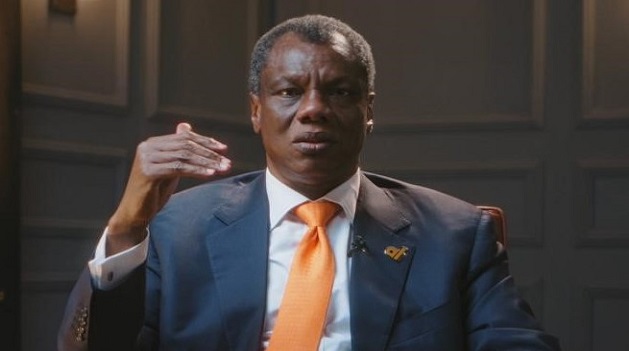
By Austin Okere
Today’s leaders must be effective communicators who embrace depolarization, paradox, and compassion—and who take action without fear.
- As society faces a range of global challenges, it looks for leaders who can create positive change and share responsibility across sectors.
- Today’s leaders must reject black-and-white thinking, be comfortable with uncertainty, and empathize with others.
- Leaders are distinguished by whether their actions and attitudes are influenced by courage or fear.

Effective leadership plays a critical role in shaping the success of any society or organization. As American author John Maxwell declared, “Everything rises and falls on Leadership”
In our complex and connected world, society faces mounting environmental and humanitarian crises. Leaders must help drive societal change by taking into account not just profits, but also people and the planet. They must help society determine what type of growth is necessary and sustainable and what type of growth we can no longer afford. To accomplish this, today’s leaders need three essential traits:
They must be visionary. Bold, forward-thinking leaders see farther and more clearly than others, often anticipating what lies ahead. They motivate teams to perform at their best.
They must be collaborative. Such leaders encourage a greater diversity of ideas to flourish, and they make sure no one individual or entity shoulders the entire burden of any task. Collaborative leaders know how to share responsibility across all sectors to solve pressing societal challenges.
They must be willing to learn. Emerging technologies such as artificial intelligence and large language models introduce leaders to new challenges on a regular basis. Leaders must be ready to constantly learn, unlearn, and relearn diverse skill sets to keep up with the changes. By embracing innovation and creativity, leaders can move beyond current restrictions and unlock more possibilities, iteratively creating new and improved realities.
Essential Competencies
To discover what qualities accomplished leaders should possess, Ausso Leadership Academy conducted an inquiry in partnership with AACSB. The academy is a mentorship program in Lagos, Nigeria, that I founded for executives and entrepreneurs. Our investigation showed us that leaders must develop capacity in three areas: depolarization, paradox, and compassion. These skills are so important for future leaders that business schools should provide opportunities throughout their curricula for students to develop them.
I speak about these capacities in a YouTube video on the #BusinessInsightsWithAO channel, but here’s a closer look at each one:
Depolarization is the ability to reject black-and-white thinking, embrace complexity, and explore alternative perspectives. It requires self-awareness, an open mind, and a nonjudgmental attitude that allows to engage in meaningful dialogue.
A professor could teach students about depolarization by dividing them into two groups that stand at opposite ends of the room and study a graphic on the floor. From one perspective, the graphic will look like the figure 6; from the other perspective, it will look like the figure 9. Students should discuss how they see the graphic from their position, and then switch sides with their peers.
This exercise teaches students that they must learn to listen to each other, acknowledge their different viewpoints, and find common ground. It shows them that people can create a more peaceful and harmonious world when they come together with respect, empathy, and understanding.
Paradox is the willingness to embrace uncertainty and acknowledge the interdependence of opposing forces. It involves operating with a curious and inquisitive mindset, recognizing personal limitations, and being honest with ourselves and others.
A faculty member could teach the concept of paradox by giving all students pieces of a jigsaw puzzle that depicts an elephant. Based on the pieces in their hands, students should try to guess what the whole image is. Those who see only the tail might think they’re looking at a rope; those who see only the thick legs might think they’re looking at a tree. The true image only emerges when all the pieces are put together.
Through this exercise, students are invited to explore the complexities of the human experience. They learn that sometimes the things that seem irreconcilable can be connected in ways that are not immediately apparent.
Compassion is the capacity to empathize with and understand different cultural backgrounds and personal experiences. It necessitates maintaining a broad perspective, avoiding confirmation bias, and striving to understand as well as to be understood.
Compassionate leaders radiate warmth, kindness, and understanding; they exude a sense of serenity that eases the burdens of those around them. Quite often, a high-performance member of the team falls on challenging times and simply needs an empathetic ear. If the compassionate leader offers a comforting word, the team member will feel a sense of hope, knowing that someone is willing to help.
To teach compassion, a professor can ask students what they would do if a team member dropped the ball on an important project. The class is likely to respond that the colleague should be removed from the team. Then the professor should remind the class that the individual is historically a high performer and suggest that the person might be going through some personal difficulties. At this point, students might view the situation differently and conclude that they should support their team member through this tough patch by showing compassion.
The Importance of Generative Listening
In addition to developing these crucial capacities, leaders must possess the ability to communicate effectively. Communication is always a two-way track, and the key part is generative listening, which happens when people listen intently, with curiosity and openness, to what each person has to say. Generative listening is not about waiting for a preconceived answer, but about creating spaces where others can feel heard, valued, and understood.
Generative listeners are not just waiting for their turn to speak, but truly seeking to understand and learn from each other. They offer words of encouragement, support, and affirmation, making each person feel safe to share their thoughts and feelings. They reflect back what they hear, ask thoughtful questions that deepen the conversation, and create spaces of respect and authenticity.
To become empathetic listeners, leaders must quiet the voices of judgment, cynicism, and fear and open themselves to the expectation of learning something new. They must step outside themselves, realizing that the truth is more conditional and experiential than their lone egos can fathom. Sometimes leaders are so arrogant that they are fully confident in their own incorrect views. Their need to be right trounces their need to learn what is true. But truth is the essential foundation for producing good outcomes.
A professor can teach generative listening by having students imagine a mathematics classroom for children. In this class, the teacher presents an addition problem to a young student named Mary: “If I give you these two apples and then I give you two more, how many apples will you have?” Mary confidently replies, “Five.” Instead of chiding Mary for her incorrect answer, the teacher should ask how she came up with that number. At that point, the teacher would learn that Mary already has an apple in the lunch bag that her mother packed.
Professors also can show students the power of generative listening by inviting them to share their experiences and learn from each other.
An Analysis of Leadership Attitudes
As a leadership consultant and an entrepreneur-in-residence at Columbia Business School in New York City, I spend a great deal of time considering the traits that distinguish leaders from each other. I have determined that one critical quality is their attitudes toward delivery (producing the desired goods and services) and accountability (taking responsibility for how the work gets done). Are their attitudes influenced by courage or by fear?
To be continued


General News
The Mood Market to Light Up Lagos with a Rooftop Gifting, Food & Lifestyle Fair this Christmas

This festive season, The Mood Market by Riella Luxé invites Lagosians and tourists to experience Christmas in a softer, more intentional way with her First Edition Christmas Fair, taking place on Monday, December 22, 2025, at Maison Fahrenheit VI (Rooftop) from 11:00 a.m. to 11:00 p.m. Entry is free and open to the public.

Designed as a lifestyle-led Christmas fair, The Mood Market is more than a shopping event. It is a curated rooftop experience built around mood, gifting, festive food, music, and community. The fair brings together intentional brands across candles, beauty, fashion, art, gourmet treats, and festive food offerings, all set against the Lagos skyline.
True to its name, The Mood Market allows guests to shop how they feel. The fair is thoughtfully curated into distinct mood zones, making it easier for attendees to navigate, connect with brands, and discover meaningful gifts that reflect emotion and intention rather than excess.
The defining moment of the evening will take place at 8 p.m., with The Mood Market Christmas Tree Light-Up Countdown, a first-of-its-kind festive moment aimed at creating a new Lagos Christmas tradition. The live countdown and lighting of the Christmas tree will symbolically mark “Lighting Up Lagos Christmas,” bringing guests together in a shared holiday celebration.
Food plays a central role in the experience, with a variety of festive food vendors offering comfort meals, holiday-inspired bites, and celebratory treats designed to complement the relaxed, lounge-style atmosphere. Guests are encouraged to eat, unwind, and stay, turning the fair into a full-day-to-night Christmas experience rather than a quick shopping stop.
Beyond shopping and food, the event promises an atmosphere designed for presence and relaxation. With DJ-led music throughout the day and into the evening, a dedicated lounge and chill area, and an open rooftop setting, guests can enjoy good music, festive meals, and conversations under the night sky.
Speaking on the vision behind the fair, founder and curator Gabriella P. Okechukwu shares: “The Mood Market was born out of a desire to change how people experience Christmas shopping. Instead of overwhelming fairs, we created a curated, rooftop space where people can shop their moods, enjoy good food and music, and find gifts that truly mean something. The Christmas tree light-up represents our vision of building a shared festive moment Lagos can return to every year,” Gabriella P. Okechukwu, Founder & Curator, The Mood Market by Riella Luxé
By blending intentional shopping, festive food, music, atmosphere, and tradition, The Mood Market by Riella Luxé positions itself as a refreshing addition to Lagos’ Christmas calendar; one that prioritizes mood, memory, and meaningful celebration.

Jumia Nigeria has launched its highly anticipated December Holiday Sale, unlocking a wide range of festive deals and savings for shoppers across the country from December 2 to December 28.

This year’s campaign goes beyond seasonal discounts, introducing a special sub-series titled “Celebrate Naija / Naija is Game,” running from December 15 to January 18. The initiative spotlights uniquely Nigerian themes and experiences, infusing the holiday season with cultural relevance and local inspiration.
The December Holiday Sale delivers a compelling mix of value, quality, and discovery, featuring the popular 12 Days of Christmas promotions, exclusive Brand Days, and deep-discount Anchor Deals across multiple product categories.
Speaking on the campaign, Temidayo Ojo, Chief Executive Officer, Jumia Nigeria, said the sale reflects the platform’s commitment to meeting the evolving needs of Nigerian consumers.
“The December Holiday Sale is our way of helping Nigerians celebrate the season without compromise. Today’s shoppers are value-driven, they want quality, convenience, and affordability. This campaign brings all three together with festive deals that address real household needs and aspirations,” Ojo said.
He added that strong Black Friday momentum continues on the platform, offering customers extended savings opportunities throughout the festive period.
On the creative direction behind the campaign, Lere Awokoya, Chief Marketing Officer, Jumia Nigeria, noted that the 2025 holiday sale is rooted in everyday moments that matter to customers.
“This year’s campaign is built around the joy of giving and daily value. ‘Celebrate Naija’ brings that spirit to life through culturally relevant themes and surprises that resonate across regions and lifestyles. We’re excited for Nigerians to discover everything we’ve curated—from gifts and essentials to dream purchases,” Awokoya said.
Shoppers can access deals across key categories including electronics, home and kitchen, fashion, beauty and personal care, and everyday essentials, with seamless online price discovery supported by Jumia’s nationwide logistics network.
Extending beyond major urban centres, Jumia’s fulfilment and pick-up infrastructure ensures customers in secondary cities and peri-urban communities enjoy the same festive prices without additional travel costs, turning convenience into tangible value.
With thousands of deals going live throughout the season, customers can expect faster deliveries, extensive pick-up options, and transparent pricing, making holiday shopping simpler and more affordable nationwide.

By Blaise Udunze
Nigeria’s refining crisis is one of the country’s most enduring economic contradictions. Africa’s largest crude oil producer, strategically located on the Atlantic coast and home to over 200 million people, has for decades depended on imported refined petroleum products. This illogicality has drained foreign exchange, weakened the naira, distorted investment incentives, and hollowed out state institutions. Instead of catalysing industrialisation, Nigeria’s oil wealth became a mechanism for capital flight, rent-seeking, and institutional decay.

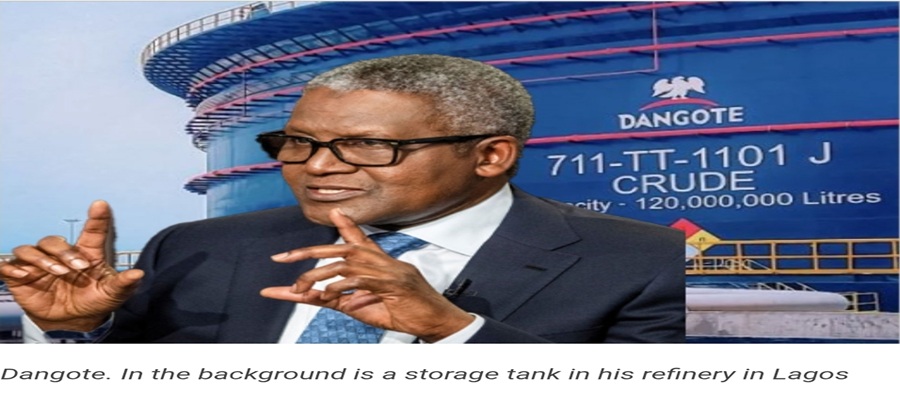
Dangote
With the challenges surrounding the refining of crude oil, the establishment of Dangote Refinery signifies an important historic moment. The refinery promises to reduce fuel imports to a bare minimum, sustain foreign exchange growth, ensure there is constant fuel domestically, and strategically position Nigeria as a regional exporter of refined oil products if functioned at full capacity. Dangote Refinery symbolises what private capital, technology, and ambition can achieve in Africa following years of fuel queues, subsidy scandals, and global embarrassment.
Nigerians must have a rethink in the cause of celebration. Nigeria’s refining problem is not simply about capacity; it is about systems. Without addressing the policy failures and institutional weaknesses that made Dangote an exception rather than the rule, the country risks replacing one failure with another, this time cloaked in private-sector success.
For a fact, Nigeria desperately needs the emergence of Dangote refinery, and its success is in the national interest. Hence, this is not an argument against the Dangote Refinery. But history warns that structural failures are not solved by scale alone. Over the year, situations have shown that without competition and strong institutions, concentrated market power, whether public or private, can undermine price stability, energy security, and consumer welfare.
The Long Silence of Refinery Investments
Perhaps the most troubling question in Nigeria’s oil history is why none of the global oil majors like Shell, ExxonMobil, Chevron, Total, or Agip has built a major refinery in Nigeria for over four decades. These companies operated profitably in Nigeria, extracted their crude, and sold refined products back to the country, yet never committed capital to domestic refining.
Over the period, it has been shown that policy incoherence has been the cause, not a matter of technical incapacity, such as price controls, resistant licensing processes, subsidy arrears, frequent regulatory changes, and political interference, which made refining an unattractive investment. Importation, by contrast, offered quick returns, lower political risk, and guaranteed margins, often backed by government subsidies.
Nigeria carelessly designed a system that rather rewarded importers and punished refiners. Dangote did not succeed because the system improved; he succeeded despite it. His refinery exists largely because of the concessions from the government, exceptional financial capacity, political access, and a willingness to absorb risks that institutions should ordinarily mitigate. This raises a deeper concern; when institutions fail, progress becomes dependent on extraordinary individuals rather than predictable systems.
The Tragedy of NNPC Refineries
If private investors stayed away, Nigeria’s state-owned refineries should have filled the gap. Instead, the Port Harcourt, Warri, and Kaduna refineries became monuments to mismanagement. Records have shown that between 2010 and 2025, Nigeria reportedly wasted between $18 billion and $25 billion, over N11 trillion, just for Turn Around Maintenance and rehabilitation. Kaduna Refinery alone is estimated to have consumed over N2.2 trillion in a decade.
Despite these expenditures, output remained negligible. This was not merely a technical failure but a governance one. Contracts were poorly monitored, accountability was absent, and consequences were nonexistent. In functional systems, such outcomes trigger investigations, sanctions, and reforms. In Nigeria, the cycle simply repeated itself, eroding public trust and deepening dependence on imports.
Where Is BUA?
Dangote is not the only Nigerian conglomerate to announce refinery ambitions. In 2020, BUA Group unveiled plans for a 200,000-barrels-per-day refinery. Years later, progress remains unclear, timelines have shifted, and execution appears stalled.
This pattern is revealing. When multiple large investors struggle to translate plans into reality, the issue is not ambition but environment. Refinery projects in Nigeria appear viable only at a massive scale and with extraordinary political leverage. Smaller or mid-sized players are effectively crowded out, not by market forces, but by systemic dysfunction.
Policy Failure and the Singapore Comparison
Nigeria often aspires to emulate Singapore’s refining and petrochemical success. The comparison is instructive. Singapore has no crude oil, yet built one of the world’s most sophisticated refining hubs through consistent policy, investor protection, infrastructure planning, and regulatory certainty.
Nigeria chose a different path: price controls, subsidies, weak contract enforcement, and politically motivated policy reversals. Refineries became tools of patronage rather than productivity. Capital exited, infrastructure decayed, and import dependence deepened. The outcome was predictable.
The Cost of Import Dependence
For years, Nigeria spent billions of dollars annually importing petrol, diesel, and aviation fuel. This placed constant pressure on foreign reserves and the naira. Petrol subsidies alone were estimated at N4-N6 trillion per year, often exceeding national spending on health, education, or infrastructure.
Even after subsidy removal, legacy costs remain: distorted consumption patterns, weakened public finances, and entrenched interests built around importation. These interests did not disappear quietly.
Who Really Benefited from the Subsidy?
Although framed as pro-poor, fuel subsidies disproportionately benefited importers, traders, shipping firms, depot owners, financiers, and politically connected intermediaries. Smuggling across borders meant Nigerians subsidised fuel consumption in neighbouring countries.
Ordinary citizens received marginal relief at the pump but paid far more through inflation, deteriorating infrastructure, and underfunded public services. The subsidy system functioned less as social protection and more as elite redistribution.
The Traders’ Dilemma
Why did major fuel marketers like Oando invest in refineries abroad but not in Nigeria? Again, incentives explain behaviour. Importation offered faster returns, lower capital requirements, and political insulation. Domestic refining demanded long-term investment under unstable rules.
In an irrational system, rational actors optimise accordingly. Importation thrived not because it was efficient, but because policy made it so.
FDI and the Confidence Problem
Sustainable Foreign Direct Investment follows domestic confidence. When local investors, who best understand political and regulatory risks, avoid long-term industrial projects, foreign investors take note. Capital flows to environments with predictable pricing, rule of law, and policy consistency.
Nigeria’s challenge is not attracting speculative capital, but building conditions for patient, productive investment.
Dangote and the Monopoly Question
Dangote Refinery deserves credit. But scale brings power, and power demands oversight. If importers exit and no competing refineries emerge, Dangote could dominate refining, pricing, and supply. Nigeria’s experience with cement, where domestic production rose but prices soared due to limited competition, offers a cautionary tale.
Markets function best with competition. Without it, price manipulation, supply risks, and weakened energy security become real dangers, especially in countries with fragile regulatory institutions.
The Way Forward: Competition, Not Replacement
Nigeria does not need to weaken Dangote; it needs to multiply Dangotes. The goal should be a competitive refining ecosystem, not a replacement of a public monopoly with a private monopoly.
This requires transparent crude allocation, open access to pipelines and storage, fair pricing mechanisms, and strong antitrust enforcement. State refineries must either be professionally concessional or decisively restructured. Stalled projects like BUA’s should be unblocked, and modular refineries should be supported.
The Litmus Test
Nigeria’s refining crisis was decades in the making and cannot be solved by one refinery, however large. Dangote Refinery is a turning point, but only if embedded within systemic reform. Otherwise, Nigeria risks trading one form of dependency for another.
The true test is not whether Nigeria can refine fuel, but whether it can build fair, open, and resilient institutions that serve the public interest. In refining, as in democracy, excessive concentration of power is dangerous. Competition remains the strongest safeguard.
Blaise, a journalist and PR professional, writes from Lagos and can be reached via: [email protected]

The Mood Market to Light Up Lagos with a Rooftop Gifting, Food & Lifestyle Fair this Christmas

Access Holdings Shareholders Approved to Raise N40bn Capital Through Private Placement

Jumia Kicks Off December Holiday Sale, Bringing Festive Deals to Shoppers Nationwide

Dangote, Monopoly Power, and Political Economy of Failure

OAU, Baptist Day School Oluponna honour Akano with Distinguished Alumnus Awards

Nigeria Records Highest Weekly Cyberattacks in Africa — Report

Cyber Tsunami Hits Nigeria as Breaches Surge 1,047%, esentry Q3 Report Reveals

Jumia’s Data Shows Nigerians Turning to Digital Retail to Navigate Inflation Pressures

GenAI Adoption Among African workers Outpace Global Peers

How Insecurity is Bleeding Nigeria about $15bn Annually and Destroying Its Economic Future




 E-Business3 days ago
Nigeria Police Arrest Okitipi, Nigerian Allegedly Linked to Microsoft 365 Hack

 E-Financial3 days ago
World Bank to Approve $500m Loan for Nigeria Today

 News3 days ago
NITDA Partners OGP to Drive Presidential Digital Goals

 E-Financial3 days ago
Customs Slam 3 Percent Surcharge on Banks over Delayed Revenue Remittance

 Telecom3 days ago
Why Econet Wireless is Switching to VFEX
 General News2 days ago
Jumia Kicks Off December Holiday Sale, Bringing Festive Deals to Shoppers Nationwide
 E-Financial2 days ago
Access Holdings Shareholders Approved to Raise N40bn Capital Through Private Placement

 Broadcasting2 days ago
NIMC rolls out Pre-Enrolment Portal for seamless NIN registration