

General News
Top Services Rendered By “Quack” Doctors in Nigeria Revealed


Latest weekly poll results released by NOIPolls Limited have revealed that about 2 in 10 Nigerians (24%) may have directly or indirectly been victims of quack or sub-standard medical practitioners.
The poll also identified Typhoid and Malaria Fever as the most prevalent ailments for which majority of the patients (50%) have been treated for by sub-standard medical practitioners, followed by pregnancy and childbirth (11%).
Furthermore, respondents were of the opinion that the health condition of victims became worse after treatment. These were the key findings from the Sub-standard or Quack Medical Practitioners in Nigeria Snap Poll conducted in the week of January 13th 2014.
The researchers said that recent media reports in Nigeria have observed an upsurge in the prevalence of sub-standard or quack medical practitioners, with attendant effects on the physical wellbeing of the populace and life expectancy of the average Nigerian.
“In 2013 alone, there were several reports of arrests made by the Nigerian Police Force in various states, especially in Lagos state. For instance, the Rivers State chapter of the Nigerian Medical Association (NMA) had the police arrest 12 quack medical doctors and also had illegal hospitals in the state shut down. Similarly, several hospitals in Lagos have been closed down for practicing without medical licenses. Other cases include that of Gabriel Onyema and Stephen Nwankwo, who were arrested for causing the deaths of a number of pregnant women, while performing illegal surgical procedures in Lagos,” the NOIPolls said.
Despite annual budgetary allocations to the health sector by various levels of government, the sector still grapples with several challenges: poor funding of the health sector; quality of graduates emanating from medical schools; deplorable conditions of health facilities & infrastructure; and poor remuneration and emoluments for medical workers, all these resulting in incessant strikes and labour actions, giving rise to the illegal practice of medicine in the country by individuals.
In the light of these, NOIPolls conducted its latest poll on the prevalence of sub-standard/quack medical practitioners in Nigeria; in order to gauge the perception of Nigerians regarding their knowledge of the existence of quack medical practitioners and effects on the country’s health sector.
Respondents to the poll were asked five specific questions. Firstly, in order to establish the awareness of the prevalence of sub-standard and quack medical practitioners in Nigeria, respondents who had an understanding of quackery were asked: Are you aware of the growing prevalence of sub-standard or quack medical practitioners in Nigeria? Overall, majority (79%) of the respondents answered positively to being aware of the growing prevalence of sub-standard or medical practitioners in Nigerian, while 21% of Nigerians responded negatively.
Further analysis, by geo-political zones, indicates that the North-West zone (92%) had the highest proportions of respondents that showed an awareness of the rising prevalence of quack medical practitioners, followed by the North-East zone with 88% and the South-West zone with 83%.
Furthermore, in order to gauge the understanding of Nigerians regarding who really is a sub-standard or quack medical practitioner, respondents were asked: Who is a sub-standard or quack medical practitioner?
Findings revealed that Nigerians have various perceptions on the concept of Quackery, giving a variety of definitions on who is a sub-standard or quack medical practitioner.
Majority (44%) of the respondents, have an understanding that sub-standard or quack medical practitioners are “practitioners with incomplete qualifications”; while 35% of respondents believe they are “individuals that pretend to have medical knowledge”’.
Furthermore, 8% say they are ‘individuals that use unproven and unscientific remedies’; 2% say they are ‘student practitioners’; and another 2% say they are ‘Native Doctors’. However, about 8% of those polled do not have a definitive idea about quack medical practitioners.
Analysis based on geo-political zones revealed that the North-Central zone (52%) had the highest proportion of Nigerians who define quackery as “practitioners with incomplete qualifications”, while the South-West zone (45%) accounted for the largest proportion of Nigerians (45%) that believe quack medical practitioners are “individuals that pretend to have medical knowledge,” according to result of the survey.



Okpi Bernard Adaafu, a legal practitioner, has dragged the federal government of Nigeria before the Federal High Court in Abuja, challenging the legality of a controversial health data sharing agreement between Nigeria and the United States of America.

The suit names the President of Nigeria, the Attorney-General of the Federation and Minister of Justice, the Federal Ministry of Health and Social Welfare, the Senate President of Nigeria, and the Speaker of the Nigerian House of Representatives as defendants.
In the originating summons filed before the court, Adaafu is asking the court to determine whether the bilateral health cooperation Memorandum of Understanding signed between Nigeria and the United States violates the constitutional rights of Nigerian citizens, particularly their rights to privacy and protection of personal data.
According to court documents, the agreement, signed on December 19, 2025, permits the collection and transfer of sensitive health information of Nigerians to the United States.
The data reportedly includes medical records, blood samples, pathogen testing information, and DNA or genetic sequencing data.
The plaintiff argued that while only a summarized version of the agreement has been made public, a related Specimen Sharing Agreement allegedly obliges Nigeria to provide biological samples and related data to the United States within five days of request and could remain in force for up to 25 years.
He contended that such an arrangement, if implemented, would violate the National Health Act 2014, which guarantees the confidentiality of patients’ medical records, as well as the Nigeria Data Protection Act 2023, regulating the processing and cross-border transfer of personal data.
The suit further argued that the agreement breaches Section 37 of the Constitution of the Federal Republic of Nigeria 1999, which guarantees the privacy of citizens.
Adaafu also raised concerns about statements suggesting that the programme would provide substantial support to Christian faith-based healthcare institutions.
According to him, the inclusion or perceived emphasis on religious affiliation within a national healthcare framework is unnecessary, constitutionally questionable, and capable of triggering avoidable social tension in a multi-faith society such as Nigeria.
He argued that healthcare interventions funded through international cooperation must remain neutral, inclusive, and accessible to all Nigerians regardless of religion, ethnicity, or social background.
Another issue raised in the suit is the alleged exclusion of the National Assembly of Nigeria from the process.
The plaintiff maintained that international agreements with significant national implications must undergo legislative scrutiny and approval before implementation.
Among the reliefs sought, Adaafu asked the court to issue an order prohibiting discriminatory agreements based on religion, ethnicity, or other protected characteristics.
He also requested a declaration that the agreement violates both the National Health Act 2014 and the Nigeria Data Protection Act 2023.
In addition, the plaintiff is seeking an order suspending the implementation of the agreement, which is scheduled to commence on April 1, 2026.
Explaining the reason for filing the suit, Adaafu said he decided to approach the court because of the potential implications of the agreement on the privacy, sovereignty, and constitutional rights of more than 200 million Nigerians.
He noted that the issues raised in the suit deserve public awareness and national discourse, stressing that transparency and accountability are necessary in matters involving citizens’ sensitive medical and genetic information.

Nigeria’s leading instant noodle brand, Indomie, is backing a cross-country cycling journey by 15-year-old autism advocate Kanyeyachukwu Tagbo, who is embarking on a Guinness World Record-bound ride from Enugu to Lagos to raise awarenessabout autism and promote inclusion.

Tagged “Journey of Possibility, #RideWithKanye,” the expedition will see the young cyclist travel across several Nigerian cities as he advocates for greater understanding and support for individuals living with Autism Spectrum Disorder and their families.
The initiative represents an official attempt to set a milestone with Guinness World Records as the youngest autistic individual to complete a cross-country cycling journey.
The ride is scheduled to conclude in Lagos on World Autism Awareness Day, reinforcing the global call for empathy, acceptance, and opportunity for people on the autism spectrum.
Speaking on the brand’s involvement, Temitope Ashiwaju, Group Corporate Communications and Events Manager, said the initiative reflects Indomie’s enduring commitment to celebrating courageous Nigerian children and amplifying stories that inspire hope.
“At Indomie, we believe every child deserves the opportunity to dream boldly and achieve extraordinary things,” he said. “Kanyeyachukwu’s journey is a powerful reminder that determination and talent can transcend limitations. We are proud to support his mission to inspire understanding, acceptance, and hope for individuals living with autism.”
Kanyeyachukwu first captured national attention when he was recognised at the Indomie Heroes Awards, an initiative by Indomie that celebrates courageous Nigerian children who have demonstrated exceptional bravery, resilience, and impact in their communities.
Since receiving the recognition, he has continued to use advocacy, creativity, and public engagement to reshape perceptions about autism and inspire conversations around inclusion.
Through the “Journey of Possibility,” Kanyeyachukwu hopes to demonstrate that individuals on the autism spectrum possess extraordinary potential when given the opportunity and support to thrive.
As a key supporter of the initiative, Indomie will provide branded cycling kits and support materials for cyclists accompanying him throughout the route, alongside financial support and brand activations at designated stops along the journey.
These engagements will include community interactions aimed at educating the public, encouraging dialogue, and fostering broader participation in autism advocacy.
To ensure the young cyclist’s safety and well-being throughout the expedition, a dedicated safety, medical, and logistics team will accompany the ride.
Host communities along the route are also expected to organise welcome receptions and awareness activities as the team passes through their cities.
The journey will culminate in a celebratory reception in Lagos, bringing together supporters, advocates, community leaders, and partners to mark the completion of the ride and reinforce the call for greater awareness and inclusion for people on the autism spectrum.
Through initiatives like the Indomie Heroes Awards and its support for the “Journey of Possibility, #RideWithKanye,” Indomie continues to champion young Nigerians whose courage, determination, and achievements demonstrate the limitless possibilities that emerge when children are empowered to pursue their dreams.
General News
Interswitch Advocates Trust-Driven Infrastructure as Cornerstones of Africa’s Cross-Border Capital Future

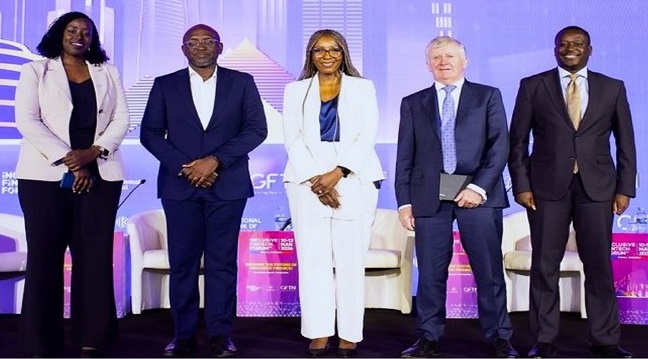
Interswitch Group, one of Africa’s leading integrated payments and digital commerce companies, has reaffirmed its commitment to advancing a seamless and inclusive financial ecosystem across the continent at the recently concluded Inclusive Fintech Forum 2026, which held at the Kigali Convention Centre, in Rwanda from 10 -12 March 2026.

Speaking during a high-level session themed “Financial Centres & the Future of Cross-Border Capital” Akeem Lawal, Managing Director, Payments Processing & Switching (Interswitch Purepay), highlighted the critical factors shaping the next phase of financial integration across Africa.
He noted that while rapid advancements in digital technology have made it possible for capital to move across borders at unprecedented speed, the ultimate destination and impact of such capital flows are determined by trust, robust infrastructure, and strategic collaboration.
According to Lawal, as Africa’s economies continue to digitize and integrate, stakeholders must prioritize building resilient payment systems and fostering partnerships that enhance transparency, interoperability, and shared prosperity.
He emphasized that sustainable growth in cross-border financial flows will depend not only on technological innovation but also on the collective ability of institutions to inspire confidence and enable seamless transactions at scale.
Throughout the forum’s engagements, Interswitch, as one of Africa’s leading and pioneering digital technology enablers reiterated its long-standing vision of fostering a prosperous and interconnected Africa. The company continues to champion the development of a secure, technologically advanced digital payments ecosystem designed to connect and empower individuals, businesses, governments, and communities across the continent.
Participation at the Inclusive Fintech Forum underscores Interswitch’s strategic focus on driving thought leadership, strengthening regional collaboration, and supporting initiatives that accelerate financial inclusion and economic resilience.
As Africa navigates the evolving landscape of digital finance and cross-border commerce, Interswitch remains committed to delivering innovative solutions and partnerships that unlock opportunities for growth and shared value creation.

Crypto Transactions Hit $96Bn in Nigeria -SEC

PwC Warns Nigeria Telcos of AI Fraud Risks

Lawyer Drags FG Court over Controversial Health Data Sharing Agreement with US

Elumelu Tags Elon Musk, Disowns AI-Generated Scam Video

FG Determined to Protect Rights, Privacy Online- NITDA

Kaspersky Discovers New Phishing Campaign Exploiting Google Tasks Notifications to Steal Corporate Credentials

esentry 2025 Report Shows Healthcare, Financial Services and Telecoms as Staging Grounds for Increased Cyberattacks in Africa

AfDB, UNDP Launch $10Bn AI Initiative for Africa

Mutual Benefits Assurance Settles ₦5.9bn Claims in January 2026

MultiChoice Suspends Yearly DStv Price Hike as Canal+ Pushes Growth




 Telecom2 days ago
VDT Communications Achieves Two Prestigious Certifications ISO /IEC 27001:2022, ISO/IEC 27032:2023 Reinforcing its Leadership in Broadband Service Provision

 E-Financial1 day ago
CBN Rolls Out New Rules for Safer Instant Payments, More Customer Control

 Telecom1 day ago
MTN Nigeria Races Ahead in Fibre Broadband Market

 News1 day ago
NIMMME Inaugurates Engr. Michael Orekyeh as 13th National Chairman in Abuja

 E-Financial1 day ago
CBN Tightens BVN Rules to Curb Fraudulent Banking Transactions

 E-Financial1 day ago
Nova Bank Appoints Jude Anele as Managing Director/CEO

 E-Business1 day ago
Tech Expert Unveils BAT-BOT AI App to Curb Fake News ahead of 2027 Elections
- Broadcasting2 hours ago
Spotify’s Loud & Clear Report Reveals Over ₦60Bn Revenue for Nigerian Artists in 2025