

General News
Top Services Rendered By “Quack” Doctors in Nigeria Revealed


Latest weekly poll results released by NOIPolls Limited have revealed that about 2 in 10 Nigerians (24%) may have directly or indirectly been victims of quack or sub-standard medical practitioners.
The poll also identified Typhoid and Malaria Fever as the most prevalent ailments for which majority of the patients (50%) have been treated for by sub-standard medical practitioners, followed by pregnancy and childbirth (11%).
Furthermore, respondents were of the opinion that the health condition of victims became worse after treatment. These were the key findings from the Sub-standard or Quack Medical Practitioners in Nigeria Snap Poll conducted in the week of January 13th 2014.
The researchers said that recent media reports in Nigeria have observed an upsurge in the prevalence of sub-standard or quack medical practitioners, with attendant effects on the physical wellbeing of the populace and life expectancy of the average Nigerian.
“In 2013 alone, there were several reports of arrests made by the Nigerian Police Force in various states, especially in Lagos state. For instance, the Rivers State chapter of the Nigerian Medical Association (NMA) had the police arrest 12 quack medical doctors and also had illegal hospitals in the state shut down. Similarly, several hospitals in Lagos have been closed down for practicing without medical licenses. Other cases include that of Gabriel Onyema and Stephen Nwankwo, who were arrested for causing the deaths of a number of pregnant women, while performing illegal surgical procedures in Lagos,” the NOIPolls said.
Despite annual budgetary allocations to the health sector by various levels of government, the sector still grapples with several challenges: poor funding of the health sector; quality of graduates emanating from medical schools; deplorable conditions of health facilities & infrastructure; and poor remuneration and emoluments for medical workers, all these resulting in incessant strikes and labour actions, giving rise to the illegal practice of medicine in the country by individuals.
In the light of these, NOIPolls conducted its latest poll on the prevalence of sub-standard/quack medical practitioners in Nigeria; in order to gauge the perception of Nigerians regarding their knowledge of the existence of quack medical practitioners and effects on the country’s health sector.
Respondents to the poll were asked five specific questions. Firstly, in order to establish the awareness of the prevalence of sub-standard and quack medical practitioners in Nigeria, respondents who had an understanding of quackery were asked: Are you aware of the growing prevalence of sub-standard or quack medical practitioners in Nigeria? Overall, majority (79%) of the respondents answered positively to being aware of the growing prevalence of sub-standard or medical practitioners in Nigerian, while 21% of Nigerians responded negatively.
Further analysis, by geo-political zones, indicates that the North-West zone (92%) had the highest proportions of respondents that showed an awareness of the rising prevalence of quack medical practitioners, followed by the North-East zone with 88% and the South-West zone with 83%.
Furthermore, in order to gauge the understanding of Nigerians regarding who really is a sub-standard or quack medical practitioner, respondents were asked: Who is a sub-standard or quack medical practitioner?
Findings revealed that Nigerians have various perceptions on the concept of Quackery, giving a variety of definitions on who is a sub-standard or quack medical practitioner.
Majority (44%) of the respondents, have an understanding that sub-standard or quack medical practitioners are “practitioners with incomplete qualifications”; while 35% of respondents believe they are “individuals that pretend to have medical knowledge”’.
Furthermore, 8% say they are ‘individuals that use unproven and unscientific remedies’; 2% say they are ‘student practitioners’; and another 2% say they are ‘Native Doctors’. However, about 8% of those polled do not have a definitive idea about quack medical practitioners.
Analysis based on geo-political zones revealed that the North-Central zone (52%) had the highest proportion of Nigerians who define quackery as “practitioners with incomplete qualifications”, while the South-West zone (45%) accounted for the largest proportion of Nigerians (45%) that believe quack medical practitioners are “individuals that pretend to have medical knowledge,” according to result of the survey.


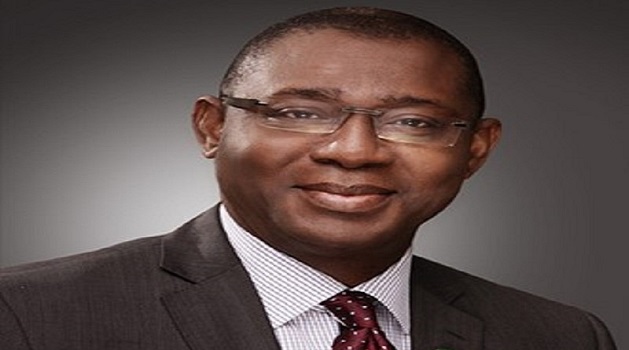
Dr. Evans Woherem, an award-winning African technology researcher, analyst, and writer, has proposed a comprehensive and implementable strategy to end terrorism, banditry, and criminal violence in Nigeria, warning that the country’s prolonged insecurity has reached a critical point that demands urgent, coordinated action.

Titled “A Comprehensive Strategy for Ending Terrorism, Banditry, and Criminal Violence in Nigeria: A Pragmatic, Multi-Layered, and Implementable Framework,” the paper presents a holistic roadmap designed to reverse more than a decade of escalating violence that has claimed thousands of lives, displaced communities, weakened local economies, and eroded public trust in governance.
According to him, insecurity has become deeply entrenched in everyday life across the country. “Terrorism, banditry, and criminal violence have become so commonplace that they now dominate daily conversations among Nigerians,” Dr. Woherem noted, adding that while the crisis is most acute in the North-East, North-West, and North-Central regions, “its effects are now being felt even in the southern parts of the country.”
Citing the 2025 Global Terrorism Index, which ranks Nigeria sixth globally in terms of terrorism impact, Dr. Woherem described the ranking as “a sobering statistical confirmation that terrorism still weighs heavily on the Nigerian state.”
The paper traces the roots of the crisis to the emergence of Boko Haram in 2009 and the subsequent rise of splinter groups such as ISWAP. It recalls high-profile incidents including the 2014 abduction of schoolgirls in Chibok, the Dapchi and Kankara kidnappings, and a series of mass abductions and attacks on schools and places of worship recorded in 2025.
Dr. Woherem observed that banditry, largely driven by ransom payments, “has spread across the entire nation, creating fear, weakening productivity, and pushing millions of households deeper into poverty.”
While acknowledging the role of military action, the author cautioned against relying on force alone. “Nigeria cannot defeat insurgency and violent crime through arms and ammunition alone,” he said. “Any sustainable solution must confront the internal conditions that allow insecurity to thrive.”
Among the key drivers identified in the paper by Dr. Woherem, are porous borders, arms proliferation, youth unemployment, economic stagnation, and persistent conflicts over land and resources, challenges Dr. Woherem stressed can be addressed through “a deliberate, intelligence-led, and whole-of-society approach.”
At the heart of the proposed framework, Woherem noted, is a call for intelligence-driven security operations, including the establishment of a National Counter-Insurgency and Intelligence Fusion Centre. “Security operations must be guided by accurate, actionable intelligence rather than fear-led mass actions that often harm civilians and undermine public trust,” he stated.
The paper also advocates comprehensive policing reforms, including the creation of constitutionally backed state police systems supported by a more specialized federal police structure. “Nigeria’s over-centralised policing model is structurally incapable of effectively addressing widespread criminality across such a vast and diverse country.”
Recognising the realities at the grassroots, Woherem calls for the formal regulation of community-based security groups, and noted that “ignoring vigilante groups is dangerous, and banning them outright is unrealistic,” but stressed that their roles must be clearly defined, regulated, and subject to strict oversight.
On border security, particularly in the Lake Chad Basin, the author warned that instability in neighbouring countries continues to fuel Nigeria’s insecurity. “No permanent solution is possible without deep regional cooperation,” he said, advocating an Integrated Border Management system supported by joint operations with neighbouring states.
The paper places strong emphasis on prevention through economic inclusion, youth employment, and skills development. “Jobs and income remain the most powerful tools for preventing recruitment into violent groups,” Dr. Woherem asserted, adding that immediate livelihood opportunities significantly weaken the appeal of extremist narratives.
He also called for structured deradicalisation and reintegration programmes, noting that “a humane, community-accepted process is essential for breaking cycles of violence and preventing relapse into extremism.”
Dr. Woherem further emphasised the need for governance reforms and accountability in the security sector. “Without transparency, oversight, and institutional integrity, even the best security strategies will fail,” he warned.
The white paper outlines a phased implementation plan from 2025 to 2030, beginning with intelligence fusion, pilot state police initiatives, community security registration, drone surveillance, and financial crackdowns on terror networks, before expanding into nationwide reforms and long-term consolidation.
Concluding, Dr. Woherem expressed cautious optimism about Nigeria’s future. “Nigeria can overcome this prolonged phase of insecurity,” he said, “but only through political will, coordinated institutions, and the active participation of society.”
He added that the proposed framework offers “a realistic pathway to restoring security, rebuilding public trust, and unlocking Nigeria’s vast human and economic potential.”


In a market where less than 3% of land is formally registered and property fraud remains systemic, infrastructure, not apps, is becoming the defining battleground for real estate innovation.

L-R: Ndifreke Ikokpu, COO, Sytemap, HRM Oba Akintoye Adeoye, President REDAN & Cholatte Odunlade-Akeji, Director, RightHome
That reality came into sharp focus on December 18, 2025, as the Real Estate Developers Association of Nigeria (REDAN) signed a Memorandum of Understanding (MoU) with Sytemap Technologies Limited, signaling a major industry endorsement of Sytemap’s land and real estate transaction infrastructure.
The partnership centers on RightHOME, a jointly developed digital real estate platform powered by Sytemap’s secure cloud infrastructure, mapping systems, transaction monitoring, and fraud-prevention architecture, with REDAN driving ecosystem adoption through its nationwide developer network.
Nigeria’s real estate sector processes transactions worth trillions of naira annually, yet remains heavily manual, fragmented, and vulnerable to disputes. Industry data suggests unresolved title issues alone lock up ₦36 trillion in dead capital, limiting access to finance and slowing development.
“This MoU represents a shift from fragmented digitization to coordinated infrastructure,” said Nnamdi Uba, CEO at Sytemap. “When the industry body itself aligns around shared standards, verification, and technology, innovation can finally scale responsibly.”
Under the agreement:
· REDAN will onboard registered developers and promote adoption of the platform as a trusted digital channel.
· Sytemap will deliver secure hosting, real-time monitoring, escrow-aligned transaction workflows, and compliance with Nigeria’s data protection regulations.
· Joint standards will be developed for digital verification, transparency, and asset mapping.
From a technology perspective, the partnership reflects a growing consensus that solving African real estate challenges requires deep infrastructure, not surface-level marketplaces. Fraud detection, uptime reliability, auditability, and regulatory alignment, areas often overlooked in proptech, are central to Sytemap’s approach.
HRM Oba Akintoye Adeoye, representing REDAN noted, “This collaboration allows developers to operate in a system where trust is embedded, not assumed. That is critical for long-term growth.”
For the broader tech ecosystem, the MoU stands out as a rare example of industry-led validation, where a national association formally aligns with a technology provider to modernize an entire sector.
Ndifreke Ikokpu, COO at Sytemap signed on behalf of Sytemap while Cholatte Odunlade – Akeji, CEO of RightHome signed on behalf of the Special Purpose Vehicle.
As pressure mounts to unlock housing finance, attract institutional capital, and reduce transaction risk, the REDAN–Sytemap partnership positions digital land infrastructure not as an optional upgrade, but as a foundational requirement for the future of real estate in Nigeria.
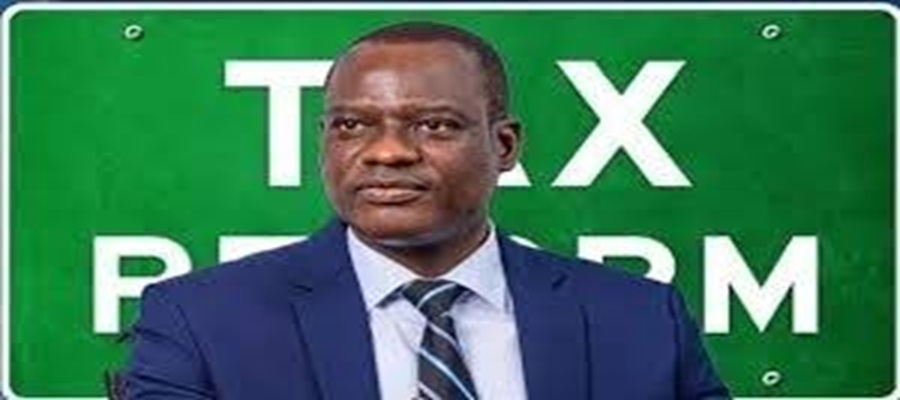
Taiwo Oyedele, Chairman of the Presidential Fiscal Policy and Tax Reforms Committee, has cautioned that failure to implement Nigeria’s new tax laws by January 1, 2026, would leave the vast majority of workers and businesses at a disadvantage.

Taiwo Oyedele
Speaking on Channels Television’s The Morning Brief, Oyedele said postponing the reforms would mean that “the bottom 98 per cent of workers remain overtaxed,” while businesses continue to grapple with multiple taxation and miss out on exemptions.
He added that small and unprofitable enterprises would still be subject to minimum taxes, and hidden VAT charges would keep driving up the cost of essentials such as food, healthcare, and education.
His comments come amid calls by former Vice President Atiku Abubakar, Labour Party’s 2023 presidential candidate Peter Obi, and several civil society groups for a suspension of the reforms. Oyedele argued that rather than halting implementation, specific areas of concern should be identified and corrected.
“So, we need to be clear about what we are asking for,” he said. “Even if it is established that there have been substantial alterations to what the National Assembly passed, my view will be to identify those provisions… and go ahead to implement the law as passed by the NASS, while you address the issues as to how they got in there in the first place.”
Oyedele acknowledged that even the version passed by lawmakers contained sections requiring amendment, citing issues with referencing and definitions.
He also addressed controversy over alleged discrepancies between the gazetted laws and those approved by the National Assembly, noting that without access to the officially harmonised bills certified by the clerk, it was difficult to determine differences.
He pointed to Section 41(8), which initially appeared to require a 20 per cent deposit but was later excluded from the final version, stressing that some draft materials circulating in the media did not originate from the House committee. “I think we should allow them do the investigation,” he said.
President Bola Tinubu has already signed the four tax reform bills into law, describing them as the most significant overhaul of Nigeria’s tax system in decades.
The reforms — the Nigeria Tax Act, Nigeria Tax Administration Act, Nigeria Revenue Service (Establishment) Act, and Joint Revenue Board (Establishment) Act — are scheduled to take effect on January 1, 2026, under a unified Nigeria Revenue Service.

World Bank Reveals Obstacles to Growth of Mobile Money Accounts in Sub-Saharan Africa

NCC Ranked Among Top 3 MDAs for Best Website Performance in 2025

FIRS Declares NIN, CAC Numbers as Tax IDs from 2026

Woherem Proposes Pragmatic Roadmap to End Terrorism and Banditry in Nigeria

AfDB Group Mobilises Global Private Capital to Close Africa’s Financing Gap

Nigeria Records Highest Weekly Cyberattacks in Africa — Report

Cyber Tsunami Hits Nigeria as Breaches Surge 1,047%, esentry Q3 Report Reveals

Minister Claims Bandits Exploit Poor Network, Bounce Calls Off Multiple Towers

GenAI Adoption Among African workers Outpace Global Peers

Jumia’s Data Shows Nigerians Turning to Digital Retail to Navigate Inflation Pressures




 News2 days ago
US Begins Partial Visa Ban on Nigerians January 1

 News2 days ago
DPLAN Threatens NDPC with Legal Action for Setting aside $32.8m Meta Fine

 News2 days ago
Glo Extends Christmas Greetings, Urges Unity and Care for Others

 E-Financial2 days ago
NOVA Bank Opens Regional Office in Owerri

 E-Financial2 days ago
Naira Stability, Lower Borrowing Costs Expected in 2026 — CBN Survey

 E-Financial1 day ago
FIRS says NIN, CAC Numbers to Serve as Tax IDs from 2026

 Telecom1 day ago
Oyedele Dismisses Claims Bank Accounts Without TIN Will Be Frozen

 E-Business2 days ago
Galaxy Backbone Tops FG’s Website Performance Ranking