

News
Unstoppable You: Towards Gender Equality

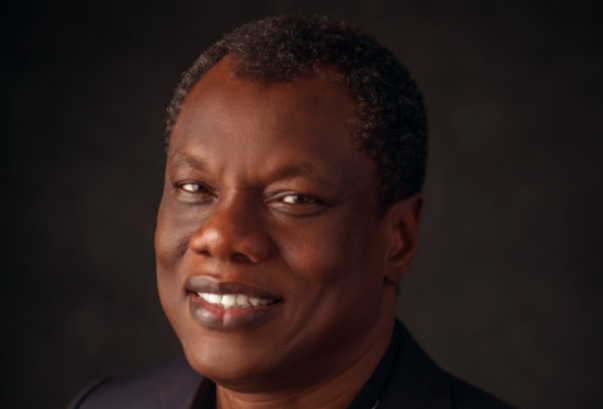
By Austin Okere
In commemoration of this year’s International Women’s Day, I would like to honor our womenfolk by sharing the essence of my keynote at the last annual WIMBIZ conference at the Eko Hotel in Lagos, aptly themed UNSTOPPABLE YOU: REINVENT & REINVIGORATE.
To start with, I was deeply impressed by the preparation leading up to the event and by the attention to detail during the event; starting on time, to the full attendance and seamless coordination.
No small feat for an event of over 2,000 participants. Well done to the Board of Trustees and Executive Council of WIMBIZ. Having said this, Women do not seem to be making it in any large number to the top of any profession anywhere in the world, even though the Sustainable Development Goal (SDG) number five is Gender Equality.
The numbers tell the story quite clearly: Sahle-Work Zewde, Ethiopia’s first female president is currently Africa’s only female head of state; of 190 Heads of State in the world, only nine are women; of all the people in parliaments in the world only 13% are women; in the corporate world, C-Level Jobs and Board Seats, only 15% are women; there are only two female CEO’s in the banking sector in Nigeria; even in the nonprofit world, where you expect more women to be in leadership positions, there are only 20% of women at the top; last year just 2% of Venture Capital funding went to startups founded by women, this is not surprising, since women comprise just 9% of the decision makers at U.S. Venture Capital Firms; and the numbers have not moved very much since the turn of the 21st century.

The other problem that women face is having to make tougher choices between professional success and personal fulfillment. A rent survey in America showed that of married senior managers, two thirds of the MEN had children and only one third of the WOMEN had children.
Verna Myers, an African-American Diversity Consultant once told a revealing story at a TED talk; Verna was on a long-distance flight; and having settled into her seat, the voice of a female pilot came over the public announcement system. Wow! she thought to herself, we women are indeed breaking through the class ceiling. We are now rocking stratosphere! With that she settled into a book. Not very long after, the plane went through some very severe turbulence.
The first thought that came to her mind was “I hope this sister can drive this thing”. And then she caught herself. What bothered her was that this thought will not at all have crossed her mind at all if the pilot had been male; and these are the hidden biases that many of us carry and have been carrying for centuries. We are mentally associated with the male as competent, and successful.
In the work place men seem to be overwhelmingly our default. Rightly or wrongly, we trust the strategic roles to men, cementing stereotypes and prejudices in which we have been schooled over and over. I usually get this from our womenfolk in the workplace.
“I prefer to hang with the guys because…” Well, this is who you feel implicitly connected to; that is your default. Do not be hard on yourself for falling into this category because a lot of research on implicit association test, which measures unconscious bias seem to suggest that our default are indeed men.
We need to get out of denial that these stereotypes exist and rather look within; and be willing to change ourselves and who we trust and feel connected to.
Scientists tell us that instead of denying our gender biases, we should be changing our mental associations of who women are; by staring and memorizing the faces and names of the most awesome women we know.
This helps us to dissociate the automatic associations that happens in our brains. It helps us to relearn a new awesome trust and break the stereotypes associated with women.
When we see a woman in a successful role, say a leading role in a hit movie, our thoughts seem to drift to “who did she have to sleep with” but we hardly ask that of successful men.
Unfortunately, both men and women are guilty of these associations, whether inherent or expressed; implicit or explicit. Biases are the stories we make up about people before we know who they actually are; but how are we going to know them without being willing to embrace them? This is why we need to get disconfirming data that proves that our old stereotypes are wrong.
While I do not entirely agree with all her viewpoints, I daresay I admire the good work done by our own Chimamanda Adichie to greatly move the needle forward in this regard.
To break the gender divide, we need men and women to walk towards our discomfort by expanding our social and professional circles and embracing complete gender diversity in our networks.
We need to build the type of relationships that reveal the holistic person and goes against the stereotypes. Wherever you are, ask yourself who is here and who is missing.
How many authentic relationships do we have with aspiring young women? How many do we have in the Boardrooms and in top management positions? How many do we have in politics? We need to get off the fence and become actors and advocates in this journey of diversity and gender equality.
We must call things out when we they are wrong because the other people who see, and perpetrate these stereotypes are our children. Biases are planted and nurtured by none other than us.
Children are born with a mind that is a clean slate, and most of their developing years are spent with their mothers. What do we write on these slates that so strongly reinforces these biases and stereotypes between the genders?
The elephant in the room is how are we going to fix this? I will make bold the following suggestions: Firstly, stand up to be seen, speak out to be heard – keep your hands raised. Sheryl Sandberg of Facebook tells the story about a talk she gave, and after that a young lady in the audience came to see her backstage.
She was upset because Sherly said she would take only two questions more. The lady (and all the other women in the room) put their hands down after the two questions.
But guess what? the men kept their hands up; and guess what else? Sheryl took more questions; and all from MEN. Perhaps this is how the men get ahead. Secondly, claim your place at the table. Beyond giving the glory to God, do not look outside yourself to explain your successes. I find that Women systematically underestimate their own abilities.
This matters, because no one gets to the corner office by sitting on the sidelines. No one gets the promotion if they do not believe they deserve their success. Perhaps this is not unrelated to the fact that while success and likeability are positively correlated for men, they seem to be negatively correlated for women.
People seem to love to be around successful or powerful men. They however, seem to hold successful women to be difficult bosses and not fun to work with. But that should be their problem and not yours. You owe yourself to be the best you can be; but certainly not be a dollar bill that is liked by everybody.
According to the Great Physicist Albert Einstein, Genius is 1% talent and 99% hard work. If you’ve worked hard for it sister; enjoy it! People may say for instance, that Serena Williams is a Tennis World Champion because she was coached by her Dad. If you watched Serena’s interview with a reporter when she was barely 13, you will realize that this could not have been the only factor in her success.
When Serena was asked which tennis Great she would like to be like, she said no; I want to be the greatest tennis player so that other players will like to be like me; how aspirational! Secondly, make your spouse or partner a real partner. Even with all the shocking statistics, women seem be doing much better in the workplace than in our households.
In a home where both spouses work, the woman does much more, because she comes back from work to cook and do the housework. We tend to put more pressure on Boys to succeed than Girls.
We generally do not welcome men in hospitality and in caregiving. Do you notice that when men go for Parent Teachers’ Association meetings or other such events which have been traditionally performed by women, the women do not talk to him or make him feel welcome?
He feels like a misfit, even though his action choice goes a long way in alleviating gender imbalance; it seems that we are not sure where we want our menfolk. Just imagine the look on the face of your Mum or Mother-in-Law when they come to visit and see your husband in the kitchen sweating over a cooking pot, perhaps because you have a very important project to turn in at the office the next day. And they are women!
We must make it as important a job in the home as it is outside. The man should not be perceived as a low flier if he opts to do the job at home. We must learn not to feel ashamed of him if this were the case. We must make it comfortable for both sexes to choose to contribute fully in the workforce or at home.
The partners that have understood this have a much healthier relationship. Thirdly, do not leave before you leave (i.e. mentally quitting before you actually quit to go and start a family).
In other words, keep your foot fully on the gas pedal at work until you are finally decided and ready to leave. Do not start leaning back because you are planning to get married and start a family.
Remember that the thought and the action could be quite far apart. Success is never going to be easy. As Denzel Washington says; fall down seven times get up eight. Without commitment you will not start, and without consistency you will not finish.
Borrowing a page from John Maxwell, I made the following tradeoffs in seeking to leave my footprints in the sands of time: Firstly – Exchanging Affirmation for Accomplishment – I stopped being a people pleaser.
Secondly – Exchanging security for significance – I changed my attitude towards uncertainty.
Thirdly – Trading Immediate Victory for Long Term Sustainability – I stopped measuring my performance solely in terms of immediate results.
In doing these, the three Ws that sustained me were: Way power – aptitude; Will power – attitude and Wait power – patience. Perhaps you may also find these helpful.
My passion for gender balance opportunities has led me to co-facilitate the SDG Africa Centre’s 100 women CEO Mentorship across 10 countries, as well as set up a the Ausso Leadership Academy to mentor entrepreneurs and business leaders towards institutionalization and geometric growth.
I urge you to take advantage of these programs.
I am an advocate because I believe that a world that has 50% of men and women involved in running Counties and Businesses will be a better place for all of us.
I wish to conclude by on the following note of caution; the future should be about equal opportunities for both men and women. We don’t want to make the same mistake by just flipping the gender problem.
We truly need both men and women working together to create a world that works for us all, and for our future generations.
At this anniversary of the International Women’s Day, I encourage our women to be reinvigorated, reinvented, and truly unstoppable. Always remember that candle losses nothing by lighting other candles. When you get to the top, please remember to send the elevator back down.
Austin Okere is the Founder of CWG Plc, the largest ICT Company on the Nigerian Stock Exchange & Entrepreneur in Residence at CBS, New York. Austin now runs the Ausso Leadership Academy focused on Business and Entrepreneurial Mentorship



DataPro Rating Agency has upgraded the long-term credit rating of Dangote Cement Plc to AA+ from AA, citing the company’s strong financial performance, market leadership and ability to meet its financial obligations despite Nigeria’s challenging economic environment.

In its latest rating report, the technology-driven credit rating agency also affirmed Dangote Cement’s short-term rating at A1, with a Stable Outlook. The ratings are valid until June 16, 2027.
DataPro said the upgrade reflects the cement maker’s sustained financial strength, resilient operating performance and dominant position in Nigeria and across Africa.
According to the agency, the assessment followed a comprehensive review of the company’s capital base, earnings, liquidity, corporate governance, regulatory compliance and the sustainability of its financial performance over the medium to long term.
It noted that Dangote Cement’s strong brand, leading market share, solid earnings, robust asset base and experienced management continue to strengthen its ability to meet financial commitments on time.
The agency also highlighted the company’s outstanding financial performance in 2025.
According to the report, Dangote Cement posted N4.31 trillion in revenue during the year, representing a 20 per cent increase from the previous year. Profit before tax more than doubled, rising 109 per cent to N1.53 trillion, driven by higher sales, improved operating efficiency, lower finance costs and a stronger capital structure.
DataPro said the AA+ long-term rating indicates low credit risk and reflects excellent financial strength, business profile and operating performance relative to its rating benchmarks.
It added that the A1 short-term rating signifies good credit quality and shows that the company has a strong capacity to meet its short-term financial obligations as they fall due.
The rating agency, however, noted that the credit rating has a maximum shelf life of 12 calendar months in line with international best practice and should be used only as a reference, not as an offer to trade in securities or as a substitute for investors’ independent judgement.


Xora Finance has announced it will no longer consider job applicants from Nigeria.

Xora Finance is a digital bank founded by Joren Lundgren, in February 2026 and allows users to deposit and earn interest on their XRP cryptocurrency.
Lundgren, founder, in an announcement on X (formerly Twitter), cited an ongoing pattern of misconduct, such as dishonesty and theft, from previous Nigerian hires as the reason for the decision.
This sudden blanket ban came just days after the company’s official career page was aggressively recruiting remote workers for marketing and content roles.
The announcement generated heavy backlash online, with many people upset that a blanket rule punishes honest job seekers.

Some lawyers have said that victims of Ponzi schemes have legal remedies, although recovering lost funds and prosecuting perpetrators remain major challenges.

A Ponzi scheme is an investment fraud that pays existing investors with funds collected from new participants rather than from actual profits.
Operators lure victims by promising high returns with little to no risk.
The scheme inevitably collapses when the flow of new investors slows down.
Some lawyers who spoke to News Agency of Nigeria (NAN) separate interviews with on Sunday, said that victims could pursue civil actions to recover their money.
Mr Chibuikem Opara, a lawyer at Justification Chambers, Ikeja,said many Nigerians continued to fall victim to Ponzi schemes in spite of repeated warnings.
Opara said it was wrong to attribute participation in Ponzi schemes to a lack of investment opportunities, noting that promoters often exploit investors’ greed through promises of unrealistic returns.
“What you cannot take away is the fact that many Nigerians have fallen and continue to fall victim to these schemes every time,” he said.
According to him, victims may individually or collectively institute civil actions against the beneficiary company for breach of contract or refund arising from failure of consideration.
Opara said victims could also unite to seek an order from the Federal High Court to wind up the beneficiary company.
He, however, noted that such efforts might yield little benefit if perpetrators had already siphoned the funds and left behind an empty shell.
The lawyer said available remedies largely depended on the actions of relevant authorities, adding that recipient accounts could be frozen to facilitate fund recovery and support winding-up proceedings.
Opara said regulators and law enforcement agencies often became aware of Ponzi schemes only after substantial losses had occurred.
According to him, victims frequently failed to report suspicious schemes early enough to enable timely intervention.
He added that funds are sometimes moved outside the country before authorities become aware of the fraud.
Opara also cited inadequate information and the deceptive nature of the schemes as major obstacles to investigation and prosecution.
“Most times, everything about the schemes is made to appear elusive, just like the profits promised to victims,” he said.
Also speaking, Mr Vincent Aminu of A.F. Aminu and Co. advised that victims of investment scams should report such cases to appropriate law enforcement agencies on time.
Aminu said victims could petition the Economic and Financial Crimes Commission (EFCC) or file reports with the police.
He said that after investigation, prosecutors could bring charges against suspects under relevant fraud-related laws, including provisions of the Criminal Code and the Advance Fee Fraud and Other Fraud Related Offences Act.
Beyond criminal prosecution, Aminu said .victims could pursue civil actions to recover their money
According to him, such actions may be based on breach of contract, unjust enrichment, or fraudulent misrepresentation, depending on the circumstances.
He added that victims could petition the Securities and Exchange Commission (SEC), which could investigate illegal operators, shut down unauthorised platforms, and freeze assets.
He identified the anonymity of online fraudsters as one of the biggest challenges confronting investigators.
According to him, many operators concealed their identities through fake digital profiles and technologies that made tracking them difficult.
Aminu also noted that victims who delayed taking legal action risked losing opportunities for redress.
He added that prolonged court proceedings often delayed justice for victims.
“Many fraud-related cases take years before the court reaches a verdict, thereby delaying justice for victims,” he said.
Also, Mr Chris Ayiyi of Ayiyi Chambers, Apapa, described Ponzi schemes as a gamble that benefited early participants at the expense of later investors.
Ayiyi said some early entrants received returns on their investments, thereby encouraging others to join the schemes.
He said the schemes eventually collapsed, leaving late investors to bear the losses
The lawyer called for a complete ban on Ponzi schemes or sustained public enlightenment campaigns against them.
He urged the National Assembly to enact laws that would strengthen regulation and provide greater protection for investors.
According to him, stronger legal safeguards are necessary in a country operating a capital-based economy.

Tinubu Orders NIMC to Enrol Every Nigerian by End of this Year – DG

Nigerians Accumulate $59Bn in Cryptocurrency Assets —FDC

Nearpays, Nigerian Fintech Becomes First African Startup to Win UN’s AI for Good Innovation Factory

Nokia’s 14 Years of Mobile-Phone Supremacy Ended in an Afternoon

MTN Nigeria Slashes Cost of Broadband Internet Router, Unwraps New Data Bundles for Low-Budget Users

NRC, Ponzi Scheme Collapses Resulting Loss of Billions of Naira

Nigeria Launches FreeTV Nationwide

NASENI Moves to Digitize CCB’s 5m Assets Declaration and Operations

Lebara Nigeria Launches Lebara Play, Africa’s First Telecom-Owned Micro-Drama Platform

CANAL+ Partners Samsung to Pre-Load DStv Stream on New Samsung TVs In Nigeria, Other African Countries




 News1 day ago
Xora Finance, Fintech Firm Refuses to Hire Nigerians over Alleged Dishonesty

 General News1 day ago
FG Secures Fresh $208.3m World Bank Loan for Cash Transfer

 Telecom1 day ago
NCC to Keynote Telecom Sector Sustainability Forum 7.0
 News1 day ago
How Ponzi Scheme Victims can Seek Legal Remedies — Lawyers

 News1 day ago
PalmPay Nigeria Appoints Samuel Oluyemi as Chief Operating Officer

 General News1 day ago
SERAP Sues INEC over Alleged N800Bn 2027 Tinubu Campaign Fund

 Telecom1 day ago
NCC Advances Dig Once Policy, Engages Stakeholders on Cost-Based Framework for Duct Sharing

 E-Business1 day ago
Kaigama,Catholic Archbishop of Abuja Warns against Misuse of AI