

/home/kenneth/web/nigeriacommunicationsweek.com.ng/public_html/wp-content/themes/zox-news/parts/post-single.php on line 153
">
Warning: Undefined array key 0 in /home/kenneth/web/nigeriacommunicationsweek.com.ng/public_html/wp-content/themes/zox-news/parts/post-single.php on line 153
Warning: Attempt to read property "cat_name" on null in /home/kenneth/web/nigeriacommunicationsweek.com.ng/public_html/wp-content/themes/zox-news/parts/post-single.php on line 153
UPS Foundation Announces New Focus Areas

The UPS Foundation, the charitable arm of UPS, the world’s express carrier and package delivery company has outlined five new focus areas to align with UPS’s vision for the future.
The five new focus areas of economic and global literacy, environmental sustainability, nonprofit effectiveness, diversity, and community safety are built upon its rich experience and are aligned with UPS’s vision for the future.
According to UPS, these focus areas, together with the powerful impact of UPS volunteers, create a comprehensive portfolio for the Foundation.
This ongoing evolution reflects the Foundation’s commitment to innovative ideas that leverage the strength of UPS and its people to address the many challenges facing the communities it serves.
It said that "economic and global literacy – illiteracy remains a tremendous barrier to economic empowerment around the world – especially for women and developing countries. Enhancing the economic literacy in communities through programming that teaches the fundamentals of free enterprise and the foundations of economic education is the focus of this initiative. UPS will also support emerging entrepreneurs through grants to innovative micro enterprise organizations"
"Environmental sustainability – while UPS’s role in this focus area is emerging, its objective is to support organizations and programs which educate communities on how they can take positive steps to improve and protect the environment through activities like conservation, recycling and green space initiatives. Similarly, it is also important that these programs facilitate a better understanding of what causes adverse impacts to the environment and non-profit effectiveness – the UPS Foundation will build on its long-standing commitment to helping nonprofit organizations operate more effectively and efficiently so they may strengthen the impact of the valuable services they provide to communities. Areas of interest include volunteer management, leadership development and capacity building through new technology" it added.
The foundation also said that "valuing diversity – from the empowerment of women to equal opportunity for the underserved and underprivileged, UPS has supported minority-focused organizations dedicated to inclusion and diversity since the 1960s. Today’s diversity issues encompass more than race and gender. It extends to the full myriad of issues ranging from ethnicity to sexual orientation. The company’s continued goal is to help communities thrive by embracing and leveraging the unique experiences, cultures, and ideas of the people living and community safety – this focus area will support programming aimed at sharing UPS’s safe driving expertise in order to improve the skills of young drivers. We will also work to enhance the strategies and efficiencies of organizations involved in disaster relief"
The UPS Foundation pursues these initiatives by identifying specific projects where its support can help produce a measurable social impact. In 2007, The UPS Foundation donated more than $46 million to charitable organizations worldwide.


Warning: Undefined array key 0 in /home/kenneth/web/nigeriacommunicationsweek.com.ng/public_html/wp-content/themes/zox-news/parts/post-single.php on line 493
Warning: Attempt to read property "cat_ID" on null in /home/kenneth/web/nigeriacommunicationsweek.com.ng/public_html/wp-content/themes/zox-news/parts/post-single.php on line 493
Telecom
Sunil Bharti Mittal Conferred GSMA Lifetime Achievement Award for Transforming Global Telecommunications

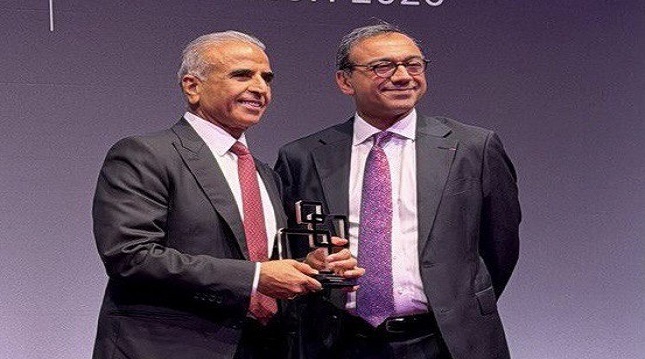
The GSMA has conferred a rare Lifetime Achievement Award on Sunil Bharti Mittal, Founder and Chairman of Bharti Enterprises, recognising his role in reshaping the global telecommunications landscape and expanding connectivity across operators, governments, businesses and billions of consumers worldwide.

Bestowed on only a handful of industry leaders in the GSMA’s history, the honour recognises contributions that have left an enduring and defining mark on the global communications ecosystem.
The award was presented at Mobile World Congress in Barcelona in the distinguished presence of His Majesty Felipe VI, the Prime Minister of Spain, Pedro Sanchez, the President of Catalonia, Salvador Illa, and global industry leaders.
A visionary in the telecom sector, Sunil Bharti Mittal has built Bharti Airtel into one of the world’s leading mobile operators, with operations across India and Africa, ranking among the top three globally and serving over half a billion customers.
He pioneered the expansion of mobile services across emerging markets and served as Chairman of the GSMA from 2017 to 2018, where he championed policies that encouraged investment and innovation while strengthening the industry’s commitment to connecting the unconnected and advancing digital inclusion.
He was previously honoured with the GSMA Chairman’s Award in 2008 and again in 2016 for his outstanding contribution to the growth and development of the global mobile industry and was felicitated at Mobile World Congress in February 2019 in recognition of his Chairmanship.
On receiving the award, Sunil Bharti Mittal said, “I am deeply honoured to receive this recognition and sincerely thank the GSMA for this award. I accept it not only as a personal milestone, but as a tribute to India’s telecom journey, the collective spirit of Bharti, and the rise of Indian telecom companies on the global stage.
Equally the award reflects the progress of an industry that has connected billions and belongs to the customers we serve, the teams who built our institutions, and the partners who believe in the transformative power of connectivity.
Telecommunication is a force that expands opportunity, places essential services in the palm of every individual and unlocks human potential. Helping shape its evolution into a powerful accelerator of modern progress has been a privileged responsibility. As innovation accelerates, we will continue to work with our partners & stakeholders to ensure that growth advances equity and creates lasting opportunity for generations to come.”
The Lifetime Achievement Award is a rare honour, bestowed only on select individuals whose leadership and innovation have left an enduring mark on the industry.
E-Business
Jumia Tech Week 2026 Begins with Tech Deals on Smartphones, Electronics, and Everyday Technology
Jumia Nigeria has announced the launch of Jumia Tech Week 2026, a two-week campaign offering customers access to discounted technology products across key categories, including smartphones, computing, home entertainment, and wearable devices.

Starting from March 2 to March 15, Jumia Nigeria’s Tech Week 2026 is themed ‘Tech Products for Less’ – a deliberate commitment by the e-commerce giant to drive down the cost of technology products for Nigerian consumers. The campaign offers significant price reductions across key product categories, enabling more Nigerians to access the devices they need at prices that reflect the company’s dedication to affordability and consumer value.
Jumia Tech Week will feature deals across a wide range of product categories, including mobile phones, computer systems and accessories, televisions and audio equipment, gaming products, home appliances, portable power solutions, health technology,, and wearable devices.
Customers will also have access to curated recommendations, including top smartphone deals, must-have accessories, gaming essentials, and home technology upgrades.
According to Temidayo Ojo, CEO of Jumia Nigeria, the campaign reflects Jumia’s broader commitment to making everyday technology more accessible to Nigerians.
“Technology has become an essential part of everyday life, and access to the right devices enables more people to participate fully in the digital economy,” said Ojo. “At Jumia, we remain focused on expanding access and improving the shopping experience as we continue to build Nigeria’s everyday retail destination.”
The campaign will include a range of customer engagement initiatives such as flash sales, brand days, anchor deals and interactive activities designed to enhance the online shopping experience.
Special highlight periods, described as Explosion Days, will take place on March 6 and March 13, featuring limited-time offers across selected technology categories. Customers will also be able to participate in interactive activities, including product-based games, treasure hunts,, and live shopping sessions during the campaign period.
The campaign will feature participation from leading brands including Oraimo, Silver Crest, Samsung, Ecoflow, Nivea and Aeon, offering customers a wide selection of technology, household and lifestyle products. Early access promotions already begun during the teaser period from February 16 to March 1, allowing customers to preview selected deals ahead of the official launch.
Jumia Tech Week forms part of the company’s broader strategy to expand e-commerce adoption by improving access to essential products and enhancing the customer experience across its platform. As Nigeria’s e-commerce market continues to grow, Jumia remains focused on strengthening its product assortment, logistics capabilities, and digital experience to serve customers better nationwide.
Customers can participate in the campaign by using the Jumia mobile app or visiting the Jumia website and following the conversation online using #JumiaTechWeek.

The African Development Bank Group last week approved an investment of €6.5 million in the Saviu II fund in order to support technology start-ups through their seed phase and first institutional fundraising, mainly in French-speaking Central and West Africa.

The Bank will invest €4.5 million as equity and €2 million as a first-loss hedging tranche on behalf of the European Commission, under the Boost Africa Programme.
This participation of the Bank Group will enable the Saviu II fund to give priority to companies with a strong technological or digital component.
Saviu II, the second investment vehicle of Saviu Partners, plans to invest between €500,000 and €3 million in about 20 technology or technology-oriented business-to-business start-ups in the seed phase or carrying out first institutional fundraising.
The Saviu II venture capital fund aims to make at least 60% of its commitments in the French-speaking countries of West and Central Africa: Côte d ‘Ivoire, Cameroon, Benin, Senegal, Togo, Burkina Faso and Mali.
The fund can also co-invest in promising technology companies in East Africa that have a strong team and business model, and whose strategy includes entering the market in French-speaking West African countries and establishing a strong presence there.
In addition, the fund will devote a dedicated envelope to pre-seed investments, focusing on minority equity investments, usually in co-investment with studios, incubators or other ecosystem partners.

Sunil Bharti Mittal Conferred GSMA Lifetime Achievement Award for Transforming Global Telecommunications

Jumia Tech Week 2026 Begins with Tech Deals on Smartphones, Electronics, and Everyday Technology

AfDB Supports Francophone Africa Start-ups with €6.5M

Krishnan Exits Africa Data Centre to Embark of Professional Chapter

Galaxy Backbone Announces Expansion of GOVMAIL to Over 150,000 Accounts

Accidental Billionaire Opts for Jail Instead of Returning Money Credited Him by Mistake

New Horizons Nigeria Breaks Ground: First to Fuse Mandarin into ICT Curriculum

Kaspersky Brings more Transparency to Threat Detection with New Hunt Hub

NDPC Commits to Balancing Data Privacy, Protection Information

OADC Lagos Reinforces Commitment to Local Data Hosting and Digital Transformation @ NDPC’s National Privacy Week Summit




 E-Financial1 day ago
Mutual Benefits Assurance Reaffirms Full Regulatory Compliance, Enhanced Governance

 E-Financial1 day ago
Iran-Israel-US Conflict and CBN’s FX Gains: A Stress Test for Nigeria’s Monetary Stability

 General News1 day ago
SERAP Asks FCCPC to Investigate Google, Meta, Others over Alleged Rights Abuses

 General News1 day ago
JAMB Uncovers AI-Driven Fraud Targeting UTME Candidates, Warns Parents

 News1 day ago
FlashChange CEO, Bidemi Oke, Urges Startups to Build Strong Governance Structures Early

 News1 day ago
TeamApt, Awabah Partner to Boost Pension Drive for Nigerians

 General News1 day ago
Capelli Institute Commits to Advancing Trichology in Nigeria

 E-Financial1 day ago
Reps Mull Commission to Regulate Fintech Operations