

General News
Victory as Shell Pays out £55m over Niger Delta Oil Spills

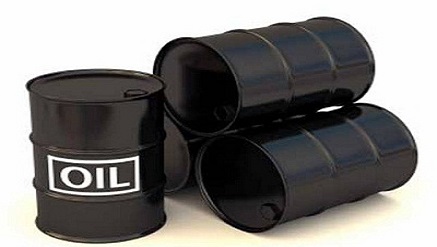
Oil giant Shell’s long-overdue compensation pay out to a community devastated by oil spills in the Niger Delta is an important victory for the victims of corporate negligence, said Amnesty International and the Centre for Environment, Human Rights and Development today.
Six years after two oil spills destroyed thousands of livelihoods in the Bodo area, legal action in the UK has driven Shell to make an out-of-court settlement of £55m to compensate the affected community.
The £55m will be split between £35m for 15,600 individuals and £20m for the community.
“While the pay-out is a long awaited victory for the thousands of people who lost their livelihoods in Bodo, it shouldn’t have taken six years to get anything close to fair compensation,” said Audrey Gaughran, Director of Global Issues at Amnesty International.
“In effect, Shell knew that Bodo was an accident waiting to happen. It took no effective action to stop it, then it made false claims about the amount of oil that had been spilt. If Shell had not been forced to disclose this information as part of the UK legal action, the people of Bodo would have been completely swindled.”
The wait has taken its toll on Bodo residents, many of whom had their fishing and farming livelihoods destroyed in the spill. Throughout this time they have had to live with the ongoing pollution and, without compensation, many have faced grinding poverty.
“The compensation is a step towards justice for the people of Bodo, but justice will be fully achieved when Shell properly cleans up the heavily polluted creeks and swamps so that those who rely on fishing and farming for their income can begin to rebuild their livelihoods,” said Styvn Obodoekwe, Director of Programmes of the Centre for Environment, Human Rights and Development (CEHRD).
“I am very happy that Shell has finally taken responsibility for its action,” said Pastor Christian Kpandei, a Bodo fish farmer, whose fish farm was destroyed by the oil spill. “I’d like to thank the lawyers for compelling Shell to make this unprecedented move.”
Shell has always accepted that the two 2008 Bodo oil spills were the fault of failures on the company’s pipeline at Bodo, but publically – and repeatedly – claimed that the volume of oil spilt was approximately 4,000 barrels for both spills combined, even though the spills went on for weeks.
In 2012 Amnesty International, using an independent assessment of video footage of the first oil spill, calculated that the total amount of oil split exceeded 100,000 barrels for this spill alone.
During the legal action in the UK, Shell had to finally admit that its figures were wrong and it had underestimated the amount of oil spilt in both of the Bodo cases. However Shell has still not confirmed how much oil was actually spilt.
During the legal process Shell was also forced to reveal that it had been aware, at least since 2002, that most of its oil pipelines were old, and some sections contained “major risk and hazard”. In a 2002 document Shell stated that outright replacement of pipelines was necessary because of extensive corrosion.
As far as Amnesty International and CEHRD are aware Shell took no action despite having this information years before the Bodo leaks. An internal Shell email from 2009 revealed that Shell knew it was exposed over spills in Ogoniland – where Bodo is situated; the email stated “the pipelines in Ogoniland have not been maintained properly or integrity assessed for over 15 years”.
Thousands more people remain at risk of future oil spills because of Shell’s failure to fix its ageing and dilapidated pipelines.
“Oil pollution in the Niger Delta is one of the biggest corporate scandals of our time. Shell needs to provide proper compensation, clear up the mess and make the pipelines safer, rather than fighting a slick PR campaign to dodge all responsibility,” said Audrey Gaughran.
It would be recalled that there were two oil spills occurred at Bodo in the Niger Delta in 2008, the first in August and the second in December.
Amnesty International and CEHRD have worked on the Bodo spills case since 2008, supporting the community to secure compensation and clean up.
In 2011, the people of Bodo, represented by UK law firm Leigh Day, began court proceedings in the UK against the Shell Petroleum Development Company of Nigeria.



African Development Bank Group (AfDB) has approved a €6.5 million investment in the Saviu II venture capital fund to boost technology start-ups across Francophone West and Central Africa.

The Bank Group will contribute €4.5 million as equity investment and an additional €2 million as a first-loss hedging tranche on behalf of the European Commission under the Boost Africa Programme.
The investment is expected to strengthen early-stage financing for innovative businesses with strong technological and digital components, particularly in French-speaking countries.
Saviu II, the second investment vehicle managed by Saviu Partners, plans to invest between €500,000 and €3 million in about 20 seed-stage or early institutional fundraising start-ups. The fund will primarily target B2B technology-oriented companies with scalable models.
At least 60 per cent of the fund’s commitments will focus on French-speaking countries in West and Central Africa, including Côte d’Ivoire, Cameroon, Benin, Senegal, Togo, Burkina Faso and Mali.
The fund may also co-invest in promising East African technology firms seeking expansion into Francophone markets.
In addition, Saviu II will dedicate a special funding envelope for pre-seed investments, mainly through minority equity stakes, often in collaboration with incubators, venture studios and other ecosystem partners.
Industry observers say the AfDB’s backing is expected to de-risk early-stage investment and crowd in more private capital into Africa’s growing digital economy.
Saviu Partners previously launched Saviu I in 2018 with a capitalization of €10 million.
The first fund invested in 12 start-ups, mainly based in French-speaking West Africa, offering not just funding but hands-on support in business development, recruitment, international expansion and fundraising.

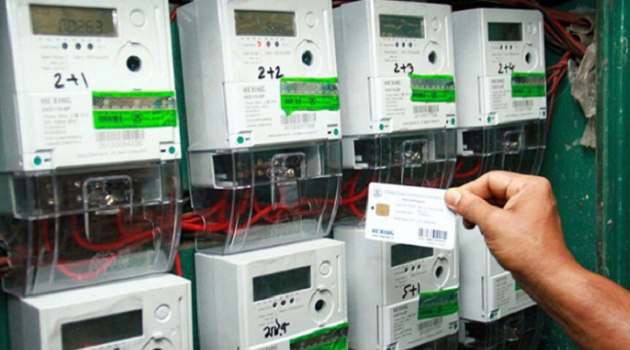
Nigerian Electricity Regulatory Commission (NERC) has ruled in favor of electricity consumers, directing distribution companies (DisCos) to refund ₦20.33 billion in outstanding costs for meters bought under the Meter Asset Provider (MAP) framework.

NERC
Signed on February 27, 2026, by Musiliu Oseni, chairman,NERC and Dafe Akpeneye, commissioner Order No. NERC/2026/025 amends a 2023 directive.
It requires DisCos to disburse the funds via energy credits over 12 months starting March 1, 2026, addressing years of slow refunds.
As of December 31, 2025, DisCos owed this amount due to delays in reimbursing prepaid customers who funded their own meters.
DisCos must automate credits for the full MAP meter cost upon activation, disbursed monthly over 120 months based on the customer’s tariff—credits cannot offset legacy debts.
Prepaid customers will receive a monthly token by the 4th day equivalent to the reimbursement value; for arrears, they’ll get two tokens per month.
Postpaid customers will see a distinct credit line on bills subtracted from totals, with two line items monthly for arrears.
NERC mandates monthly reports on reimbursement values using an approved template, plus dedicated email channels for complaints with resolution status included.
The order aims to end delays, improve notifications, and boost sector trust. DisCos must accelerate arrears recovery over 12 months without further excuses.
This follows NERC’s February 2026 compliance review, amid ongoing power sector challenges highlighted by Power Minister Adebayo Adelabu.

Nigeria Centre for Disease Control and Prevention (NCDC) has raised alarm over ravage of Lassa fever cases across 18 states and 67 Local Government Areas (LGAs) of the country.

Dr Jide Idris, director-general of NCDC, in statement yesterday, said that Bauchi, Ondo, Taraba, Edo and Benue accounted for more than 80 per cent of confirmed cases recorded during the 2026 peak transmission season.
Idris, described as particularly worrisome the growing infections among healthcare workers, with 28 confirmed cases and three deaths reported so far this season.
NCDC attributed the sustained transmission and rising fatalities to operational gaps at the state level, urging urgent action to strengthen outbreak response and control measures.
According to Idris, field investigations showed most transmissions were occurring in known endemic areas, but weak implementation of established response frameworks had contributed to the continued spread and higher case fatality rate.
He said that gaps identified include infections in general outpatient and maternity settings, poor adherence to Infection Prevention and Control (IPC) protocols, and inadequate pre-positioning of Personal Protective Equipment (PPE).
He added that delayed patient presentation due to financial barriers, inconsistent activation of State Incident Management Systems, weak contact tracing, persistent stigma and poor isolation centre standards were also driving transmission.
Idris emphasised that outbreak response implementation and health service delivery fell primarily under state governments within Nigeria’s federal structure, urging them to strengthen accountability and resource allocation.
He called on affected and high-risk states to urgently activate and closely monitor their Incident Management Systems, ensuring timely coordination and efficient outbreak response at all levels of healthcare delivery.
He also urged the immediate release of response funds, strict enforcement of Infection Prevention and Control (IPC) compliance in public and private health facilities, and continuous availability of PPE and other critical supplies.
The NCDC boss also advocated accelerated financial protection mechanisms to reduce late presentation and high fatality rates, alongside institutionalised rodent control and environmental sanitation measures under a One Health approach.
He advised healthcare workers to maintain a high index of suspicion and adhere strictly to IPC guidelines.
He also urged the public to keep environments clean, prevent rodent entry into homes, store food safely and seek early medical care when symptoms appeared.
Idris noted that Lassa fever was treatable, with improved outcomes when detected early, adding that Nigeria was also responding to other epidemic-prone diseases including Cerebrospinal Meningitis, Diphtheria, Mpox and Cholera.
He reiterated NCDC’s toll-free emergency line, 6232, for reporting suspected cases and obtaining further information

NAICOM Signs MoU with BPP to Deepen Insurance Compliance in Public Procurement

FG Approves GIS-enabled Digital Postcode to Tackle Logistics Gaps, Boost E-commerce

Firm Enhances its Security Awareness Platform with SCORM and PDF Support

AfDB Approves €6.5m for Tech Startups

GSMA, African Operators, Others to Launch Low-cost 4G Devices

Dr. Cairo Ojougboh Foundation Bolsters Nigeria’s Education Drive with ₦2.7m Student Support
Kaspersky Brings more Transparency to Threat Detection with New Hunt Hub

NDPC Commits to Balancing Data Privacy, Protection Information

OADC Lagos Reinforces Commitment to Local Data Hosting and Digital Transformation @ NDPC’s National Privacy Week Summit

PwC Reveals AI Scaling Gap Slows Africa’s Digital Transformation




 Telecom3 days ago
Sunil Bharti Mittal Conferred GSMA Lifetime Achievement Award for Transforming Global Telecommunications

 Telecom3 days ago
Why Digital Trust Matters: Secure, Responsible AI for African SMEs?

 E-Business3 days ago
Jumia Tech Week 2026 Begins with Tech Deals on Smartphones, Electronics, and Everyday Technology

 General News3 days ago
Krishnan Exits Africa Data Centre to Embark on Professional Chapter

 E-Financial2 days ago
NRS Targets N40trillion in Tax, Royalty Revenue in 2026
 News3 days ago
AfDB Supports Francophone Africa Start-ups with €6.5M

 E-Business3 days ago
House Queries NDIC: ₦5m Max Payout for Failed Bank Depositors

 Telecom3 days ago
House Probes Fintech Regulation via Public Hearing on New Commission Bill