

News
Visa, African Women Impact Fund Initiative (AWIF) Unveil Recipients of Funding to Empower African women


Three women fund managers from Nigeria, Kenya and South Africa have been selected to receive Visa’s grant funding from the African Women Impact Fund Initiative (AWIF), a collaboration between Standard Bank and the United Nations Economic Commission for Africa (UNECA).

SME.NG (Nigeria), Altree Capital (Kenya) and Maia Capital (South Africa) are the selected recipients and will utilise the grants for their warehousing capital needs to invest in women-owned entrepreneurs across a range of sectors.
Last year Visa announced a grant to the AWIF as an extension of the She’s Next program, a global advocacy program for women-owned businesses that has been expanded to Sub-Saharan Africa to further champion and strengthen African women business owners as they build, sustain, and advance their businesses.
“We are proud to extend our efforts to empower women entrepreneurs to the fund management space. Women fund managers in Africa continue to face numerous challenges in building sustainable businesses.
“Their progress continues to be slow due to systematic barriers and investor bias. Our collaboration with AWIF will accelerate the multiplier effect of funding across the entire value chain where women owned businesses exist” says Aida Diarra, Senior Vice President & Head of Sub-Saharan Africa at Visa.
Women fund managers in Africa continue to face numerous challenges in building sustainable businesses. Research shows slow-moving progress in the visibility and inclusion of women fund managers due to systematic barriers and investor bias.
With African women accounting for just 7.6% of private equity and women-led businesses receiving only 7% of Private Equity (PE) and Venture Capital (VC) in emerging markets, this highlights the opportunities that exist to reduce the current gender gaps.
“When you invest in women, you also invest in their communities. Investments that go into the hands of women fund managers not only go towards the growth and sustainability of the companies they invest in, but the women who are part of the value chain of these companies.
“We are proud to have selected managers who have demonstrated their ability to support the growth and development of their communities, and through the grant these managers will now be in a better position to scale up their efforts and impact the lives of many more women-led businesses,” says Lindeka Dzedze. Global Markets Head of Strategic Partnership at Standard Bank Group.
The selection of the grant recipients was through a due diligence process managed by the appointed investment manager of the AWIF Initiative, Riscura.
The rigorous selection criteria were in alignment with the objectives of Visa’s She’s Next programme and AWIF which are to help women-owned businesses thrive, and to support and develop women fund managers, respectively.
Dinao Lerutla, the Managing Partner of South African based fund manager, Maia Capital, describes her organisation as the nexus between private capital and inclusive growth.
“At Maia Capital we are very intentional about ensuring that our investments make a positive and direct impact on the low-to-middle income households in South Africa and generate a return for investors.
“We have a bias towards women businesses and businesses that promote gender inclusion throughout the value chain. Through our targeted investments, we hope to contribute to economic recovery that is sustainable and inclusive.
“This is why our investment themes include education, healthcare, housing, clean technology, financial inclusion, and gender inclusion” she adds.
Jenni Chamberlain, CEO of Altree Capital Kenya, is the Investment Manager of the Altree Kadzi Gender Climate Fund is one of the selected fund managers. The Fund invests with a gender-lens and climate-smart approach in sub-Saharan Africa, with a strong East African presence.
She explains: “We have four investment pillars that we focus on when we look at an investment, namely, women entrepreneurs, women in leadership (the business must have 30% or more of women in management or on the board), employers of women (over 30% women in employment) and/or products & services that will improve the lives of women.
“The Altree Kadzi Gender Climate Fund will utilise the funding to invest in women-led and women-oriented companies, also driving sustainability and climate adaptation and mitigation strategies.
“By intentionally focusing on women and climate, Altree will provide support not only to the investee companies but also to companies in the greater investment value chain, ensuring gender-equity mainstreaming and sustainability.
“There are numerous barriers to African women accessing finance for their businesses; women-led businesses are an important yet overlooked sector of the economy.
“These companies are growing rapidly and access to finance will improve their growth trajectory exponentially. Altree will prove the ability of these companies to produce strong returns for the female entrepreneurs and investors alike.
“Not only are women most affected by climate change but women are early adopters of climate mitigation and adaptation technologies and solutions, as well as strong benefit multipliers. Supporting women-led and oriented firms, empowers women, ensures climate action, and will transform economies and societies” Ms Chamberlain adds.
Thelma Ekiyor, the co-founder of SME.NG, says her investment platform is driven by a gender lens investment philosophy focussing on the bottom of the pyramid.
The firm leverages private capital, public sector investments and philanthropic donations to deploy capital to impact oriented female entrepreneurs.
As an indigenous gender lens impact investor, SME.NG is committed to providing non-financial support that address the challenges women-owned businesses face, alongside financial capital.
SME.NG is differentiated by the fact that it has presence across eleven states of Nigeria rather than being concentrated in Lagos or Abuja, which makes its reach and impact significant.
Some of the small business SME.NG will invest in include businesses like NicNax Company – a company that collaborates with local farmers to process healthy breakfast and snack options.
Popular brands are the granola and peanut butter, currently available at most retail stores and eateries in Lagos. SME.NG will also invest in Smiley’s Mobile Kitchen – a company that sources organic tomatoes from small-holder farmers and processes into Nigerian “stew” bases, tomato and peppers purees and pastes.
“We have identified women businesses that have the potential to succeed across different sectors and we deliberately put a lot of emphasis on how women are impacted in the value chains of these companies. The grant from Visa and AWIF will help us strengthen our investment pipeline,” says Ms Ekiyor.



Kaspersky Global Research & Analysis Team (GReAT) has uncovered an active malicious campaign distributing a previously undocumented RAT with a very broad feature set. Beyond the standard remote access trojan functionality, it combines stealer, keylogger, clipper, and spyware capabilities.

Cybercriminals are selling it to third parties as MaaS (malware-as-a-service) promoting it on YouTube and Telegram, increasing the likelihood of its use across a wider range of actors, including less-skilled operators.
Due to its stealer functionality, the malware can collect a wide range of data about its victim: it gathers system information, extracts credentials for Steam, Discord and Telegram, and also harvests data from web browsers. It also poses a threat to cryptocurrency users, as it includes a browser-based clipper that replaces crypto wallet addresses.
Beyond data theft, CrystalX RAT is capable of full-scale surveillance, with the ability to take screenshots, record audio from the microphone, and capture video from both the webcam and the victim’s screen.
Particularly notable is the CrystalX RAT “playful” Prankware feature set, which is actively promoted by the developers. These capabilities allow operators to visibly interfere with the victim’s system by shaking the mouse cursor, setting wallpapers on the victim’s screen, changing screen orientation, hiding desktop icons, forcing system shut downs, and even delivering real-time pop-up notifications and messages to the victim.
While seemingly trivial, these features introduce a disruptive and psychological dimension to the attack, making the attack both visible and distressing for the victim.
Kaspersky reports attacks targeting users in Russia, but the trojan has the potential to spread to other countries due to its sales and distribution model.
“Such a diverse feature set effectively enables a 360-degree compromise of the victim and a complete loss of privacy. Beyond gaining access to account credentials, the stolen data could potentially be used for blackmail.
“At the moment, the initial infection vector is not precisely known, but it is already affecting dozens of victims. Our telemetry is already detecting new versions of the implants, indicating that this malware is still actively developed and maintained.
“We expect the number of victims to grow significantly and its geographic spread to expand in the near future,” says Leonid Bezvershenko, senior security researcher at Kaspersky GReAT.

Microsoft has rolled out a new set of features for its Microsoft 365 Copilot platform, including tools for complex, multi-step work and deeper research tasks, as competition in workplace artificial intelligence (AI) intensifies.

The update introduces Copilot Cowork, a capability aimed at handling long-running tasks across Microsoft 365 applications.
The feature is being made available through the company’s Frontier programme, which typically gives early access to experimental tools.
Microsoft is also integrating technology linked to Claude – an AI model developed by Anthropic –into Copilot, signalling a broader shift toward using multiple AI systems within a single product rather than relying on a single model.
Jared Spataro, chief marketing officer for AI at Work at Microsoft, says the company is positioning Copilot as a system embedded directly into workplace software, rather than a standalone tool.
“Microsoft 365 Copilot is your AI for work,” he says, adding that it draws on multiple AI models and is integrated into existing workflows.
Alongside this, Microsoft has upgraded its Researcher feature, which is designed to analyse information from multiple sources and generate structured reports.
A new “Critique” function separates the drafting and review process between different AI models – one generates an initial response, while another evaluates and refines it.
The company says this approach improves output quality, with Researcher showing gains on its internal benchmark for accuracy, completeness and objectivity.
Another addition, called Model Council, allows users to compare outputs from different AI models side-by-side, highlighting differences in responses and reasoning.
The updates form part of what Microsoft calls “Wave 3” of Copilot, as it pushes to embed generative AI deeper into enterprise software. The move reflects a wider industry trend towards combining models from multiple providers, including OpenAI and Anthropic, to improve performance and reliability.

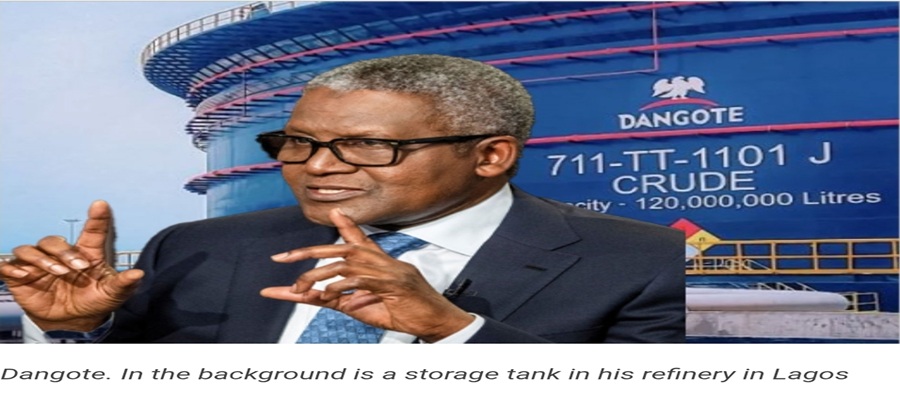
Dangote Petroleum Refinery and Petrochemicals (DPRP) has debunked recent circulation of unauthorised information regarding a potential Initial Public Offering (IPO).

In a statement, DPRP noted that several online platforms and unofficial sources have published unverified, and in some instances inaccurate, information relating to a potential offering.
“Such reports do not originate from DPRP and should be treated with caution. All official updates regarding any potential transaction will be communicated strictly through DPRP’s formal public disclosures and announcements issued by its appointed advisers, in line with applicable laws and regulatory requirements.
“Accordingly, the public, investors, and all market participants are strongly advised to disregard speculative commentary and rely solely on verified information formally issued by DPRP or its authorised representatives,” the statement said.
The firm assured stakeholders that, when appropriate, comprehensive, and accurate details regarding any proposed transaction will be made available through official channels, including regulatory filings, authorised press releases, and coordinated communications by the Enterprise and its appointed advisers.

Nigeria, Others Lose $88bn Yearly to Illicit Flows —Edun

Oracle Sacks 12,000 in India, Begins Shift to AI

CBN Says 33 Banks Raise Fresh N4.65 Trillion in Recapitalisation Exercise

NCC Insists Telcos Must Compensate Subscribers for Poor Quality of Service

NITDA Urges Joint Action to Drive Nigeria’s Digital Innovation

Spotify’s Loud & Clear Report Reveals Over ₦60Bn Revenue for Nigerian Artists in 2025

Madonna University Taps Tech Guru Adote for Strategic Board Role

China Threatens to Shut Nigeria’s Satellite Over $11.44m Unpaid Debt

FCCPC Bans Lagos ‘No Refund’ Policy, Vows Fines and Shutdowns for Traders

EFCC Arraigns Two FSDH Bank Officials Over $307k, €50k Fraud




 E-Financial2 days ago
NGX REGCO Fines 5 Firms N291m for Market Manipulation

 News2 days ago
Dangote Refinery Debunks Speculations on IPO

 E-Financial2 days ago
FG Launches Cross-Border Digital Payments Report

 News2 days ago
Descasio Launches “Give to Gain” Leadership Insights Report, Hosts Executive Brunch for Women in Leadership

 E-Financial2 days ago
Interswitch Deepens Strategic Partnership with KCB Group to Advance Digital Payments and Financial Inclusion

 News2 days ago
World Backup Day: Research Reveals 84% of Users Store Sensitive Data Digitally

 General News2 days ago
EFCC Waxes Worriedly over $160Bn Crypto Crime Losses

 General News2 days ago
Moniepoint Launches Sixth Edition of Women in Tech Internship with “There Is Space for You” Campaign