

E-Business
Why WW Shipments of Wearables Will Surpass 200m in 2019- IDC Forecasts

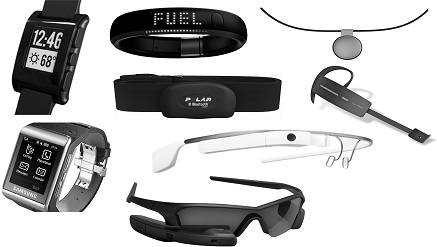
Worldwide (WW) shipments of wearable devices are expected to reach 110 million by the end of 2016 with 38.2% growth over the previous year.
According to the International Data Corporation (IDC) Worldwide Quarterly Wearable Device Tracker, an expanding lineup of vendors combined with fast-growing consumer awareness and demand will generate double-digit growth throughout the 2015-2020 forecast period, culminating in shipments of 237.1 million wearable devices in 2020.
The market will also be driven forward by the proliferation of new and different wearable products. Watch and wristband shipments will reach a combined total of 100 million shipments in 2016, up from 72.2 million in 2015.
Other form factors, such as clothing, eyewear, and hearables, are expected to reach 9.8 million units in 2016 and will more than double their share by 2020.
This will open the door for new experiences, use cases, and applications going forward. Still, the primary focus of the wearables market will be on smartwatches.
“Although smartwatches like the Apple Watch or Android Wear devices capture the spotlight, they will only account for a quarter of all wearables in 2016 and will grow to about a third by 2020,” said Jitesh Ubrani, Senior Research Analyst for IDC Mobile Device Trackers. “It’s time to start thinking about smarter watches — traditional watches with some sort of fitness or sleep tracking but are unable to run apps—built by classic watch makers. These devices have the potential of making the technology invisible while still integrating themselves within day-to-day activities.
“By creating smarter watches, vendors also stand to side-step some of the typical challenges that smartwatch platforms face,” added Ubrani. “There’s no need to create a developer or app ecosystem for one thing, and there’s plenty of room for simpler devices that appeal to the average user while smartwatches continue catering to the technophiles.”
Meanwhile, smartwatches with an app ecosystem – like Apple’s watchOS and Google’s Android Wear – are expected to gain further salience in the market as both products and experiences evolve. “With few exceptions, this part of the smartwatch market is still in its initial stages,” said Ramon Llamas, Research Manager for IDC’s Wearables team.
“We expect to see major changes, with smartwatches that actually look like watches, user interfaces that are easier than swipes and gestures, applications that rival those on our smartphones, and connections to networks, systems, and other devices. This puts pressure on smartwatch platforms to develop further from where they are today.”
Top Five Smartwatch Platform Highlights
Apple’s watchOS is likely to see some slowdown in the early part of 2016 as anticipation builds for the second generation device.
However, with newer hardware and an evolving ecosystem, Apple will remain the smartwatch leader through the majority of the forecast.
Android Wear remains in second place as its list of partners grows and the platform further integrates into Google’s larger ecosystem. Google’s decision to limit UI differentiation will stifle further growth (unlike its success in smartphones) but this may have the positive side effect of forcing brands to compete on design and price, appealing to the fashion conscious, the budget conscious, or both.
Adding Android-based smartwatches to Android Wear would push the category into first place in 2020. However, Android smartwatches are expected to remain a small portion of the overall market and will likely be relegated to emerging regions as local vendors attempt to differentiate themselves.
Real-Time Operating System (RTOS) – primarily used as a proprietary operating system but capable of running third-party apps – will become the third largest smartwatch OS, largely driven by gains in emerging markets and its use by Chinese ODMs. Appealing to consumers looking for a cheap alternative, RTOS devices will likely see relatively high adoption though the experience will be sub-par.
Tizen’s limited app ecosystem makes it a tough sell as a smartwatch, though this underdog has the potential to pose a serious threat to Android Wear if Samsung is able to provide some synergy between its lineup of Gear S watches and the rest of its consumer electronics portfolio.
Linux-based smartwatches will have similar appeal as RTOS-based devices. The focus will be low cost and adoption will be mainly in the Asia/Pacific region, excluding Japan.
Pebble’s avid fan base and unique hardware/software platform will enjoy modest growth in the short term. However, competitive pressures will cause it to gradually lose share to giants like watchOS and Android Wear.


E-Business
Nigus International, Elmirate Capital Ink $200m MoU for Nigeria’s Defense Tech, Satellite Hub


Nigus International Investment Limited and Elmirate Investment LLC (Elmirate Capital) have inked a strategic memorandum of understanding to launch a next-generation defense technology, satellite systems, and advanced manufacturing platform in Nigeria, backed by up to $200 million in planned investment.

Nigus International
The partnership, channeled through a new Special Purpose Vehicle called Nigus Tactical Systems Ltd, aligns with Nigeria’s push for sovereign defense capabilities under the Defense Industries Corporation of Nigeria (DICON) Act 2023.
It targets local production of drones, armored vehicles, munitions, cyber defense tools, and satellite networks to cut import reliance and boost regional security.
“Africa is entering a pivotal phase where technological capability defines economic strength and national security,” said HRH Prince Malik Ado-Ibrahim, Executive Chairman of Nigus International.
“This platform supports innovation, advanced manufacturing, and technology transfer to build a sustainable industrial base for national and regional needs.”
Pankajj Ghode, Managing Director of Elmirate Capital, added: “We’re proud to partner with Nigus to position Nigeria as a technology and aerospace hub.
“Our $200 million commitment connects global expertise in defense, cybersecurity, and aerospace with local talent for resilient growth.”
Key focus areas include Class C manufacturing platforms for tactical/ISR drones, unmanned aerial systems, ammunition, munitions, armored vehicles, and protected mobility; counter-terror surveillance with data analysis and border security tech; military cyber defense and cyber ranges; plus earth observation satellites, secure networks, and geospatial intelligence for defense and civilian use. The initiative aims to create high-value jobs, foster technology transfer, and establish Nigeria as a regional tech hub.

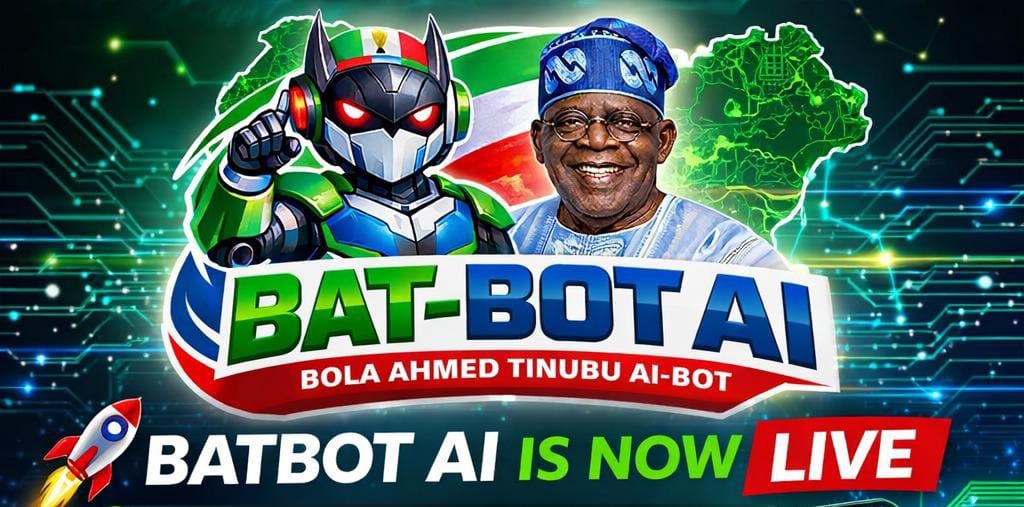
An artificial intelligence (AI) application has been developed to help combat the spread of fake news, misinformation and political propaganda as political activities gradually build toward the 2027 general elections in Nigeria.

The app, known as BAT-BOT AI, was unveiled in Abuja by Mr. Gunu Usman, its founder, who said the platform is designed to assist the federal government in addressing the growing challenge of false information within nation’s digital space.
Mr Usman explained that the new platform was created to ensure that factual information circulates faster than falsehood.
He noted that the rapid spread of misinformation, disinformation, hate speech and manipulated narratives targeting the administration of Bola Tinubu, the ruling All Progressives Congress, and national institutions poses risks to democratic stability and public trust.
According to Mr. Usman, BAT-BOT AI was developed to support public access to verified information while countering misleading narratives online.
The Technology expert described the system as a sovereign AI-powered civic information and fact-verification platform designed to strengthen Nigeria’s digital information ecosystem ahead of the 2027 general election.
He added that the initiative aligns with the government’s policy direction under the Renewed Hope Agenda of President Tinubu, which seeks to promote transparency and encourage informed civic participation.
The founder further explained that the platform is currently accessible to Nigerians through multiple digital channels, enabling users to verify claims, seek clarification on government policies and obtain information on national development initiatives.
Mr. Usman expressed optimism that the tool would help curb the spread of false information and contribute to a more credible digital environment as the country prepares for the next electoral cycle.

Over the past four years, gold has risen by more than 400%. The precious metal has long been one of the most traded assets in global financial markets. From its role as a traditional store of value to its sensitivity to inflation, interest rates, and geopolitical uncertainty, gold continues to attract traders seeking efficient and predictable trading opportunities during a period of global uncertainty and high volatility.

JustMarkets
For traders looking to effectively access gold markets, choosing the right trading environment is as important as timing their entry. One of the most popular and effective gold trading platforms is JustMarkets, offering the tools, conditions, and infrastructure to enable traders to achieve their most ambitious gold trading goals.
Tight Spreads on XAU/USD
Cost efficiency is a critical factor in gold trading, especially for active day traders. JustMarkets offers extremely competitive XAU/USD spreads, allowing traders to open and close positions with reduced transaction costs. Lower spreads can significantly impact short-term strategies, where precision and timing are key to effectively entering a trade. By minimizing trading costs, JustMarkets helps traders focus more on market analysis and finding the ideal entry point, and less on overhead.
Fast and Reliable Execution
Gold is recognized for its volatility, especially during the day, especially with economic announcements or geopolitical events. Speed is of the essence in volatile markets. JustMarkets provides high-speed execution of orders, which helps minimize the risks of delays, especially during periods of high volatility. This ensures that traders are able to respond better to market conditions, thereby having better control over trade management.
Flexible Trading Conditions
Each trader has their own approach to gold, ranging from intraday trading to position trading. JustMarkets offers flexible leverage and account types, enabling traders to adjust their exposure based on their risk tolerance and trading style. This flexibility is suitable for both conservative and aggressive traders while still allowing them to access the same global gold market.
Advanced Platforms and Tools
Successful gold trading is based on thorough technical and fundamental analysis. JustMarkets provides access to industry-standard trading platforms equipped with advanced charting tools, multiple timeframes, and a wide range of indicators for recognizing divergences and clear entry points. These features help traders analyze price trends, identify key levels, and plan their trades with greater confidence.
Accessibility via mobile devices and computers via the JustMarkets Mobile Trading app also ensures traders can monitor positions and market movements from anywhere and at any time.
Education and Market Support
Gold is also affected by factors such as inflation rates, central bank policies, and currency fluctuations. Understanding these factors is important for developing a structured trading strategy.
JustMarkets offers resources for traders, which provide information on how global events can impact the price of gold like case studies, daily, bank and weekly analysis. This is a knowledge-based system, which enables the trader to make more informed decisions rather than relying on the price movements of gold.
Trading Activities That Keep Gold Traders Engaged
In addition to the competitive trading environment, JustMarkets also runs various special activities and campaigns that aim to make the trading experience more interesting. At certain intervals, the special activities may include trading contests on specific trading instruments, such as gold, which are highly sought after by traders. This will give the traders an added impetus to keep trading.
The special activities are designed to encourage trading, consistency, and skill-building among the traders, along with the additional motivation for the trading strategies. This is also in line with the overall philosophy of JustMarkets to create a dynamic trading environment where trading, learning, and motivation are linked together.
A Trading Environment Built for Gold Traders
Gold is still one of the most dynamic markets with the greatest number of opportunities in the world. With tight spreads on XAU/USD, fast execution, flexible trading terms, and access to advanced analytical tools, JustMarkets creates an optimal trading environment for those who want to trade gold efficiently.
In addition to the comprehensive educational assistance, JustMarkets continues to position itself as a strong competitor for traders who are looking for professional trading conditions combined with growth opportunities.
Spotify’s Loud & Clear Report Reveals Over ₦60Bn Revenue for Nigerian Artists in 2025

Nigus International, Elmirate Capital Ink $200m MoU for Nigeria’s Defense Tech, Satellite Hub

Tech Expert Unveils BAT-BOT AI App to Curb Fake News ahead of 2027 Elections

MTN Nigeria Races Ahead in Fibre Broadband Market

CBN Tightens BVN Rules to Curb Fraudulent Banking Transactions

Kaspersky Discovers New Phishing Campaign Exploiting Google Tasks Notifications to Steal Corporate Credentials

esentry 2025 Report Shows Healthcare, Financial Services and Telecoms as Staging Grounds for Increased Cyberattacks in Africa

AfDB, UNDP Launch $10Bn AI Initiative for Africa

Mutual Benefits Assurance Settles ₦5.9bn Claims in January 2026

MultiChoice Suspends Yearly DStv Price Hike as Canal+ Pushes Growth




 General News3 days ago
Interswitch Advocates Trust-Driven Infrastructure as Cornerstones of Africa’s Cross-Border Capital Future

 News3 days ago
NLNG Advances Media Excellence with Change Your Story Workshop

 E-Financial3 days ago
CBN Orders Banks to Restrict Access to Banking Services for Loan Defaulters

 Telecom2 days ago
VDT Communications Achieves Two Prestigious Certifications ISO /IEC 27001:2022, ISO/IEC 27032:2023 Reinforcing its Leadership in Broadband Service Provision
 Telecom24 hours ago
MTN Nigeria Races Ahead in Fibre Broadband Market

 E-Financial1 day ago
CBN Rolls Out New Rules for Safer Instant Payments, More Customer Control
 E-Financial24 hours ago
CBN Tightens BVN Rules to Curb Fraudulent Banking Transactions

 News1 day ago
NIMMME Inaugurates Engr. Michael Orekyeh as 13th National Chairman in Abuja