

General News
Will Trump Shock the World Again?


By Lukman Otunuga, Senior Research Analyst at FXTM,
Nearly four years ago, Donald Trump shocked the world by winning the US presidential election, pulling off one of the biggest political upsets in American history.
With polling stations opening in a few hours’ time, the lingering question is whether history will repeat itself with Trump catching markets off-guard once again and securing a decisive electoral college win. National polls favour Democrat candidate Joe Biden to defeat the incumbent, a development that is mysteriously similar to 2016. Whatever the outcome of this momentous day, it will certainly have a profound impact on financial markets.
US futures and Asian stocks have marched into Tuesday with a spring in their step as encouraging factory activity data and expectations of a ‘blue wave’ victory for Democrat candidate Joe Biden have boosted risk sentiment. A clear Biden win, where his party retains control of the House and wins the Senate, seems like the most positive outcome for markets. Such a result will open the doors to a round of large-scale fiscal stimulus that could nurse some of the damage COVID-19 has inflicted on the US economy. Should Biden win with Republicans retaining the Senate, this may reduce the odds of a larger fiscal stimulus and could be less positive for global risk sentiment.
A Trump victory will certainly catch markets by surprise and prove the polls wrong again. Although this outcome may result in a smaller or even delayed fiscal package, the policy continuity from his re-election could send stock prices higher over the medium term.
In the event of a contested result, risk aversion is likely to sweep across global markets which would trigger a stock market selloff, while boosting appetite for the safe-haven Dollar, Yen and Gold.
Dollar outlook hangs on election outcome
King Dollar’s performance over the next few days will be heavily influenced by the election outcome. As results start flowing in later this morning, the Dollar is poised to remain highly sensitive and volatile as investors attempt to figure out who the next President of the United States will be. A ‘blue wave’ outcome may be negative for the Greenback due to an even bigger stimulus package by Democrats lifting inflationary pressures. On the other hand, a contested result might inject bulls with fresh inspiration to push the DXY beyond the 94.00 resistance level, given the Dollar’s safe-haven status.
Talking technicals, a solid daily close above the 94.00 level could open a path towards 94.65 and beyond. Alternatively, a clear Biden sweep should see the Dollar weaken and trigger a decline back towards 92.70.
Commodity spotlight – Gold
Over the past few weeks, Gold has been waiting for a fresh directional catalyst to break out of its current range. This could come in the form of the US election today.
A Democrat sweep is likely to provide Gold a handsome tailwind in the form of a weaker Dollar. Although the metal may also derive some strength from a Trump win, the upside is likely to be limited by other forces in the short to medium term. As new coronavirus cases surge in Europe and the United States, investors are rushing towards the world most liquid currency. If the Dollar ends up appreciating on a contested election outcome, this could limit Gold’s upside despite the risk aversion.
Looking at the technical picture, Gold is hovering around $1890 as of writing. The key levels of interest remain $1935 and $1965 to the upside and $1858 support if prices go lower.


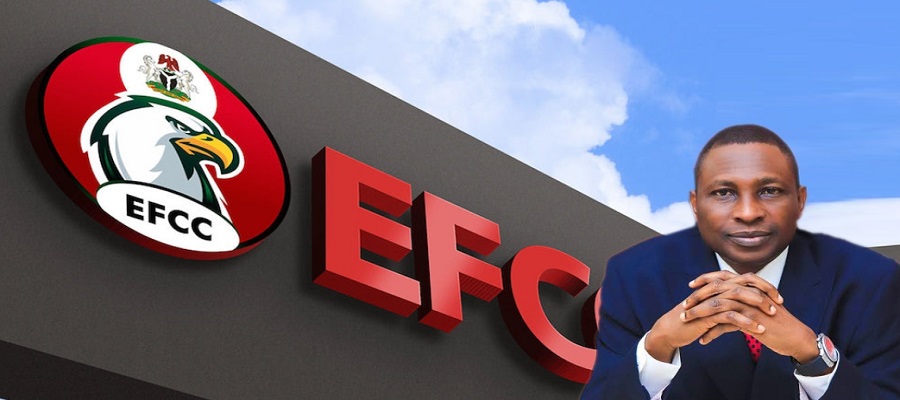
Economic and Financial Crimes Commission (EFCC) has warned of rising cryptocurrency-related crimes, revealing that illicit digital currency transactions exceeded $160 billion globally in 2025.

Ola Olukoyede, chairman, raised the concern during the inauguration of the United Nations Office on Drugs and Crime Country Programme for Nigeria (2026–2030) in Abuja.
Olukoyede, warned that digital currencies such as Bitcoin are increasingly being exploited by criminal networks to move funds across borders undetected.
According to him, advances in technology, weak regulatory frameworks, and gaps in global financial systems have created fertile ground for cyber-enabled financial crimes.
The anti-graft agency boss stressed that tackling cryptocurrency crime required coordinated national strategies, stronger institutions, and intelligence-driven enforcement.
According to him, the new UNODC programme comes at a critical time when Nigeria and the global community are facing growing threats from organised crime, cybercrime, and illicit financial flows.
Olukoyede described the initiative as a strategic platform to strengthen the rule of law, improve the criminal justice system, and protect citizens from financial and violent crimes.
Musa Aliyu, chairman of the Independent Corrupt Practices and Other Related Offences Commission (ICPC), in his comments, called for stronger inter-agency cooperation.
Aliyu said Nigeria faced interconnected threats, including violent extremism, smuggling, organised crime, and illicit financial flows, warning that no single agency could address them alone.

Federal government has awarded N50 million each to 45 students selected from 65 finalists drawn from public and private tertiary institutions nationwide under the Student Venture Capital Grant (S-VCG).

Tunji Alausa, minister of Education, unveiled the initiative at the weekend at the United Nations Development Programme Innovation Hub in Ikoyi, Lagos, describing it as a bold step toward positioning Nigerian youth as drivers of global innovation.
Alausa said the programme marked a significant shift in education policy, aimed at empowering students through innovation, entrepreneurship, and skills development. He noted that the grant offers equity-free funding, mentorship, incubation, and access to digital tools.
He explained that the beneficiaries emerged after a rigorous selection process involving over 30,000 applicants from more than 400 tertiary institutions across the country, culminating in a three-day bootcamp and pitch session before industry experts.
According to the minister, the initiative is designed to transform tertiary institutions into hubs of innovation and economic development, enabling students to move from ideation to commercialisation and become job creators.
“Today is not just another programme event. We are activating a new future for Nigerian students where great ideas are nurtured into impactful solutions,” he said.
Also speaking, Suwaiba Ahmad, minister of State for Education, described student entrepreneurship as a critical national strategy for job creation and economic growth. She emphasised the need for institutions to move beyond theory and support students in translating ideas into viable enterprises.
Similarly, Bosun Tijani, minister of Communications and Digital Economy, commended the initiative, urging beneficiaries to focus on building sustainable and impactful solutions rather than pursuing short-term gains.
He advised students to adopt consistency and long-term thinking, noting that small, sustained efforts could lead to meaningful innovation and societal impact.
In her goodwill message, Elsie Attafuah reaffirmed the commitment of the United Nations to supporting Nigeria’s innovation ecosystem.
She encouraged beneficiaries to refine their ideas, respond to market needs, and contribute meaningfully to national development through innovative solutions.
The minister acknowledged key partners, including the UNDP, Google, and the Bank of Industry, for their support in implementing the initiative and expanding opportunities for young innovators across Nigeria.


The Federal Government has launched the ‘Cross-Border Digital Payments and Identity in Nigeria under the AfCFTA’ report, urging stakeholders to unlock trade opportunities for Micro, Small and Medium Enterprises (MSMEs) to access the $3.5 trillion African Continental Free Trade Area (AfCFTA) market.

The high-level report, hosted by the Office of the Vice-President in collaboration with ODI Global under the Supporting Investment and Trade in Africa (SITA) programme, was unveiled on Monday by the Deputy Chief of Staff to the President, Ibrahim Hassan Hadejia, in Abuja.
Hadejia described the research as both timely and strategic, noting the strong coordination by the Office of the Vice-President and the leadership of the Federal Ministry of Industry, Trade and Investment.
He revealed that the cross-border payments report followed earlier milestones, including the development and launch of Nigeria’s Digital Trade Strategy and a capacity-building programme for subnational leaders.
According to him, Nigeria is increasingly assuming a leading role in shaping the digital trade agenda across the African continent, necessitating that the country remains at the forefront of AfCFTA implementation.
He noted that deepening engagement with AfCFTA and enabling businesses, particularly SMEs, to conduct seamless cross-border transactions will be critical to unlocking trade, fostering growth, and creating jobs.
He further stated that efficient cross-border payments, supported by trusted digital identity systems as recommended in the report, will be key to realising President Bola Ahmed Tinubu’s Renewed Hope vision for Nigerian MSMEs.
Hadejia also observed that while the report identifies the Pan-African Payment and Settlement System as a critical platform for cross-border digital payments, Nigerian fintech firms such as PalmPay and Moniepoint, which have some of the largest and most active user bases, will play a pivotal role in driving adoption.
He assured the audience that the Federal Government remains committed to strengthening critical infrastructure, regulatory frameworks, and partnerships to ensure Nigeria is not only ready for digital trade but continues to lead.
“I appreciate the efforts of all stakeholders and urge us to move AfCFTA beyond a continental agreement to a $3.5 trillion trade juggernaut that will reinvigorate our industries, unlock intra-African trade, and domesticate African prosperity,” he added.
Hadejia stated that intra-African trade will be driven not only by large corporations but by small businesses empowered through digital trade and e-commerce, while noting that issues of trust, identity and logistics, as highlighted in the report, must be addressed.
Commenting on the report, the Special Adviser to the President on Job Creation and MSMEs, Temitola Adekunle-Johnson, said the report – developed under the purview of the Office of the Vice-President – would significantly strengthen the MSME ecosystem.
He explained that cross-border payments in Nigeria and across Africa have historically been largely informal and inefficient but noted that the emergence of the Bank Verification Number (BVN) and National Identification Number (NIN) systems is changing the landscape.
Adekunle-Johnson expressed optimism that the report’s findings and recommendations would enable Nigerian SMEs to achieve seamless access to continental markets.
Earlier, the Special Assistant to the President on ICT Policy, Office of the Vice-President, Salihu Dasuki, disclosed that the office, in partnership with development partners, has developed a framework to fast-track seamless cross-border payments for MSMEs.
He added that a key pillar of President Tinubu’s Renewed Hope Agenda is enabling Nigerians to access digital trade, which informed the capacity-building programme conducted for subnational governments last year.
Also speaking, Special Assistant to the President on Project Support, Office of the Vice-President, Shuda Ahmed, commended ODI Global for leading the research underpinning the report.
She noted that without seamless and affordable cross-border payment systems, MSMEs across the continent would be unable to scale beyond their domestic markets.
The event was attended by officials of ODI Global, representatives of AfCFTA, the National Information Technology Development Agency (NITDA), National Identity Management Commission (NIMC), Nigerian Petroleum Development Company (NPDC), Federal Competition and Consumer Protection Commission (FCCPC), and MSMEs, among other key stakeholders.

EFCC Waxes Worriedly over $160Bn Crypto Crime Losses

Dangote Refinery Debunks Speculations on IPO

FG Awards N50m Each to 45 Students under S-VCG

NGX REGCO Fines 5 Firms N291m for Market Manipulation

FG Launches Cross-Border Digital Payments Report

Spotify’s Loud & Clear Report Reveals Over ₦60Bn Revenue for Nigerian Artists in 2025

Madonna University Taps Tech Guru Adote for Strategic Board Role

China Threatens to Shut Nigeria’s Satellite Over $11.44m Unpaid Debt

Jumia Tech Week 2026 Begins with Tech Deals on Smartphones, Electronics, and Everyday Technology

FCCPC Bans Lagos ‘No Refund’ Policy, Vows Fines and Shutdowns for Traders




 E-Financial2 days ago
CBN bars large‑ticket loan defaulters from banking services in tough new crackdown

 General News1 day ago
ARN Rejects Medical Bill over Attempt to ‘Scrap’ Profession

 Telecom2 days ago
NIGCOMSAT Supports Startups Growth with the Launch of Accelerator 3.0

 Telecom2 days ago
FG Unveils Digital Economy Research Fund Scheme

 News2 days ago
Stakeholder says AI is Crucial to Nigerian Data Centres Amid Persistent Grid Collapse

 News2 days ago
Meningitis Kills a Quarter Million People a Year -Study
- General News2 days ago
Nigeria Advances Digital Governance as NITDA takes over NGEA Portal

 General News2 days ago
Zarttech Reflects on Its Role in Changing Global Perceptions of Africa