

E-Business
WTO: LCCI Tasks Africa on Global Trade Opportunities Under Okonjo-Iweala

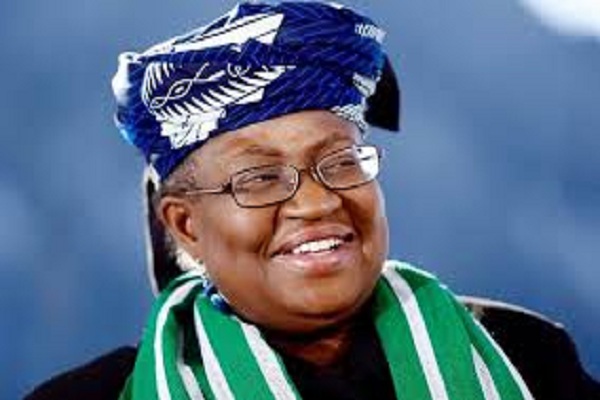
The Lagos Chamber of Commerce and Industry (LCCI) has urged African governments to shore up their capacity for international competitiveness to fully harness the opportunities offered by the World Trade Organisation (WTO).
Dr Muda Yusuf, Director-General, LCCI, said this in a congratulatory message emailed to newsmen on Monday following Dr Ngozi Okonjo-Iweala’s emergence as the Director-General of the WTO.
The News Agency of Nigeria (NAN) reports that Nigeria’s former Minister of Finance whose appointment takes effect from March 1, 2021 made history as the first woman and first African to lead the WTO.
Yusuf said that Okonjo-Iweala’s emergence was at a time when the global trading system was faced with numerous challenges including supply chain disruptions precipitated by the coronavirus pandemic.
Other challenges, Yusuf added, were rising protectionism and unilateralism, growing economic nationalism, imposition of trade restrictions covering substantial amount of international trade, as well as trust and credibility concerns among members.
Yusuf said that Africa had peculiar challenges in the global trade arena with the continent deeply integrated into the global supply chain.
This, he said, underscored the low participation level of African economies in international trade.
“While the emergence of Dr Okonjo-Iweala as the new WTO Director-General is very gratifying and calls for celebration, there is a need to manage expectations around the outcomes for the Nigerian economy given the numerous productivity and competitiveness issues the country is grappling with.
“It is a great delight being the first female and first African to head the WTO since its formation in 1995 [replacing the General Agreements on Tariffs and Trade (GATT), which commenced in 1948].
“According to the United Nations Conference on Trade and Development, Africa’s trade with the global community between 2015 and 2017 stood at an average of $760.1 billion, compared with Asia ($6.8 trn), America ($5.1 trn) and Europe ($4.1trn).
“These numbers indicate that Africa is not a major player in global trade and Nigeria’s share in global trade is even more insignificant,” he said.
According to him, it is very pertinent for African economies to build capacity within the continent in order to take advantage of the opportunities in global trade.
“Nigeria’s export structure is still largely dependent on crude oil, which accounts for about 50 per cent of government revenue and 90 per cent of foreign exchange earnings.
“More importantly, Nigeria’s non-oil exports are largely primary commodities with little or zero value addition.
“Thus, the prospects of tapping international trade opportunities remains dim,” he added.
Yusuf said it was imperative to address trade facilitation issues especially around trade policies, port processes, international trade documentation and foreign exchange policies to fully take advantage of the opportunities offer by the WTO under its new DG.
He stressed the need to promote local value addition and backward integration to strengthen competitiveness of the nation’s domestic industries.
“We must undertake reforms of our tariff policy in accordance with the principles of comparative advantage, which would enable the country optimise opportunities in the global trade arena and enhance the citizens’ welfare.
“It is critical to develop an Africa Continental Free Trade Area strategy that would enable the country leverage trade opportunities both continentally and globally.
“There is a need to improve on our strategy in managing the coronavirus pandemic ranging from ensuring compliance to safety protocols to vaccine procurement and distribution.
“Ultimately, these are the factors that would determine the benefits that would accrue to the economy from global trade,”Yusuf said.
(NAN)


Africa’s financial services sector is entering a new era of artificial general intelligence (AGI), as the adoption of artificial intelligence (AI) on the continent evolves to boost economic growth.

This was the word from Lavina Ramkissoon, ambassador representing the African Union for the East, North and South of the continent, speaking last week during the Financial Sector Conduct Authority Conference 2026.
As AI rapidly evolves beyond current frameworks, Africa faces a narrowing window to define its role in what could become a radically different global economic order, she said.
Ramkissoon co-chairs the African Union’s Science, Research, Technology and Innovation Council and leads its “sixth region” diaspora portfolio.
AGI refers to AI that matches human intelligence, capable of learning, reasoning and applying knowledge across diverse domains, while ASI is a theoretical, future AI that surpasses human intelligence across all fields.
Ramkissoon cautioned the global AI trajectory is already shifting beyond human and machine collaboration toward far more advanced forms of intelligence.
“In my opinion, we’ve quickly moved away from human agency, we’ve moved away from AI agency, and we’re getting into a space where we’re going to see AGI unfold − but not really know that it’s unfolding.”
She noted that this transition could be subtle at first, with only limited signals before a more dramatic leap.
“There’s going to be one or two key signs… and then all of a sudden, we’re going to wake up and see ASI around in terms of superintelligence.”
This progression, she suggested, raises fundamental questions about control and governance.
Rather than focusing purely on technological capability, Ramkissoon argued that societies must confront how much decision-making power they are willing to relinquish.
“From a human perspective, we’re going to have to dig deep in terms of understanding where to next and what sort of control we are willing to give away or negotiate going forward.”
Beyond the technological shift, she emphasised that Africa’s response must be grounded in structural readiness. Responsible AI at scale, she said, depends on three core pillars: infrastructure, computational capacity and a broader understanding of intelligence itself.
On infrastructure, Ramkissoon highlighted the need for interoperability rather than isolated systems, noting that Africa’s financial and digital ecosystems remain fragmented.
“For some reason, we haven’t been able to orchestrate it in a unified manner. This is probably our last opportunity to utilise AI to gauge that.”
She also challenged assumptions around compute capacity, arguing that the continent does not yet require widespread investment in large-scale data centres.
“Our utilisation of AI isn’t at that capacity yet. Running things like language models or robo-advisors are still relatively menial when we talk about the larger capacity required.”
More fundamentally, Ramkissoon pointed to a shift in how intelligence itself is defined and used in the digital economy.
“Intelligence is intelligence. Distinctions between human and artificial intelligence are becoming less relevant as the two increasingly converge.”
This shift is already reshaping economic thinking. Ramkissoon described the emergence of what she called a “new age economy”, where traditional drivers are being replaced.
“It no longer functions on the cost of capital, but is moving towards the cost of energy, the cost of data and the cost of intelligence.”
She also pointed to growing divergence in how global technology players are approaching AI, with some pushing for rapid expansion of capabilities, while others advocate for constraint.
Within the African continent, more than 60% of countries had adopted some form of AI policy or regulatory framework as of 18 months ago, with different regions beginning to take distinct approaches.
However, the continent risks falling behind if it fails to articulate a unified vision and take advantage of the full potential of AI, she stated.
“As much as we understand the opportunity, what are we actually tangibly doing on the ground to unlock that?” she asked, pointing to persistent challenges such as unemployment and low economic growth.
While AI is already reshaping labour markets globally, Ramkissoon cautioned against framing the issue purely in terms of job losses.
“We focus on fear more than optimism. AI is creating jobs and removing jobs at the same time.”
Instead, she called for a broader, long-term perspective that moves beyond short-term disruption toward strategic positioning.
“We really need to zone out and have a macro view. Without that, Africa risks missing a critical moment in shaping its digital and economic future as AI capabilities accelerate toward increasingly autonomous and potentially uncontrollable systems.”

A new global Kaspersky study has identified the lack of qualified IT security workers and the need for global organisations to prioritise various security tasks to mitigate the risk of supply chain and trusted relationship attacks. Both factors are cited by nearly half (42%) of the respondents.

Kaspersky’s recent study* on supply chain and trusted relationship risks showed that supply chain attacks have emerged as a top threat for businesses, with every third organisation hit by such an attack over the past year.
The severity and frequency of supply chain attacks necessitate uncovering the key reasons preventing them from addressing the risks successfully.
According to the survey, one of the key barriers to reducing supply chain and trusted relationship risks is the lack of a qualified workforce. This shortage leaves organisations without the capacity to consistently access and monitor possible third-party vulnerabilities across their ecosystems.
Among other primary obstacles, respondents noted the need to juggle multiple cybersecurity priorities. This reflects the fact that security teams are stretched across too many tasks at once, which might leave supply chain threats unaddressed.
Beyond resource constraints, respondents also point to structural issues: 39% say their contracts lack clear IT security obligations for contractors. Further 32% note that non‑IT security staff often do not fully understand these risks.
Globally, according to the survey, an overwhelming 85% of businesses admit their organisations need to upgrade protection against supply chain and trusted relationship risks, with only 15% of enterprises considering their current security measures effective.
At the same time, the results of the survey showed that current mitigation practices for third-party risks remain fragmented, with no way of protection getting more than 40% of current adopters. Even the most common protective measure, two-factor authentication, is used by only 38% of respondents.
In addition, only 35% of organisations conduct regular reviews of contractors’ cybersecurity postures. As a result, nearly two thirds of businesses lack ongoing visibility into the security of their partners, leaving them exposed to evolving vulnerabilities across their ecosystems.
It’s noteworthy that companies that have already experienced supply chain and trusted relationship attacks tend to adopt stronger security habits. Those hit by supply chain incidents are more likely to request penetration test results (56%), while victims of trusted relationship breaches prioritise checks on compliance with industry standards (56%) and their contractors’ own supply chain policies (53%).
“When security teams are overstretched, understaffed and have to prioritise urgent tasks over long term resilience priorities, organisations are left exposed to threats that can move silently through their provider ecosystem.
“To break this cycle, the industry needs to adopt more unified and consistent mitigation strategies, from standardised contractor assessments to stronger cross‑team awareness. Supply chain security should become a shared, enforceable responsibility across the entire business network,” comments Sergey Soldatov, Head of Security Operations Center at Kaspersky.
Only by implementing preventive measures across the organisation and approaching partnerships with suppliers and contractors strategically can companies reduce supply chain risks and ensure the resilience of their business.
E-Business
Study Reveals 83% of Employees Stay Connected to Work During Time Off, Fuelling Digital Anxiety


A new Kaspersky survey undertaken in the Middle East, Turkiye and Africa (META) region reveals that digital anxiety is becoming a defining feature of modern work culture, as employees don’t disconnect even during their free time and vacations.

According to the findings, 83% of respondents keep an eye on work tasks outside working hours. An overwhelming 85% reply to all work-related messages in instant messaging apps, while the same share (85%) check work emails during their time off – and 81% admit they are responding to work emails while on vacation or in their personal time.
The pressure to remain constantly available is contributing to heightened stress levels in the workplace. Other sources of stress include work issues, for example, 43% experience anxiety after accidentally sending a random message to a work chat.
Interestingly, not all digital mishaps are perceived equally: 40% report that they take it calmly when they send an unfinished email, proving that some mistakes are considered less damaging than others.
Blurred boundaries between professional and personal life, combined with instant communication tools, are intensifying feelings of constant monitoring and fear of making digital errors.
More than a third (36%) of respondents say they feel extremely uncomfortable or even scared if their boss notices them scrolling through social media at work instead of working. The “always-on” culture may undermine employee well-being, increase burnout risks, and reduce overall productivity in the long term.
“Digital anxiety doesn’t just affect employee well-being – it can also increase cybersecurity risks for organisations. When people feel constant pressure to respond immediately to messages and emails, they are more likely to act impulsively, without carefully verifying links, attachments, or sender identities.
This urgency can make employees more vulnerable to phishing, and other scams using social engineering techniques,” comments Brandon Muller, Technical Expert at Kaspersky.
Kaspersky recommends employees to follow the below tips to avoid digital anxiety and associated cyber risks:
- Slow down before clicking or replying. Digital anxiety can trigger automatic reactions. A short pause to check sender details, URLs, or attachments can prevent security breaches.
- Treat urgency as a red flag. Cybercriminals often exploit pressure and fear. Always verify unexpected or urgent requests before responding.
- Avoid handling sensitive information on unsecured networks. Public Wi-Fi, often used when working outside regular hours, increases exposure to cyber threats. Mobile network and VPN should be applied in such cases.
- Use technologies that will help reduce risks. For example, Kaspersky Premium offers AI-powered anti-phishing features designed to help warn of potential threats.
Businesses can reduce cybersecurity risks related to employees’ digital anxiety by providing regular cybersecurity training that helps staff recognise threats and respond correctly even under stress.
At the same time, organisations should use robust cybersecurity solutions to minimise the impact of human error. Kaspersky Next’s adaptable and robust cloud-native protection, underpinned by an unequalled cybersecurity track record, is one of such products.
Protection solutions for mail servers, such as Kaspersky Security for Mail Server, with anti-phishing capabilities, help to additionally decrease the chance of infection through a phishing email.

Court Remands Hacker for Allegedly Stealing N3.09Bn from FCMB

CBN Directs IMTOs to Open Naira Settlement Accounts

Nigerians Lose N12.5Bn to AI-Driven Scams- PwC

SEDC Launches SEVCP to Expand Access to Capital for Startups

Kaspersky, AFRIPOL Conduct Joint Cybersecurity Training for African law Enforcement

Kaspersky Discovers New Phishing Campaign Exploiting Google Tasks Notifications to Steal Corporate Credentials

esentry 2025 Report Shows Healthcare, Financial Services and Telecoms as Staging Grounds for Increased Cyberattacks in Africa

AfDB, UNDP Launch $10Bn AI Initiative for Africa

MultiChoice Suspends Yearly DStv Price Hike as Canal+ Pushes Growth

MTN Nigeria Posts Record N1.70 Trillion Pre‑Tax Profit, Declares N20 Dividend for 2025




 E-Financial1 day ago
DLM SPV PLC Lists ₦9.00bn AAA-Rated Medium-Term Notes on FMDQ Exchange, Sets Benchmark in Corporate Bond Market

 E-Financial2 days ago
CBN Wins Central Bank of the Year Title @13th Global Awards

 General News2 days ago
Tech Firms Sack over 45,000 so Far in 2026

 News2 days ago
Morney Launches in Nigeria as E-invoicing Drives Finance Digitisation

 General News2 days ago
Jury Finds Elon Musk Liable for Misleading Twitter Investors

 Telecom2 days ago
FG Taps Quest Merchant Bank for Advisory on 90,000km Fibre Project

 General News2 days ago
Rockefeller, Global Energy Alliance Cross $100 million Mark in Africa Electrification Push

 News1 day ago
Metaverse Collapses, Horizon Worlds Shuts Down on Quest