

E-Business
Youths Disillusioned as Delta State Innovation Hub Shuts Down

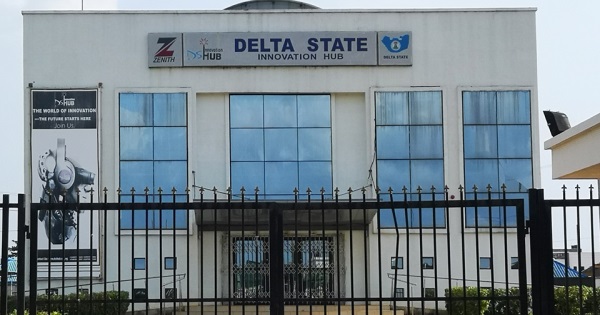
The decision by Delta state government to shut down its innovation hub has left teeming youths of the state disenchanted, Nigeria CommunicationsWeek investigations have revealed.
The common aim of innovation hubs is to promote local innovation, encourage relevant actors to share knowledge early in the development process, build Startups, create employment and foster entrepreneurial cooperation. The hubs support networking among local stakeholders and create links to investors and international organisations.
Primarily, governments facilitate and fund Innovation hubs to serve as centres of excellence for creativity and development of information technology amongst youths. The provision of innovation hubs could be a means of youth empowerment which would allow the youth to channel their creative energy into a potentially productive source for their communities.
Against this backdrop that Nigeria CommunicationsWeek recently visited Delta state innovation hub to ascertain the impact of the closure of the hub and its impact since last year on youth empowerment and what the state government’s plan to reopen the hub.
Among the youths that expressed their minds on the frustrations they are faced with the closure of the hub include Sylvester Nkeze, a web developer in Asaba, he worked as a software engineer and also involved in tutoring a lot of people who came to learn about fundamentals of software engineering in the hub when it was operational.
“The truth is beyond individuals having their personal skills; it was a kind of assembling point for people with like minds, the hub served as a place not only for people to learn but also to be able to gather people after they have done learning to share their ideas and use what they have learnt to create products or business for Delta State and Nigeria.
“Generally, the essence of the Hub is to make people converge their technological ideas into a scalable business that could help bring development and employment in the state. Nobody in this century can individually start a business, I’m talking of a large scale business and not small and medium scale business, and bigger businesses today are built on partnerships.
“There are a lot of people working around with great and good ideas and they don’t have people with like minds they can share those ideas with and be able to build on those ideas. The Hub served as a meeting point for such things to happen, the closure of the hub has totally destabilized the means through which a lot of ideas or large scale businesses could have been built or incubated that is one of the biggest problems.
“Right now, you have people walking around looking for menial jobs to do whereas their ideas could have been used to build businesses that could create jobs and even the government could tax for revenue. It is a big problem,” he said.
Henry Chuks, co-founder of Benx Technologies, Asaba based ICT firm, said that the implications of continuous closure of the Hub are enormous which include brain drain, youth unemployment among others.
According to him, “I know many people residing in Delta state who have left the state to better equipped hubs in Port Harcourt and Lagos after acquiring ICT skills and mentorship decided to establish in those states thereby leaving Delta with nothing. “More so, as they run their businesses in those states they will pay taxes and levies to those states’ government as such Delta state will lose that revenue.
“ICT is today the largest market globally, if 70 per cent of youths in Delta state are ICT inclined from programming to hardware engineering they can get jobs in or outside of the country, as well be self -employed with their talents which will help in addressing youth unemployment”.
According to Favour Asuainok, a student, “I just finished my OND from Ogwashi Polytechnic. My plan was to come and do my internship in Delta State Innovation Hub, when I contacted the director, he said the Hub is closed I was sad because I had plans of meeting great and like minds as well as sharing of ideas. I would love the government to look into this issue of closure of the Hub because, it is very important.
“I travel as far as from here (Asaba) to Awka in Anambra just because I want to attend Meet-ups and Hackathons to meet with like minds to bring innovative solutions to our problems in the country through technology. If Delta state government can look into this issue it will help to spring up starts-up that will create jobs in the state.
“Hub is a place of meeting. Information technology has paved the way all over the world, you see people that studied humanities, social science and languages among others coming to learn IT, because IT is thriving globally. If Delta state government truncates one of the key springboards for start-ups it is a very bad situation.
“I urge the government to not only opening the Hub back but also working in-hand with the ministry of youth and development so that this area of IT should be boosted in the state. Delta state is lagging behind, I have seen what states like Akwa Ibom, Edo and Lagos are doing, and this has resulted in youths in Delta going to Lagos where there are a lot of Hubs.
Providing insight on how the Hub operated before it was shut down, Pius Eke Jr, managing director, Mobile Software Solutions, operators of the Hub, he also served as the facility head of Delta State Innovation Hub.
He said innovation Hubs are designed for the youths of the areas they are located; Delta state innovation hub was no difference. “At the heart of the innovation Hub was an incubation and acceleration programmes, trainings, office and co-working spaces, youth development, business master-classes among others. We were assigned to ministry of Sciences and Technology as government supervising agency.
“Being a new subject in town, it was a bit difficult to be able to drive our intent and purpose to the teaming youths of Asaba as such we did a lot of marketing. Went to high institutions around Asaba such as Delta university, Awna Campus; Delta State Polytechnic, Ogwasi-uku; Delta state Polytechnic, Ozoro; Delta State University, Abaraka; and Delta state Polytechnic, Oghara.
“We were able to visit these higher institutions of learning and made them understand that the world is changing with new knowledge and new skills are actually in demand and they need to come and learn.
“As part of our service offering, aside incubation and acceleration programmes which of course is for already skilled people, we decided that since the skill is new in that terrain we would begin to teach these skills from beginning. So, we started teaching programming, and other technology related courses.
“With hindsight of our corporate and professional experience of successfully organising and running Innovation Hackathon in Tinapa with the Cross-River State Government for 4 years in partnership with ISPON, we helped in establish Software Clubs in 30 Universities Nationwide which has benefited many thousands of our youths. We organised meet-ups, we created platforms such as Asaba Tech Meet-up groups. We worked with Google to facilitate GDG Day shows as well bring tech conferences to Asaba and worked with CySic to bring cybersecurity training to Asaba.
“So, in all of these campaigns we had problems in having youths that resides in Delta engaging the Hub, instead the attraction we got were Deltains and non-Deltains from other States in other universities outside the state that come into the Hub when they are on holidays, internship or waiting for National Youth Service Corps, they find themselves coming back to Asaba as such visit the Hub.
“We had youths of Delta state that have gone to universities such as Covenant University, Afe Babalola University, Babcock University, University of Benin and University of Nigeria, Nsukka. Students from these schools came to the Hub to run one programme or the other.
“Delta State Innovation Hub was one of the first out of Nigeria. We ran the hub for three (3) years, without any funding from Delta State. We established the Innovation Hall of Fame, Created e-Government and Digital research Labs amongst others. Throughout the duration, we deployed 4 staff, external Resource persons, training materials and enormous resources from Lagos to Asaba. In 2016, during the public presentation of the hub, our Chairman and his Consortium partners chattered a Jet from Lagos to Asaba at enormous cost, to fly in some dignitaries, due to aviation fuel scarcity. In all of these, we didn’t get as much support as we expected from the government considering that it was Private Public Partnership initiative. All said, the hub experience was a monumental loss to Mobile Software Solutions and still counting.”
Instead, the state was expecting and requested for huge sums of money as revenue – forgetting that innovation hub is a Research Domain whose return on investment ranges from 7-10years year-in-year-out. Every of the activities we ran in the Hub, we ran it basically on our own from the leanest possible resource that we could run on. The hub has trained and mentored more than 1000 youths during its active inception at enormous cost to the project partner.
Responding, Engr. Mathew Tsekiri, commissioner for Science and Technology, Delta State, reassured that the state government has decided to reopen the hub as renovation work is on-going to reopen the facility for use by Delta youths.
“We are renovating hub, once we finish the renovation then we will start activities, it is going to be one of the best Hubs in the country.
“The MoU we signed with Mobile Software solution for the running of the hub has expired and we have decided to run the hub by ourselves.
“We are going to make it a proper education hub offering certified ICT trainings for graduates seeking for jobs, when we train them they will be employable or self-employed. We are going to offer high earned ICT courses.
“We have put the structure in place to manage the hub. We are not going to give it out to anybody to manage for us.
We intend to collaborate with ICT companies such as Google, Facebook among others, but we just want to get the hub up and running first.
We have the resources to get the hub running we are not going to seek for resources from any multinational ICT giants.
Meanwhile, available records reveal that Delta State indigenes are recognised in the Nigeria IT profession and Innovation Ecosystem as some of the high-flyers in policy, strategy and digital Innovation leadership. It is therefore a tragedy that while Delta State IT Professional has contributed significantly in the development of National and other States IT Policy agenda, they remain oblivious in their State. Perhaps, that is why the State Government has decided to consult Google and Facebook? The Investigation continues.



Okitipi Samuel, a Nigerian man, has been taken into custody by the Nigeria Police Force for his alleged role in a global cyberattack on Microsoft 365 users.

Benjamin Hundeyin, Force public relations officer, disclosed this on Thursday in Abuja while briefing journalists on the outcome of investigations carried out by the National Cybercrime Centre of the Nigeria Police Force.
Hundeyin said the centre, under the leadership of Ifeanyi Uche, its director and Commissioner of Police, commenced investigations in collaboration with Microsoft, the Federal Bureau of Investigation, the United States Secret Service, and the United Kingdom’s National Crime Agency.
According to him, investigations revealed that a phishing toolkit known as “Raccoon 0365” was used to create fake Microsoft login portals to harvest user credentials and unlawfully access email accounts belonging to corporate organisations, financial institutions, and educational institutions in several countries.
“This investigation commenced following credible intelligence received from Microsoft USA through the FBI, indicating that a malicious phishing toolkit known as Raccoon0365 was being used to create fake Microsoft login portals, harvest user credentials, and unlawfully access the email accounts of corporate organisations, financial institutions, and educational establishments,” Hundeyin said.
He added that between January and September 2025, several reports of unauthorised access to Microsoft 365 accounts were traced to phishing emails designed to mimic legitimate Microsoft login pages, enabling business email compromise, internal phishing, data breaches, and other cyber-enabled fraud.
Hundeyin said digital forensic analysis and cryptocurrency tracing identified wallets connected to the illegal operation.
He noted that operatives were deployed to Lagos and Edo states, leading to the arrest of three suspects identified as Joshua, James, and Okitipi Samuel between September 20 and October 4, 2025.
“Following extensive digital forensic and technical intelligence analysis, the centre conducted cryptocurrency tracing that identified suspicious wallets connected to cash-out schemes.
“Acting on actionable intelligence, operational teams were deployed to Lagos and Edo states, resulting in the arrest of Joshua, James, and Okitipi Samuel. Searches at their residences led to the recovery of mobile devices, laptops, and other digital exhibits linked to the fraudulent scheme,” he said.
Hundeyin identified Okitipi Samuel, also known as “0365” and Moses Felix as the principal suspect and developer of the phishing infrastructure.
He added that investigations confirmed Samuel unlawfully used the email details of one of the arrested individuals without consent to register some of the accounts used in the operation.
The police spokesperson said further investigations revealed that the identities of Joshua and James were used without their consent.
“There was no evidence linking them to the creation or operation of the phishing scheme. They were victims of identity theft,” Hundeyin said.
He said a prima facie case had been established against Samuel for identity theft, unlawful access to computer systems, creation and distribution of malicious software, unauthorised interference with network data, and aiding and abetting fraud.
Hundeyin added that the suspect would be charged under relevant provisions of the Cybercrimes (Prohibition, Prevention, etc.) Act, 2024.
He said the suspect would be prosecuted in Nigeria, noting that the country has the capacity to enforce its cybercrime laws, although extradition could be considered if formally requested through due process.
Hundeyin assured Nigerians that the police, under the leadership of Kayode Egbetokun, inspector-general of Police, would continue to protect the country’s digital ecosystem and urged citizens to practise good cyber hygiene by being cautious when clicking links and sharing personal information online.
Speaking separately, Ifeanyi Uche, director of the National Cybercrime Centre, urged Nigerians to exercise caution online.
Uche advised members of the public to avoid clicking on links from unknown or unexpected sources, noting that such links often contain malware or phishing tools designed to compromise devices and personal data.
He warned that indiscriminate clicking of links or responding to unsolicited emails could lead to unauthorised access to personal and corporate accounts, urging citizens to “wash their cyber hands” by verifying sources before taking action online.

Nigeria has unveiled a comprehensive, multi-pronged strategy designed to localise WSIS+20 commitments. This roadmap accelerates national transformation by prioritising robust infrastructure, transparent internet governance, and advanced cybersecurity through deep stakeholder collaboration.

Unveiled in New York at the Nigerian high-level side event titled “Re-Imagining Digital Cooperation for Sustainable Development: From WSIS+20 Vision to Local Action,” the strategy cements Nigeria’s position as a primary architect of the world’s digital future.
Speaking at the event, the Director General of the National Information Technology Development Agency (NITDA), Kashifu Inuwa, CCIE represented by Director, Corporate Planning and Strategy, Dr. Dimie Shively Wariowei said Nigeria’s approach is deliberately aligned with the four core activity areas identified under the ongoing WSIS+20 review process.
According to him, the focus areas provide a practical framework for translating global digital commitments into measurable national outcomes, ensuring that international resolutions drive inclusive growth and sustainable digital development at the country level.
Inuwa identified digital infrastructure as the foundation of effective localisation, noting persistent challenges in extending connectivity to underserved and remote communities. Beyond infrastructure gaps, he highlighted affordability constraints and digital literacy deficits, stressing that addressing these issues remains central to Nigeria’s digital inclusion drive.
He explained that government alone cannot shoulder the burden of nationwide digital infrastructure deployment, given Nigeria’s vast geographical spread, hence the adoption of collaborative Public-Private Partnership (PPP) models. He disclosed that Nigeria, in collaboration with the World Bank, is implementing a major fibre-optic project spanning about 90,000 kilometres nationwide to boost connectivity.
The NITDA DG also revealed that the current National Broadband Plan, which has guided broadband expansion in recent years, is nearing completion, with plans underway to renew and reposition it for the next five years. The renewed plan, he said, will strategically target increased broadband penetration as a catalyst for digital access and economic growth.
On internet governance, Inuwa referenced Nigeria’s active participation in the Internet Governance Forum (IGF), noting that the country successfully hosted its annual national IGF. He said the forum operates on a multi-stakeholder model that brings together government, the private sector, civil society and the technical community to foster cooperation and informed policy dialogue.
Cybersecurity, he added, remains a critical pillar of Nigeria’s localisation efforts. He cited the existing Cybersecurity Act and ongoing efforts to strengthen the legal framework through a reviewed version currently awaiting parliamentary approval. These measures, he said, are designed to mitigate risks associated with increased internet use and to protect users and critical digital infrastructure.
Inuwa further stressed Nigeria’s ambition to play a leadership role in advancing digital cooperation across Africa through inclusive, multi-stakeholder engagement. He underscored the importance of coordinated national data collection, noting that reliable, country-specific data is essential for tracking progress and presenting Africa’s digital development story on the global stage.
He concluded that sustained engagement and follow-up actions arising from the WSIS+20 review would strengthen digital cooperation among African countries and ensure that global digital commitments translate into tangible national and regional impact.
Stakeholders commended Nigeria’s efforts in the digital space, acknowledging the country’s growing role in shaping Africa’s digital future.
Earlier, Ms. Jennifer Chung, Co-Convener of the Informal Multi-Stakeholder Sounding Board (IMSB), praised Nigeria for convening a broad-based, multi-stakeholder delegation and for its commitment to the meaningful implementation of WSIS+20 outcomes.
Chung stressed the growing demand for localised WSIS follow-up mechanisms, noting that platforms such as the annual IGF, National and Regional IGF Initiatives (NRIs), and youth-led forums are vital for tracking progress towards the 2030 Agenda and Africa’s Agenda 2063.
She described the WSIS+20 review as a critical step toward effective monitoring, reliable data collection and evidence-based evaluation, particularly for developing countries in the Global South. According to her, these measures are essential to achieving WSIS targets and ensuring that no region is left behind.
Drawing parallels with the Asia-Pacific region, Chung noted that challenges around affordable and meaningful connectivity remain widespread across developing economies. She emphasised that expanding broadband penetration and reducing the cost of access are crucial to closing digital divides in Africa, Asia-Pacific and other parts of the Global South.
She also highlighted the need to enable active citizen participation in emerging technologies, including artificial intelligence and future innovations such as quantum technologies, stressing that inclusive digital access is key to maximising the benefits of digital transformation.
Reflecting on the WSIS+20 review process, Chung praised the innovative and inclusive approach adopted through the informal multi-stakeholder sounding board, describing it as one of the first of its kind in global digital governance. She called for sustained collaboration among governments, the private sector, civil society and the technical community to carry the WSIS vision from global commitments to local action.


United Bank for Africa (UBA) Plc has announced a $100 million financing partnership with CIG Motors, Lagride and the Lagos State Government to promote urban mobility and financial inclusion through a scheme tagged “Drive to Own.”

Group Managing Director/CEO, United Bank for Africa(UBA) and, Chairman, LagRide, Chief Diana Chen, flagged by LagRide drivers, at the signing ceremony of $100 Million Expansion Facility, strengthening smart mobility, driver asset ownership of over 3,500 cars, financed by UBA in partnership with Lagos State Government and LagRide, held in Lagos on Tuesday.
The initiative, unveiled on Wednesday in Alausa, Lagos, will empower 3,500 drivers in the state by enabling them to own vehicles with an equity contribution of 10 per cent of the total cost, while the balance is payable over 48 months.
UBA’s Group Managing Director/CEO, Oliver Alawuba, described the scheme as transformational, noting that it would foster inclusive economic growth, support MSME development and create opportunities for the younger generation.
“This partnership with Lagride is transformational. It will drive inclusivity for economic growth and ensure progress for everyone,” he said.
Alawuba shared a personal story, recalling that his father worked as a driver and was able to fund his education through that income. He said the scheme would provide similar opportunities for many families.
UBA’s Head of SME Banking, Babatunde Ajayi, said the partnership reflected a rethinking of traditional banking models.
“Not every business has a shop. Some businesses have wheels. Every commercial driver is running a business, yet they have remained outside formal finance. We designed credit that fits their reality,” he said.
Chairman of Lagride, Diana Chen, said the company had built a data-driven and credit-ready mobility platform for drivers, stressing that transportation remained the backbone of Africa’s economic future.
“Lagride now stands as the most structured, data-driven and credit-ready mobility platform in Nigeria,” Chen said.
The partnership aligns the strengths of the three organisations, with UBA providing financial support, CIG Motors offering viable business opportunities, and Lagride delivering a technology-driven platform to ensure sustainable livelihoods for driver-partners.

US Okays $2.1Bn for Christian Healthcare in Nigeria

Leo Stan Ekeh: A “Rare Avis”, an Unconquerable Entrepreneur

SERAP Asks Tinubu to Release CTC of Tax Bill

Tim Akano Recounts 20-Year Growth, Media Support at NITRA End-of-Year Meet

Sterling Bank, Water.org, Sterling One Foundation Partner on WASH Loan for Millions

Nigeria Records Highest Weekly Cyberattacks in Africa — Report

Cyber Tsunami Hits Nigeria as Breaches Surge 1,047%, esentry Q3 Report Reveals

GenAI Adoption Among African workers Outpace Global Peers

Jumia’s Data Shows Nigerians Turning to Digital Retail to Navigate Inflation Pressures

Minister Claims Bandits Exploit Poor Network, Bounce Calls Off Multiple Towers




 General News3 days ago
Jumia Kicks Off December Holiday Sale, Bringing Festive Deals to Shoppers Nationwide

 E-Financial3 days ago
Access Holdings Shareholders Approved to Raise N40bn Capital Through Private Placement

 Broadcasting3 days ago
NIMC rolls out Pre-Enrolment Portal for seamless NIN registration

 General News3 days ago
Dangote, Monopoly Power, and Political Economy of Failure

 General News3 days ago
OAU, Baptist Day School Oluponna honour Akano with Distinguished Alumnus Awards

 General News22 hours ago
The Mood Market to Light Up Lagos with a Rooftop Gifting, Food & Lifestyle Fair this Christmas
 News16 hours ago
US Okays $2.1Bn for Christian Healthcare in Nigeria
 Broadcasting16 hours ago
Tim Akano Recounts 20-Year Growth, Media Support at NITRA End-of-Year Meet