

E-Business
4 Ways Online Retailers Can Shine This Season


It is the busiest time of the year in many retail industries, and there is a substantial uptick in customers looking to spend money. The National Retail Federation noted that online shoppers are expected to spend $105 billion during the 2015 holiday season.
The following four tips by web expert Sven Hammar, CEO of Apica System, can help online retailers get the most out of the holiday season traffic boom:
1) Check Your Infrastructure
Do not become a casualty of your own success: Make sure your website infrastructure can handle all the extra holiday visitors.
Inadequate hosting capabilities can cause your site to go down when there are too many people browsing your site, leading customers to other websites to buy what you are selling.
Professional load testing services are an excellent option to make sure your sites will stay online with the increased traffic flow on both web and mobile platforms.
According to American Express, Cyber Monday sees a 170 percent increase in web traffic, while Black Friday sees a 114 percent uptick when compared to the average business day.
The second and third Mondays in December and the second Tuesday in December round out the season’s most heavily trafficked days.
Your site infrastructure needs to have enough overhead to handle at least a 170 percent increase in web traffic over the average.
2) Mobile First Mentality
In 2014, 60 percent of Amazon.com shoppers were using mobile devices to browse products during the holiday season.
A comScore study found that 60 percent of all web traffic comes from mobile devices, and an upward trend is projected.
It is common for websites to neglect the mobile in favour of the desktop website—so a retailer can gain a substantial competitive advantage by offering a user-friendly, fast mobile site.
Tweaking a mobile web site can be a substantial undertaking, so it is something to look at far in advance of the holiday season.
Responsive web design, which generates the content display based on the screen size of the device, can streamline the web development process, making both the desktop and mobile websites functionally identical.
3) Cut Download Times
Your site does not shine in the holiday season simply by staying online. It needs to be able to serve content to an increased number of visitors without sacrificing speed.
According to KissMetrics, the typical website visitor will wait only 6 to 10 seconds for a web page to load before abandoning it.
The longer your page takes to load, the more likely you are to lose visitors.
Retailers can shine during the holiday season by ensuring their pages load as quickly as possible.
Making sure the online graphics use compressed JPG images, reducing the number of ads displayed on the page, and removing unnecessary code are all effective ways to decrease load times.
4) Ad Retargeting
Ad retargeting is a practice that determines the placement of advertisements on websites based on a visitor’s browsing history.
This offers retailers a huge opportunity to bring back customers who were looking at a product, but did not actually purchase it, to complete the sale.
Generally speaking, only two percent of visitors actually buy something from a website on their first visit.
The practice helps target potential customers that have already established an interest in what you are selling as opposed to using other metrics like visiting a specific site or living in a specific area.
Consider purchasing retargeted ads through a service like Facebook, opposed to traditional advertising, to get the most out of your promotions budget.
Online shoppers will spend more than ever this hoöiday season, but they are also becoming more demanding when it comes to e-commerce web/mobile reliability, quality, speed and service.
The objective is to seize that spike in potential customers while it is here. Make sure that you are one of the online retailers that shine this year.
Sven Hammar is co-founder and CEO of Apica, a provider of powerful, best-in-class technology for testing, monitoring, and optimizing the performance of cloud and mobile applications.
Mr. Hammar he has decade-long experience and expertise in web performance and web optimization, e-commerce, cloud services, IT entrepreneurship and the Internet. He is also a serial entrepreneur who has founded several successful IT companies over the years.


E-Business
Jumia Tech Week 2026 Begins with Tech Deals on Smartphones, Electronics, and Everyday Technology

Jumia Nigeria has announced the launch of Jumia Tech Week 2026, a two-week campaign offering customers access to discounted technology products across key categories, including smartphones, computing, home entertainment, and wearable devices.

Starting from March 2 to March 15, Jumia Nigeria’s Tech Week 2026 is themed ‘Tech Products for Less’ – a deliberate commitment by the e-commerce giant to drive down the cost of technology products for Nigerian consumers. The campaign offers significant price reductions across key product categories, enabling more Nigerians to access the devices they need at prices that reflect the company’s dedication to affordability and consumer value.
Jumia Tech Week will feature deals across a wide range of product categories, including mobile phones, computer systems and accessories, televisions and audio equipment, gaming products, home appliances, portable power solutions, health technology,, and wearable devices.
Customers will also have access to curated recommendations, including top smartphone deals, must-have accessories, gaming essentials, and home technology upgrades.
According to Temidayo Ojo, CEO of Jumia Nigeria, the campaign reflects Jumia’s broader commitment to making everyday technology more accessible to Nigerians.
“Technology has become an essential part of everyday life, and access to the right devices enables more people to participate fully in the digital economy,” said Ojo. “At Jumia, we remain focused on expanding access and improving the shopping experience as we continue to build Nigeria’s everyday retail destination.”
The campaign will include a range of customer engagement initiatives such as flash sales, brand days, anchor deals and interactive activities designed to enhance the online shopping experience.
Special highlight periods, described as Explosion Days, will take place on March 6 and March 13, featuring limited-time offers across selected technology categories. Customers will also be able to participate in interactive activities, including product-based games, treasure hunts,, and live shopping sessions during the campaign period.
The campaign will feature participation from leading brands including Oraimo, Silver Crest, Samsung, Ecoflow, Nivea and Aeon, offering customers a wide selection of technology, household and lifestyle products. Early access promotions already begun during the teaser period from February 16 to March 1, allowing customers to preview selected deals ahead of the official launch.
Jumia Tech Week forms part of the company’s broader strategy to expand e-commerce adoption by improving access to essential products and enhancing the customer experience across its platform. As Nigeria’s e-commerce market continues to grow, Jumia remains focused on strengthening its product assortment, logistics capabilities, and digital experience to serve customers better nationwide.
Customers can participate in the campaign by using the Jumia mobile app or visiting the Jumia website and following the conversation online using #JumiaTechWeek.
E-Business
Kaspersky Discovers New Phishing Campaign Exploiting Google Tasks Notifications to Steal Corporate Credentials

Kaspersky has uncovered a new phishing scheme that abuses legitimate Google Tasks notifications to trick corporate users into revealing corporate login credentials.

By leveraging Google’s trusted @google.com email domain and notification system, attackers bypass traditional email security filters and exploit users’ trust in familiar services.
In this campaign, victims receive an authentic-looking notification from Google Tasks with the subject line “You have a new task.” The message creates the illusion that the recipient’s company has adopted Google’s task management tool, pressuring them to act quickly. The notification often includes elements of urgency, such as a high-priority flag and a tight deadline, to prompt the victim’s immediate response.
Upon clicking the embedded link, users are directed to a fraudulent form disguised as an “employee verification” page, where they are asked to enter their corporate credentials under the pretense of confirming their status. These stolen credentials can then be used for unauthorised access to company systems, data theft, or further attacks.
“Google’s vast ecosystem of services gets exploited by scammers. The scheme with Google Tasks is part of a broader trend observed before and continuing into 2026, where cybercriminals misuse legitimate platforms to distribute scams and phishing.
Notifications originating from legitimate domains naturally evade many spam and phishing filters, while the social engineering aspect – making it seem like an internal company process – lowers the victim’s guard,” comments Roman Dedenok, Anti-Spam Expert at Kaspersky.
E-Business
esentry 2025 Report Shows Healthcare, Financial Services and Telecoms as Staging Grounds for Increased Cyberattacks in Africa
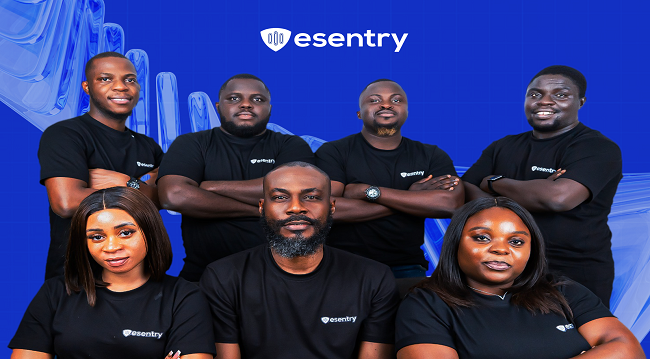
Cyber adversaries targeting African organisations are increasingly shifting away from opportunistic attacks toward deliberate, sector-specific campaigns aimed at the continent’s most critical digital infrastructures, according to the esentry 2025 Annual Report released by esentry, Lagos-based Africa’s leading indigenous Managed Security Service Provider (MSSP).

The report identifies healthcare, financial services, and telecommunications as the primary staging grounds for high-velocity cyberattacks, reflecting a growing focus on sectors that underpin economic stability, public welfare, and digital connectivity across Africa.
The findings are drawn from one of the largest cybersecurity datasets analysed in the region. Over the course of 2025, esentry processed more than 31 billion security events, generating 3.5 million alerts and successfully blocking over 15,000 malicious attempts. This monitoring scale shows that, while traditional financial institutions remain a core target, the threat landscape has expanded to include digital lending platforms, healthcare systems that store sensitive personal data, and telecom operators responsible for national and regional connectivity.
Within the healthcare sector, the report highlights ransomware as the most acute risk, with attackers frequently exploiting exposed Remote Desktop Protocol (RDP) services to compromise patient data and disrupt essential medical operations. In financial services, organisations are facing a surge in credential abuse, insider-related threats, and info-stealer malware designed to enable fraud and unauthorised access. Telecommunications providers are increasingly targeted by highly tailored phishing campaigns and attacks on exposed web services, which aim to harvest credentials and compromise customer data.
Commenting on the findings, Gbolabo Awelewa, Chief Business Officer at esentry, said the nature of cyber threats across Africa has evolved significantly. “The threats we are seeing today are deliberate, informed, and carefully tailored to local enterprises. Attackers are exploiting trusted access and moving quietly within networks, which makes early detection critical. Our coordinated cybersecurity model, spanning Defence, Intelligence, Offence, and Security Engineering, allows us to combine scale, speed, and deep contextual insight to detect and neutralise threats before they escalate,” Awelewa said.
A defining trend identified in the report is the shift from overt system exploitation to the abuse of legitimate access. By leveraging compromised credentials and ‘living-off-the-land’ techniques, attackers can blend into routine enterprise operations and significantly delay detection. This approach has compressed the attack lifecycle, enabling adversaries to move from initial access to full operational impact in fewer than 15 days.
To counter this acceleration, the report emphasises the importance of early detection and automated response. esentry says it currently contains low-complexity incidents in under 90 seconds, using a combination of structured threat hunting and centralised telemetry to anticipate and absorb attacker pressure rather than reacting after damage has occurred.
As African organisations continue to digitise, the esentry 2025 Annual Report positions itself as a critical reference point for understanding the continent’s evolving cyber threat environment. The report concludes that protecting Africa’s digital trust will require a shift away from fragmented security tools toward disciplined, coordinated defence frameworks, what esentry describes as a unified Phalanx formation.

Sunil Bharti Mittal Conferred GSMA Lifetime Achievement Award for Transforming Global Telecommunications

Jumia Tech Week 2026 Begins with Tech Deals on Smartphones, Electronics, and Everyday Technology

AfDB Supports Francophone Africa Start-ups with €6.5M

Krishnan Exits Africa Data Centre to Embark of Professional Chapter

Galaxy Backbone Announces Expansion of GOVMAIL to Over 150,000 Accounts

Accidental Billionaire Opts for Jail Instead of Returning Money Credited Him by Mistake

New Horizons Nigeria Breaks Ground: First to Fuse Mandarin into ICT Curriculum

Kaspersky Brings more Transparency to Threat Detection with New Hunt Hub

NDPC Commits to Balancing Data Privacy, Protection Information

OADC Lagos Reinforces Commitment to Local Data Hosting and Digital Transformation @ NDPC’s National Privacy Week Summit




 E-Financial1 day ago
Mutual Benefits Assurance Reaffirms Full Regulatory Compliance, Enhanced Governance

 E-Financial1 day ago
Iran-Israel-US Conflict and CBN’s FX Gains: A Stress Test for Nigeria’s Monetary Stability

 General News1 day ago
SERAP Asks FCCPC to Investigate Google, Meta, Others over Alleged Rights Abuses

 General News1 day ago
JAMB Uncovers AI-Driven Fraud Targeting UTME Candidates, Warns Parents

 News1 day ago
FlashChange CEO, Bidemi Oke, Urges Startups to Build Strong Governance Structures Early

 News1 day ago
TeamApt, Awabah Partner to Boost Pension Drive for Nigerians

 General News1 day ago
Capelli Institute Commits to Advancing Trichology in Nigeria

 E-Financial1 day ago
Reps Mull Commission to Regulate Fintech Operations