

E-Financial
Nigeria Is Broke! Trillions in Oil Revenue Looted

Opinion by Dr. Peregrino Brimah
Diezani Alison-Madueke, Petroleum minister said in London, October that the theft of oil revenue needed for national building amounted to terror.
David Cameron, British Prime minister, said at this year’s World economic forum meeting at Davos on January 24, that Nigeria earned 100 billion dollars in oil revenue for the year 2012—which is more than all the aid given to the entire Sub-Saharan Africa—but corruption and lack of transparency of the civilian administration denied growth and causes suffering to continue in the nation, with a huge amount of Nigeria’s earned revenue being looted ever before it reaches the nation.
One such “hole” or “massive gap” Cameron referenced that had been uncovered, accounted for the looting over 800 million dollars from oil revenue paid to Nigeria.
The British Prime Minister called for global attention to the epic looting and economic terrorism that is completely destroying Nigeria.
Presidential spokesman Reno Omokri denied these revelations and accusations of the British Premiere, but this link proves: https://www.gov.uk/government/speeches/prime-minister-david-camerons-speech-to-the-world-economic-forum-in-davos.
Premium Times on November 12, published startling findings of a 7 billion dollar hole in Nigeria’s oil revenue retrieval, with the NNPC implicated along with Swiss oil dealers. In the report from the Berne Declaration, a Switzerland based anti-corruption NGO (http://www.evb.ch/en/p25021690.html); it was shockingly exposed that Nigeria’s oil was being sold below market price in an elaborate inter-continental scam involving the petroleum ministry and foreign cartels, operating in financial lax Switzerland.
The harrowing report from the Berne Declaration which includes a distressing 20 page BD Research detailed publication “Swiss traders opaque deals in Nigeria” (http://issuu.com/erklaerungvbern/docs/bd-nigeria-en-20131101?e=3524425/5474605#search), exposed in detail, numerous looting operations of the Nigeria oil marketing sector. Some issues highlighted: Nigeria is the only major producing company that sells 100% of its oil via private intermediaries, thus the nation loses in extra revenue swallowed by the oil baron cabal.
These middle men, “brief-case holders” act as “letter boxes” for PEP’s (politically exposed persons) –the well-known and hidden Nigerian cabal. 2.
The irresponsible secret calls for tender, a common practice in Nigeria; this of course is a setup between parties to get kickbacks in billions, and sell the nation’s oil at treasonous prices. Most of Nigeria’s oil is marketed through the Switzerland channel.
Well known is the multibillion fuel subsidy scam which the ministry of petroleum allowed to fester for years, effectively robbing Nigeria of more than N2 trillion. No one has yet been held accountable for any of these elephantine pilferages.
Ngozi Okonjo-Iweala, minister of the economy, has stubbornly denied that the nation is broke. This is far from the truth and reality on the ground. Multiple sources within all arms of the Federal government acknowledge that Nigeria is broke and unable to take care of it financial obligations to the people.
The budget for the fiscal year, 2012 was 5 trillion naira, this is about 30billion dollars.
The total revenue earned from oil sales in the same year, according to British Prime Minister David Cameron was 100 billion naira.
There is a gross discrepancy in the budget – not inclusive of actual funds disbursed—from the total earnings in oil revenue.
This gap can only be accounted for if Nigeria paid in amortization on its foreign debts to the tune of 70 billion dollars.
However in this same period, Nigeria has accumulated greater foreign debts and its 2012 repayment figure was $246,663,000 according to Index mundi.
The total foreign debt stands at $6.7 billion. Clearly, foreign debts are not where our massive revenue from oil is going. The government in this period, rather also embarked on schemes to tax the masses via removal of oil subsidies and other schemes to supplement capital for government expenditure.
More of such are put out almost every day. But despite increased taxation and levying, there is no money in the economy, as looting has completely drained the nation’s coffer of all wealth.
Nigeria’s domestic debts have also been catapulting as the nation awards contracts but cannot afford to pay the contractors. This domestic debt currently stands at over N6.1 trillion.
If not the ASUU strike, then the recent riots over none payment of stipend by Niger Delta Amnesty militants in Russia, highlights the disturbing reality of the broken state of the economy; even pet and prized projects and national security concerns of the administration in which they have the most vested and regional interests can no longer be sustained and funded.
Following the money—in this same period of rising domestic and foreign debt, Nigeria is making more and more “businessmen” and oil oligarchs, billionaires in dollars.
Compounding the acute lack of capital in the nation, implicated on looting of oil revenue by collaborations involving the ministry of petroleum with its family of international business stooges and a cartel of oil barons, is an artificial, politically motivated capital constriction.
As is a common dirty practice in Nigerian politics, the ruling administration purposefully starves the nation of circulating capital to bring the nation to its knees ahead of elections, with aim to manage the release of this capital through the subservient, to influence votes.
This artificial, criminal crisis instigated two years to the next presidential election has created a potentially unrecoverable economic catastrophe.
At the head of Africa’s largest nation’s financial meltdown is the oil minister, one of the president’s , or rather, “Charlie’s angels;” a billionaire or trillionaire, who “owns” Nigeria’s corporate media and senate and remains relatively insulated from proportional castigation and arrest for gross looting of the nation’s oil revenue.
A typical case that merits little media attention involves the minister of oil, Diezani Alison-Madueke and two of her alleged “stooges,” one Jide Omokore and another Kola Aluko.
A case of iniquitous misappropriation of over N58.9 trillion naira from the illegal transfer of four oil blocks in favour of Jide Omokore`s ATLANTIC ENERGY DRILLING CONCEPT. This whopping sum the minister and her coterie are accused of plundering, equals the nation’s total earned oil revenue for four years at the rate of $100bn or 16 trillion/year.
The case is being handled by the Senator Emmanuel Paulker-led Committee on Petroleum Upstream. (National Enquirer) These “Diezani boys” who have recently been featuring in the news, command so much wealth, they are reported to be flying around the world in private jets and buying up hundreds of millions of dollars worth of property and boats. Illustrating the authority and audacity of Jide Omokore, he was arrested in France with Nigeria’s presidential jet in November of 2012 (http://saharareporters.com/news-page/french-police-detain-nigerian-private-jet-carrying-president-jonathans-front-man).
What the gross, blatant robbery and misappropriation of Nigeria’s wealth, being stolen before and after it reaches the nation; accounts to is frank terrorism.
The nation is on its knees, crippled and begging for international assistance from the ongoing siege. The masses who pay tax and pay fuel subsidies, only for the income to be looted in whole, are what can be termed as “mugus,” “fools,” as also is the nation’s military currently dying, engaged in what the police should have controlled (waging a war against Boko Haram terrorists in the nation’s north eastern borders) while in a role-reversal, the police are occupied in fascist intimidation campaigns, as criminal tools of the presidency.
While the drained military die to clean up the mess of politician and police fatuitous obliquity, the culprits and masterminds behind Boko Haram remain free with impunity, guzzling the nation’s wealth in high offices.
“Tax and Transparency after the G8: Nigeria and Beyond” revealed in London this October that “Nigeria is the only country in the world where illicit financial flows, which it estimated at about 10 percent of GDP, are larger than tax revenues levied outside the natural resources industries.”
This means, officially more than what Nigerians suffer to pay in taxes is being looted. Oil pollution in the Niger Delta has already reached levels of irreversible poisoning of the ecological environments.
And nothing has been done to check this, as reckless looting of the oil resource is at its highest ever with consequential loss of revenue and dangerous cancer causing morbid pollution.
Another form of massive and reckless looting of the recent civilian regimes is in the privatization craze.
What one of Nigeria’s cabal who recently part-purchased PHCN (Power assets) coined the term “Africapitalism” to promote.
The reality is that these private sector cabal, do not provide alternative and cost effective service to supplement the government failures, but rather they accentuate the failure, then buy the nation’s assets at a tenth of their value to then turn around and offer the service or utility at double or triple the global charges for these.
A benefactor of government unregulated oligopolistic service provision, recently referred to the wealth profiteered from the masses as “ritual-like.”
This Africapitalism is a grand scheme of extortion of the 160 million masses and sheer robbery. Unless something is done and done fast, Nigeria will never recover from the epidemic looting of its 6th republic.
Some in some quarters clamor for a fractionation of the nation—the size of which may actually be a factor in the impossibility to abate the gargantuan looting—however the next most urgent step for the nation is a Rawlings-style, “bloody” cleaning out and recovery of looted national assets and wealth, or else Nigeria or the fragments of it will never recover from the colossal looting that has been the bane of its 6th republic.
They say that one day the masses will have nothing left to eat but the rich. The day has indeed come.
Dr. Peregrino Brimah
http://ENDS.ng [Every Nigerian Do Something]
Email: [email protected] Twitter: @EveryNigerian


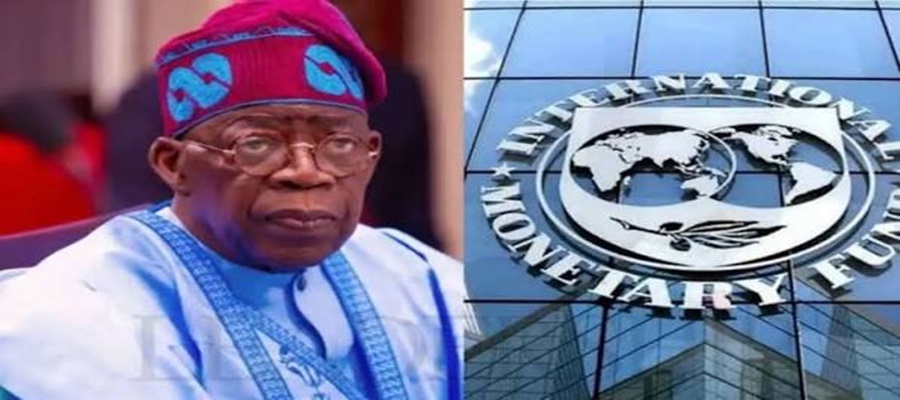
International Monetary Fund (IMF) has raised concerns over Nigeria’s fiscal transparency, disclosing that about two per cent of the country’s Gross Domestic Product (GDP), estimated at N8.83 trillion, was omitted from recent official budget documents.

Bola Tinubu
Unreported public spending—also known as off-budget expenditure—happens when a government spends money on public projects or services without including those costs in official budget documents.
This practice hides the true size of the government’s deficit, hides debt accumulation, and distorts overall economic data.
The IMF said the unreported expenditure has created a significant gap between Nigeria’s reported fiscal deficit and its actual financing requirements, making government borrowing appear lower than it truly is.
Speaking at an industry event in Lagos, Christian Ebeke, resident representative of IMF in Nigeria, said the expenditure should have been reflected in the country’s fiscal accounts to present a more accurate picture of public finances.
“So far we think that there are about two per cent of GDP of expenditure that were not reported that should be reported and should be recorded, so that this statistical discrepancy will disappear,” Ebeke said.
The estimate translates to approximately N8.83 trillion, based on the National Bureau of Statistics’ (NBS) latest nominal GDP figure of N441.5 trillion for 2025.
According to the NBS, Nigeria’s nominal GDP increased from N372.8 trillion in 2024 to N441.5 trillion in 2025 following improved performance across both the oil and non-oil sectors.
Using the Central Bank of Nigeria’s average exchange rate of N1,436 to the dollar for 2025, the omitted expenditure amounts to about $6.15 billion.
Ebeke attributed the discrepancy largely to capital projects executed outside the formal budget framework, noting that the omission had distorted assessments of Nigeria’s fiscal position and public investment profile.
He explained that some government spending was neither captured in approved budget documents nor reflected in budget implementation reports, resulting in an understatement of the country’s actual fiscal deficit.
According to him, the lack of comprehensive reporting also complicates coordination between fiscal and monetary authorities, as policymakers are left without a complete picture of government finances.
“The lack of full reporting can also complicate coordination between fiscal and monetary policy, as policymakers may not have a clear picture of the true deficit,” he said.
Ebeke warned that off-budget spending raises broader concerns about accountability, procurement processes and institutional oversight, stressing that improving fiscal transparency should remain a priority for the government.
“Improving transparency is critical,” he added, noting that expenditures outside the formal budget process undermine effective oversight and public accountability.
The IMF representative, however, acknowledged that the Federal Government has begun taking steps to address the problem through legislative reforms aimed at bringing previously unreported expenditures within the formal budget framework.
He said the authorities were working to amend existing budget laws to ensure greater disclosure of government spending but stressed that such reforms must be accompanied by timely and comprehensive budget implementation reports.
According to him, closing the reporting gap is essential to strengthening public financial management, improving transparency and restoring confidence in Nigeria’s fiscal framework.
The IMF’s latest observations come months after the National Bureau of Statistics rebased Nigeria’s economy, changing the GDP base year from 2010 to 2019, a revision that significantly increased the size of the country’s economy and, by implication, the value of expenditure estimates expressed as a percentage of GDP.
The concerns also follow the IMF’s recent Article IV Consultation on Nigeria, in which the Fund commended the Federal Government’s ongoing economic reforms for improving macroeconomic stability and boosting investor confidence, while cautioning that persistent structural weaknesses continue to limit the impact of the reforms on the broader population.

Visa is expanding access to Visa Pay for additional issuers across Africa through a software development kit (SDK) that enables banks, mobile money operators, and fintechs embed Visa Pay capabilities into their existing mobile applications and to launch virtual cards and payment experiences quickly and securely.

According to a statement from the company, the solution is an interoperable and secure way for banked and unbanked consumers to transact and move money across participating banks, fintechs and mobile networks.
Issuers adopting Visa Pay’s SDK span multiple markets across the continent including Ghana, the Democratic Republic of Congo, Sudan, Comoros, Mauritius, Zambia, Zimbabwe, Botswana, Tanzania, and Sierra Leone.
With integrated issuer processing capabilities, built-in customer experience, tokenisation readiness and Visa-certified security and compliance components, SDK helps accelerate and simplify the deployment of Visa Pay, particularly in markets where infrastructure constraints can slow digital transformation.
Looking ahead, Visa Pay will continue to evolve with new capabilities designed to further simplify everyday payments. Among the features expected to launch soon is Tap to Pay, which will enable consumers to make secure contactless payments by simply tapping their phone at a contactless-enabled checkout terminal, said the firm.
“Visa Pay is designed to help issuers meet a wide range of market needs, from secure e-commerce and remittances to mobile money-linked virtual cards, humanitarian disbursements, person-to-person payments and future contactless experiences,” said Godfrey Sullivan, senior vice president and head of products and solutions for Central and Eastern Europe, Middle East and Africa at Visa.
“The adoption of Visa Pay represents an important step in strengthening our digital payments capabilities and supporting our broader digital transformation agenda. At a time when Sudan’s current challenges have increased the need for resilient and accessible financial services, we believe digital payment solutions play a critical role in enhancing customer convenience, supporting business continuity, and promoting financial inclusion” commented Yousif Eltinay, CEO of United Capital Bank, Sudan.
According to Jesse Jackson, chief digital and innovation officer for Tanzania Commercial Bank, from a business perspective, Visa Pay will enable it accelerate digital adoption among both consumers and merchants, increase transaction activity within its ecosystem, expand merchant acceptance and strengthen customer engagement.
“It also supports our broader goal of driving financial inclusion by bringing more individuals and businesses into the digital economy.”


Nigeria Deposit Insurance Corporation (NDIC) has warned members of the public against carrying out any transactions with the 46 microfinance banks whose operating licences were revoked by the Central Bank of Nigeria (CBN).

NDIC
The corporation issued the warning on Thursday following the revocation of the licences by the CBN on July 1, 2026.
In a statement, the NDIC said it had been appointed the official liquidator of the failed banks pursuant to Section 12(2) of the Banks and Other Financial Institutions Act (BOFIA) 2020 and Sections 55(1) and 55(2) of the NDIC Act 2023.
It stated that the affected microfinance banks were no longer authorised to carry out banking business in Nigeria following the withdrawal of their licences.
The corporation cautioned members of the public against engaging in any unauthorised transactions with the closed banks or attempting to tamper with their assets and records.
It warned that any attempt by individuals to remove, conceal, retain or interfere with the assets, records or properties of the failed institutions would constitute a violation of the law and could attract appropriate legal sanctions.
According to the NDIC, it has commenced the process of an orderly closure of the banks through their immediate takeover, verification of depositors and payment of insured deposits to eligible customers.
The corporation assured depositors that the liquidation process would be conducted in accordance with relevant laws and regulations.
It added that depositors and the general public would be kept informed on further steps regarding the liquidation exercise, including the verification process and payment of insured sums to eligible depositors.
The NDIC urged customers of the affected banks to remain calm, assuring them of its commitment to protecting insured deposits and ensuring an orderly resolution of the failed financial institutions.

Court Declares Keystone Bank Staff Wanted over Alleged N35m Fraud

IMF Raises Concerns over N8.83 Trillion Unreported Spending in Nigeria’s Budgets

NOTAP to Commercialise University Research, Expands Patent Drive

FG Unveils Digital Postcode System for MDAs

BoI, NBCC Sign MoU to Deepen Bilateral Trade, Industrial Growth and Investment

Mobile Internet Gender Gap Widest in Africa – GSMA

London Strengthens Global Investment Ties with Africa @ First Ever London-Africa Business Summit

FG Targets Alleged N3tn Capital Flight, Opens Airtime Credit Market to Nigerian Fintechs

Japan, UNESCO Boost Digital Learning in 15 CoEs with Donation of ICT Equipment

Nigeria Launches FreeTV Nationwide




 News2 days ago
Verve Strengthens Global Acceptance Across Leading Digital Platforms

 News2 days ago
Army Says Terrorists Now Recruiting, Raising Funds Online

 Telecom2 days ago
Lebara Nigeria Becomes Member of GSMA Network

 E-Business2 days ago
Kaspersky Warns of The Gentlemen Ransomware Group Expanding Operations with New Malware

 Telecom2 days ago
Airtel Nigeria Deepens Focus on Data Usage Transparency @ Customer Forum

 Telecom2 days ago
Vitel Wireless Warns Public, Says it Not Running any Investment Scheme

 E-Financial2 days ago
Bank of Industry Appoints Kuramo Capital as Manager of Dice Fund of Funds

 General News2 days ago
FG to Abolish JSS-SSS Separation Policy after 20m Pupils Drop Out