

Telecom
Adapt or Die: Nigeria’s Telecoms Sector’s Chance at Survival Amid Economic Turmoil


By Dr. Roseline Oluwaseun Ogundokun
When the Global Systems for Mobile Communications (GSM) was first introduced into the Nigerian market in 2001, the acquisition of a cellular device swiftly became a badge of distinction, signifying one’s immersion in the technological revolution of the 21st century.

Dr. Roseline Oluwaseun Ogundokun
The devices became the exclusive purview and financial burden of the elite, relegating many middle-class households to sharing a solitary device among its members. It was expected.
The cost of procuring a Subscriber Identity Module (SIM) hovered between N40,000 to N50,000 (about $384 to $480 at the time), while iconic models such as the NOKIA 3310 and Samsung series commanded prices exceeding N80,000 (about $769) to over N100,000 (about $961). At inception, networks operated within the 900 and 1800 MHz spectrum with a billing structure set at about N50 per minute, until the introduction of the per-second billing system. As such, barely 10% of the country’s 125-million population could afford to own a device with regular credit recharge.
But before the arrival of such devices with an unattainable luxury status for the economically disadvantaged, Nigerians had long grappled with problematic services from the oft-maligned Nigerian Telecommunications Limited (NITEL). Until 2001, NITEL’s 16-year operation was plagued with citizen discontent over poor management as it maintained monopoly over Nigeria’s telecommunications and data services. The arrival of GSM — spearheaded by MTN, Econet (now Airtel) and MTEL months apart in 2001, and Globacom two years later in 2003 — to relieve the troubled service provider, therefore, changed everything.
In mobile phone accessibility and internet service affordability progress since that time, the numbers have been staggering. By 2022, two decades after GSM introduction, more than 222 million mobile phone subscribers existed in Nigeria according to the Nigerian Bureau of Statistics and the Nigerian Communications Commission (NCC), out of which over 215 million were active. The projections for the future are just as phenomenal. A steady surge in smartphone adoption is expected across the country from 2024 to 2029, with the user base estimated to reach a new peak in the next five years.
Network subscriptions are also at the lowest they have ever been. Mobile data subscriptions in Nigeria, today, are available for as low as N25 while call rates go as low as 9 kobo per second. However, considering Nigeria’s frail economic climate in recent years, providing affordable services to citizens while maintaining high-standard infrastructure presents the greatest challenge for the telecommunications industry and operators in the country.
Nigeria’s economy has experienced two major recessions over the last 10 years and currently faces one of its most difficult periods of uncertainty. Recent market conditions and currency devaluation have plunged the value of the Naira in the foreign exchange market, resulting in skyrocketed prices of commodities. Unfortunately, the telecommunications sector, which contributes approximately 16% to Nigeria’s GDP, is, like other sectors, not immune to the profound repercussions of the prevailing economic upheavals.
The telecoms industry, like many others in the country, is heavily reliant on foreign exchange (FX) for the procurement of essential equipment, infrastructure, and technology. With a significant portion of telecom equipment and services being imported from foreign markets, fluctuations in currency exchange rates directly impact the cost of operations for industry players. As the value of the Naira fluctuates against major currencies such as the US Dollar and Euro, the cost of procuring equipment and services denominated in foreign currencies escalates, placing immense strain on the financial resources of telecom companies.
Mobile network operators in the telecommunications sector, whose tariffs are rigorously regulated by the NCC, therefore, face a dilemma in balancing investments towards sustaining quality and affordable services for their vast subscriber base with their goal of achieving profitability. For a sector battling various environmental and infrastructural impediments including frequent fibre cuts due to road construction and vandalism, right-of-way challenges, and exploitative rent-seeking practices, maintaining operational efficiency amidst prevalent economic adversities become increasingly daunting.
None of these existing challenges are alien to industry regulators and stakeholders. Operators’ advocacy for critical infrastructure protection in the ICT/telecommunications sector in recent years has especially served as a striking illustration of a cry for proactive actions to curtail the profound financial impact of such obstacles on its operations. Yet, while these challenges persist, mobile network operators have remained unflinching in their commitments to ensuring seamless connectivity, service reliability, and pricing affordability for their subscribers.
Despite Nigeria’s headline inflation rate surging to a 27-year peak of 29.9% in December 2023 and reaching 33.2% in March 2024, the telecoms industry, compared to other sectors adeptly adapting to Nigeria’s changing market conditions, continues to find itself traversing the intricate terrain of regulatory compliance and financial viability. In the mobile market which maintains a strong connection to the telecoms sector, for instance, prices of mobile phones, today, have nearly doubled to reflect the rising cost of production and import, while call and data tariffs largely remain the same they have been for over a decade.
A similar rise in cost has been evident in food prices which increased to over 30% in February, impacting the fast-moving consumer goods (FMCG) sector. The sector has since adjusted, with FMCG corporations including brewing companies increasing product prices in tandem with the high cost of raw materials and production. Companies in other sectors providing domestic consumer needs, such as Pay TV companies and Discos, have also duly followed suit by conducting price reviews in recent times.
While these price adjustments may be inconvenient for consumers due to limited purchasing power, they are more than necessary for businesses to continue to meet demands, deliver value to shareholders, and contribute significantly to the Nigerian economy.
It is especially pivotal to recognise the broader socio-economic implications for Nigeria if the telecoms sector sticks with its pricing plans as other sectors adapt. The industry is reputable for its crucial role in driving economic growth, creating employment opportunities, and improving digital inclusion efforts across the country.
Notably, over 15,000 people have been directly employed by licensees in Nigeria’s $75.6 billion telecoms sector, according to a December 2022 report by the NCC. Also, as of second quarter 2023, the Information and Telecommunications industry ranked highly among activity sectors contributing the most to the country’s GDP. Not least of mobile service providers’ critical contributions to socio-economic issues is their position at the forefront of Nigeria’s digital inclusion ambitions, which sees them providing more than 83 million citizens with the opportunity to benefit from prompt information access and exchange necessary for increased social and business productivity.
A lack of adjustments within the sector amidst FX-dependent pressures and rising inflation will indubitably pose a threat to these transformative indicators in the next few years. When telecom companies struggle to maintain and expand their infrastructure, there are higher chances of network congestion, dropped calls, and slow internet speeds that can undermine productivity, hinder business operations, and diminish the overall quality of communication services. Operators’ ability to invest in infrastructure upgrades, network expansion, and technological advancements could be significantly hampered, significantly impacting coverage and service quality.
They can’t afford to test consumers’ patience in this regard.
Quality of Service (QoS) in the sector is, indeed, deemed non-negotiable among consumers. Regardless of any situation within or beyond their control, operators are expected to uphold high standards of service delivery to remain competitive and retain customer loyalty, and any compromise can have far-reaching consequences. But maintaining and improving on progress made thus far in the sector would be impossible without access to adequate financial resources for further investments. It is, as such, a critical time to employ new adaptive strategies for the sector to achieve profitability and survive in an increasingly competitive landscape.
Operators such as MTN Nigeria, Airtel, Globacom, and 9Mobile have commendably demonstrated an understanding of the grim economic situation’s impact on citizens’ spending power by adhering to regulators’ rules and showing restraint in pushing for higher charges. However, their display of empathy may prove to be their Achilles’ heel in a brutal business and economic climate. Therefore, the review of tariffs to reflect new economic realities, despite regulators’ reluctance, may be long overdue.
At this critical juncture, the onus is on regulators to ensure that consumers are adequately informed about the imperative need for an upward revision of tariffs to secure the industry’s survival. This revision would provide crucial funding for network infrastructure upgrades, necessary for the continued delivery of services.
A measured review of current tariffs, with pricing plans that are adaptive and responsive to the evolving business and economic climate, would enable the industry to mitigate potential socio-economic and business risks. However, regulators must strike a delicate balance between consumer protection and the sustainability of the telecom industry.
The telcos have expressed their readiness to collaborate with regulators on reasonable adjustments in call and data tariffs to mitigate the cost of running their networks. As the Association of Licensed Telecommunications Operators of Nigeria (ALTON) recently stated, “For a fully liberalized and deregulated sector, the current price control mechanism, which is not aligned with economic realities, threatens the industry’s sustainability and can erode investors’ confidence.”
As economic pressures on the sector intensify, telcos hope that their concerns will be understood, and urgent action taken to ensure their continued capacity to offer improved services, before the damaging impact of inaction becomes more pronounced than imagined.
Dr. Roseline Oluwaseun Ogundokun serves as a lecturer and SDG 4 Cluster Team Lead at Landmark University’s Department of Computer Science. Additionally, she holds the position of Multimedia Engineering and AI Researcher at Kaunas University of Technology in Kaunas, Lithuania.


Nigeria Data Protection Commission (NDPC) has issued a stern warning to content creators filming and sharing videos of unsuspecting citizens on social media, describing such practices as direct violations of citizens’ rights to informational self-determination.

NDPC
The Commission drew attention to individuals capturing pictures and footage of the general public without consent, breaching Section 37 of the 1999 Constitution of the Federal Republic of Nigeria (as amended) and the Nigeria Data Protection Act, 2023 (NDP Act).
NDPC specifically flagged a content creator in Lagos State who films unsuspecting passersby at roadsides for a “reality show”. The Commission stressed that processing personal images in this manner demands explicit consent or a justifiable lawful basis under the NDP Act.
Preliminary investigations revealed no public or legitimate interest served by this “wilful invasion of privacy”. Data subjects, the Commission noted, have no reasonable expectation that their images would be captured and broadcast globally by an unknown individual.
National Commissioner/CEO Dr Vincent Olatunji has instructed social media platform owners—including TikTok, X (formerly Twitter), and Meta—to intensify enforcement of community guidelines to prevent harm from unlawful and unfair personal data processing.
Platforms failing to act promptly face sanctions under the NDP Act. Individual creators remain personally liable for violations, potentially facing criminal prosecution for infringing citizens’ and data subjects’ privacy rights.
The advisory was signed by Babatunde Bamigboye, Esq. CDPRP, Head of Legal, Enforcement and Regulations.
NDPC emphasised that abuse of rights under the guise of entertainment will not be tolerated, urging compliance to safeguard Nigerians’ data privacy in the digital age.
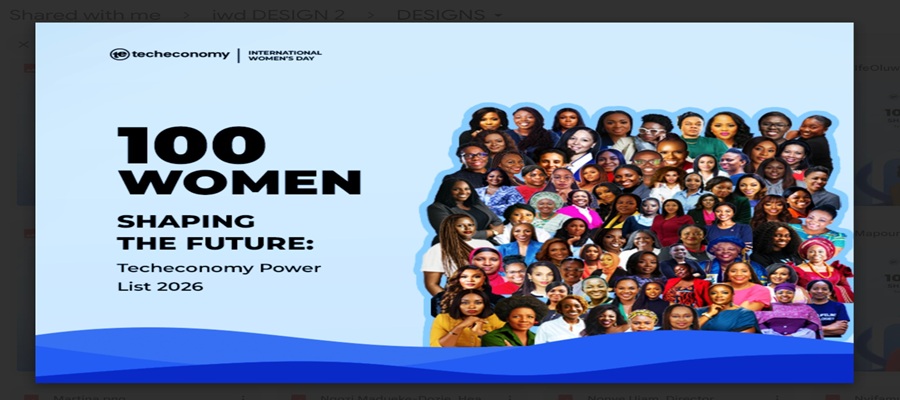
In celebration of International Women’s Day (IWD) 2026, Techeconomy, a leading business news platform in Nigeria, has unveiled its “100 Women Shaping the Future: Techeconomy Power List 2026,” recognizing exceptional women driving innovation, leadership, and impact across technology and the broader digital economy.

Techeconomy
The annual recognition spotlights women who are transforming industries through entrepreneurship, policy leadership, digital innovation, financial inclusion, media, education, and emerging technologies.
The initiative is part of Techeconomy’s commitment to promoting gender inclusion and highlighting female leadership shaping Africa’s technology ecosystem.
The Techeconomy IWD Power List features a diverse group of women, from corporate executives and startup founders to policymakers, ecosystem builders, and social innovators, whose work continues to influence the future of technology, business, and digital transformation in Nigeria and across Africa.
Speaking on the initiative, Joan Aimuengheuwa, the Managing Editor at Techeconomy, noted that the recognition goes beyond celebrating titles, focusing instead on impact, resilience, and the ability to shape the future through innovation and leadership.
According to her, “the women on the list represent different sectors including fintech, banking, healthcare, agriculture, education, communications, and the creative economy, demonstrating the growing role of women in advancing technology-driven development.
The unveiling aligns with the global celebration of International Women’s Day, which highlights the achievements of women and calls for accelerated progress toward gender equality. Across the world, the technology sector continues to push for greater female representation and leadership as part of efforts to build more inclusive digital economies.
Also speaking, Oluwatosin Aloba, the Brand Manager at Techeconomy, said: “Techeconomy IWD 2026 Power List is specially designed to inspire the next generation of female innovators and leaders by showcasing role models who are breaking barriers and redefining possibilities in the technology landscape.
“Techeconomy encouraged industry stakeholders, institutions, and the broader public to celebrate the achievements of these women while continuing to support policies, programs, and investments that expand opportunities for women in technology”, she added.
The full list of the “100 Women Shaping the Future: Techeconomy Power List 2026” is available on the Techeconomy website or visit: https://techeconomy.ng/techeconomy-iwd-2026-power-list-celebrates-100-women-shaping-the-future-of-tech/.

National Information Technology Development Agency (NITDA), via its Office for Nigerian Digital Innovation (ONDI), has partnered with the Japan International Cooperation Agency (JICA) to launch applications for the fifth cohort of the iHatch Startup Incubation Programme, targeting 37 innovation hubs—one per state and the Federal Capital Territory (FCT).

NITDA
The initiative selects hubs as state-level managers to run incubation programmes, addressing uneven support outside Lagos and Abuja. “Nigeria’s startup ecosystem has grown rapidly, but access remains uneven,” said ONDI National Coordinator Victoria Fabunmi. “iHatch builds stronger hubs, standardises quality, and boosts investment readiness across all regions.”
Amid Africa’s $3.42 billion startup funding in 2025, Nigeria’s innovation clusters in major cities, sidelining rural founders. Selected hubs will incubate five startups each for at least one year, providing structured guidance for growth and funding. Hubs gain operational support, resources, and performance rewards—prioritizing ecosystem leadership over cash grants.
Eligibility and Timeline
Eligible hubs must:
Operate for at least one year with local engagement.
Possess infrastructure for incubation activities.
Applications close March 16 at ondi.nitda.gov.ng/#/ihatch.
Fabunmi emphasized: “By equipping hubs with tools, curriculum, and oversight, iHatch ensures consistent outcomes for founders everywhere,” tackling geographic gaps to scale local innovation.

CBN Orders Banks to Restrict Access to Banking Services for Loan Defaulters

NLNG Advances Media Excellence with Change Your Story Workshop
Interswitch Advocates Trust-Driven Infrastructure as Cornerstones of Africa’s Cross-Border Capital Future

Why JustMarkets Is a Strong Choice for Gold Trading

UBA Business Series Celebrates ‘Gen.W: The Evolved Woman’ in Push for Female Empowerment

Kaspersky Discovers New Phishing Campaign Exploiting Google Tasks Notifications to Steal Corporate Credentials

esentry 2025 Report Shows Healthcare, Financial Services and Telecoms as Staging Grounds for Increased Cyberattacks in Africa

AfDB, UNDP Launch $10Bn AI Initiative for Africa

Pheelz Shares His Journey on Glo-Sponsored African Voices

Mutual Benefits Assurance Settles ₦5.9bn Claims in January 2026




 E-Business2 days ago
FG Moves to Strengthen Children’s Online Safety

 E-Financial2 days ago
CBN Directs Banks to Activate Anti-Money Laundering Systems

 Telecom2 days ago
Canal+ Unveils €100m Rescue Plan to Revive MultiChoice after Subscriber Slump

 General News1 day ago
Court Freezes Bank Accounts of Petrocam, Founder over Alleged N9Bn Zenith Bank Debt

 General News1 day ago
FCCPC Says Telcos, Energy Firms Lead Consumer Complaints in Nigeria

 E-Business2 days ago
How Africa Can Turn the AI Wave into Inclusive Growth

 E-Business2 days ago
Nigeria’s Non-Oil Exports Hit N12.36trn in 2025 – NBS

 E-Financial2 days ago
Fintechs Gear up to Combat Fraud as CBN Issues Directive on Fraud Detection Solution