

General News
Again, Gambaryan, Binance Executive Accuses 3 Lawmakers, NSA of Demanding $150m Bribe

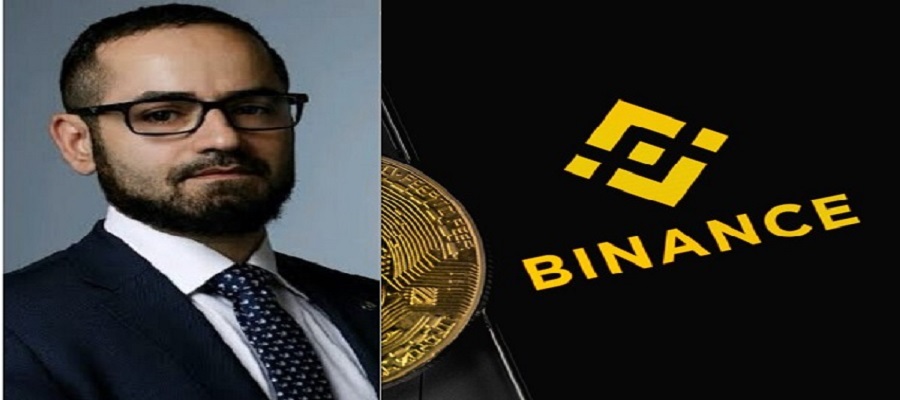
Tigran Gambaryan, head, Financial Crime Compliance Unit at Binance, cryptocurrency firm, who was detained in Nigeria for several months last year, has again alleged that three Nigerian lawmakers demanded a $150 million bribe from him.

Tigran Gambaryan, head, Financial Crime Compliance Unit at Binance
Gambaryan, also alleged that, Nuhu Ribadu, National Security Adviser (NSA) demanded billions worth of crypto accounts to fund his future political ambitions. He, however, did not say in which currency the alleged demand was made.
Tweeting on his X handle, formerly known as Twitter, with the name @TigranGambaryan on Friday, Gambaryan named two lawmakers involved in a meeting of January 5, 2024, at the National Assembly as Peter Akpanke and Philip Agbese, whom he said were working under the committee of Ginger Obinna Onwusibe, while he could not recall the name of the third lawmaker.
Narrating his alleged ordeal in Nigeria on X, Gambaryan said that the lawmakers set up fake cameras and media to make the meeting with his team official but that the cameras were not even plugged in.
Onwusibe is the chairman of the House of Representatives Committee on Financial Crimes, Akpanke is a member of the committee, and Agbese is the deputy spokesperson of the House.
The NSA’s office and the lawmakers have all denied the allegations. This is just as the federal government called on Nigerians to disregard the accusations, saying there are false and outrageous.
Gambaryan, who was detained in February 2024 on a five-count allegation of money laundering, was released on October 23, 2024, on diplomatic grounds due to ill health.
Continuing, Gambaryan said ‘@NuhuRibadu invited us to the official meeting and worked through Sa’ad Abubakar. Another key figure in this situation was Hamma Adama Belloji. Ogunjobi was just a pawn; they used him too. This was sold as a friendly meeting with the NSA, the head of the SEC (Securities and Exchange Commission), and the CBN (Central of Bank of Nigeria) governor and includes a discussion of the briber that was solicited by the House of Representatives.
‘The $26 billion figure they kept pushing publicly as some mystery money escaping Nigeria is complete BS. This information was provided in response to their request and was simply cumulative trade data for Nigerians on the platform. This money didn’t leave Nigeria-it was just people buying and selling crypto. For example, if you trade $100 a hundred times, that’s $10,000 in trade volume, but in reality, you only used $100. Again, just another example of them lying to cover up their BS investigation.
‘They lied about Nadeem escaping during mosque prayers. In reality, he returned and escaped afterwards. I don’t know exactly how he managed to flee. He emailed me in November, but we haven’t discussed the details of his escape. It’s possible he paid someone off, but I have no proof. If Belloji had simply checked his passport for a visa, he would have realized that Nadeem did not use that passport to travel to Nigeria.
‘They sent a letter to the U.S. Embassy and the British High Commission, falsely claiming that we were voluntarily participating in strategic talks. This was a blatant lie’, he said.
While noting that some Economic and Financial Crimes Commission (EFCC) officials, who were not present when Nadeem escaped, were detained, he added that: ‘Nadeem did not escape lawful detention-we were being held illegally. Belloji even admitted that he would fabricate evidence to obtain a court order to detain us for 14 days. Once the court order expired, they were unable to get an extension from the judge. At that point, they continued holding us illegally and had no justification for doing so.
‘There was a lot of noise about using Interpol to capture Nadeem. As someone who has been involved in multiple extradition cases, I can confidently say this was a joke. Extradition is a lengthy legal process, and no rational judge in Kenya or wherever would ever approve extradition for someone who escaped illegal detention at the hands of rogue law enforcement-especially when that detention involved holding employees hostage to pressure their employer. All noise’, he said.
Our company was a scapegoat’
Gambaryan stated further that Binance was made a scapegoat for the naira’s devaluation, when it was the direct result of President Bola Ahmed Tinubu’s ‘monetary policy’. According to him, the Nigerian operatives violated international privacy laws on user data on all Nigerians to target opposition members for allegedly ‘manipulating the price of the naira.’
Accusations against Ribadu
Gambaryan said Ribadu emphasised that he wanted billions in payouts to fund his future political ambition but was ‘trapped’ because any settlement would be perceived as a bribe. He added: ‘I guess he really wanted his boss’ job.’
He added: ‘Ribadu even hired a U.S. law firm to negotiate my release, but this failed due to their incompetence and greed.
‘Ribadu overstepped his authority and embarrassed Nigeria in front of U.S. National Security Advisor Jake Sullivan. Ribadu acting like… angered the White House and led to diplomatic repercussions-the U.S. limited visas to the Nigerian delegation for UNGA (United Nations General Assembly), and (President Joe) Biden refused to meet with Tinubu until my situation was resolved.
‘In the end, Ribadu overestimated his influence. They thought they could secure a quick win, but instead, they created an international incident, exposing his incompetence on a global scale,’ the Binance executive said.
The federal government has however called on Nigerians to disregard what it called falsehoods being peddled by the Binance executive.
In a statement issued last night, Mohammed Idris, the Minister of Information and National Orientation.
It noted with concern the ‘outrageous allegations, misinformation, and defamatory statements being disseminated by Tigran Gambaryan’.
He said while the federal government is hesitant to engage Mr Gambaryan, ”given the high-level diplomatic intervention that resolved his case, we are obliged to set the records straight to stop his falsehoods from gaining grounds.
‘The first visit by Mr Gambaryan and his colleagues to Nigeria was discretional on their part and government was not officially involved. However, when the attention of the government was called to an alleged bribery demand during that trip, an investigation was immediately opened into it, though there was no formal complaint by anyone.
‘Mr Gambaryan’s second visit to Nigeria was part of a wider probe into the criminal manipulation of the Nigerian currency through peer-to-peer platforms like Binance, but investigators were frustrated by the tactics deployed by Gambaryan and his team.
‘Mr Gambaryan was released by the Nigerian government in October 2024, on humanitarian grounds and following a high-level diplomatic intervention that ended with tangible benefits for Nigeria.
The government rejected Binance’s offer of a $5 million down payment in exchange for Mr Gambaryan’s freedom, in favour of a more beneficial settlement with the American government.’
The minister added, ‘we categorically deny the retaliatory claims made by Mr. Gambaryan against Nigerian officials involved in his case, and we urge the public to disregard these false accusations in their entirety.
‘It is essential to note that Mr. Gambaryan’s allegations are not only unsubstantiated but also lack credibility, given his apparent motive to discredit and intimidate those who ensured he faced justice.
‘However, we are confident that both the Nigerian and American judicial systems will provide Mr. Gambaryan with a fair opportunity to substantiate his claims in court. Until then, we advise the public to exercise caution and not be swayed by Mr. Gambaryan’s unfounded and malicious claims.’
Also speaking on the allegations, the lawmakers mentioned denied demanding bribe from Binance, asking Mr Gambaryan to provide evidence to back his allegations or be ready to face consequences.
One of the affected lawmakers and deputy spokesman of the House, Agbese, said he was ‘outraged’ by the ‘false’ allegation as he was not part of any meeting with the Binance team, but had a chance encounter with them when he visited his friend, Akpanke.
He said: ‘Let it be on record that I am not a member of the Committee on Economic and Financial Crimes. I visited my colleague, Peter Akpanke, in his office, where he was meeting with some visitors about the activity of his committee, with Peter Anekwe, a member of the committee present. We exchanged pleasantries and, in character with my person as an avid pursuer of knowledge, discussed Binance’s activities that did not include any demand from anyone.
‘It was during this visit to the office of Peter Akpanke, with Peter Anekwe present, that he told me they were interfacing with the Binance team from abroad over a referral to their committee. What transpired between the two of them and the Binance executive after I left the office is left to them. I never saw those visitors again after that chance meeting and did not afterwards attend any meeting with Binance executives, the EFCC, or the DSS (Directorate of State Services).
‘I am aware that when this issue was first raised, the chairman of the committee went to court and Binance apologised. So, all inquiries should be directed to the committee, not to Philip Agbese.
‘I have never used any cryptocurrency as I do not have a crypto wallet anywhere in the world, so I could not have asked for funds to be credited to a non-existent wallet.
‘Gambaryan and his associate, who escaped from prison, should return to the EFCC and defend themselves. Instead of trying to implicate me, they should focus on addressing the allegations against them’, he said.
Agbese demanded a retraction and an apology from Gambaryan within seven days if he failed to provide evidence or face legal action from his lawyers.
When contacted, Akpanke also denied demanding bribe from Binance executives as alleged and challenged Gambaryan to provide evidence that he (Akpanke) and other members of the committee demanded gratification from him as alleged.
Akpanke said: ‘Whatever we did with Binance was transparent; it was an open thing. Is it just to allege; how did we demand? This is the question you people should ask them as journalists. Where did we demand it? What for? Did the Nigerian government not charge them to court? If there were such a thing, why did they charge them to court? It is not true. I have not met Binance executives since we had a meeting with him in my office, in which I represented the chairman and everything was open and transparent. There was nothing hidden’.
While maintaining that he had no contact with the firm after submitting his investigation report to the chairman of the committee, Akpanke said the allegation had been made before and there is a pending court case about it and the firm had failed to show up.
Meanwhile, efforts to get the reaction of the chairman of the Financial Crimes Committee, Ginger Onwusibe, were not successful as he did not respond to calls and WhatsApp messages sent to him.
But a top government source said Gambaryan was being economical with the truth.
Efforts to speak with the NSA, Ribadu, were not successful. Also, Zakari Mijinyawa, who speaks on behalf of the office, could not be reached.
‘He (Gambaryan) contradicted himself because in one place he said Ribadu asked him for bribe to fund his future political ambition, and in another place, he said any money collected by Ribadu will be seen as bribe’, said the source.


General News
PalmPay, Premier Cool to Reward 10,000 Nigerians with ₦100 Million in “10k for 10k Campaign”


Premier Cool, Nigeria’s leading antibacterial cooling bar soap, has announced the launch of its nationwide consumer promotion, “10K for 10K”, in partnership with Palmpay, Nigeria’s leading digital bank.

This promo is designed to reward 10,000 Nigerians with ₦10,000, amounting to a total of ₦100 million in cash rewards paid instantly via PalmPay wallets. Running from January 12 to April 11, 2026, 111 winners will emerge daily throughout the three months.
Speaking on the campaign, the MD PZ Cussons Africa, Mr Oghale Elueni, said ‘At a time when financial pressure is real for many households, this promo is our way of easing the load and refreshing Nigerians, emotionally and financially, with a brand they already know and trust.
Participation is straightforward, and reward is instant on your PalmPay wallet
Consumers can take part in three easy steps:
- Buy a promo-coded pack of Premier Cool 110g (Ultimate or Black) and unwrap to reveal a unique code inside.
- Scan the QR code on the pack, which leads directly to the campaign microsite and the PalmPay app.
- Enter the unique code on PalmPay for an instant draw and a chance to win ₦10,000 instantly.
New PalmPay users participating in the campaign will also enjoy a welcome bonus of up to ₦5,550, further reinforcing PalmPay’s commitment to delivering practical value and smarter everyday banking.
Also speaking at the launch, Managing Director of PalmPay Nigeria, Chika Nwosu, noted that this campaign reflects PalmPay’s commitment to delivering real, everyday value to Nigerians. By partnering with a brand that families have trusted for decades, we are reinforcing our promise of smarter banking that supports daily living, saving, and financial growth.”
Rewarding Loyalty, the Premier Cool Way
Premier Cool understands the value of loyalty and believes freshness should come with real rewards. With the 10K for 10K Promo in partnership with PalmPay, Premier Cool reinforces its commitment to consumers through meaningful engagement, proving that staying fresh pays.
With decades of heritage under PZ Cussons, Premier Cool remains a symbol of reliability, family well-being, and consistent quality in Nigerian homes.
PalmPay is driving financial inclusion and economic empowerment in underserved emerging markets. Through its secure, user-friendly, and inclusive suite of financial services, PalmPay empowers individuals and businesses with tools to manage and grow their money.
PalmPay offers a comprehensive range of products, including mobile payments, savings, and micro-insurance via its app and mobile money agent network.

As Nigeria enters a new phase of tax administration, a locally developed technology platform, Kaanta AI, has been launched to help Nigerians have a better understanding of their tax obligations.

Kaanta AI is a WhatsApp-based, AI-powered tax assistant designed to provide simplified tax guidance to traders, small and medium-sized businesses, professionals, and individuals.
The platform arrives at a time when tax reforms and compliance requirements are becoming more prominent in public discourse.
Rather than relying on complex online portals or technical language, Founder and Chief Technology Officer, Oluwaferanmi Oladepo, at the launch of the innovation, explained that Kaanta AI operates entirely on WhatsApp, allowing users to ask tax-related questions, receive explanations, calculate taxes, and understand available reliefs using text, voice, or handwritten notes.
The service also supports local languages, including Yoruba, Igbo, Hausa, and Pidgin, expanding access beyond English-speaking users.
With the new tax law taking effect on January 1, 2026, analysts expect increased public confusion and misinformation. However, Oladepo assured Nigerians that Kaanta AI positions itself as a verification and guidance tool, offering instant responses to tax-related questions and concerns.
He described the platform as a response to a long-standing gap in tax education, sayin,: “Tax should not feel scary or confusing. Kaanta AI is built to help Nigerians understand what applies to them and make informed decisions, using clear and accessible language.”
According to the tech guru, in addition to basic explanations, the platform provides tax calculations and insights on tax reliefs, noting that the company also plans to introduce professional tax services, including filing support for small businesses and larger organisations. Kaanta AI operates a freemium model, with basic guidance available at no cost and advanced services offered through paid plans.
According to Tobiloba Olanipekun, Product and Growth Lead, the platform was designed around how Nigerians already communicate.
Olanipekun said: “WhatsApp is where people naturally ask questions and seek help. We wanted Kaanta AI to feel like a conversation, not a lecture. Anyone from a market trader to a young professional can ask questions freely and get clear answers.”
He added that the long-term goal is to improve tax education and compliance culture across the country, adding that: “With tax becoming part of everyday conversation in Nigeria, we aim to guide people with clarity rather than confusion.”
Kaanta AI is now available to users nationwide. As tax reforms take centre stage in 2026, the platform is expected to play a role in helping Nigerians navigate the changing tax landscape.

By Blaise Udunze
Millions of Nigerian citizens are watching with cautious anticipation as the federal government begins implementing its far-reaching 2026 tax reforms. This is to say that the official assurances that the new tax regime will be fairer, simpler, and more humane, as relished by the proponents of the reforms, are being listened to by both low-income workers, small business owners, professionals, and informal sector participants.

Tax
Still, behind the optimism is a familiar worry shaped by past experience that reminds us that taxation without accountability undermines both governance credibility and the legitimacy of the tax system, thereby making it hard to believe in.
For many Nigerians, the question is not whether taxes should be paid, but whether the state has earned the moral authority to demand them, judging by the lack of accountability over the years.
The Nigerian Tax Act and the Nigerian Tax Administration Act, two of the four pillars of the 2026 reforms, came into force on January 1, reshaping how individuals and businesses are taxed. According to proponents of the reforms, particularly the Chairman of the Presidential Committee on Fiscal Policy and Tax Reforms, Dr. Taiwo Oyedele, the changes are deliberately pro-poor and pro-growth. Workers earning below N800,000 annually are exempted from personal income tax. Basic food items, healthcare, education, and public transportation have been removed from the VAT net. Small companies with turnovers of N100 million or less are exempt from corporate income tax, capital gains tax, and the new development levy. Multiple tax laws have been consolidated into a unified code to reduce duplication, confusion, and harassment.
On paper, these reforms acknowledge Nigeria’s economic distress and signal a genuine attempt to lighten the burden on the majority of citizens. However, Nigeria’s tax crisis has never been about tax rates alone.
Nigerians have lived through decades of taxation that did not translate into visible development, social welfare, or improved quality of life, as this has succinctly shown that it is fundamentally about trust. No matter how progressive, for this singular reason, Nigerians see the announcement of the reforms via a long memory of disappointment and failure, while Nigerians have increasingly become vocal in demanding accountability from government at all levels, and social media has played a powerful role in amplifying public scrutiny in recent years.
Images and videos of the alleged lavish lifestyles of public office holders and their families are alarming and circulate widely, reinforcing the perception that public funds are misused or siphoned for private gain. While not all such claims are verified, the damage lies in the perception itself since governance credibility suffers when citizens believe that those entrusted with public resources live far above the realities of the people they govern.
The Nigerian Constitution, while not explicitly mandating accountability in narrow terms, establishes in Section 14 that the security and welfare of the people shall be the primary purpose of government. The state is expected to manage the economy in a manner that ensures maximum welfare, freedom, and happiness of citizens on the basis of social justice and equality. The provisions made in Section 22 further empower the media and arm it to the teeth to hold the government accountable to the people and beyond constitutional provisions, Nigeria voluntarily signed up to global transparency initiatives such as the Extractive Industries Transparency Initiative, domesticated through the NEITI Act of 2007. Over the period, NEITI has helped improve disclosure in the extractive sector, as its mandate does not extend to tracking how revenues are spent, leaving a critical accountability gap.
This gap is most evident in the lived experience of Nigerian taxpayers. Intrinsically, the average Nigerian does not experience taxation as a collective investment in shared prosperity. Instead, taxation feels like an added burden layered on top of already crushing personal responsibilities. Nigerians generate their own electricity through generators, source water privately, pay for security, indirectly fund road maintenance through vehicle repairs, and bear healthcare and education costs out of pocket. When citizens pay taxes and still bear the full cost of survival, taxation begins to resemble organized extraction rather than civic contribution.
For instance, the stories of Mr. George and Mr. Kunle reflect this reality. Mr. George, is an earned salary worker who has personal income tax deducted monthly through PAYE. Meanwhile, George also pays for electricity, security, water, road repairs, and private schooling. What about Mr. Kunle, who is a small business owner and chooses not to pay taxes voluntarily with the belief that the government has failed to meet its obligations and other rights? Their frustration is widely shared. According to the IMF, only about 10 million Nigerians out of a labour force of 77 million are registered taxpayers. This low compliance is not a product of ignorance alone, but of a deeply broken social contract.
Over the years, successive governments have attempted to address low compliance through amnesty schemes such as the Voluntary Asset and Income Declaration Scheme. Though these initiatives temporarily expanded the tax base, their long-term impact remains questionable because compliance driven by fear of penalties or temporary incentives does not endure where trust is absent. In Nigeria, tax compliance is often compelled rather than voluntary, just as we are about to experience in this new regime, enforcement tends to replace persuasion. This approach may generate short-term revenue, but it weakens legitimacy and fuels resistance.
Academic studies on taxation and accountability in Nigeria reinforce this conclusion. While global literature suggests a strong relationship between government accountability and voluntary tax compliance, Nigeria’s experience has been distorted by weak institutions and limited political legitimacy. This should be noted by the policymakers that where citizens perceive government as unaccountable, coercion increases, collection costs rise, and evasion becomes normalized. Hence while, the result is a vicious cycle in which low trust breeds low compliance, prompting harsher enforcement that further erodes trust.
Other jurisdictions offer valuable lessons. For instance, today, a country like Sweden has one of the highest tax-to-GDP ratios in the world with remarkably high compliance rates, and this has been the norm despite imposing steep personal income taxes. The reason is simple, in the sense that transparency and visible benefits are not far-fetched. Citizens know how their taxes are spent and experience the returns through quality education, healthcare, social security, and public services. Taxation is viewed not as punishment but as a shared investment. In China, targeted tax deductions for healthcare and education similarly align taxation with social needs, reinforcing compliance through perceived fairness.
Nigeria’s challenge is not to replicate these systems mechanically, but to internalize their core principle that enables the people to comply willingly when they believe the system works and that everyone is treated fairly.
This principle is being tested anew by the recent controversy surrounding the Federal Inland Revenue Service’s (now branded as Nigeria Revenue Service) appointment of Xpress Payments Solutions Limited as a Treasury Single Account collecting agent. Though framed as a technical step toward modernizing digital tax infrastructure, the quiet nature of the appointment, coupled with limited public disclosure, has reignited fears of revenue capture and cartelization. Critics have drawn parallels with past private-sector dominance over state revenue systems, warning against concentrating sensitive national revenue functions in private hands without clear safeguards.
Former Vice President Atiku Abubakar’s reaction captured the broader public unease. He raised an alarm while warning against what he described as the nationalization of a revenue collection model that had previously raised serious transparency concerns and the Nigeria Revenue Service (NRS) has insisted that Xpress Payments is merely an additional option and not an exclusive gatekeeper, the controversy highlights a deeper issue, which authenticates the fact that in a climate of low trust, silence, and lack of clarity, suspicion. Even well-intentioned reforms can falter if citizens feel excluded from the process.
With broader concerns about governance, accountability, and democratic integrity in society, this moment coincides with it. Even the recent calls by leaders such as Rotimi Amaechi and civil society organizations like ActionAid Nigeria underscore the growing demand for responsible, transparent and people-oriented leadership as being raised from different quarters. Governance indices consistently rank Nigeria poorly on accountability, while poverty, unemployment and insecurity remain widespread. That is what, in such a context, asking citizens to trust the tax system without first restoring confidence in governance is unrealistic and unattainable.
At the core of the debate lies a fundamental moral question: when does a government have the right to tax its citizens? Taxation is not charity and it is not magic. It is a contract. Citizens surrender a portion of their income so the state can provide security, infrastructure, justice, and essential services that individuals cannot efficiently provide on their own. When this exchange functions, taxation feels legitimate. When it fails, taxation feels coercive.
No doubt, legally, the Nigerian state retains the power to tax, but morally, legitimacy depends on performance. Security is foundational. Infrastructure enables productivity. The government must understand that healthcare and education protect human capital, while transparency ensures fairness. And, when these pillars are weak, taxation loses its ethical grounding. All that Nigerians demand is not perfection; they demand evidence that their sacrifices matter.
As the implementation of the new tax reforms takes root, Nigeria stands at a defining moment. The reforms offer an opportunity to reset the social contract around taxation, broaden the tax base, and reduce dependence on dwindling oil revenues. But the point being flagged is that reform without accountability will only reproduce old failures in new forms. To buttress this further, taxation without accountability, as being practiced in the past, will invariably undermine governance credibility and erode the legitimacy of the tax system.
And, as the scripture says, you cannot put “old wine in a new wineskin.” Failure to adhere to this instruction will lead to combustion. Yesterday’s methods or mindsets on taxation will rupture new strategies, which cannot thrive or survive because of a lack of accountability.
If the government is serious about improving voluntary compliance, it must go beyond policy announcements. Hence, must demonstrate transparent use of tax revenues, strengthen oversight institutions, limit monopolistic control over revenue collection, and communicate clearly and consistently with citizens. Most importantly, it must deliver tangible improvements in the daily lives of all Nigerians.
When citizens see roads fixed, hospitals working, schools improving, and security strengthened, compliance will follow. Voluntary tax compliance is not an act of generosity; it is a rational response to trust. Fix the system, restore confidence, and Nigerians will pay, not because they are forced, but because the contract finally makes sense.
Blaise, a journalist and PR professional, writes from Lagos and can be reached via: [email protected]

Ecobank Joins Trillion-naira Club for the First Time in 20 Years

PalmPay, Premier Cool to Reward 10,000 Nigerians with ₦100 Million in “10k for 10k Campaign”

Nigerian Terra Industries Secures $11.8m for Expansion

Cybersecurity Firm Warns Telecom Threats from 2025 will Carry into 2026 as New Technology Adds New Risk

SHELT Named in Prestigious 2025 MSSP 250 List for Cybersecurity Excellence

Banks quietly move to enforce new ₦50 transfer levy from Jan. 1

FIRS says NIN, CAC Numbers to Serve as Tax IDs from 2026

Nigeria Takes the Lead in the Global WSIS+20 Digital Agenda

PalmPay Launches N400 Million World Travel Carnival, Rewarding Users with Free Global Trips

Nigeria Police Arrest Okitipi, Nigerian Allegedly Linked to Microsoft 365 Hack




 General News2 days ago
Ministry of Finance Leads FG-Backed Deal to Deliver Quality Homes and Boost Agriculture in Niger State

 News2 days ago
SERAP Sues INEC Over Alleged ₦55.9Bn Election Funds Diversion

 E-Financial2 days ago
NDIC Declares Second Liquidation Dividend for Heritage Bank Depositors

 Telecom2 days ago
FG Plans to Invest $460m World Bank Loan in Fibre Infrastructure

 News2 days ago
AI Founders and Developers to Converge in Lagos for AI in Action 2026 conference

 News2 days ago
FG Inaugurates N40Bn CCTV Control Centre for Third Mainland Bridge

 Telecom1 day ago
X Suspends Twitter Account for Rules Violation

 General News2 days ago
Tax Reforms Panel Rejects KPMG’s Critique of New Laws