

General News
Air Travel is Expensive in Africa But What Can Be Done to Make it Affordable

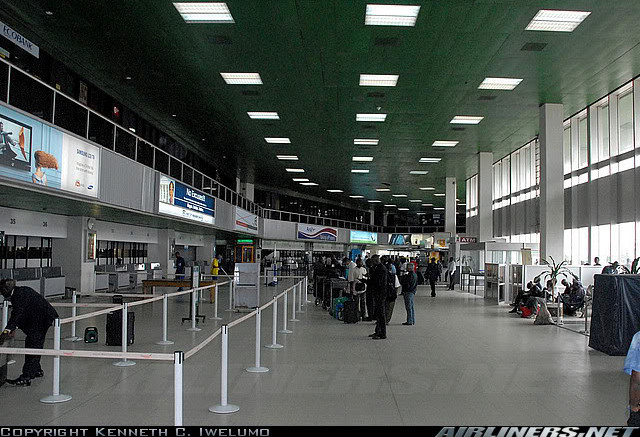
The business of air travel in the continent of Africa is booming as commercial airlines are battling to get and cement their market share. This competition is awesome as currently, Africa’s aviation industry supports 6.8 million jobs and USD72.5 billion in economic activity. Unfortunately, this has had little or no impact on the rates of these airlines. This continues despite the presence of ‘budget airlines’ that fly to only a handful of destinations. While budget airlines have secured their foothold in other parts of the world, countries in Africa are still struggling to establish a continent-wide one.
Hence, it is unarguably true that Air travel is quite expensive and travellers within and outside the continent are left with no choice than to make these payments because they will be the ones to bear the brunt.
Even the International Air Transport Association (IATA) vice president for Africa Raphael Kuuchi recognises the fact that Air Travel in Africa has to become more affordable.
Kuuchi said that the cost of air travel in Africa is far more expensive than anywhere else in the world, and the reasons are this includes very high operating costs from the airport ends, high taxes and charges that are imposed by governments and other institutions on passengers and airlines.
Indeed, there is the need for an urgent solution to reduce the cost of air transport in the continent despite many challenges highlighted by Kuuchi. This is key because an expensive air transport system will stifle the growth of the tourism industry as local and international tourists won’t want to visit destinations that are not affordable.
What can be done to make air transport in Africa more affordable?
Understandably, the government has a huge role to play when it comes to making air travel more affordable. The government should perhaps grant tax breaks to airlines, and create an air transport fund dedicated to the industry to reduce their overhead cost. Additionally, more airlines should collaborate so that they can deplore data and technology to cut cost which will have a ripple effect on the price of air travel.
Amidst the demand to make air travel more affordable, an online travel agency that has taken the bull by the horn to make air travel more affordable is Jumia‘s hotel and flight marketplace. The hotel and flight booking platform recently partnered with Amadeus, a leading travel technology company, to launch the first flight marketplace in Africa.
According to a statement announcing the partnership: “It is the base for a new flights marketplace on Jumia, that will be a step further towards making travel in Africa simple and affordable. The platform aims at enabling travel agents, airlines, and travel websites to bring all flight content online, to offer customers the best available prices for their flights.”
In summary, Jumia’s hotel and flight marketplace has created the first of its kind marketplace in Africa where rates are aggregated from different travel agents and airlines and this allows the air traveller to select the airline with the best available rate at that moment. And since the platform debuted in September, Jumia has seen a significant increase in booking as travellers jostle to get the best available rate.
In the near future, it is hoped that a budget airline that will cover Africa will come on board in order to make African travel less expensive. Till then, the Jumia flight marketplace is your sure bet to get the best flight rates.


General News
Union Bank Looted: How Former Directors Gambled with Billions and Nearly Destroyed a National Bank

The former directors and owners of Union Bank did not just fail, they engineered a financial disaster. They manipulated reports, hid massive losses, diverted foreign loans and treated depositors’ money like a private wallet.

Union Bank
Investigators uncovered billions of dollars in misconduct. These directors buried over ₦250 billion in losses, piled a $300 million foreign loan onto the bank without protection and then forced Union Bank to carry the burden. They even used the bank’s own funds to buy its shares, an outrageous betrayal of trust.
It didn’t stop there. Over $100 million was pulled out improperly, leaving the bank exposed and struggling. Loans meant for customers were secretly diverted into shady transactions. False reports were sent to lenders. The system was deliberately deceived.
This was not incompetence. It was exploitation.
By 2025, their actions had created nearly ₦400 billion in losses and over ₦147 billion in unpaid charges. The bank was on the edge.
The Central Bank of Nigeria (CBN) stepped in just in time. Without that intervention, Union Bank could have collapsed, dragging others down with it.
Now, the bank is stabilising. But let’s be clear: this recovery is happening in spite of those former directors, not because of them.
They didn’t build value. They destroyed it.
And Nigerians deserve to never forget who was responsible.


Federal government, The European Union (EU), and the United Nations Industrial Development Organisation (UNIDO) have called for urgent and coordinated action to curb food waste and promote sustainable consumption and production practices.

They warned that when food is wasted, the water, energy, and labour invested in its production are also lost, accelerating climate change and undermining global efforts to build a zero-waste, circular economy.
Speaking in Abuja at the commemoration of this year’s International Zero Waste Day, themed “Food Waste Reduction: Minimisation and Valorisation,” Zissimos Vergos, deputy Ambassador of the EU Delegation to Nigeria and ECOWAS, disclosed that Nigeria wastes approximately 38 million tonnes of food annually, more than any other country in Africa.
He further noted that globally, in 2022 alone, nearly one billion tonnes of food—almost one-fifth of all food available to consumers—was wasted.
“This is not just a loss of food; it is a squandering of precious resources, a missed opportunity to combat hunger, and a direct threat to our planet’s health,” he said.
Vergos stressed that food loss and waste are major drivers of environmental degradation, contributing up to 10 per cent of global greenhouse gas emissions—nearly five times the emissions of the entire aviation sector—and accounting for as much as 40 per cent of global methane emissions.
Highlighting Nigeria’s ongoing efforts, he said: “The Nigeria Circular Economy Roadmap, the establishment of the Interministerial Circular Economy Committee, the push to develop a National Plastic Waste Management Regulation, these are not small gestures. These are structural shifts.
“They signal that Nigeria is not waiting for someone else to solve its problem; it is building the system to solve it from within. Now, today’s theme: food waste reduction, minimisation and valorisation, is the right conversation at the right moment.”
Vergos also shared three key lessons from the EU’s experience to support Nigeria’s efforts. First, he urged investment in rural infrastructure, including roads, storage, and cold chains, to address post-harvest losses beyond the farm gate. Second, he emphasised the need to promote agro-processing by converting fresh produce into value-added products such as tomato paste and cassava flour, while linking smallholder farmers to processors and markets.
Third, he called for embedding zero-waste principles, recycling, and resource efficiency into school curricula from the primary level to foster a culture of sustainability among future generations.
Reaffirming the EU’s commitment, he stated, “The EU stands ready to be your partner in that work, through funding, through technical cooperation, and through genuine solidarity.”
In his keynote address, Balarabe Abbas Lawal, minister of Environment, reiterated the Federal Government’s commitment to environmental protection and sustainable practices aimed at safeguarding the health and well-being of Nigerians.
“Food waste remains a significant challenge that affects not only our environment but also our economy and society. Every discarded meal represents wasted resources such as water, energy, labour, and capital, while Nigerians continue to face food insecurity.
Addressing food waste is therefore central to sustainable development and ensuring a healthier future for all,” he said.
He added: “The Federal Ministry of Environment, in this year’s national appropriation, has developed projects on food waste elimination in major markets around Nigeria. And this is to show you that the Federal Ministry of Environment is tackling the issues of food waste at its core, especially post-harvest losses.”
Stressing the broader impact, he noted that addressing food waste aligns with the Ministry’s core objectives. “Reducing food waste will not only help to lower pollution and greenhouse gases, but also conserve valuable resources and promote more efficient and responsible consumption patterns across households, businesses, and institutions,” he added.
Also speaking, Amb. Philbert Johnson, Director and Representative of UNIDO’s Sub-Regional Office in Nigeria, emphasised that food must not be wasted, especially in a country grappling with food insecurity and malnutrition.
“Food is far more than a commodity: it is a foundation of wealth, a driver of health, and a pillar of security. It sustains our homes, supports industries, and underpins the stability of our societies.
“When food systems function efficiently, they generate income, enhance resilience, and improve well-being. When food systems fail, when food is lost or wasted, the consequences ripple across our economies, our environment, and our communities.”
He reaffirmed UNIDO’s commitment to supporting Nigeria in building resilient, inclusive, and sustainable agro-industrial systems.

President Bola Ahmed Tinubu has directed the immediate installation of 5,000 CCTV cameras across identified flashpoints in Plateau State as part of urgent measures to address the worsening security situation in the state.

The President gave the directive during an emergency visit to Plateau on Thursday, where he held a brief stakeholders’ meeting at the Yakubu Gowon Airport following the recent killings in Angwan Rukuba, Jos, where at least 28 persons were killed by unidentified gunmen.
Tinubu also approved the formation of a delegation of key stakeholders to engage in further deliberations on lasting solutions to the security challenges in the state.
He condoled with families of the victims and directed that support be provided to cushion their losses.
President Bola Tinubu while expressing deep sympathy to families of victims said the installation of surveillance cameras was part of a deliberate move towards addressing the kind of attacks that befell residence of the recent attack in the State.
In his remarks, Governor Caleb Mutfwang appreciated the President’s visit and show of concern, but expressed worry over the recent wave of attacks in the state, describing the situation as disturbing and requiring urgent attention.
The meeting had in attendance, former Governors, serving and former National and State Assembly members, traditional rulers, government appointees as well as relatives of those killed in the Angwan Rukuba attack.

Union Bank Looted: How Former Directors Gambled with Billions and Nearly Destroyed a National Bank

N4.65 Trillion in the Vault, but is the Real Economy Locked Out?

FG, Others Say Nigeria Wastes 38m Tonnes of Food Annually

Ecobank Assures of Seamless Easter Banking Services

Anchor Gets Nigerian, Canadian Licences as Transactions Crosses $2.5Bn

Spotify’s Loud & Clear Report Reveals Over ₦60Bn Revenue for Nigerian Artists in 2025

Madonna University Taps Tech Guru Adote for Strategic Board Role

China Threatens to Shut Nigeria’s Satellite Over $11.44m Unpaid Debt

FCCPC Bans Lagos ‘No Refund’ Policy, Vows Fines and Shutdowns for Traders

Healthcare Under Attack: Why Cybersecurity is Now Critical Care




 E-Financial3 days ago
CBN Says 33 Banks Raise Fresh N4.65 Trillion in Recapitalisation Exercise

 Telecom3 days ago
NITDA Urges Joint Action to Drive Nigeria’s Digital Innovation

 E-Business3 days ago
Cybersecurity Firm Uncovers CrystalX RAT which Steals Data, Mocks its Victims

 Telecom3 days ago
NCC Insists Telcos Must Compensate Subscribers for Poor Quality of Service

 Telecom3 days ago
Oracle Corporation Axes 30,000 Workers in Brutal AI Shake-Up

 E-Business3 days ago
Oracle Sacks 12,000 in India, Begins Shift to AI

 E-Financial2 days ago
UBA Beefs Up Mobile App Security to Stop Fraudulent Debits, Withdrawals

 E-Financial3 days ago
Nigeria, Others Lose $88bn Yearly to Illicit Flows —Edun