

News
Alleged Blackmail of Zinox Chairman and Access Bank by Benjamin Joseph: The Full Story


By Adamu Sanni, Public Affairs Analyst
An undue reprieve came the way of Mr. Benjamin Joseph, an indigene of Enugu State and Managing Director of Ibadan-based Citadel Oracle Concepts Limited, on Thursday, June 24, 2024, when the Attorney-General of the Federation (AGF) and Minister of Justice, Lateef Fagbemi SAN, discontinued Charge No. CR/216/2016, wherein the Inspector-General of Police (IGP) has been prosecuting Mr. Joseph since 2016 before Honourable Justice Peter Kekemeke of the FCT High Court Abuja, for giving false information to the Police but which the said Joseph failed to prove his case in a matter he reported to the police.

Mr. Benjamin Joseph
On three previous occasions, Mr. Joseph had appealed to the past Attorneys-General of the Federation to discontinue the said criminal proceedings against him but all the Attorneys-General refused his plea and rather directed the Police to prosecute him to a logical conclusion.
Their refusals are contained in the letters dated 10th February 2017, 7th May 2018, and 6th June 2022, addressed from the Office of the Attorney-General to the Inspector-General of Police.
Although he was visibly excited when the court acquitted him of the charges following the intervention of the Attorney-General, it is to be noted that the acquittal of Mr. Joseph was not on the merit of the case, as the trial was not concluded and the court did not give a judgment of its own.

It was rather based on the prerogative of the Attorney-General in the exercise of his constitutional power to discontinue any case with or without reason.
This is more so considering that a subsisting judgment was given by Honourable Justice Senchi of the FCT High Court in Charge No. CR/244/2018 which dismissed as false all the allegations made by Mr. Joseph against Technology Distributions, Access Bank, and other persons and imposed the sum of N20million as damages against him for false petitioning.
Despite the acquittal of Mr. Joseph which has saved him from a possible jail term, it still does not derogate from the judgment of Honorable Justice Senchi that had already found Mr. Joseph liable for false information.
Indeed, the acquittal was made in utter defiance of another subsisting order given on 14th June 2024 by Honourable Justice Inyang Ekwo of the Federal High Court Abuja in Suit No. FHC/ABJ/CS/376/2024, which had restrained all parties including the Honourable Attorney-General from tampering with the said Charge No. CR/216/2016 pending the determination of the suit before him.
Campaign of Calumny
What is very bewildering in the whole scenario is that Mr. Benjamin Joseph, since 2014, intensified a media campaign against Technology Distributions Limited and Zinox Technologies Limited who had nothing to do with the problem between him and his partner and representatives, Princess Kama and Chief Igbokwe.
He engaged the services of one Bassey Udo, the publisher of a relatively unknown online newspaper, Mediatracnet.
It is to be noted that the publications of Mediatracnet are all falsely skewed and biased in favour of Mr. Joseph because Zinox Technologies and its Chairman, Leo Stan Ekeh have taken court actions against the said Bassey Udo.
He is, therefore, acting on a vendetta. The paradox is that neither Zinox nor its Chairman was involved in the transaction.
Indeed, in the course of all the investigations, reports and judgments, there was nowhere Zinox was mentioned as being involved.
Moreover, Mrs. Chioma Ekeh, the wife of Mr. Leo Stan Ekeh, has never been cited as a suspect or accused in all the Police reports, both from the SFU and the Police headquarters. Neither her nor her husband ever made any statements to the Police and were never invited.
Yet, all publications orchestrated by Mr. Joseph bear ‘Zinox’ as its title with the photograph of its chairman, Leo Stan Ekeh (and sometimes with his wife – Chioma Ekeh) prominently featured as if they had any personal dealing with Mr. Joseph and his company.
Technology Distributions and Zinox Technologies are totally different companies with different shareholders, boards, and management.
More importantly, the judgment of Honourable Justice Senchi in the said Charge No. CR/244/2018 unequivocally stated that Technology Distributions and its staff were not liable for any fraud; that they were entitled to receive the proceeds of the laptops supplied on credit to Citadel which were delivered to the FIRS.
The judgment fully absolved Mr. Chris Eze Ozims and Shade Oyebode stating that they never acted as directors of Citadel but only as signatories to the account that received the proceeds of the FIRS contract, which was the only security for the laptops supplied on credit.
Moreover, the final Report by the Legal Department of the Police Headquarters on the matter dated 1st December 2020 absolved Technology Distributions and its said staff of any criminal liability and disclaimed as spurious a certain 2015 report of one Police Special Enquiry Bureau (SEB) headed by CP Olufemi Oyeleye and a certain 2015 report by the then Director of Public Prosecution, Mohammad Saidu Diri.
These so-called reports made in 2015 were disclaimed and discarded by the Police Legal Department in their said final report on 1st December 2020 because they were made based only on the petition and statement of Benjamin Joseph without giving an opportunity to the so-called suspects by way of invitation or extracting written statements from them.
How do you find a suspect liable without hearing from him after you heard only from his accuser? Yet, these are the documents being paraded online by Mr. Joseph as having indicted the staff of Technology Distributions and the Chairman of Zinox, and some staff of Access Bank.
In the publications, Benjamin Joseph claims that the Police SFU had found Technology Distributions and its staff liable but that the Police refused to prosecute them. This is totally false because in the criminal trial in Charge No. CR/216/2016, the Investigative Police Officer (Inspector Stephen Ogira) from the SFU who handled the investigations, testified against Benjamin Joseph and stated that their report had absolved TD and its staff of any wrongdoing. Similarly, the forensic analyst of the Forensic Science Laboratory D. Dept, Force CID, Alagbon Close, Ikoyi, Lagos, (ASP Raphael Onwuzuligbo) who conducted the forensic analysis of the disputed Board resolution and other documents testified that the documents were not forged but were actually signed by Benjamin Joseph. So, it is false of Mr. Jospeh to still write that the SFU Report indicted the staff of Technology Distributions and Chief Leo Stan Ekeh of his wife, Chioma Ekeh. It is in this context that, perhaps, the motive of Benjamin Joseph in this inexplicable focus in his online campaign of calumny on Chief Leo Stan Ekeh and his wife, Chioma Ekeh, is probably motivated by a quest to blackmail them and tarnish their reputation, allegedly at the behest of their competitors, and bring down their business which they have strenuously taken more than 35 years to build resulting into Technology Distributions Limited (now TD Africa Limited) as the foremost distributor of ICT products in the West African subregion.
How it all began
This chequered issue arose from a business transaction in December 2012 between Citadel Oracle Concept Limited (Mr. Benjamin Joseph’s company) and their appointed staff/representatives, (Princess Kama and Chief Igbokwe), when they won a contract for the supply of HP laptops to the FIRS that same year. Just as other retailers who won similar contracts but had no funds to execute the contract, their said staff/representatives approached Technology Distributions Limited (now TD Africa Distributions Limited), the biggest authorized HP distributor in Nigeria, to supply them the laptops on credit pending payment by the FIRS. In view of previous bad experiences and to avoid exposing the business to bad loans, Technology Distributions Limited, as it is their policy in the normal course of business, insisted that its staff, Mr. Chris Eze Ozims and Mrs. Shade Oyebode, would have to be signatories to an account opened for the purpose of receiving the proceeds of the FIRS contract as security for the laptops supplied on credit. After the contract was executed and payment effected by the FIRS, TD Africa deducted the pre-agreed invoice sum of the laptops and had its staff resign as signatories to the said account. A similar procedure applied to the other customers who had similar contracts with FIRS for the supply of similar HP laptops at the time. Technology Distributions and its named staff have no reason or motive to hijack the contract as falsely alleged by Benjamin Joseph because they had other retailers who had similar contracts with FIRS and were ready to take the same laptops at the same uniform price for supply to the FIRS at the same profit. So, what’s the motive to hijack his contract as he alleged?
Sharing Formula Problem
Exactly one year after the conclusion of the contract and the parties had gone their ways, Mr. Joseph petitioned the Special Fraud Unit of the Nigerian Police (SFU), Milverton Road, Ikoyi, in 2013, against Princess Kama, the representatives of Citadel and her uncle, Chief Igbokwe (the owner of Ad’Mas Technologies Limited) who equally won similar FIRS contract. Because Citadel was unknown to Technology Distributions and had no credit rating with them, Chief Igbokwe, an old customer of Technology Distributions, stood as their guarantor. Mr. Joseph claimed that his company was used without his knowledge and that the account opened by his company in Access Bank was not to his knowledge and that the Board resolution used to open the account was forged. The Police thus subjected the documents, including the Board resolution bearing Mr. Joseph’s signature, to forensic analysis and confirmed that the signature was actually his. He would later join Technology Distributions and its staff as part of those who he claimed hijacked his contract.
However, in the course of the investigations, it emerged that after the execution of the contract, a disagreement arose between him and Princess Kama when they could not agree on the formula for sharing the profit earned from the transaction. While he insisted on diverting the entire proceeds of the contract to his company, Princess Kama insisted on letting Technology Distributions take the invoice value of the contract because her uncle, Chief Onny Igbokwe had guaranteed the credit. Mr. Joseph’s then lawyer and legal luminary, Afe Babalola SAN tried to intervene to resolve the issue between them and they held meetings at Ibadan. However, when they could not reach an amicable settlement, Mr. Joseph changed the narrative – claiming that he had no knowledge of the transaction and reported the case to the Police SFU as a fraud. The question is: if his company was actually defrauded, why hold settlement meetings first, and when it failed then report to the Police a case of fraud?
Further Investigations by the Police (Force CID) Headquarters Abuja
Not satisfied with the report of the investigation by the Police SFU, Benjamin Joseph went ahead to lodge another petition with the Nigerian Police (Force CID) Headquarters, Abuja, in 2014, on the same set of facts and allegations. The then Inspector-General of Police, Solomon Arase instructed a detailed investigation. The investigations by the Force Headquarters also came to the same conclusion as the SFU Report. It was this deceit that informed the Police to commence criminal proceedings against Mr. Joseph for false and misleading information and waste of Police resources and time, in Charge No. CR/216/16 (IGP vs. Benjamin Joseph), at the FCT High Court, Abuja before Honourable Justice Peter Kekemeke.
Investigation by the EFCC
Again, in 2016, Mr. Benjamin Joseph petitioned the Office of the then Vice President, Prof. Yemi Osinbajo on the same facts, insinuating that his company was used to defraud the Federal Government of Nigeria of over N200m. In this case, he claimed that though payment was made, no computers were supplied to the FIRS. The EFCC acting on the instruction of the VP launched a nationwide investigation and confirmed that all the laptops were supplied and their assigned users identified at FIRS, and again, showing that Benjamin Joseph lied. The EFCC report also exonerated Technology Distributions Limited and its staff, Chris Eze Ozims, Shade Oyebode, and Charles Adigwe, of any fraud, as the money received by the company was the actual invoice value of the computers supplied to Mr. Joseph’s company, Citadel, on credit. It was also noted that Zinox Technologies Limited and its Chairman, Mr. Leo Stan Ekeh, had no involvement, whatsoever, with the transaction.
However, following the insistence of Benjamin Joseph, the EFCC charged the said representatives of Citadel, Chief Igbokwe and Princess Kama in Charge No.CR/244/2018 before Honourable Justice Senchi. But in a considered judgment, Honourable Justice Senchi dismissed all the allegations put forward by Benjamin Joseph in his petition to the EFCC as false and imposed damage of N20million against him. The EFCC did not appeal the judgment and indeed saw no reason to do otherwise.
Intervention by the current AGF
In the criminal charge contained in Charge No. CR/216/2016 before Honourable Justice Peter Kekemeke, while the Police Prosecutor, Simon Lough SAN, closed his case since 2018, Mr. Joseph has used all manner of alibi to delay the fair trial of the case. He first filed a No-Case Submission, but to which the trial judgment ruled against him to the effect that the Police had established a triable case against him and requested him to enter his defence. He then started petitioning the office of the past Attorneys-General to withdraw the charge against him but they refused his request and rather directed the Police to prosecute him to logical conclusion. However, in a curious twist, the current AGF, the respected Lateef Fagbemi SAN, withdrew and discontinued the prosecution of Mr. Joseph.
The volte-face by the AGF is seen as utter disobedience of a subsisting court order given on 14th June 2024 by Honourable Justice Inyang Ekwo of the Federal High Court Abuja in Suit No. FHC/ABJ/CS/376/2024). Recall that on Friday, 14 June 2024, a fresh case (Suit No. FHC/ABJ/CS/376/2024), came up before Honourable Justice Ekwo of the Federal High Court Abuja. It was a case brought by the duo Chief Onny Igbokwe and Princess Kama (as Plaintiffs) against the Attorney General of the Federation and Inspector General of Police (as Defendants), challenging the directive given by the Attorney General to the Police to withdraw and discontinue the criminal proceedings against Mr. Benjamin Joseph pending before Honourable Justice Peter Kekemeke of the FCT High Court in Charge No. CR/216/2016. The basis of this new case is that there is a subsisting judgment made by Honourable Justice Senchi of the FCT High Court in Charge No. CR/244/2024, which dismissed as false the same facts and allegations by Benjamin Joseph and imposed a N20million damages against him for giving the EFCC false information. Since there is a subsisting judgment on the merit of these facts, the Attorney-General overreached himself to now acquit Benjamin Joseph, as if he never gave false information to the Police. It is not in public interest as certain demands as contained in the 1999 Constitution were not met to justify the withdrawal of the case by the Attorney-General.
However, to the shock of lawyers appearing for the Prosecution, when the other case with Charge No. CR/216/2016, came up before Honourable Justice Kekemeke on Thursday, 20 June 2024, a lawyer from the Office of the Attorney General and Minister of Justice, Barrister F. N. Umoh, Assistant Chief State Counsel, announced an appearance for the Prosecution and said she had the instruction of the Attorney General to withdraw and discontinue the case.
In the circumstance, Honourable Justice Kekemeke was constrained into making a ruling striking out Charge No. CR/216/2016, and acquitting Benjamin Joseph. As aforesaid, though Mr. Joseph got the reprieve he long begged and craved from the Attorney-General, it does not derogate from the judgment of Honourable Justice Senchi which dismissed as false his allegations against Technology Distributions Limited and other persons, and held him liable for false information with a N20milliin damages still hanging on his neck.
In effect, Mr. Joseph was not acquitted because he did not provide false information to the Police, he was acquitted on the prerogative of the AGF to apply nolle prosequi in any case he wishes.



Nigeria and Israel yesterday reaffirmed their commitment to deepening bilateral cooperation in research, technology and innovation as both countries pledged to expand partnerships that will drive entrepreneurship, commercialise research and accelerate economic development.

The commitment was made at the closing ceremony and innovation showcase of the I-FAIR Cohort of the Israel-Nigeria Innovation Fellowship for Aspiring Inventors and Researchers (I-FAIR) in Abuja, where the Ambassador of Israel to Nigeria, Michael Freeman, announced that funding had been secured for the fifth edition of the programme, scheduled to begin in October 2026.
Freeman described I-FAIR as a practical demonstration of the growing partnership between both countries, saying it had enabled Nigerian innovators to develop local solutions to national challenges through Israeli mentorship and expertise.
He said, “This programme has never been about bringing Israeli solutions to Nigeria. It’s been about helping brilliant Nigerian innovators develop Nigerian solutions to Nigerian challenges supported by Israeli experience, mentorship and innovation.”
The envoy noted that the initiative had brought together government, academia, investors, engineers and entrepreneurs to transform innovative ideas into businesses capable of creating jobs and stimulating economic growth.
Announcing the continuation of the programme, he said, “I am so proud to stand here today and announce that we have secured with our partners funding for I-FAIR 5 and I-FAIR 5 will be launching in October 2026.”
Freeman said the relationship between Nigeria and Israel had grown significantly over the past four and a half years through cooperation in innovation, agriculture, healthcare, education, water management and technology.
He expressed confidence that stronger collaboration between both countries would unlock greater opportunities for startups, research institutions and businesses.
According to him, “Israel brings experience and innovation, technology, agriculture, healthcare, cyber security, security and water management. Nigeria brings extraordinary talent, creativity, entrepreneurship and one of the most dynamic young populations anywhere in the world.”
He added, “I have no doubt that the best chapters of the relationship between Israel and Nigeria are still ahead of us.”
The Executive Secretary of the Tertiary Education Trust Fund, Architect Sonny Echono, also reaffirmed TETFund’s commitment to strengthening research and innovation through strategic partnerships with Israel and other stakeholders.
He said the I-FAIR programme aligned with Nigeria’s priorities in food security, agriculture, medicine, technology, clean energy and the circular economy, adding that TETFund would continue supporting initiatives that promote research commercialisation.
Echono stressed that collaboration between government, academia and industry remained critical to translating research findings into products and services.
He said, “It is this critical linkage, especially between science, engineering, technology and innovation, and the productive sector that is critical for translating R&D results and inventions into finished products for socio-economic benefits of our people.”
He disclosed that TETFund was working with partners to establish innovation facilities in about 60 tertiary institutions and had created a student innovation fund that would provide up to ₦50 million to students with commercially viable ideas.
The TETFund boss also announced plans for a National Research Fair later this year, where innovators would showcase products before policymakers, financial institutions and investors to attract funding and commercial partnerships.
Paying tribute to the outgoing Israeli ambassador, Echono described Freeman as a strong bridge between Nigeria and Israel.
He said, “Nigeria is grateful for your service. You have been a strong bridge between our two countries.”
Earlier, Head of Programmes at Innov8 Hub, Tolulope Aina, said sustainable economic development depended on building an innovation ecosystem that transforms ideas into successful businesses.
She noted that Innov8 Hub had supported more than 3,000 innovators, researchers and entrepreneurs, helping them convert research into products, startups and investment-ready ventures.
Aina said, “Nigeria does not suffer from a shortage of brilliant minds, what we need are stronger pathways that help those ideas become products, businesses, and opportunities that improve life.”
She thanked the Embassy of Israel and TETFund for their continued support in strengthening Nigeria’s innovation ecosystem.
According to her, “Building an innovation-driven economy requires collaboration, long-term commitment and shared purpose.”
Chief Judges drawn from countries across the African continent have resolved to collaborate and support measures aimed at ensuring the success of the Africa Continental Free Trade Area (AfCFTA) through an efficient, reliable and predictable dispute resolution system.

They agreed to explore ways to harmonize disputes resolution mechanisms in the continent with a view to making it easier and faster to resolve commercial disputes.
The resolutions formed part of the decisions taken at the third Africa Chief Justices’ Alternative Dispute Resolution (ADR) Summit held in Nairobi, Kenya between June 18 and 19.
According to a statement by the Special Assistant on Media to the Chief Justice of Nigeria (CJN), Justice Kudirat Kekere-Ekun, Mr. Tobi Soniyi, the African judicial leaders were of the view that commercial confidence depends largely on legal certainty.
They emphasised how structured Alternative Disputes Resolution could enhance commercial justice, protect the business environment and support the AfCFTA.
In her contribution, the Chief Justice of Nigeria (CJN), Justice Kudirat Kekere-Ekun urged called on African judiciaries to proactively prepare for emerging challenges to disputes resolution in the continent.
Justice Kekere-Ekun, who served as Co-Chair of the session on “Financial sector disputes, tax certainty and ADR: Building commercial confidence in Africa, noted that AfCFTA represents one of the most ambitious economic integration projects in modern history.
The CJN, who stressed the importance of a proactive Judiciary to the success of AfCFTA, warned that its success would depend, not only on trade protocols, tariff reductions and economic policies, but also on the strength and reliability of the institutions that support commerce.
Justice Kekere-Ekun urged her colleagues to examine how judiciaries in the continent, central banks, tax administrations and ADR institutions could work together to reduce uncertainty, prevent disputes, strengthen investor confidence and support the realization of AfCFTA’s objectives.
She envisaged the growth of intra-African trade to inevitably generate cross-border tax disputes; foreign exchange disputes; banking and payment system disputes; digital commerce disputes; enforcement of arbitral awards; recognition of foreign judgments; and disputes arising from regional supply chains.
The CJN, who said “African Judiciaries must proactively prepare for these emerging realities,” challenged African judicial leaders on the importance of disputes prevention mechanism.
She stated that modern commercial justice must move beyond the traditional focus on disputes resolution after conflicts arise.
“The most successful commercial systems are not those that generate the highest volumes of litigation but those that reduce the need for litigation,” she added.
Justice Kekere-Ekun, who stressed the importance of ADR, cautioned against seeing ADR as merely an alternative procedure.
She said ADR should rather be considered as a strategic tool for reducing transaction costs, preserving commercial relationships, enhancing investor confidence, reducing court congestion, improving ease of doing business and strengthening commercial certainty.
Sharing the Nigerian experiences, Justice Kekere-Ekun cited the recent decision by the Nigerian Supreme Court in the case of EMTS v. AFDIN Ventures Ltd. & Ors. (2026), which reaffirmed important principles of commercial certainty, including respect for arbitration agreements; recognition that consent may be inferred from conduct; judicial restraint from re-litigating arbitral disputes on the merits; and the importance of finality in arbitral awards.
According to her, the decision reinforced Nigeria’s position as an arbitration-supportive jurisdiction.
She identified timely resolution of tax disputes as an important factor in ensuring certainty and recommended Nigerian tax disputes resolution mechanism which she said “offers useful example of institutional reforms that support commercial certainty.”
Justice Kekere-Ekun recommended the Nigeria’s Tax Appeal Tribunal model, which she described as one of Nigeria’s most significant innovations.
According to Mr. Soniyi, Justice Kekere-Ekun’s message to his brother justices is clear: building an African commercial environment in which investors, businesses, regulators and citizens can transact across borders with confidence, secure in the knowledge that their rights will be protected and their obligations fairly enforced.
The summit advanced the goals of the African Chief Justices Alternative Dispute Resolution Forum (ACJADRF) to harmonize jurisprudence and establish common enforcement standards across the continent.
The CJN was, on the last day of the summit, nominated by the Chief Justice of Kenya as the Vice Chairperson of the Africa Chief Justice ADR Forum with effect from August 1, 2026. The nomination was ratified by the forum.
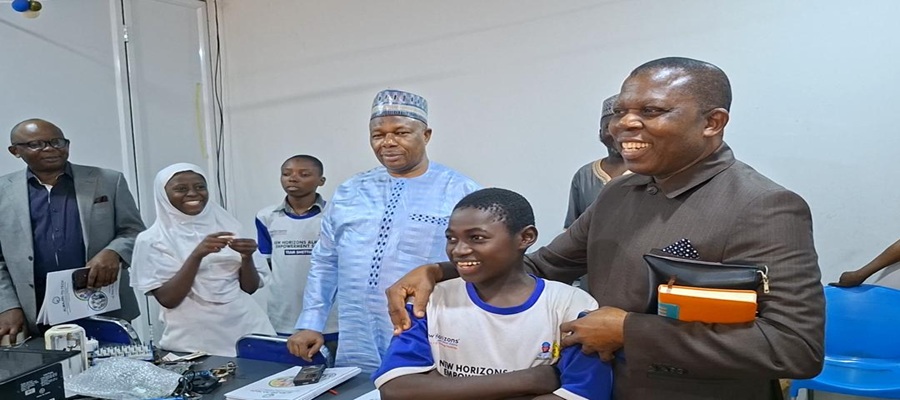
Twenty-one former Almajiri learners and street children are set to graduate as certified technology technicians under the Almajiri-to-Tech Initiative, a programme designed to equip vulnerable children with digital and entrepreneurial skills while addressing youth unemployment, poverty and insecurity.

The pioneer graduation ceremony is scheduled to hold on July 29 in Abuja, where the graduates will demonstrate practical skills, including assembling computers and drones, before government officials, development partners, members of the diplomatic community and the media.
The initiative was founded by technology education advocate, Mr Tim Akano, in partnership with New Horizons Nigeria, an Information and Communication Technology (ICT) training organisation.
According to the organisers, the programme seeks to provide practical solutions to the growing challenge of out-of-school children by combining technology education, entrepreneurship, mentorship and character development.
The organisers said the initiative had transformed children who previously had little or no exposure to technology into technicians capable of repairing laptops, desktop computers, mobile phones, power banks, electric fans, microwave ovens and other electronic devices.
They explained that the participants also received entrepreneurship training, mentorship, transportation support, daily meals, learning materials and professional work tools during the programme.
The organisers added that religious instructors from the participants’ respective faiths regularly visited the trainees to provide moral guidance, describing character development as a critical component of the initiative.
Unlike many vocational interventions that end with the presentation of certificates, the organisers said graduates of the programme would receive start-up support, while outstanding participants would be provided with professional work tools to establish their own businesses.
They also disclosed plans to launch a business directory and customer contact platform that would enable individuals, businesses and organisations to engage the services of the graduates.
Speaking on the initiative, Akano, who is also the Managing Director and Chief Executive Officer of New Horizons System Solutions Ltd., said the programme was conceived as a practical response to the challenges of youth unemployment, insecurity, poverty and irregular migration.
“You do not end migration by building higher walls. You do not defeat insecurity by relying only on military force, and you do not end poverty by preaching patriotism.
“You solve these challenges by building hope where hopelessness exists, equipping young people with practical skills, and creating opportunities where they live,” he said.
According to him, the pilot programme has demonstrated that children who have experienced neglect and exclusion can become innovators, entrepreneurs and contributors to national development when provided with quality education and opportunities.
He said one of the trainees, Mohammed, who arrived from the Niger Republic without speaking English, had acquired sufficient language proficiency within months to communicate confidently with customers while carrying out computer and electronics repairs.
Another participant, Fatima, discovered her interest in poetry during the programme and produced a poem celebrating New Horizons Nigeria, reflecting the broader personal development fostered by the initiative.
The organisers said the programme was inspired by concerns over the growing number of out-of-school children in Nigeria, estimated at about 30 million, and the broader global challenge of millions of children without access to education.
They argued that investing in digital skills, entrepreneurship and mentorship for vulnerable children offers a sustainable approach to addressing poverty, insecurity, youth unemployment and violent extremism.
As part of efforts to sustain the programme, the foundation said it had established a fully equipped workshop known as “The Almajiri Republic Workshop” in Wuse II, Abuja.
The workshop, according to the organisers, will serve as a commercial repair centre where graduates can provide computer and electronics repair services while continuing to strengthen their technical expertise.
The foundation called on the Presidency, federal and state governments, Ministries, Departments and Agencies (MDAs), members of the National Assembly, development partners, donor agencies, corporate organisations, civil society groups, religious institutions and other stakeholders to support the expansion of the initiative across Nigeria.
It maintained that scaling up the programme could transform millions of vulnerable children into skilled professionals capable of contributing to economic growth while reducing poverty, unemployment and insecurity.
The organisers said local and international media organisations, including CNN, BBC, Al Jazeera and ARISE News, had been invited to witness the graduation ceremony and the practical demonstrations by the pioneer graduates.

HURIWA, CLO Protests Bill Asking Social Media Firms’ to Open Shops Nigeria

Anambra Govt Bans Graduation Ceremonies in Anambra Schools

Airtel Secures Another 10-year Spectrum Renewal in Nigeria

Moniepoint as a Key Driver in Expanding Financial Access for Businesses in Nigeria

Nigeria, Israel Strengthen Research, Technology Collaboration

NRC, Ponzi Scheme Collapses Resulting Loss of Billions of Naira

EFCC Busts NIS Visa Overstay Racket, Uncovers N700m in an Account

Tokenization, Blockchain Technology will Transform Financial Institutions – IMF

From Scarcity to Scale: What Africa Can Learn from India’s Agricultural Transformation

Spotify partners Afro Nation Portugal to expand African music experience




 E-Business2 days ago
Kaspersky Warns Mobile‑data Buyers about Scammers Posing as Telecoms Operators

 E-Financial2 days ago
ChatPay Unveils Public Waitlist for WhatsApp-Based Banking Platform

 General News2 days ago
Three Entrepreneurs Secure ₦5 Million at The Gathering on 100 Pitchathon

 News2 days ago
African Judges Pledge Support for AfCFTA’s Success

 Telecom2 days ago
Airtel Africa Backs London Listing

 Telecom2 days ago
GSMA Says High Smartphone Costs Threatens Africa’s AI Future

 E-Business2 days ago
Nigeria Leads Africa in Online Gambling Regulation – GCI

 News2 days ago
How 21 Former Almajiri Children Learned to Build Computers and Drones in Months