

/home/kenneth/web/nigeriacommunicationsweek.com.ng/public_html/wp-content/themes/zox-news/parts/post-single.php on line 153
">
Warning: Undefined array key 0 in /home/kenneth/web/nigeriacommunicationsweek.com.ng/public_html/wp-content/themes/zox-news/parts/post-single.php on line 153
Warning: Attempt to read property "cat_name" on null in /home/kenneth/web/nigeriacommunicationsweek.com.ng/public_html/wp-content/themes/zox-news/parts/post-single.php on line 153
Apuye, GM, Transcontinental Express Courier Laments Delay at Airport

Transcontinental Express Services Limited is a courier firm on a mission. The company discovered that a lot of people were looking for a means of delivering parcels at affordable rates and still have their goods in tact and came on board to fill this yearning gap.
The firm ensures that customers’ goods are save right from when the goods arrive at the airport up until the point of delivery.
Fidelis Apuye, general manager of the courier outfit is bringing his experience of long service with the Cross River State government to bear in repositioning the company to be as competitive and viable as its contemporaries.
Speaking to Nigeria CommunicationsWeek, Apuye revealed that the strength of the company lies in transparent honesty with which they handle their clients. He said that a client will be ready to do business with any company if he discovers the company is honest. To him honesty is an important ingredient in the business of courier.
Secondly, the target of the company at all times he said is to satisfy their customers as they deliver goods in all parts of the country.
With the advent of Information and Communication Technology (ICT) courier practice has assumed another dimension. Computer has indeed revolutionized the courier practice. With ICT, better and faster means of communication has since evolved. With internet and other ICT tools, the scope of courier practice has also been widened – bringing to the system glamour and ease of operations. The information age has necessitated that fast and modern means of transportation evolved.
Apuye maintained that technology has helped courier operations to overcome all those problems that appear impossible in courier business. "Take away technology and tell me how I can phone somebody in Owerri and inform him that his goods are arriving. Without technology, tell me how you can use the computer and assess information as fast as possible. Without technology, how will plane leave New York and arrive here the following day?" Apuye asked.
However, even with the aid of technology that has improved courier practice tremendously, there’s also the Nigeria factor hampering the business. The challenges according to the courier Icon consist of difficulty in clearing goods at the airport. Apuye said they have presented the problem to the parent body, Association of Nigerian Courier Operators (Anco) and the body has been trying to solve the problem but the solution is not yet there. Apuye is vexed with issues which he does not understand which go on at the airport. For instance, when a plane arrives at the airport, goods should be cleared with dispatch. Because of the delay at the airport he said some times weather conditions affect the goods which more often than not leave the goods in bad condition.
In a particular incident, he lamented that he had to personally appeal to a client whose goods were damaged by the rain before he accepted the goods.
The clearing fee charged at the airport should also be reviewed. Apuye is of the opinion that if the government can come to their assistance and reduce the cost of clearing that the sky will be the limit of courier operators.
Transcontinental courier does not believe in having its hands in many pies. It believes in specialization. Apuye said the company does not deliver Express and Mail even though they may consider that in future as they expand but the company for now is into haulage and logistics which they have comparative advantage over their competitors.
Applying economic term, Apuye said goods are not produced until they get to the final consumers and because of this, the firm ensures safe and fast delivery of clients’ goods no matter where they are coming from.
Summarily, Apuye said the firm has consistently kept its head above the water not minding the challenges in the sector.


Warning: Undefined array key 0 in /home/kenneth/web/nigeriacommunicationsweek.com.ng/public_html/wp-content/themes/zox-news/parts/post-single.php on line 493
Warning: Attempt to read property "cat_ID" on null in /home/kenneth/web/nigeriacommunicationsweek.com.ng/public_html/wp-content/themes/zox-news/parts/post-single.php on line 493
Telecom
VDT Communications Achieves Two Prestigious Certifications ISO /IEC 27001:2022, ISO/IEC 27032:2023 Reinforcing its Leadership in Broadband Service Provision


VDT Communications Limited, a provider of Enterprise communication solutions, is proud to announce that it has been awarded the ISO/IEC 27001:2022 Information Security Management System (ISMS) and ISO/IEC 27032:2023 Cybersecurity Management System certifications.

These prestigious certifications demonstrate VDT’s commitment to maintaining the highest standards of information security and cybersecurity, ensuring the protection of sensitive customer data and maintaining the trust of its clients.
These certifications are a testament to VDT’s dedication to implementing robust information security and cybersecurity measures, aligning with international best practices.
The ISO/IEC 27001:2022 certification recognizes VDT’s ability to establish, implement, maintain, and continually improve its ISMS, ensuring the confidentiality, integrity, and availability of customer information. The ISO/IEC 27032:2023 certification highlights its commitment to protecting its customers’ information assets and preventing Cyber threats.
VDT Communications Limited has consistently demonstrated its commitment to excellence, previously earning and maintaining ISO 9001:2015 Quality Management System and ISO 20000-1:2018 IT Service Management certifications. These certifications have enabled the company to deliver high-quality services, ensuring customer satisfaction and loyalty.
“We are thrilled to receive these two prestigious certifications, which reinforce our commitment to information security and cybersecurity. These certifications demonstrate our dedication to implementing robust security measures that ensure confidentiality, integrity and availability of customer data” said Engr. Abiodun Omoniyi, GMD of VDT Communications Limited.
The ISO/IEC 27001:2022 and ISO/IEC 27032:2023 certifications bring numerous benefits to VDT’s customers, including:
- Enhanced information security and cybersecurity posture
- Protection of sensitive customer data
- Compliance with international standards and regulations
- Improved risk management and incident response
- Increased trust and confidence in VDT’s services
“We are proud to serve our customers with the highest level of security and quality,” Bimbo Ikumariegbe, Chief Operating Officer (COO) of VDT. “These certifications demonstrate our commitment to excellence and our dedication to delivering innovative communication solutions that meet the evolving needs of our customers” – Olufemi Akinola, Head, Information Technology.


Central Bank of Nigeria (CBN) has asked commercial banks to restrict loan defaulters, specifically large-ticket obligors, from accessing credit facilities.

A large ticket obligor is a borrower (an individual or company) that owes a very large amount of money to a bank.
The directive is coming a week after the CBN asked financial institutions to stress test.
It is uncertain if the two directives are connected or what may have triggered the loan-related instruction, but the apex bank said it furthers its mandate to protect Nigeria’s financial system.
“In furtherance of its mandate to promote a sound financial system, protect depositors, and enhance prudential compliance within the banking sector, the Central Bank of Nigeria (CBN) hereby directs all banks to restrict non-performing large ticket obligors, whose activities pose systemic risk to the financial system, from accessing specified banking services,” the circular reads in part.
“Any large-ticket obligor with a non-performing facility recorded in the CRMS and/or any licensed private credit bureau shall not be granted additional credit facilities. For the purpose of this restriction, credit facilities include loans and other forms of direct credit.
“In addition, such obligors shall not be granted banking facilities or contingent liabilities such as bankers’ confirmations, letters of credit, performance bonds, or advance payment guarantees.”
On strengthening collateral coverage, the CBN asked financial institutions to obtain additional realisable collateral from such obligors to adequately secure existing exposures.
The CBN said large ticket obligors are borrowers whose exposures are as defined under Clause 3.2 (d) of the prudential guidelines for deposit money banks in Nigeria 2010, or a customer with a combined exposure across banks, as shown in the credit risk management system (CRMS), and/or as shown in the reports of a licensed private credit bureau, “that exceed the Single Obligor Limit (SOL), which materially affect a bank’s Capital Adequacy Ratio (CAR) or otherwise pose a systemic risk to the financial system”.
“This directive reinforces earlier measures, particularly the circular titled “Prohibition of Loan Defaulters from Further Access to Credit Facilities in the Banking System” issued on June 30, 2014 (Ref: BSD/DIR/GEN/LAB/07/015). This is to ensure consistency and effectiveness in curbing credit abuse by large-ticket obligors,” the circular further reads.
The regulator said it will monitor compliance with the directive to ensure consistent implementation across the banking industry.
The CBN warned that noncompliance would attract appropriate regulatory sanctions in line with the provisions of the Banks and Other Financial Institutions Act (BOFIA) 2020.
Nigerian banks are undergoing a recapitalisation programme, slated to end by March 31.
So far, about 30 banks have met the minimum capital requirements announced in March 2024.
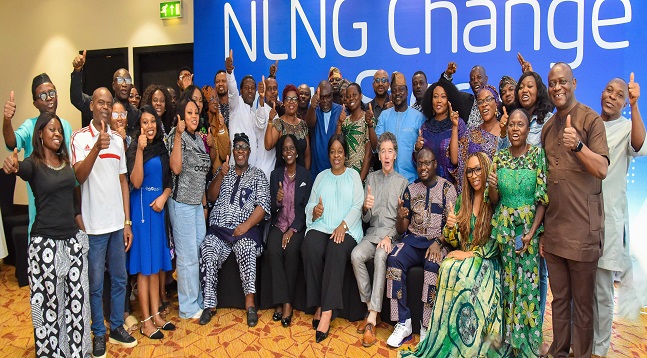
NLNG has demonstrated its dedication to media development in Nigeria through the successful completion of the second edition of the #NLNGChangeYourStory workshop for 2026, which took place in Lagos.

The workshop convened 40 participants representing diverse media outlets to examine the changing landscape of journalism shaped by artificial intelligence and digital communication. Discussions centered on how new media technologies can support real-time reporting, extend audience reach across borders, and foster deeper, more effective engagement on digital platforms.
Speaking at the event, the General Manager, External Relations and Sustainable Development at NLNG, Sophia Horsfall, described the workshop as part of the company’s broader effort to strengthen engagement with the media while supporting professional excellence in journalism. She noted that the initiative reflects NLNG’s belief that well-informed reporting plays an important role in shaping public understanding of critical sectors such as energy, economic development, and sustainability.
She encouraged participants to leverage the insights and practical knowledge gained during the workshop to elevate the quality, depth, and credibility of their reporting.
“NLNG views this engagement as a strategic partnership. We provide the energy that powers nations and generates revenue for our nation; you provide the information that powers our minds. We have been proud to host you, but our pride will only be justified when we see the ‘New Standard’ in your next feature, your next broadcast, and your next investigative report.
As you head back to your various stations, I urge you to take the spirit of this workshop with you.”
The programme combined expert-led discussions with hands-on learning. Digital communication specialist Dan Mason guided participants through key aspects of digital storytelling, while veteran journalist Taiwo Obe led a practical Journalism Clinic. Together, the sessions equipped participants with practical skills in data visualisation, online verification, audience engagement, and managing a strong digital presence.
Through the workshop, NLNG reiterated its commitment to promoting journalistic excellence and supporting the media industry’s digital transformation. The #NLNGChangeYourStory programme has now empowered over 400 journalists with enhanced digital communication and social media skills across its various editions.

VDT Communications Achieves Two Prestigious Certifications ISO /IEC 27001:2022, ISO/IEC 27032:2023 Reinforcing its Leadership in Broadband Service Provision

CBN Orders Banks to Restrict Access to Banking Services for Loan Defaulters

NLNG Advances Media Excellence with Change Your Story Workshop

Interswitch Advocates Trust-Driven Infrastructure as Cornerstones of Africa’s Cross-Border Capital Future

Why JustMarkets Is a Strong Choice for Gold Trading

Kaspersky Discovers New Phishing Campaign Exploiting Google Tasks Notifications to Steal Corporate Credentials

esentry 2025 Report Shows Healthcare, Financial Services and Telecoms as Staging Grounds for Increased Cyberattacks in Africa

AfDB, UNDP Launch $10Bn AI Initiative for Africa

Pheelz Shares His Journey on Glo-Sponsored African Voices

Mutual Benefits Assurance Settles ₦5.9bn Claims in January 2026




 General News2 days ago
Court Freezes Bank Accounts of Petrocam, Founder over Alleged N9Bn Zenith Bank Debt

 General News2 days ago
FCCPC Says Telcos, Energy Firms Lead Consumer Complaints in Nigeria

 Telecom2 days ago
Techeconomy Unveils IWD 2026 Power List Celebrating 100 Women Shaping the Future

 E-Business2 days ago
Kaspersky Uncovers a New Android Malware Campaign Disguised as Starlink Application

 News2 days ago
Easybuy Sales Talent Program to Empower 10,000 Nigerians to Become Millionaires

 News2 days ago
FG Approves First National Policy on Cosmetic Safety, Health

 E-Business2 days ago
Microsoft Expands Africa AI Push while DeepSeek Gains Users

 News2 days ago
Mobile Phones Used by Food Vendors Could Spread Infections- Experts