

E-Financial
Banks Cash Out, Economy Loses Out: How Nigerian Banks’ N5.05Trn Government Securities Boom is Stifling Real Growth

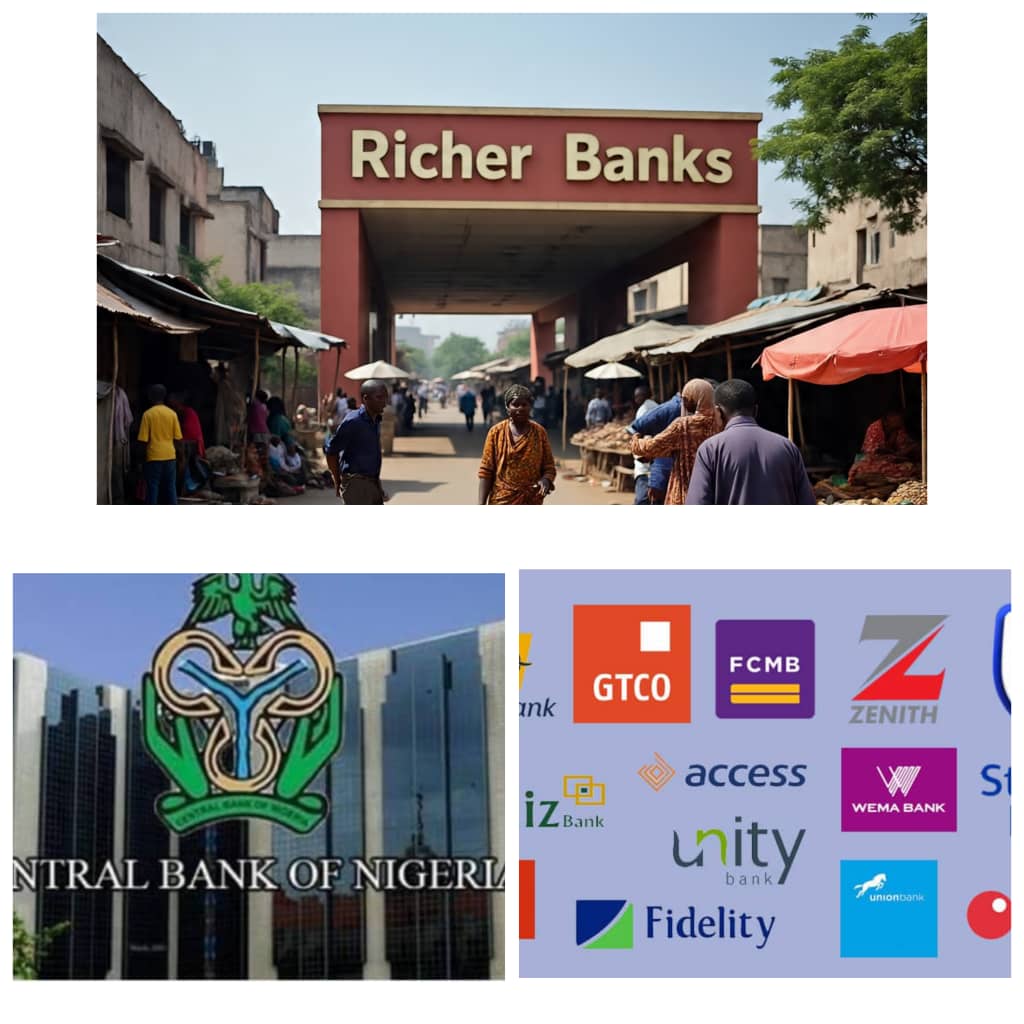
By Blaise Udunze
In a year when Nigeria’s economy continues to groan under the weight of inflation, unemployment, and weak purchasing power, the banking sector has once again recorded a massive windfall, not from lending to the real economy or financing innovation, but from investing in government securities.

According to data compiled by MoneyCentral, Nigerian Tier-1 banks collectively realized N5.05 trillion in income from investment securities in the first nine months of 2025 represents a staggering 42.28 percent increase over the N3.55 trillion recorded in the same period of 2024.
At first glance, this performance might seem like a testament to the banking industry’s resilience and financial ingenuity. But beneath the lustrous profit sheets lies a deeper economic dilemma that reveals how Nigeria’s banks are making more money by lending to government than by lending to people, small businesses, and industries which are the very arteries that sustain productive economic life.
It is no secret that Nigeria’s commercial banks have long found comfort in the safe, predictable yields of government securities such as treasury bills, bonds, and promissory notes. These instruments are virtually risk-free, backed by sovereign guarantees, and often deliver attractive returns in a high-interest-rate environment. For the banks, it is a perfect business model where depositors’ funds flow in at low cost, and those funds are easily parked in high-yield government paper with minimal risk or operational hassle. There is no need to worry about non-performing loans, credit analysis, or the painstaking process of supporting small and medium enterprises (SMEs).
But for the economy, it is a tragedy of misaligned priorities. While the banks luxuriate in “safe profits,” the productive sectors like agriculture, manufacturing, transport, housing, and creative industries remain starved of credit. Nigeria’s SMEs, which account for over 80 percent of employment and nearly half of GDP, face prohibitive interest rates, limited access to capital, and chronic underfunding. The result is economic stagnation disguised as stability.
The data below tells the story clearly:
– Zenith Bank realized N1.14 trillion from income from short-term government securities, which is 55.49 percent higher than 2024’s N734.14 billion.
– Access Bank made N1.13 trillion income from investment securities as at September 2025 which is 36 percent higher than 2024’s N838.14 billion.
– GTCO realized N547.77 billion income from government bonds, which is 45.68 percent higher than 2024’s N376 billion.
– United Bank for Africa (UBA) saw its income from short-term government securities rise 29.77 percent to N973.12 billion in the period under review, up from N750.48 billion the previous year.
– FirstHoldco’s income from investment securities increased 33.70 percent to N720.15 billion in September 2025, from N538.59 billion in September 2024.
Collectively, these numbers paint a clear picture of the real economy struggling to breathe, while the financial sector is growing fat on sovereign debt. This is not banking as development finance; it is banking as arbitrage. And the scale of this investment obsession is enormous. In the past teo years alone, the top 10 listed banks have channeled at least N20.4 trillion into investment securities and this huge capital could have financed millions of jobs, supported thousands of small businesses, and accelerated growth in Nigeria’s productive sectors.
This has now caught the attention of Nigeria’s tax authorities. The Federal Inland Revenue Service (FIRS) recently directed banks, stockbrokers, and other financial institutions to deduct a 10 percent withholding tax on interest earned from investments in short-term securities. Prior to this directive, short-term bills were tax-exempt to boost returns for investors. The new rule requires tax to be deducted at the point of payment on instruments such as treasury bills, corporate bonds, promissory notes, and bills of exchange.
It remains unclear how much the government expects to generate from this withholding tax. However, the FIRS clarified that investors will receive tax credits for the amounts withheld unless the deduction represents a final tax. Notably, interest on federal government bonds remains exempt from the levy. “All relevant interest-payers are required to comply with this circular to avoid penalties and interest as stipulated in the tax law,” FIRS Executive Chairman Zacch Adedeji said in the official notice.
Yield-hungry investors including banks are likely to be the most affected by this directive. In the first half of 2025 alone, Nigeria’s biggest banks realized N3.03 trillion in income from treasury bills, which represents a 60.40 percent increase from N1.89 trillion recorded in the corresponding period of 2024. GTCO, Zenith Bank Plc, United Bank for Africa Plc, Access Holdings Plc, FirstHoldco Plc, FCMB Plc, Fidelity Bank Plc, and Stanbic IBTC Holdings Plc have been in the habit of buying up domestic government bonds that offer among the highest yields in emerging markets.
By introducing this withholding tax, the FIRS aims to reduce excessive speculative investment in short-term securities and redirect liquidity into more productive parts of the economy. Whether this policy shift achieves that goal remains to be seen. In theory, taxing government securities could make lending to the private sector relatively more attractive. In practice, unless accompanied by broader structural reforms such as reducing credit risk, improving collateral enforcement, and stabilizing the macroeconomic environment, banks may simply adjust their margins and continue business as usual.
Nigeria is witnessing a growing disconnect between financial growth and economic growth. On one side is the booming financial economy, driven by banks’ trading gains, FX revaluation, and investment returns. On the other side is the struggling real economy, where factories close, youth unemployment rises, and SMEs collapse under the weight of credit starvation. The banks’ balance sheets may glitter, but the nation’s balance of welfare is grim.
As inflation eased slightly to 18.02 percent in September 2025, the Central Bank of Nigeria (CBN) cut the Monetary Policy Rate (MPR) from 27.5 percent to 27 percent. While this move signals a dovish tone, it does little to change the fact that the cost of credit remains astronomically high. Commercial lending rates hover between 25 percent and 35 percent, which is completely out of reach for most small businesses. Meanwhile, banks can earn double-digit, risk-free returns on treasury bills. Faced with that choice, which banker would lend to a farmer or manufacturer?
Beyond the figures, this trend has human consequences. Every SME denied a loan represents jobs not created, taxes not paid, and innovations never realized. Every startup that shuts down for lack of funding represents a family’s dashed hopes. Every manufacturer operating below capacity because of working capital shortages translates into lost exports and higher import dependence. When banks turn away from development finance, the ripple effect touches every household ranging from the market woman running a petty trade to the tech entrepreneurs across the country.
Several factors explain why banks prefer the comfort of government securities to the challenge of real-sector lending. Many SMEs operate informally, without proper records or collateral, making them unattractive to traditional lenders. Nigeria’s judicial system often makes loan recovery slow and uncertain, discouraging risk-taking. Exchange rate instability and inflation distort business forecasts, making long-term lending risky. Banks also find it easier to meet liquidity and capital adequacy ratios by holding government paper. Executive bonuses and performance metrics are tied to quarterly profits, not long-term economic impact. These factors form an entrenched ecosystem of incentives that rewards speculation over production, in a system where financial stability comes at the cost of real growth.
If Nigeria must break free from this cycle, a paradigm shift is needed, one that redefines the purpose of banking in national development. The CBN and fiscal authorities must create differentiated incentives for banks that channel a higher percentage of their loan portfolio to productive sectors such as agriculture, manufacturing, renewable energy, and technology. Tax rebates, lower cash reserve ratios, or credit guarantees can help de-risk these loans. Nigeria’s collateral registry, credit bureaus, and bankruptcy laws need modernization to reduce perceived risk, while the legal system must guarantee faster resolution of credit disputes.
Government, through the Bank of Industry (BOI) or similar agencies, can establish a blended-finance vehicle that matches public capital with private lending, allowing banks to co-finance SME projects with shared risk. Many small businesses fail to access credit because they lack proper documentation or business plans. A coordinated financial literacy program, supported by banks and chambers of commerce, could improve their readiness for formal credit. Ultimately, change must come from the top. Bank CEOs and boards must see themselves not just as profit managers but as nation builders. The sustainability of their profits depends on the health of the economy that surrounds them.
If this imbalance persists, Nigeria risks becoming a country where banks thrive and industries die. The long-term cost is profound. Economic growth will remain consumption-driven rather than production-led. Unemployment will worsen as SMEs fold up. Government borrowing will continue to crowd out private investment. The naira will weaken due to import dependence and weak export diversification. Financial capitalism, without developmental conscience, will only deepen inequality and discontent.
The time has come for Nigeria’s banking industry, regulators, and policymakers to make a collective choice: between easy profits and enduring prosperity. It is not enough to celebrate trillion-naira incomes if the nation remains trapped in jobless growth. It is not enough to report record balance sheets while millions of Nigerians remain unbanked and unemployed. True financial innovation lies not in exploiting yields, but in empowering people. The banks that will define the next decade are those that look beyond treasury bills, especially those that find value in the dreams of Nigerian entrepreneurs, in the resilience of its farmers, and in the creativity of its youth.
The story of Nigeria’s N5.05 trillion securities income is not just about numbers; it is about choices and their consequences. It reveals a financial system that has lost sight of its developmental mission, a government too dependent on debt, and an economy where growth has become disjointed from human progress. Yet, it is not too late to change course. The recent 10 percent tax on short-term securities should be the first step toward a deeper reform as one that forces a reallocation of capital from paper to people, from speculation to production.
As yields fall and monetary policy adjusts, the smart banks will be those that read the writing on the wall knowing that the future of finance in Nigeria lies not in government debt, but in the real economy because it is the only economy that truly matters. Because in the end, a nation cannot prosper when its banks are rich and its people are poor.
Blaise, a journalist and PR professional writes from Lagos, can be reached via: [email protected]



Central Bank of Nigeria (CBN) has restricted banking services for large‑ticket loan defaulters as part of a broader push to enforce credit discipline and protect the stability of the financial system.

CBN
The directive, issued on Wednesday, March 26, 2026, follows public remarks by CBN Governor Olayemi Cardoso at the 4th Annual IMF/AFRITAC West High‑Level Executive Forum in Abuja, where he declared that the era of leniency toward delinquent borrowers is over.
Cardoso said the apex bank is tightening corporate governance measures to safeguard the N4.61 trillion recently injected into the Nigerian banking sector and warned that there would be zero tolerance for violations.
“Our stance on corporate governance is unequivocal: zero tolerance for violations. By ending years of regulatory forbearance, we have reinforced accountability, tightened supervision, and elevated compliance standards across the sector,” he stated.
The new directive targets “large‑ticket obligors,” defined as individuals or entities with significant outstanding debts classified as non‑performing in the Credit Risk Management System.
Under the rules, these defaulters will be barred from accessing fresh credit as well as essential contingent liabilities and trade instruments, effectively cutting off their ability to obtain new loans or trade‑related banking facilities.
The CBN said the restriction is aimed at curbing “credit jumping,” a practice where borrowers move from one financial institution to another to secure additional loans despite existing non‑performing debts.
“We have implemented a restriction of banking services to non‑performing large‑ticket obligors. This decisive step underscores our commitment to credit discipline, financial integrity, and accountability,” the regulator stated.
The policy is intended to instil a long‑absent “culture of repayment,” protect depositors’ funds and reinforce the overall stability of the financial system.
Cardoso added that the CBN remains committed to orthodox monetary policy, focused on restoring price stability, strengthening policy credibility and anchoring expectations through discipline and consistency.


Nigeria Deposit Insurance Corporation (NDIC) has reaffirmed its commitment to protecting depositors and sustaining confidence in the nation’s banking system, declaring that its insurance framework currently safeguards about 99 per cent of customers across Nigerian banks.

Speaking during the NDIC Special Day at the 37th Enugu International Trade Fair, Thompson Oludare, managing director and chief executive, highlighted the Corporation’s role as a critical stabiliser in the financial sector, particularly in times of economic uncertainty.
Addressing participants on the theme, “Empowering MSMEs for global competitiveness”, Oludare said the NDIC remains a dependable backbone for small businesses by protecting their funds against bank failures.
He disclosed that the Corporation reviewed and increased its insurance coverage in 2024 in line with prevailing economic realities. Under the revised structure, depositors in Deposit Money Banks (DMBs), Mobile Money Operators, and Non-Interest Banks are insured up to ₦5,000,000, while those in Microfinance Banks and Primary Mortgage Institutions are covered up to ₦2,000,000.
Explaining the operational mechanism behind depositor protection, Oludare noted that the NDIC does not depend on government funding to reimburse customers of failed banks.
Rather, it draws from the Deposit Insurance Fund (DIF), which is financed through premiums contributed by licensed financial institutions.
He described the process as efficient and sustainable, enabling the Corporation to meet its obligations promptly without placing pressure on public finances.
Highlighting recent technological advancements, the NDIC boss revealed that the use of the Bank Verification Number (BVN) has significantly improved the speed of payments to affected depositors.
According to him, the BVN system allows the Corporation to trace alternative bank accounts of customers and process reimbursements within days of a bank’s closure, eliminating the delays previously associated with manual claims.
For depositors with balances above the insured limits, Oludare reassured that recovery efforts remain ongoing through liquidation processes.
“This is a continuous process,” he stated. “Additional dividend payments are made in tranches as more funds are recovered. We have demonstrated this successfully with the liquidation of Union Homes, Aso Savings and Loans, and the more recent Heritage Bank Limited, where multiple tranches of dividends have already been disbursed.”
He also cautioned Nigerians against falling victim to fraudulent financial schemes, popularly known as “wonder banks”, urging them to verify the credibility of financial institutions before investing.
On his part, Nnanyelugo Onyemelukwe, president of the Enugu Chamber of Commerce, Industry, Mines and Agriculture (ECCIMA), described the Corporation as a dependable safeguard for depositors.
According to him, the NDIC remains “a beacon of hope for depositors”, providing a “great confidence backup” in situations where banks fail due to mismanagement or distress.
Onyemelukwe also called for stronger regulatory oversight by the Central Bank of Nigeria (CBN) to further reduce the risk of bank failures and sustain public trust in the financial system.

Central Bank of Nigeria (CBN) has officially restricted banking services for “chronic defaulters” and large-ticket obligors with non-performing loans.

In a sweeping move to enforce credit discipline and safeguard the nation’s financial system, the apex bank issued a policy statement on Wednesday following remarks by Olayemi Cardoso, governor, CBN, at the 4th Annual IMF/AFRITAC West 2 High-Level Executive Forum in Abuja.
The Governor made it clear that the era of regulatory forbearance for delinquent borrowers is over.
He emphasised that the bank is shifting toward a more aggressive stance on corporate governance to ensure that the N4.61tn in new capital recently attracted by the banking sector is protected from systemic abuse.
“Our stance on corporate governance is unequivocal: zero tolerance for violations. By ending years of regulatory forbearance, we have reinforced accountability, tightened supervision, and elevated compliance standards across the sector,” the Governor stated.
The new directive specifically targets “large-ticket obligors”, individuals or entities with significant outstanding debts classified as non-performing in the Credit Risk Management System. Under the new rules, these defaulters will be barred from accessing not only fresh credit but also essential contingent liabilities and trade instruments.
“We have implemented a restriction of banking services to non-performing large-ticket obligors. This decisive step underscores our commitment to credit discipline, financial integrity, and accountability,” the statement read.
According to the CBN, the move is designed to instil a “culture of repayment” that has historically been lacking among high-profile borrowers. By cutting off access to instruments such as letters of credit and performance bonds, the regulator aims to prevent “credit jumping”, a practice where defaulters migrate between banks to accumulate more debt.
“By curbing access to banking services for chronic defaulters, we are reinforcing the culture of repayment, protecting depositors, and safeguarding the stability of the financial system,” the apex bank added.
Beyond the crackdown on debtors, Cardoso reaffirmed that the CBN remains firmly committed to orthodox monetary policy. This approach prioritises price stability and the use of traditional tools to anchor inflation expectations, moving away from unconventional interventions to restore confidence in the naira.
“The CBN remains firmly anchored in orthodox monetary policy, focused on restoring price stability, strengthening policy credibility, and anchoring expectations through discipline and consistency,” the statement concluded.
For years, the Nigerian banking sector has struggled with “chronic defaulters”, wealthy individuals or massive corporations that borrow billions and fail to repay.
These are often referred to as “large-ticket obligors”. When these loans go bad, they threaten the liquidity of banks and the safety of ordinary citizens’ deposits.
Under the leadership of Cardoso, the CBN is pivoting toward “Orthodox Monetary Policy”. This means moving away from the era of massive development interventions and direct lending to sectors like agriculture and focusing instead on its core mandate: price stability and financial system regulation.

ARN Rejects Medical Bill over Attempt to ‘Scrap’ Profession

Meningitis Kills a Quarter Million People a Year -Study

NIGCOMSAT Supports Startups Growth with the Launch of Accelerator 3.0

Stakeholder says AI is Crucial to Nigerian Data Centres Amid Persistent Grid Collapse

NFVCB Boss Urges Stronger Distribution Channels @ Coal City Film Festival 2026

Spotify’s Loud & Clear Report Reveals Over ₦60Bn Revenue for Nigerian Artists in 2025

Madonna University Taps Tech Guru Adote for Strategic Board Role

China Threatens to Shut Nigeria’s Satellite Over $11.44m Unpaid Debt

Jumia Tech Week 2026 Begins with Tech Deals on Smartphones, Electronics, and Everyday Technology

FCCPC Bans Lagos ‘No Refund’ Policy, Vows Fines and Shutdowns for Traders




 E-Financial3 days ago
Breaking…..Kuda Lays Off Many Employees in Broad Restructuring

 Telecom2 days ago
Google Rolls Out Search Live AI to 200+ Countries, Including Nigeria

 E-Financial2 days ago
CBN Bars Chronic Loan Defaulters from Accessing Loans

 E-Financial2 days ago
NDIC Insures 99 Percent of Bank Customers

 E-Business2 days ago
FG Shifting Focus to “Meaningful Connectivity” to Drive Inclusion – Minister

 General News2 days ago
Anti Graft Agencies Raise Alarm over Rising Crypto-Linked Financial Crimes

 E-Business2 days ago
NITDA Takes Over National Digital Architecture System

 E-Financial6 hours ago
CBN bars large‑ticket loan defaulters from banking services in tough new crackdown