

E-Financial
Banks’ Funding Failure: The Shocking Rot In Nigeria’s Intervention Programmes

By Blaise Udunze
For over a decade, the Nigerian government and its financial institutions have launched a flurry of intervention funds, all with the promise to empower industries, revive the manufacturing sector, and lift millions of micro, small, and medium enterprises (MSMEs) out of financial drought. From agriculture to aviation, from creative industries to export promotion, these funds were designed as catalysts for inclusive growth and job creation.

But today, the story reads like a tragic irony. Trillions of naira later, there is little impact to show. Factories remain underutilized, MSMEs struggle to survive, and unemployment continues to soar. The rot runs deeply entrenched corruption, politicization, poor monitoring, and widespread loan defaults have turned what should have been Nigeria’s economic lifeline into a cautionary tale of mismanagement and missed opportunities.
The Central Bank of Nigeria (CBN) and the Bank of Industry (BOI) have, over the years, spearheaded multiple intervention programmes. In 2013, the N220 billion MSME Development Fund (MSMEDF) was launched to empower small businesses, with a special 60 percent allocation for women. Yet, more than a decade later, thousands of genuine entrepreneurs say they never accessed the fund, while others question the transparency of disbursement. The Anchor Borrowers’ Programme (ABP), launched in 2015, aimed to link smallholder farmers to processors and was hailed as a masterstroke for agricultural self-sufficiency. Over N1 trillion reportedly flowed into the scheme. But the dream soon dimmed with ghost beneficiaries, political interference, and poor loan recovery exposed a programme riddled with abuse.
Similarly, the Agri-Business/Small and Medium Enterprises Investment Scheme (AGSMEIS), a CBN-backed initiative pooling five percent of banks’ profit after tax, began as a noble effort to stimulate SMEs. However, its later years were marred by disbursement bottlenecks and allegations of insider favoritism. Commercial banks and some designated financial institutions, instead of acting as facilitators, became gatekeepers of corruption. Bribes, favoritism, and endless paperwork became the norm. Funds meant for productive ventures were sometimes redirected to political allies or misapplied by the very institutions entrusted with disbursement.
Rather than empowering Nigeria’s real economy, intervention loans too often empowered a network of insiders who saw the programmes as avenues for rent-seeking. The impenetrability of these schemes made them convenient channels for political reward and institutional looting. Once the funds leave government coffers, tracking them becomes an exercise in futility. There are no reliable public databases showing who got what, how much was repaid, or what impact was achieved.
The rot is not confined to agriculture. The Creative Industry Financing Initiative (CIFI), launched in 2019 to nurture Nigeria’s entertainment and digital sectors, became mired in controversy over opaque selection and limited reach. The Real Sector Support Facility (RSSF) and the Textile Sector Intervention Fund, meant to boost manufacturing and revive the textile industry, also suffered from weak monitoring and low repayment discipline. During the pandemic, the N400 billion COVID-19 Targeted Credit Facility (TCF) was touted as a lifeline for households and small firms. Administered by NIRSAL Microfinance Bank, it sparked hope among struggling entrepreneurs, but soon, the familiar patterns emerged as connected elites got the funds, while genuine applicants were locked out.
Official data reveals that the CBN has disbursed over N10.3 trillion across various interventions in less than a decade with an unprecedented scale of funding. When combined with BOI-managed programmes such as the Government Enterprise and Empowerment Programme (GEEP) and the Export Expansion Facility Programme (EEFP), total earmarked intervention funds likely exceed N12 trillion. Yet, Nigeria’s industrial contribution to GDP remains below 10 percent, and MSMEs with the supposed beneficiaries continue to struggle with high costs, poor infrastructure, and limited credit access.
Over the years, numerous intervention funds have been launched to support industries and MSMEs from the N220 billion MSME Development Fund and N300 billion Real Sector Support Facility to the N200 billion SME Restructuring and Refinancing Fund. However, poor administration, corruption, and diversion have undermined these initiatives. A 2023 report by the Auditor-General revealed that billions of naira from these schemes were either unaccounted for or misapplied, with funds channeled through commercial banks that prioritized profit over impact.
For instance, the CBN’s N220 billion MSME Development Fund has only seen about N83 billion disbursed over seven years. The Survival Fund, though lauded in principle, has delivered roughly N67.5 billion to over 1.25 million beneficiaries, including cases where mobilisation fees were collected but goods or services never followed. An N5 billion SME loan fund through SMEDAN and Sterling Bank saw only N250 million actually reach business owners. Even in interventions like BOI’s N75 billion Manufacturing Sector Fund, less than a third had been disbursed to manufacturers, with many applications still awaiting approval. These examples speak not to scarcity of funds, but to failures in administration, accountability, and access.
The cost of Nigeria’s failed intervention programmes goes beyond wasted billions; it has crippled the very sectors they were designed to rescue. Thousands of promising small businesses are left stranded without access to affordable credit, while manufacturers continue to struggle with obsolete equipment, erratic power supply, and prohibitive interest rates. Instead of catalyzing growth, these funds have deepened dependency, encouraged corruption, and distorted the credit market.
The result is a stunted industrial base, where innovation and expansion are sacrificed on the altar of bureaucracy and greed. Many entrepreneurs who could have scaled production or entered export markets have shut down under the weight of unmet promises. Jobs that could have been created remain mere statistics in policy documents, while Nigeria’s ambition to diversify its economy beyond oil continues to falter.
In the ongoing investigation into the Central Bank of Nigeria’s activities, news reports have uncovered that scrutiny may extend to Chief Executive Officers and senior management personnel of various banks. The investigation seeks to examine potential discrepancies related to the management of intervention funds by deposit money banks. This revelation follows reports that the CBN might be compelled to withdraw its released audited annual financial reports after investigators uncovered irregularities and inconsistencies.
This unfolding probe, led by Special Investigator Jim Obazee, who was appointed by President Bola Tinubu in July 2023 as this mark one of the most comprehensive financial examinations in Nigeria’s history. Obazee’s mandate extends beyond the CBN to include other Government Business Entities (GBEs), with the goal of plugging financial leaks and holding corrupt individuals accountable. According to the Secretary to the Government of the Federation, George Akume, the forthcoming audit report will shed light on governance failures that have long crippled Nigeria’s financial system.
One key revelation involves intervention funds totaling N1.27 trillion reportedly held in the accounts of five major banks: Access Bank, Fidelity Bank, Guaranty Trust Bank, United Bank for Africa, and Zenith Bank. These funds cover various CBN lending schemes, including the Commercial Agriculture Credit Scheme, Real Sector Support Facility, and state bailouts. Access Bank alone held about N530 billion in intervention funds, while Fidelity Bank retained roughly N310 billion.
Several banks have also been found to hold undisbursed funds from the CBN earmarked for programmes like the Anchor Borrowers’ Scheme and the Commercial Agriculture Credit Scheme. As of June 2023, Guaranty Trust Holding Company, Wema Bank, and Sterling Financial Holdings collectively held N114 billion in Anchor Borrowers’ funds, while seven banks, including UBA, Access, Zenith, and Fidelity, retained N94 billion from the agriculture credit scheme.
As the investigation progresses, bank executives were expected to be summoned for questioning. The revelations underscore the depth of systemic dysfunction, where funds meant for development sit idle or are diverted, while small businesses gasp for credit.
Amid the turbulence, the newly appointed CBN Governor Olayemi Cardoso called for a radical shift in the bank’s role. During his Senate screening, he emphasized the need to refocus the CBN on its core mandate of monetary stability rather than direct development finance. Cardoso warned that the CBN’s historical foray into fiscal interventions had blurred institutional boundaries and undermined credibility. His plan is to transition the bank toward a more limited advisory role, one that supports economic growth without entangling itself in politically driven lending.
This reorientation is timely. As of October 2022, nearly 10 trillion had already been disbursed as intervention funds, much of it tied to agriculture and small business support. Yet controversies over beneficiary selection, repayment defaults, and limited impact persist. Experts have urged a full-scale audit and restructuring of these programmes, recommending that future interventions be channeled through relevant ministries and agencies, not the CBN to ensure proper oversight and impact measurement.
Before the next bailout or recovery initiative is launched, both the CBN and BOI must clean house. This means full public disclosure of all beneficiaries, proper audits of past disbursements, and the recovery of misapplied or stolen funds. The impenetrability that has shielded corruption for years must give way to transparency, backed by digital tracking systems and citizen oversight.
Beyond cleansing their books, these institutions must also rethink their approach. Development finance should no longer be routed through rent-seeking commercial banks that profit without producing impact. Instead, direct digital lending platforms, strict eligibility verification, and measurable impact tracking should define the new model.
Nigeria’s intervention programmes must undergo radical reform anchored on transparency, technology, and traceability. Every fund should have a publicly accessible portal listing disbursements, beneficiaries, and repayment status. Periodic audits that are independently verified must be mandatory, not optional. Beyond financial engineering, Nigeria must fix the enabling environment for consistent power supply, logistics, security, and regulatory stability that makes business growth possible.
The shocking rot in Nigeria’s intervention programmes is not just a financial scandal; it is a betrayal of national trust. Trillions have been poured into schemes that promised jobs and prosperity, yet delivered little beyond paperwork and propaganda. Unless Nigeria cleans up the system, enforcing accountability and rewarding genuine productivity, its intervention funds will continue to fund failure, not progress.
Blaise, a journalist and PR professional writes from Lagos, can be reached via: [email protected]


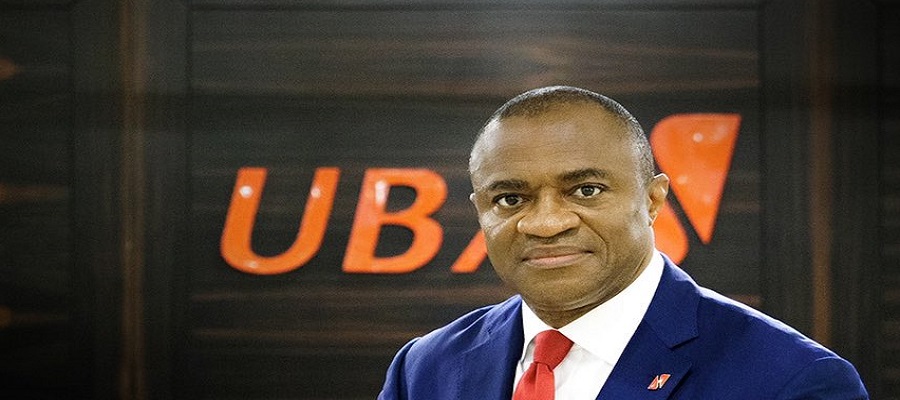
United Bank for Africa (UBA) has said that it has strengthened the security of transactions on its mobile application to stop fraudulent debits, unauthorised transfers and withdrawals.

Oliver Alawuba, Group Managing Director and CEO of United Bank for Africa
UBA announced this in a memo forwarded to its customers via email recently.
“We are pleased to inform you that we have further strengthened the security of transactions on the Mobile App.
“Updated authentication options now apply based on the value of transfers,” the memo reads in part.
UBA said in the memo that it had introduced authentication options for transactions of varying amounts to detect and prevent fraud.
According to the bank, transactions of N200,000 or more will now require customers to provide their Personal Identification Number (PIN) and a token number.
For transactions above N200,000 and N250,000, customers will be required to provide their PIN and a One-Time Password (OTP).
They can make use of their PIN and Biometric or PIN and Token numbers to authenticate such transactions.
Customers will be required to provide a PIN and OTP, or a PIN and Token number, when carrying out transactions between N250,000 and N500,000
For transactions between N500,000 and N10 million, customers must enter their PIN and Token to authenticate the transaction.
For transactions above N10 million, customers must use their PIN, Token, and Biometric to complete the transaction.
“The app will guide you, no need to memorise these thresholds,” the bank assured customers in the memo.
Central Bank of Nigeria (CBN), has said that it will be launching a new payment systems vision that will outline where the entire ecosystem is expected to be heading in the next three years.

Olayemi Cardoso, governor of the Central Bank of Nigeria
The vision was co-created with the financial technology players, the mobile money operators, payment service providers across the board.
This was announced by Muhammad Abdullahi, deputy governor, Economic Policy Directorate at the CBN, after the inaugural meeting of the Payment Service Providers Committee.
Olayemi Cardoso, governor of the Central Bank of Nigeria, inaugurated the first meeting of the Payment Service Providers Committee, to reinforce policy coordination, knowledge sharing, and also ensure collective problem-solving by the industry and by the central bank.
The committee is being chaired by Muhammad Abdullahi, CBN deputy Governor, Economic Policy, and co-chaired by Philip Ikeazor, deputy Governor, Financial System Stability Directorate.
Other members of the committee include stakeholders from all the key payment service providers that are licensed to operate in Nigeria as well as a number of regulators, the Nigerian Communications Commission (NCC), Nigeria Deposit Insurance Corporation (NDIC) and the Securities and Exchange Commission (SEC).
According to Abdullahi, the committee is expected to convene on a quarterly basis to interface with players in the industry, to ensure that they collectively solve some of the challenges that are facing the industry.
“The committee is to put Nigeria on the best footing forward in terms of payment system space. As we already know, Nigeria is a world leader in payment service provision.
“The kind of technology and fintechs deployed in Nigeria are far ahead of regional and continental peers. And what we want to ensure over the next five to 10 years is that we continue to maintain this leadership and be able to do much more for the Nigerian economy,” he said.
He stated that setting up the committee had become relevant with the remarkable growth trajectory seen in the digital payment landscape in Nigeria.
“In 2024 alone, the system processed over 11.2 billion electronic transactions, amounting to over N1.07 quadrillion. This is the first time that digital payments crossed the quadrillion naira threshold, representing significant growth.
“The momentum has continued. In 2025, we’ve seen significant growth, and of course, in the first few months of 2026 as well. This is an ecosystem that is significantly growing, that has significant implications for growth in Nigeria, for inclusive growth, for trade, and other significant positives for our country, he said.
The Deputy Governor, Financial System Stability Directorate, and co-chair of the committee, explained that the inaugural meeting, featured discussions such as preliminary issues around how participation is going to be, what the top-line issues are, and some of the committees that would be set up eventually.
He said, “What we intend to do is to be able to solve this in a much faster way. So in the past, companies would have to wait a significant amount of time to interface or lay their concerns to the central bank, and the central bank would have to do supervisory visits—on-site, off-site—to be able to carry out its responsibilities.
“But today, now, we have a platform that brings us all together, that has committees that are working towards specific mandates that can advance the payment systems space, you know, payment service provider space. So what we really have now is that a major bottleneck has been removed, which is the bottleneck of coordination, collaboration, and joint systems thinking”.
On her part, Foyinsolami Akinjayeju, chief executive officer of Enhancing Financial Inclusion and Advancement (EFInA), said that the inaugural meeting of the Payment Services Providers Committee was to ensure that innovation was not stifled.
She said, “The Payment Services Providers Committee will more importantly, allow for inclusive and sustainable growth through access, expansion, strengthening of trust to ensure that no segments of our economy is left behind”.
Also, Premier Oiwoh, managing director and chief executive, Nigeria Inter Bank Settlement System (NIBSS), lauded the initiative describing it as historic and a win for all Nigerians.
For Jay Alabraba, chairman, Association of Licensed Mobile Payment Operators, the initiative is a good one which will help sustain the nation’s growth through active participation of industry stakeholders.

Ghana becomes the first African country to integrate payment into its Citizens’ Identity Card, ditching US-based payment giants Visa and Mastercard in Africa.

The card is now widely accepted in over 190 countries for online, in-store, and ATM use.
It allows for secure purchases, international payments, and offers perks like insurance and emergency assistance.
Ghana Card holders can activate their card using the MyCitizens App or by dialling *402#
Recall that Ghana’s National Identification Authority (NIA), statutory body mandated to establish a national identification system, first announced in September 2025, that the card would allow users to make use of Automated Teller Machines (ATMs), make payments in stores and online, make international payments with over 200 countries, and access other services such as insurance and emergency assistance.
The NIA’s aim for developing this feature is to bolster financial inclusion within the country.
In Ghana, the credit card penetration rate was forecast at 0.6% in 2024 and was forecast to continuously decrease between 2024 and 2029.

UBA Beefs Up Mobile App Security to Stop Fraudulent Debits, Withdrawals

Bharti Airtel Crosses 650m Users

FG Orders Installation of 5000 CCTV Cameras for Surveillance in Plateau

CBN Plans New Payment Systems Vision

Ghana Makes History as First African Country to Integrate Payment National Identity Card

Spotify’s Loud & Clear Report Reveals Over ₦60Bn Revenue for Nigerian Artists in 2025

Madonna University Taps Tech Guru Adote for Strategic Board Role

China Threatens to Shut Nigeria’s Satellite Over $11.44m Unpaid Debt

FCCPC Bans Lagos ‘No Refund’ Policy, Vows Fines and Shutdowns for Traders

Healthcare Under Attack: Why Cybersecurity is Now Critical Care




 News2 days ago
Microsoft Revamps Copilot in Workplace AI Push

 E-Business2 days ago
Kaspersky Warns of a New Phishing Technique Leveraging Bubble, a no-code AI Platform

 Telecom2 days ago
How Recycled SIM Card Linked to N50m Kidnapping Nearly Landed me in Jail – Businesswoman

 E-Financial2 days ago
CBN Directs Banks, Fintechs to Complete Cybersecurity Audit Tool

 Telecom2 days ago
Ouranos Technologies Strengthens Board with Key Leadership Appointments

 General News2 days ago
Senate Gives Tinubu Nod to Borrow Fresh $6Bn

 General News2 days ago
FG Launches CLHEEAN to Streamline Access to Government Services

 General News2 days ago
FG Earmarks $2Bn to Launch 2 Satellites in 2028, 2029