

E-Financial
CBN May Allow Telcos to Drive MM Adoption

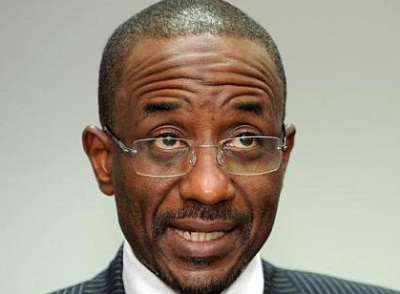
Central Bank of Nigeria (CBN) may rescind its decision and allow telecoms operators drive the mobile money payment scheme to give fresh impetus to the initiative which has crawled since introduction in 2011, Nigeria CommunicationsWeek has learnt.
Nigeria’s mobile money service is anchored on a bank-led model, which required that only financial institutions could carry mobile money licences.
What it also means is that all the telecoms companies are offering mobile money services in partnership with licence holders.
Nigeria CommunicationsWeek however gathered that the policy shift is in offing as the CBN and Nigeria Communications Commission (NCC) have begun talks to involve telecommunications operators as key drivers to increase the adoption of the system in the country.
Paul Mosimabale, head, product and business development, First Bank of Nigeria, gave hints of such talks and urged CBN and NCC to come up with a framework to increase awareness of the system among Nigerians.
Mosimabale, who stated this at NigeriaCom conference, held in Lagos last week added that the operators also noted that the involvement of telcos will help banks to leverage on the telcos dealers and customer care outlets as mobile money agent networks.
He explained that because of the low amount of commission involved in the transaction most agents are reluctant to accept mobile money transactions.
“Robust and strong Agent distribution is very key for any mobile money initiative to be successful.” the bank executive added.
Nigeria CommunicationsWeek gathered that as income; illiteracy; affordability; poor access channels; and inadequate distribution or agency networks are major challenges affecting the emerging industry.
Mr. Emmanuel Okoegwale, principal associate, Mobile Money Africa said that mobile money was a mass market product that would require mass access channels to reach all market segments.
Nodding in agreement, Samson Isa, director West Africa, Clickatell, said that agent network is important in the adoption of mobile money and that banks could not leverage the agent network of telcos because they were excluded from the process.
He called for a synergy between banks and telcos to make the system successful.
Isa also identified cost of Unstructured Supplementary Service Data (USSD) platform of telecommunications networks that is use in the transaction process as being high.
Nigeria CommunicationsWeek learnt that some mobile network operators had refused to open up mass access channels like Subscriber Identification Module toolkit and USSD for mobile money providers.
Mobile money is the transfer of monetary value via the mobile phone. The system fundamentally rides on mobile networks.
According to Isa, if there is synergy between banks and telcos, USSD service could be free or reduced to short message service (SMS) rate.
Presently, telecommunications operators charge N10 for a N100 transaction on their USSD platform.
But despite the many roadblocks, mobile money transactions are on the rise as Nigeria CommunicationsWeek had reported a daily transactions value of N8million on the interoperability platform of mobile money services.
Interoperability is basically the ability of the user of one mobile money service to send money directly to the wallet of a user on any other service.
Without interoperability the difficult decision of which mobile money service to choose might be influenced by which members of the customer’s peer group are already using a given service.
Nigeria CommunicationsWeek gathered that transactions among mobile money schemes commenced in March this year after the expiration of the deadline of February 28 Central Bank of Nigeria (CBN) gave to operators to connect to National Central Switch (NCS) that is offering the handshake.
The daily transactions value of N8million is carried out over 200 transactions every day. These are specifically transactions from one mobile scheme wallet to another as well as from mobile scheme wallet to bank accounts.
Moreover, transactions within a mobile scheme are not recorded in this value and volume as their transactions are routed through NCS.
Okoegwale, said there are different levels to achieve interoperability. It could be platform, agency or even via other channels like merchants.
“Essentially interoperability enables the acceptance of e-money seamlessly across providers, agency network and event merchants. Interoperability for agent revolves around agents ability to meet the needs of subscribers across multiple providers for cash out and cash in service, same way ATMs don’t discriminate between cards of firms that had entered into interoperability agreements at National or even at international level. It significantly reduces the cost for ecosystem players across agency network,” he said.
He added that when interoperability is achieved in the system a subscriber of scheme provider A, can send mobile money from his wallet to subscriber that is enrolled in scheme provider B and the funds in the wallet can be spent directly at a merchant location or cash out at own agent locations.
It would be recalled that Central Bank of Nigeria (CBN) had issued licences to 16 companies to operator mobile money transactions.
The CBN had said that the MMOs were licensed to accelerate the transformation of the nation’s payment system which would emphasis use of mobile phones.



Securities and Exchange Commission (SEC) has warned that unregistered schemes pose serious risks for investors.

This is coming after the commission announced that it has shut down more than 400 fraudulent investment schemes across Nigeria, in intensified regulatory crackdown on illegal investment activities and a stronger push to protect investors.
SEC also said that several suspects linked to these schemes are currently under prosecution.
The disclosure was made by Bola Ajomale, executive commissioner for Operations, SEC, during the financial literacy forum “The Money Fair,” organized by Nairametrics in Lagos.
Ajomale, who represented Dr. Emomotimi Agama, director-general, SEC, emphasized the regulator’s commitment to safeguarding market confidence amid a surge in unregulated investment platforms.
“Over the last three years, we have investigated and shut down at least 400 of these so-called schemes,” Ajomale said.
“We saw a tremendous increase in them last year, and a number of those involved have been arrested and prosecuted.”
If the investment product or the operator is not registered with the SEC, they have no business asking you to put your money there.”
The SEC has intensified its enforcement measures alongside public awareness campaigns to curb the proliferation of illegal investment platforms.
Initiatives such as the “See It, Snap It” campaign and the “SEC Scam Alert” platform have been introduced to enable Nigerians to report suspicious schemes quickly, allowing regulators to act before these operations expand.
Ajomale noted that the regulator has adopted a multi-pronged strategy combining investigations, arrests, and investor education to enhance market integrity.
“We are not just shutting down illegal schemes; we are also empowering investors with the knowledge to identify and avoid fraudulent operators,” he said.
The crackdown comes as unregulated investment products continue to pose significant risks to Nigerian investors, particularly amid rising interest in digital and alternative investment platforms.

By Matthew Anthony, Senior Market Analyst- Africa
Tensions in the Middle East are sending shockwaves through global markets, stoking fresh inflation concerns as oil prices climb.

As these tensions escalate, mounting fears of inflationary shocks could force central banks to rethink their 2026 playbooks.
Against this backdrop, Nigeria’s inflation eased to 15.06% in February, just before the Iran conflict erupted. Since then, gasoline prices have soared by more than 30% for Africa’s leading crude exporter, pushing transportation costs higher for everyday Nigerians.
Nigeria’s oil production has helped shield it from the war’s fallout. The currency has only dipped 0.3% against the dollar in the past two weeks.
However, these shifts may challenge the CBN’s plans to keep lowering interest rates. The Naira now trades at NGN1,385 per US dollar, up from NGN1,360 before tensions flared in the Middle East.
Outside of Nigeria, risk aversion returned to global markets on Tuesday as tensions in the Middle East sapped risk appetite.
The brief tech rally in the previous session merely served as a small distraction with equities on the back foot amid the overall caution.
All eyes remain on the ship traffic through the Strait of Hormuz as Trump calls for other nations to secure the critical waterway.
Ultimately, this has injected oil prices with monstrous levels of volatility with Brent rallying above $103 a barrel on Tuesday. Iran’s attacks on energy infrastructure around the Middle East have intensified fears around supply shocks, injecting oil bulls with renewed vigour.
To counter such shocks, the IEA launched its largest ever oil release amounting to 400million barrels of oil from their emergency stocks. In addition, the US issued its second temporary waiver for the purchase of Russian oil. Despite all of this, Brent is finding comfort at triple digits and could extend gains on geopolitical risk.
Gold remains on the backfoot despite the growing risk aversion.
A broadly stronger dollar and dwindling bets around lower US interest rates have dealt gold a double blow. Traders are only pricing in just one Fed cut in 2026 thanks to concerns around conflict-induced inflation.
Gold’s near-term outlook may be influenced by the Fed decision on Wednesday. No changes are expected but the Fed may be forced to reassess its policy strategy for 2026. Looking at the charts, gold is wobbling above $5000 as of writing. Weakness below this point may open a path toward $4900 while a rebound could see prices retest resistance at $5100.
Speaking of central banks, the RBA raised interest rates on Tuesday for a second consecutive meeting.
Growing concerns around conflict-induced inflation shocks may prompt central banks to reassess their policy strategies for 2026.
The Federal Reserve (Fed), European Central Bank (ECB) and Bank of England (BoE), among many others will be under the spotlight this week.
Market expectations have rapidly evaporated over the Fed cutting rates anytime while the BoE/ECB are seen potentially hiking rates by the end of the year if inflation persists. These sharp shifts in policy expectations may translate to heightened levels of volatility.
Securities and Exchange Commission (SEC) yesterday said that Nigeria’s digital finance ecosystem recorded about $96bn in cryptocurrency and other virtual asset transactions.

Emomotimi Agama, director-general, SEC,
Emomotimi Agama, director-general, SEC, revealed this during a Citizens and Stakeholders Engagement Session organised by the Federal Ministry of Finance in Abuja.
He noted the the size of transactions within the digital asset space makes regulation necessary in order to protect investors and ensure transparency.
According to him, the regulatory framework for the sector was strengthened following the enactment of the Investment and Securities Act 2025, which gives the commission powers to regulate digital assets and other emerging financial technologies.
He said the law also confirms the SEC as the apex regulator of the capital market while introducing provisions aimed at monitoring systemic risks and aligning Nigeria’s market operations with global standards.
Agama said the Nigerian capital market has continued to support investment activities across the economy, adding that the commission approved ₦3.68 trillion worth of new capital market issues in 2024, covering both equities and fixed income instruments.
He added that the market played a major role in strengthening the banking sector during the recent recapitalisation exercise, with more than 31 banks raising funds through the capital market to meet new capital requirements.
The SEC director-general said the performance of the market has improved significantly in recent years, with total market capitalisation rising from ₦55 trillion in 2024 to about ₦127 trillion currently.
He added that the capital market’s contribution to the economy has also expanded, with the market capitalisation-to-GDP ratio rising from about 13 per cent to roughly 33 per cent.
According to him, the commission has introduced several measures aimed at protecting investors and building confidence in the market.
He disclosed that the regulator has issued more than 90 advisory notices warning Nigerians about suspicious investment schemes and risky financial offers.
Agama also said the commission has intensified its actions against fraudulent investment schemes, including Ponzi operations, while working with the Nigeria Police Force to investigate and prosecute offenders.
He warned that many people who fall victim to such schemes often invest in unregistered platforms promising unrealistic returns, advising investors to verify whether any investment opportunity is approved by the SEC before committing funds.
The SEC boss said the capital market has also supported infrastructure development across the country through bond issuances by state governments.
He explained that several public projects including markets, stadiums and other infrastructure have been financed through subnational bond issuances raised in the capital market.
According to him, Nigeria protects investors in state bonds through the Irrevocable Standing Payment Order (ISPO) system, which allows loan repayments to be deducted directly from states’ allocations from the Federation Account.
Agama said the commission has also established an Office of Municipal Fund Development to help state and local governments access capital market financing for development projects at the grassroots level.
He added that the SEC supported the launch of the Ministry of Finance Incorporated Real Estate Investment Fund (MREIF) to help address Nigeria’s housing deficit by providing long-term funding that allows Nigerians access to mortgages at single-digit interest rates.
Looking ahead, he said the commission is working to deepen the market by raising the capital market capitalisation-to-GDP ratio from about 30 per cent toward levels seen in emerging economies such as India, where the ratio stands at about 92 per cent.
Also speaking at the session, Mr. Raymond Omenka Omachi, permanent secretary of the Federal Ministry of Finance, addressed concerns about the performance of the federal budget, explaining that several factors have affected implementation.
He said Nigeria has faced challenges meeting the oil production benchmark of about 2.1 million barrels per day, while fluctuations in global oil prices have also affected revenue.
The Permanent Secretary added that the budget benchmark was set at $75 per barrel, but oil prices at some point fell below $60 per barrel, reducing expected government revenue.
He noted that rising debt servicing obligations and increased salary commitments have also placed pressure on available funds.
According to him, the government is taking steps to improve the situation through regular monitoring of revenue and expenditure.
He said the ministry now holds weekly cash management meetings every Monday to review government finances and identify ways to boost revenue performance.
The Permanent Secretary added that the government expects improvements once Nigeria returns to operating a single budget cycle, noting that plans are underway to collapse overlapping budgets so that the country will run only one national budget from 2026 onward.

SEC Shuts Over 400 Fraudulent Investment Schemes, Arrests Operators

NigComSat-1R, Nigeria’s Only Satellite to Expire this Year

Nigeria, Ghana Trigger Stunning 45 Percent Surge in MTN Dividends

Banks, Offices to Close for Thursday and Friday for Eid-el-Fitr

ATCIS Urges FG to Ensure Safety of Consumers Data

Kaspersky Discovers New Phishing Campaign Exploiting Google Tasks Notifications to Steal Corporate Credentials

esentry 2025 Report Shows Healthcare, Financial Services and Telecoms as Staging Grounds for Increased Cyberattacks in Africa

AfDB, UNDP Launch $10Bn AI Initiative for Africa

Mutual Benefits Assurance Settles ₦5.9bn Claims in January 2026

MultiChoice Suspends Yearly DStv Price Hike as Canal+ Pushes Growth




 E-Financial3 days ago
CBN Rolls Out New Rules for Safer Instant Payments, More Customer Control

 News3 days ago
NIMMME Inaugurates Engr. Michael Orekyeh as 13th National Chairman in Abuja

 E-Financial3 days ago
CBN Tightens BVN Rules to Curb Fraudulent Banking Transactions

 Telecom3 days ago
MTN Nigeria Races Ahead in Fibre Broadband Market

 E-Financial3 days ago
Nova Bank Appoints Jude Anele as Managing Director/CEO

 Broadcasting2 days ago
Spotify’s Loud & Clear Report Reveals Over ₦60Bn Revenue for Nigerian Artists in 2025

 E-Business3 days ago
Tech Expert Unveils BAT-BOT AI App to Curb Fake News ahead of 2027 Elections

 Telecom2 days ago
PwC Warns Nigeria Telcos of AI Fraud Risks