

E-Financial
Creating International Growth Opportunities for Tomorrow’s Unicorns


By Stephen A. Newton, Managing Director at Aleph, Africa
It’s become increasingly impossible to deny that we live in an increasingly global world. Today, nearly 65% of world -wide consumers are connected to the internet. Africa having around 570 million internet users, combined with various technological advancements, is driving a wave of change in how entrepreneurs and businesses operate.

Stephen Newton, Managing Director, Sub-Saharan Africa, Ad Dynamo by Aleph
Decades of innovation – culminating in the launch and widespread adoption of social media; the availability of high-speed internet globally; and the rapid integration of generative artificial intelligence; have created new channels for local entrepreneurs and advertisers to grow their businesses. Entrepreneurs, who were once confined to trading within their local community, or best, their single market, can now leverage technology to access opportunities available through global, cross-border trade.
The nature of cross-border trade is already having a seismic effect on emerging economies. According to the World Bank, the digital economy contributes more than 15% of the annual gross domestic product (GDP) globally, and in the past decade has been growing at two and a half times faster than physical world GDP. In several African countries, the digital economy is becoming a main driver of growth, accounting for more than 5% of GDP. Helping to ease the pains associated with cross-border payments, Aleph has built and is now offering its own service, Aleph Payments. Aleph Payments, has managed over $2bn worth of total cross border credit and payments across multiple international markets. Building on Aleph’s near 20 years of experience as a trusted operator, Aleph Payments provides an end-to-end, cross-border credit underwriting and payments solution that supports global expansion.
For ambitious entrepreneurs looking at the wealth of opportunities available on the distant horizon through digital, it’s seemingly never been easier to do business. Businesses can engage customers through tailored advertising on social media platforms and through internet searches, 24 hours a day and seven days a week while using data and analytics to better understand their customers. However, the open and ‘always on’ nature of today’s trading environment means that it’s also hyper-competitive for businesses. Businesses need to excel in more than one aspect of their marketing mix: price, promotion, place, or product, and have the constant threat of being trumped by a larger, well-resourced player.
For some, the idea of launching your own digital business can come with complexities – a case of not knowing where – or how – to start. For those who take the plunge, resilience, overcoming the everyday challenges of managing and growing a business and keeping up to date with the latest trends in advertising is key.
Creating a business and accessing international growth opportunities through digital channels shouldn’t be difficult. We believe more needs to be done to help businesses participate in the digital economy and unlock significant economic value.
That’s why we’ve unveiled Aleph – a strong, single brand that brings together the technologies, local teams, and global reach of brands including Ad Dynamo, Connect Ads, Httpool and IMS. Simply, Aleph is an ecosystem of global digital experts and technology-driven solutions that enable the growth of digital marketing. We connect thousands of advertisers with billions of consumers and create markets for local businesses to grow. Designed with digital marketing at its core, Aleph has evolved to focus on [four key pillars] that address the challenges facing businesses—and consumers—at various stages of their growth journey or understanding of digital marketing.
At a foundational level, Aleph’s Digital Ad Expert offers a free skills-based education platform that gives each student the skills they need to manage digital advertising campaigns and unlock growth. It provides resources, courses, and networking opportunities, and has certified more than 75,000 people from 140+ countries in short courses. Nigeria leads the way in Sub-Saharan Africa with an impressive 149,018 registered participants in the Digital Ad Expert program, followed by Kenya with 24,709 registrants, Ghana with 23,999 registrants, and South Africa with 9,419 registrants. As a platform, it gives consumers around the world the tools they need to drive growth for businesses – or better still, capture growth opportunities through digital marketing for their own business. That’s why we were delighted to join UNESCO’s Global Education Coalition, and specifically support UNESCO’s Global Skills Academy, an initiative that aims to help ten million young people build skills for employability and resilience by 2029.
That’s where Aleph Express comes in – Aleph’s proprietary platform that enables micro, small and medium-sized to create and maintain a free ecommerce website, create a product catalogue, set discounts and coupons, local delivery options and record and process orders. Like Digital Ad Expert for commerce, it gives entrepreneurs all the tools needed to launch their own online store. It’s currently available in Nigeria but is highly scalable and will be rolled out more widely in the future.
Once at scale, Aleph’s core digital marketing business can then help businesses tell their story to the wider world. Through our existing partnerships with the world’s largest platforms, we create meaningful opportunities for brands to engage with consumers in an authentic way, while at a significant scale – often in multiple countries simultaneously. Our local teams across all continents support and provide insights to advertisers to equip them with the latest know-how to make the most of their media investments.
As the world evolves and the ways that businesses operate change, there is a level of responsibility for larger businesses to move with the times and do what they can to support smaller, ambitious, and possibly high-growth businesses. And, in today’s global world, that means breaking down barriers in place of international growth opportunities.
By doing this, we will help a new wave of small businesses flourish, create new jobs and economic value, and possibly uncover the next global unicorns in the process. From our perspective, there’s nothing to lose in helping businesses access global commerce.


Central Bank of Nigeria (CBN) has introduced stricter Bank Verification Number (BVN) enrolment and data access rules to prevent suspected fraudulent transactions, effective May 1, 2026.

This was disclosed in a statement issued over the weekend and titled “Addendum to the Revised Regulatory Framework for Bank Verification Number (BVN) Operations and Watchlist for the Nigerian Banking Industry 2021.”
The statement was signed by Musa Jimoh, director of the Payment System Policy Department.
The CBN said it introduced the ‘Revised Regulatory Framework for Bank Verification (BVN) and Watchlist for the Nigerian Banking Industry 2021’, to promote a stable financial system.
The apex bank reiterated that enrollment for the BVN be limited to individuals aged 18 and above, while amendments to phone numbers linked to a BVN will be restricted to a one-time change only.
Financial Institutions are mandated to establish and maintain a temporary watchlist for BVNs implicated in suspected fraudulent transactions reported by a financial institution.
“A BVN may remain on this temporary Watchlist for a maximum period of twenty-four (24) hours. During this period, the BVN owner shall be contacted to clarify the identified transaction(s).
Enrolment for BVN is restricted to individuals who have attained the age of eighteen (18) years and above. Amendments to phone numbers linked to a BVN shall be allowed only once,” the statement read.
The CBN insisted that it maintain an exclusive right to access BVN databases and to approve access to them by financial institutions.
“Access to the BVN databases shall be exclusively granted to Central Bank of Nigeria (CBN) licensed financial institutions. Notwithstanding this provision, the Central Bank of Nigeria (the Bank) reserves the right to approve access to the BVN databases in extenuating circumstances and in accordance with the provisions of extant laws,” the statement said.
The directive was part of the CBN’s recent regulatory amendments in combating fraudulent activities.
On Tuesday, the bank issued new regulations, “Baseline Standards for Automated Anti-Money Laundering (AML) Solution for Financial Institutions in Nigeria’, to all financial institutions, in a bid to automatically counter money laundering and terrorism financing.

NOVA Bank Limited has announced the appointment of Jude Anele as its Managing Director and Chief Executive Officer, following the approval of the Central Bank of Nigeria.

Jude Anele
The appointment comes at a pivotal moment in the Bank’s evolution, following its transition from merchant banking to commercial banking and the successful completion of its recapitalisation programme ahead of the March 31, 2026, regulatory deadline.
Anele brings more than 33 years of banking experience across West and Central Africa, with deep expertise in retail / commercial banking, corporate banking, risk management, institutional transformation and executive leadership.
Over the course of his career, he has led complex banking operations, strengthened governance frameworks, delivered sustainable revenue growth and built high-performance teams.
The appointment reflects the Board’s strategic commitment to consolidating NOVA Bank’s commercial banking platform while accelerating growth across its Corporate, Commercial and Retail segments, as well as priority markets.
Speaking on his appointment, Anele said he was honoured to assume leadership of the Bank at a defining stage of its growth.
“Nova Bank has built a strong institutional foundation defined by regulatory compliance, capital strength, disciplined governance and a clear commercial mandate.
“Our focus now is execution — deepening customer relationships, expanding responsibly across priority markets, strengthening risk discipline and delivering sustainable value to our shareholders,” he said.
The Bank’s Chairman, Phillips Oduoza, also expressed confidence in the new leadership.
“The Board is pleased to welcome Mr. Jude Anele as Managing Director and Chief Executive Officer. His depth of experience, strategic clarity and proven leadership record align strongly with NOVA Bank’s growth ambitions,” Oduoza said.
He added that with recapitalization completed ahead of the regulatory timeline, the Bank is entering a new phase defined by scale, stability and structured expansion.
NOVA Bank also confirmed that it has met the recapitalization requirements set by the Central Bank of Nigeria ahead of the regulatory deadline, reinforcing its capital adequacy and long-term financial stability.
The capital raise, supported by new and existing shareholders, further strengthens the Bank’s balance sheet and positions it for disciplined growth.
In 2025, Global Credit Rating reaffirmed NOVA Commercial Bank’s national scale long- and short-term issuer ratings of BBB(NG) and A3(NG) respectively, while Agusto & Co. reaffirmed the Bank’s “Bbb” rating with a stable outlook, reflecting its strong capital base, sound liquidity position and resilient asset quality relative to its risk profile.
NOVA Bank currently maintains operations in Lagos, Abuja, Owerri and Port Harcourt, with plans to open eight additional branches across key commercial hubs in 2026 as part of its expansion strategy.
The commissioning of the Bank’s regional office in Owerri marked a significant milestone in its South-East and South-South growth strategy.
The event attracted government officials’ business leaders and Nigerians in diaspora and underscored NOVA Bank’s commitment to supporting enterprise development and economic growth.
NOVA Bank Limited is a commercial bank licensed and regulated by the Central Bank of Nigeria. Commencing operations in 2018 as a merchant bank, the institution transitioned to a commercial bank in 2024 and provides retail, SME, corporate and commercial banking services through its Phygital model—an integrated approach combining physical branch presence with digital banking infrastructure.
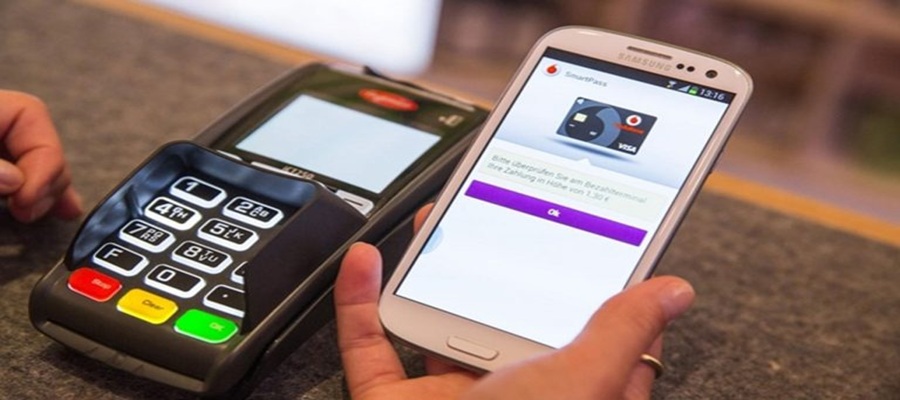
Central Bank of Nigeria (CBN) has launched simple new rules to make mobile money transfers and online banking safer and give ordinary Nigerians more say over their cash.

CBN
The changes aim to stop fraud in our fast-growing digital money world. A notice dated March 12, signed by Musa Jimoh, says the rules start on July 1 for all banks and payment apps in Nigeria.
Customers can now choose if they want instant payments turned on or off on their accounts—anytime they like. Banks must let people say yes or no with strong security checks called Multi-Factor Authentication (MFA), like passwords plus phone codes.
New customers start with it on, but can switch it off easily. If off, online transfers stop right away, but you can go to the bank branch to send money the old way.
People can also change their daily spending limits, up to ₦25 million for personal accounts or ₦250 million for businesses—but only after the bank checks risks. Changes happen fast after customer okay via MFA.
CBN wants banks to use big computer systems to watch for funny money moves, like sudden big inflows or outflows that might mean thieves.
For safety, opening or waking up online accounts needs “liveness checks.” This means you prove you’re real-time alive by blinking, smiling, talking, or turning your head on camera—matched to your Bank Verification Number (BVN) and National ID.
Mobile apps lock to one phone or device at a time. No using the same app on two gadgets together. Switching phones? Full check again.
New mobile apps or new devices get tiny limits for the first 24 hours—just ₦20,000 in or out—to test for tricks. Internet banking from a new gadget also needs extra MFA steps first time.
CBN says these are basic must-dos to protect users, catch crooks faster, and let people control their money better.
The rules come as more Nigerians use phones for quick transfers via apps like Opay, Palmpay, and bank wallets—saving time but facing scams.
CBN balances this growth with tough safety to build trust. Banks must follow or face fines, helping everyday workers, traders, and families bank without fear.

Tech Expert Unveils BAT-BOT AI App to Curb Fake News ahead of 2027 Elections

MTN Nigeria Races Ahead in Fibre Broadband Market

CBN Tightens BVN Rules to Curb Fraudulent Banking Transactions

Nova Bank Appoints Jude Anele as Managing Director/CEO

CBN Rolls Out New Rules for Safer Instant Payments, More Customer Control

Kaspersky Discovers New Phishing Campaign Exploiting Google Tasks Notifications to Steal Corporate Credentials

esentry 2025 Report Shows Healthcare, Financial Services and Telecoms as Staging Grounds for Increased Cyberattacks in Africa

AfDB, UNDP Launch $10Bn AI Initiative for Africa

Mutual Benefits Assurance Settles ₦5.9bn Claims in January 2026

Pheelz Shares His Journey on Glo-Sponsored African Voices




 General News2 days ago
Interswitch Advocates Trust-Driven Infrastructure as Cornerstones of Africa’s Cross-Border Capital Future

 News2 days ago
NLNG Advances Media Excellence with Change Your Story Workshop

 E-Business2 days ago
Why JustMarkets Is a Strong Choice for Gold Trading

 E-Financial2 days ago
CBN Orders Banks to Restrict Access to Banking Services for Loan Defaulters

 E-Financial2 days ago
UBA Business Series Celebrates ‘Gen.W: The Evolved Woman’ in Push for Female Empowerment

 Telecom2 days ago
NDPC Warns Content Creators Against Privacy Violations in Viral Videos

 General News2 days ago
FCCPC Launches Fuel Price Surveillance, Probes Airline Price Gouging, Resolves N10bn Complaints

 E-Financial2 days ago
Recapitalisation Without Transformation is a Risk Nigeria Cannot Afford