

General News
Defending the foundations for connectivity

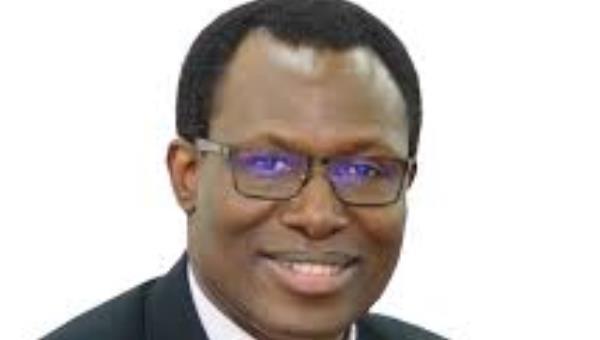
By Engr. Gbenga Adebayo
In 2001, when the first GSM call was made in Nigeria how many of us would have envisaged the digital world that we live in today? The pace of growth and the rate of adoption of telecoms solutions in Nigeria has been revolutionary. It is a globally acknowledged case study that we should be proud of and a clear demonstration of what can be achieved.

Almost all of us today are reliant on the network connectivity that it has enabled in different shapes and forms. From the simple need to communicate with loved ones, to the digital platforms that enable our access to and consumption of entertainment, financial products and other critical services. Our reliance on these systems is becoming more and more acute, whether it is citizens, governments, or corporations. System downtime is increasingly disruptive and offline manual redundancies are often in the advanced stages of being phased out. The pace of this transition is not slowing down. With the core infrastructure in place, innovation is driving the exponential growth of services that ride on it. From the fully adopted social media that has changed the way we interact, to the emerging Artificial Intelligence (AI) revolution.
While this innovation is enabling exciting new possibilities, there is a tendency to focus on those opportunities, to the detriment of the core infrastructure on which it rides. It is imperative that we retain a focus on the optimisation of that infrastructure and enable continued investment in its development. We have seen how the transition from 2G, through to 3G, 4G and 5G have each enabled the development of more and more sophisticated solutions.
The continued development of core infrastructure has to be sustainable, and over the last few months we have begun to see the challenges that the operators that provide it are facing. Both MTN and Airtel have declared significant foreign exchange (FX) losses in Nigeria, and the stress is not linked to them alone. The entire ecosystem is battling with a range of challenges that must be addressed. If we fail to do so, the downstream impact on innovation will be severe. Telecoms infrastructure requires a base level of investment to maintain its current capabilities, and significant additional investment to expand and grow. It is capital intensive and that capital has to be generated through sustainable business models.
At the heart of the challenge the industry faces is the issue of rising costs. Recent financial losses are directly linked to the cost of operating towers that rely on inputs like diesel, which have increased significantly as the Naira has depreciated. The provisions large telecom companies have had to make, and the consequent losses and impact on their reserves is a red flag. It tells us that business as usual is not sustainable. If we continue as we are, then those companies will struggle to continue to invest in and maintain existing services.
But those costs are not the only challenge. General cost inflation, multiple taxation, regular and damaging vandalisation of infrastructure and the costs associated with regulatory compliance all help contribute to the high cost of operations. We cannot continue to follow a path that asks those companies to simply accept those rising costs. It is no longer sustainable, and we have reached an inflection point.
This is a critical moment for the industry. How we approach and resolve it will define the future of Nigeria’s digital economy. If you want to be able to enjoy the benefits that digitisation brings. If we want the infrastructure that enables AI and helps us drive growth, then we must take action now.
Cost-reflective tariffs, like it or not, are simply non-negotiable. We have seen the impact of price controls in other segments of the economy, like power. If providers cannot operate sustainable business models, then they stop investing. When that happens, the existing infrastructure starts to crumble. For power, a consumer can choose to take ownership of the solution by buying a generator, or a solar panel. For fuel, the government can step in as the provider of last resort and manage a subsidy regime that mitigates the impact on the population. Those options are not available in the telecoms sector. There is no self-help solution.
We fully understand and appreciate the financial stress that Nigerians are experiencing today. The cost of living is the single most significant factor in most people’s daily lives. But those people are still able to enjoy the benefits that connectivity brings, at the price they paid before these challenges became so acute. Imagine a future in which the gains of the last twenty years are reversed. Nigeria, and Nigerians simply cannot afford it. The pain that we would feel under those circumstances would be exponentially worse.
We need to find a long-term, sustainable and manageable solution to this problem. Prices will need to rise, but action needs to be taken in a measured way, through sustainable conversations and partnership with the government. It is time to address this head on.
Engr. Gbenga Adebayo is the Chairman, Association of Licensed Telecoms Operators of Nigeria (ALTON)


Federal government has directed all Ministries, Departments and Agencies (MDAs) to suspend the introduction and rollout of new policies, regulations, or major regulatory changes until full compliance with the Regulatory Impact Analysis (RIA) Framework is achieved.

The directive, issued by Princess Zahrah Mustapha Audu, director general of the Presidential Enabling Business Environment Council (PEBEC), is part of efforts to strengthen regulatory quality, ensure policy coherence, and improve the ease of doing business in Nigeria
According to the statement, the RIA Framework, which was formally implemented in January 2025, requires that all new policies or amendments introduced after the date must undergo review and approval in line with its provisions.
She noted the framework has already been circulated to MDAs by the Office of the Secretary to the Government of the Federation and is also accessible on the PEBEC website.
MDAs are therefore expected to familiarise themselves with the framework and align their policy development processes accordingly.
Audu emphasised that while the government remains committed to working collaboratively with regulatory institutions, no new reform or policy would be allowed to proceed without being backed by clear and verifiable evidence.
She explained the directive aims to prevent policy shocks that could negatively affect businesses, investors and citizens, eliminate inconsistencies and frequent policy reversals, and institutionalise evidence-based policymaking across government.
The directive also seeks to enhance transparency, improve predictability, and boost stakeholder confidence in public policies, while ensuring adequate engagement to minimise resistance prior to implementation.
Consequently, all MDAs have been instructed to suspend any planned policy rollouts that have not yet been implemented, ensure that new policy proposals are supported by comprehensive RIA and necessary approvals, and integrate the RIA process into their internal policy formulation procedures.
They are also required to undertake structured and inclusive stakeholder engagement as part of policy development to improve acceptance and implementation outcomes.
The PEBEC boss added that MDAs can access the RIA Framework through its website or seek technical support from the council’s secretariat.
She, however, noted that exceptions would only be granted in cases of urgent national interest, subject to appropriate approval.
Audu stressed that cooperation from all MDAs is crucial to building a stable, consistent and business-friendly regulatory environment capable of driving sustainable economic growth and boosting investor confidence.


The Federal Government has unveiled a new digital platform, NITOUREY, aimed at showcasing Nigeria’s rich cultural heritage and tourism destinations to global audiences.

The initiative, introduced at a press conference organised by the Nigerian Tourism Development Authority, was described as a public-private partnership designed to project Nigeria’s diverse cultural assets.
Speaking at the event on Tuesday, the Minister of Arts, Culture, Tourism and the Creative Economy, Hannatu Musawa, said the platform marked another step in repositioning Nigeria as a leading global destination for tourism, culture and creative excellence.
She explained that the digital project would harness the power of the creative economy and technology to amplify Nigeria’s cultural narratives while creating opportunities for young Nigerians, filmmakers, content creators and tourism operators.
Musawa said, “Today marks yet another significant step in our collective journey to reposition Nigeria as a leading global destination for tourism, culture and creative excellence.
“The initiative aligned with the administration’s economic diversification drive, noting that tourism had the potential to contribute significantly to national growth.
“President Bola Tinubu has a vision to use tourism as part of economic diversification and expansion, and NTDA can play a vital role in achieving that goal”.
She emphasised that NITOUREY would not only showcase destinations across the country but also create economic opportunities within the creative industry.
“Through this initiative, we are not only showcasing destinations across Nigeria but also creating opportunities for the creative industries, including filmmakers, content creators, tourism operators and young Nigerians within the creative economy,” she added.
The minister also stressed the importance of collaboration between government agencies, state governments and the private sector, noting that the platform was a PPP initiative designed to unlock the full potential of Nigeria’s tourism and creative sectors.
“This is a commendable PPP initiative that demonstrates the collaboration required to unlock the full potential of Nigeria’s tourism and creative industry,” she said.
She further assured stakeholders that the Ministry of Art, Culture, Tourism and the Creative Economy would continue to support initiatives that enhance Nigeria’s visibility, attract investment and create jobs.
In his remarks, the Director General of NTDA, Ola Awakan, described NITOUREY as a transformative platform that will redefine how Nigeria is presented to the world.
He emphasised that tourism thrives on perception, visibility, and storytelling, noting that the platform will collaborate with key institutions, including the Nigerian Film Corporation, National Film and Video Censors Board, and the National Information Technology Development Agency, to deliver high-quality content.
Awakan added that the initiative is powered by a strong public-private partnership involving TOURCLIQ Creatives Limited and JM MiSA International Limited, underscoring the importance of collaboration in unlocking the full potential of Nigeria’s tourism and creative industries.
He further revealed that NITOUREY will spotlight iconic destinations across Nigeria’s six geopolitical zones, including Zuma Rock, Yankari Resort and Safari, the Argungu Fishing Festival, Ngwo Pine Forest and Cave, Obudu Mountain Resort, and Olumo Rock, projecting them to a global audience.
The platform is expected to serve as Nigeria’s premier tourism streaming platform, projecting the country’s culture, creativity and destinations to both domestic and international audiences.
The STS Association is proud to announce the signing of a Liaison Agreement with the DLMS User Association (DLMS UA), marking a significant milestone in the evolution of interoperable, secure, and future-ready smart prepayment metering systems.

This collaboration brings together two of the world’s most widely adopted global standards — STS token technology and the DLMS/COSEM data model — with the shared objective of strengthening interoperability, enhancing smart prepayment capabilities, and delivering greater value across the global metering ecosystem.
The DLMS User Association is a globally recognised authority in interoperable and secure data exchange, providing a strong foundation for innovation in energy and water management. Its DLMS/COSEM protocol and data model are widely adopted and supported by major international standardisation bodies, making it a key enabler of modern smart metering systems.
Through this liaison, the STS Association and DLMS UA will work closely to ensure that STS tokens can be seamlessly transported using the DLMS/COSEM protocol and data model. This includes the development of supporting specifications, mappings, and technical enhancements required to integrate STS token functionality within DLMS Generic Companion Profiles.
Both organisations will align their development roadmaps to ensure that advancements in token technology and data exchange evolve in a coordinated and complementary manner. In parallel, joint efforts will focus on market education, technical documentation, and awareness initiatives to clearly communicate the benefits of integrating STS prepayment with DLMS-based communication frameworks.
While electricity metering remains a primary focus, the collaboration also supports expansion into broader multi-utility applications, including water, gas, and time metering. This reinforces the relevance of both standards in enabling flexible, scalable, and future-ready utility infrastructures.
The STS Association will showcase this collaboration at the Power & Water Nigeria 2026 event between the 28th and 30th April at the Landmark Centre in Lagos, Nigeria. We will be.
The event will provide a platform to engage with utilities and stakeholders from across Africa and beyond, to demonstrate how the integration of STS and DLMS/COSEM is shaping the future of smart metering, while offering practical insights into implementation and deployment.
This strategic alignment reinforces a shared commitment to open standards, long-term sustainability, and the delivery of secure, interoperable solutions that support utilities and consumers in an increasingly digital and connected world.

Multichoice Bleeds Customers in South Africa, Loses 580,000 Subscribers

FG Asks MDAs to Halt New Policies Until Full Compliance with RIA

Broadcast Station Owners Reject IBAN’s Threat to Boycott Wike’s Media Engagements

BVN Database hits 68.6m – NIBSS

How Unethical Deals Triggered CBN Takeover of Union Bank -Forensic Report

Spotify’s Loud & Clear Report Reveals Over ₦60Bn Revenue for Nigerian Artists in 2025

Madonna University Taps Tech Guru Adote for Strategic Board Role

China Threatens to Shut Nigeria’s Satellite Over $11.44m Unpaid Debt

Healthcare Under Attack: Why Cybersecurity is Now Critical Care

Why JustMarkets Is a Strong Choice for Gold Trading




 E-Business2 days ago
FG to Strengthen Cybersecurity Coordination as NDPC Probes Alleged Data Breach

 Telecom2 days ago
Compensation for Poor Service Quality is Automatic- NCC

 E-Business2 days ago
Offset Communications Slams N50m Suit against Qore Technologies for Alleged Copyright Infringement

 Telecom2 days ago
FG Moves to Strengthen Cybersecurity Coordination as NDPC Probes Alleged Data Breach

 General News2 days ago
Tinubu Approves N3.3 Trillion Payment Plan to Boost Power Supply

 News2 days ago
Beware of Fake Cerelac Products – NAFDAC

 General News2 days ago
SERAP Sues CCB over Electoral Act, New Tax law

 E-Business1 day ago
Nigeria Cyberattacks: Stronger Collaboration as a Panacea