

Telecom
Digital Education: FG to Provide affordable Learning Devices for Students

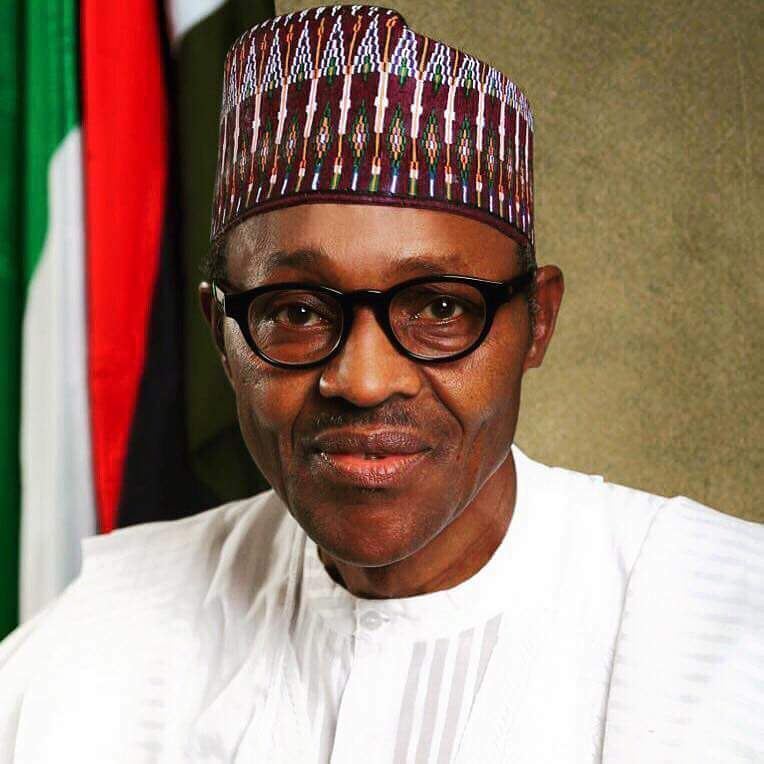
The federal government says it is working with state governments and some development partners to improve the country’s education system by making it more digitally accessible as part of its response to the effect of the COVID-19 pandemic on the sector.
Senior Special Assistant on Education Interventions to President Muhammadu Buhari, Obafela Bank-Olemoh, said that going forward, one of the key areas that Nigerians are going to see a lot of funding from both the federal and state governments towards the education sector, is in the area of devices.
“How do we get cheap and affordable devices into the hands of school students? It’s a key thing that we are working on.”
Mr. Bank-Olemoh was speaking at MTN Nigeria’s The Revv Programme masterclass on ‘Education without Borders and Boundaries’.
The Revv Programme is an initiative from MTN Nigeria to help small businesses rethink and relearn their operations to enable them mitigate against the effect of the COVID-19 pandemic using a four-pronged approach that includes masterclasses, access to market, productivity tools support and advisory initiatives.
Nigeria’s education sector has been one of the most affected by the pandemic. Since the government instituted lockdown to slow the spread of the coronavirus, schools across the country have remained closed.
The federal and state governments plan to have the resumption happen soon; however, no date has been fixed.
The pandemic has meant that the state and federal governments, along with development partners, rethink Nigeria’s education system.
“The reality has changed how we do education whether at the state or federal level.
“Whether we like it or not, we have to provide devices for our children; this is because if something like this happens the second time, we can’t make the excuse of not planning for it,” according to Bank-Olemoh.
Continuing, Bank-Olemoh said the plan wasn’t just to put devices in the hands of students, but to see how that can be done locally.
“Beyond that, it is also an area that we say how do we do it locally? This is because what we have now is just pumping funds outside the country.
“However, going forward, that’s one major area that we’re going to see a lot of intervention from both the federal government, states as well as development partners.”
Other educators and education experts from the public and private sectors that made up the event’s lineup of speakers included Sim Shagaya, Chief Executive Officer, Ulesson Education; Orondaam Otto, Founder/ED, Slum2School Africa; Bolajoko Falore, Education Director, Mind Builders School; Olamidun Majekodunmi, Country Manager, Nexford University; and Babalola Oyeleye, General Manager, Transformation Office, MTN Nigeria.



The International Rescue Committee (IRC) has announced the formation of Airbel Ventures, a new humanitarian impact investing fund aimed at accelerating the introduction and scaling of breakthrough technologies in crisis-affected communities.

The fund will invest in companies whose ideas have the potential to change humanitarian response, including digital infrastructure for frontline health systems and climate-resilient agriculture.
The launch of Airbel Ventures follows a period of rapid innovation at the IRC, despite the humanitarian sector facing record funding cuts.
In the past year, the IRC’s Airbel Impact Lab has advanced more than twenty Artificial Intelligence (AI) and technology initiatives—from anticipatory action tools powered by climate and vulnerability data, to frontline service delivery using safe, orchestrated AI systems, to breakthrough diagnostic tools for emerging diseases.
Airbel Ventures’ first impact investment is in Signalytic, a company delivering solar-powered computing devices that ensure reliable electricity and connectivity for remote health facilities.
Following the investment, the IRC will pilot Signalytic’s technology with its Nigeria Health team, demonstrating the viability of next-generation digital infrastructure in humanitarian settings.
“We know breakthrough solutions already exist—what’s missing is the path to scale in humanitarian contexts,” said Dr. Jeannie Annan, Senior Vice President for Research & Innovation at the IRC and head of the Airbel Impact Lab.


MTN Nigeria, the country’s largest telecommunications operator, recorded a historic surge in network disruptions in 2025, suffering 9,218 fibre cuts as of December 31, alongside 211 base station sites affected by theft and vandalism, incidents that disrupted mobile and data services relied upon daily by millions of Nigerians.

The data was revealed by Dr Karl Toriola, chief executive officer/managing director, MTN Nigeria via a social media post titled ‘MTN Nigeria 2025 Wrapped’.
The scale of the damage highlights the growing vulnerability of Nigeria’s telecommunications infrastructure, which has come under increasing pressure from road construction activities, cable theft and deliberate acts of vandalism.
MTN said 5,478 fibre cuts occurred within just the first seven months of 2025, with 760 incidents recorded in July alone, underscoring the intensity of the challenge.
Some of the incidents had wide-ranging consequences, knocking out connectivity across multiple states simultaneously and affecting voice calls, data services, digital payments and enterprise operations.
The company described the situation as a national infrastructure problem, rather than an isolated corporate issue, given the economy’s deep dependence on mobile networks.
“These gaps were shaped by real operational challenges such as fibre cuts, theft, and vandalism. Their impact is felt directly by customers and reflected in what they tell us,” Toriola,
The disruptions were reflected in customer feedback volumes, as MTN handled an unprecedented number of complaints during the year. The operator said it resolved 1,624,263 customer complaints in 2025, spanning call centres, social media platforms, emails and physical service centres nationwide.
Despite the setbacks, MTN pointed to signs of operational resilience. The company retained its ranking as Nigeria’s best network by Ookla, returned to profitability after a challenging period, declared an interim dividend, and expanded its subscriber base to over 85 million users by September 2025.
The figures show that while Nigeria’s telecom operators continue to invest heavily in network expansion and customer service, infrastructure sabotage remains a major drag on service quality and operating costs.
MTN acknowledged that performance improvements remain a work in progress. “We are not where we want to be yet. We see you. We hear you. We exist because of you. And we will get better,” Toriola said.
As the company enters its 25th year of operations in Nigeria, Toriola said MTN is doubling down on customer-centricity, treating every piece of feedback as a guide for improvement, while also stepping up engagement with government agencies.
The CEO renewed calls for stronger regulatory and legal protections for telecommunications infrastructure, urging policymakers to classify fibre cables, base stations and other critical assets as national infrastructure and criminalise vandalism to deter repeat attacks.
Nigerian Communications Commission (NCC) has granted operating licences to six new Internet Service Providers (ISPs), effective January 1, 2026, raising the total number of authorised ISPs in the country to 231 from 225 recorded in December 2025.

NCC
The newly licensed firms are Intellvision Technologies Limited, Granet Technologies Limited, Fiber Sonic Limited, Dasol Solution Services Ltd, Boost ISP Limited, and Amazon Kuiper Nigeria Limited.
Five of these companies are headquartered in Lagos, while Granet Technologies Limited operates from Owerri in Imo State, highlighting the persistent concentration of broadband infrastructure in major commercial hubs like Lagos, Abuja, and Port Harcourt.
This development intensifies competition in Nigeria’s broadband market, which faces pressure from dominant mobile network operators such as MTN and Airtel, alongside rapid expansion by satellite providers like Starlink.
Traditional ISPs continue to grapple with shrinking customer bases, aggressive data pricing from telcos, and satellite disruptions, even as NCC data from Q2 2025 showed Spectranet, Starlink, and FibreOne controlling about 65 per cent of the 313,713 active ISP subscribers.
The inclusion of Amazon Kuiper Nigeria Limited marks a significant entry of global satellite broadband competition, building on Nigeria’s recent approvals for other low Earth orbit providers to enhance connectivity in underserved areas.
Industry analysts view the licences as a strategic push to improve internet quality amid rising demand for digital services, though geographic clustering underscores ongoing infrastructure challenges outside urban centres.
NCC’s move aligns with broader efforts to foster a competitive telecoms sector critical to Nigeria’s digital economy ambitions.

Tech Executives Double Down on AI, Talent and Adaptive Strategies to Lead in the Intelligence Age

Firm Identifies AI as Common Denominator in Entertainment Industry’s 2026 Security Threats

NIBBS to Boost Financial Inclusion with Offline Payment Solutions

Why Nigeria’s Banks Still on Shaky Ground with Big Profits, Weak Capital

CBN Upgrades Licences of Opay, Moniepoint, Kuda, Palmpay, Paga to National Status

19 Nigerian Banks Meet CBN Recapitalization Targets Ahead of March Deadline

Jumia CEO says Black Friday Signals Nigeria’s E-Commerce Maturity

Galaxy Backbone Celebrates the Federal Government’s Paperless Civil Service Milestone

DStv Offers Instant Package Upgrade for Customers from January to February

Banks to Impose N50 Stamp Duty on Transfers of N10,000 and Above from January 1




 News1 day ago
Anambra Cuts Monday Pay to Kill Sit-at-Home

 E-Financial1 day ago
First Asset Management Receives Upgraded Ratings from Agusto &Co and DataPro

 General News1 day ago
Nigeria Treats Religious Violence as Attack on State – NSA Ribadu

 E-Financial1 day ago
CBN Prepares Fresh Debit Card Rules to Improve ATM Services

 E-Financial1 day ago
NIBSS, Others Flag 13,417 Nigerian Fraudsters on Person of Interest Portal

 News1 day ago
LIRS to Invoke NTAA to Recover Unpaid Taxes from Bank Accounts, Others

 General News7 hours ago
WEBINAR: Techeconomy Business Series Hosts Experts from MTN, Interswitch, BusinessPlus, others this Wednesday
 News7 hours ago
Tech Executives Double Down on AI, Talent and Adaptive Strategies to Lead in the Intelligence Age