

News
Gartner says Global IT Spending to Reach $3.7trn in 2013


Worldwide IT spending is projected to reach $3.73 trillion in 2013, a 4.2 per cent increase from $3.58 trillion in 2012, according the latest report from Gartner, a research firm.
Gartner said in a statement that much of this spending increase is the result from projected gains in the value of foreign currencies versus the dollar, adding that in constant currency, spending growth in 2013 is expected to be 3.9 per cent.
The 2013 outlook for IT spending growth in US dollars has been revised upward from 3.8 per cent in the Q3 2012 forecast.
“Uncertainties surrounding prospects for an upturn in global economic growth are the major retardants to IT growth. This uncertainty has caused the pessimistic business and consumer sentiment throughout the world,” Richard Gordon, Gartner managing vice president said.
However, much of this uncertainty is nearing resolution, and as it does, Gartner expects accelerated spending growth in 2013 compared to 2012, he added.
Worldwide devices spending which includes PCs, tablets, mobile phones and printers, is forecast to reach $666 billion in 2013, up 6.3 per cent from 2012.
However, this is a significant reduction in the outlook for 2013 compared with Gartner’s previous forecast of $ 706 billion in worldwide devices and 7.9 per cent growth.
The long-term forecast for global spending on devices has been reduced as well, with growth from 2012 through 2016 now expected to average 4.5 per cent annually (from 6.4 per cent).
These reductions reflect a sharp reduction in the forecast growth in spending on PCs and tablets that is only partially offset by marginal increases in forecast growth in spending on mobile phones and printers, Gartner said.
“The tablet market has seen greater price competition from Android devices as well as smaller, low-priced devices in emerging markets,” Gordon said.
Worldwide enterprise software spending is forecast to total $296 billion in 2013, 6.4 per cent up from 2012. This segment will be driven by key markets like security, storage management and customer relationship management.
Beginning 2014, markets aligned to big data and other information management initiatives, like enterprise content management, data integration tools, and data quality tools will see increased levels of investment, Gartner said.
The global telecom services market continues to be the largest IT spending market. From $ 1.66 trillion in 2012, this segment is estimated to grow 2.4 per cent to $ 1.7 trillion in 2013.
Gartner said growth is expected to be predominately flat over the next several years as revenue from mobile data services compensates for the declines in total spending for both the fixed and mobile voice services markets.


News
Stakeholders Demand Stronger Governance and Infrastructure to Drive Tech Adoption @ Lagos AI Summit


As AI adoption accelerates across Nigeria, leaders at the “AI in Action Now” conference 2026 have called for a balance between rapid innovation and strict regulatory governance. The event, held at the Lagos Oriental Hotel, highlighted both the doggedness of Nigerian builders and the risks of unregulated data usage.

Dotun Adeoye, Co-Founder of AI Nigeria, raised alarms over “Shadow AI”, a trend where employees upload sensitive official documents to public AI platforms. He praised the Nigerian Data Protection Commission (NDPC) for its recent aggressive stance, including multi-million-dollar fines against major banks and social media brands.
“Innovation without governance is dangerous. The regulator now has the job of educating players. We are working in partnership with them to ensure players don’t just get fined, but actually understand how to protect data locally rather than storing it abroad, ” Adeoye noted.
Addressing issues of lack of infrastructure to carry AI adoption, Conference Convener Debola Ibiyode admitted that while Nigeria lacks the traditional foundation for AI adoption, the tech community cannot afford to wait.

“The simple answer is we don’t have the infrastructure, but Nigeria has never really had infrastructure to drive anything, and we still thrive, ” Iboyode said, encouraging students and builders to look beyond current limitations. “Once we start to build based on what we have now, it will encourage those who need to provide the infrastructure to do their part. The world will not wait for us,” she insisted.
To bridge this gap, she highlighted the AI Foundry Africa, an incubator designed to mentor ideas into market-ready products.
Meanwhile, speaking to journalists on the sidelines, Biodun Ogunleye, the Lagos State Commissioner of Energy and Mineral Resources, echoed the sentiment that the government’s role is to facilitate the right environment through partnership. He emphasized that data generated from interactions with the government must have long-term value.
“We must ensure that in all facets from production to interaction with government, the tools required to ensure data has value are appreciated,” Ogunleye stated.
He concluded that through private-sector collaboration, the government can focus on its primary functions while leveraging AI to ensure the nation aspires for the future.


About 35 million Nigerians face acute hunger risks in 2026, including three million children battling severe malnutrition, the United Nations has warned, attributing the crisis to collapsing global aid budgets and escalating violence in the northeast.

UN Resident and Humanitarian Coordinator Mohamed Malick Fall disclosed this on Thursday during the launch of the 2026 humanitarian plan in Abuja, noting that the traditional foreign-led aid model proves unsustainable amid Nigeria’s escalating needs.
He highlighted dire conditions in Borno, Adamawa and Yobe states, where over 4,000 people perished in the first eight months of 2025 from surging suicide bombings and attacks—equalling the entire previous year’s toll.
The UN now targets $516 million to deliver lifesaving aid to 2.5 million people this year, a sharp drop from 3.6 million in 2025 and half of prior levels, forcing prioritisation of only the most critical interventions.
Fall stressed, “These are not statistics. These numbers represent lives, futures and Nigerians,” as shortfalls last year compelled the World Food Programme to halt support for over 300,000 children after resources dried up in December.
Yet, Fall acknowledged Nigeria’s increasing national ownership, including local funding for lean-season food assistance and proactive flood early-warning systems, signalling a shift toward self-reliant crisis response.
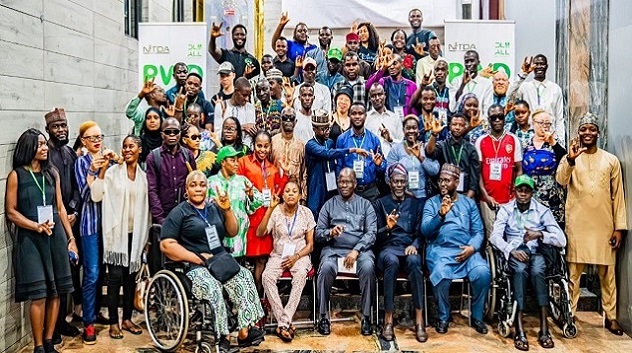
The National Information Technology Development Agency (NITDA) has reaffirmed its commitment to inclusive digital development following the completion of a two-day digital literacy training for persons with disabilities (PWDs) in Abuja.

The programme, organised under NITDA’s Digital Literacy for All (DL4ALL) initiative, the programme trained 50 participants in practical digital skills to enhance their participation in Nigeria’s expanding digital economy.
In his remarks, the Director-General, Kashifu Inuwa CCIE, stated that the programme reflects the agency’s determination to ensure accessibility remains a core component of national digital transformation efforts.
He explained that genuine digital advancement cannot be realised without the inclusion of persons with disabilities, adding that millions of Nigerians remain constrained by limited access to accessible and inclusive digital platforms.
“In many cases, the problem is not the absence of digital tools but the lack of accessibility. Platforms that do not support assistive technologies, non-captioned content and inaccessible websites effectively shut people out and limit opportunities,” he added.
Inuwa further explained that the initiative aligns with President Bola Ahmed Tinubu’s Renewed Hope Agenda, which prioritises inclusivity as a driver of national development. He stressed that persons with disabilities should be recognised as active contributors to economic growth rather than dependants.
“When equipped with the right skills and technologies, persons with disabilities become innovators, entrepreneurs and professionals who contribute meaningfully across sectors,” he added.
He acknowledged the role of Inclusive Friends Association (IFA) and SIMBED in delivering the training, describing the collaboration as a model of how government and civil society partnerships can advance inclusive development.
Highlighting NITDA’s broader digital literacy drive, the Director-General said the DL4ALL programme is a key component of the agency’s Strategic Roadmap and Action Plan, which targets 70 per cent digital literacy by 2027 and 95 per cent by 2030.
He explained that the initiative operates through three main tracks: an informal sector programme that has trained more than 480,000 Nigerians across 30 states and the Federal Capital Territory since September 2024; an education sector programme focused on embedding digital skills into learning institutions; and a workforce readiness programme designed to strengthen digital competence in both public and private sectors.
“This programme is not merely a pilot. It is proof that inclusive and intentional training works, and that persons with disabilities can excel when given equal opportunities,” Inuwa stated.
Also speaking, the Managing Director and Chief Executive Officer of SIMBED, Mr Daniel Onunkwo, described the training as a significant step towards closing the digital inclusion gap for persons with disabilities.
Onunkwo added that the initiative sends a strong message about equity and national progress, adding that SIMBED remains committed to expanding digital empowerment for persons with disabilities.
Similarly, the Executive Director of Inclusive Friends Association, Grace Jerry, represented by Tracy Agbamu, commended NITDA for demonstrating intentional leadership in promoting inclusion under the Renewed Hope Agenda.
She urged participants to continue applying the skills acquired and to serve as digital inclusion advocates within their communities.
The training programme further strengthens NITDA’s vision of building a digitally inclusive Nigeria where access to digital opportunities is determined not by physical ability but by empowerment and innovation.

PalmPay User Shares Experience on Fintech Apps to Trust in Nigeria

Stakeholders Demand Stronger Governance and Infrastructure to Drive Tech Adoption @ Lagos AI Summit

Nigerians Target Self-Improvement, Business Startups in 2026 Google Data

35 Million Nigerians Face Acute Hunger in 2026, UN Warns

How Inside Jobs and Policy Shocks Trigger Nigeria’s Rising Loan Crisis

Banks quietly move to enforce new ₦50 transfer levy from Jan. 1

Jumia CEO says Black Friday Signals Nigeria’s E-Commerce Maturity

Galaxy Backbone Celebrates the Federal Government’s Paperless Civil Service Milestone

19 Nigerian Banks Meet CBN Recapitalization Targets Ahead of March Deadline

Nigeria’s Internet Usage Hits 1.24m Terabytes – NCC




 E-Business3 days ago
Firm Detected a Scam Exploiting OpenAI’s Teamwork Features

 E-Financial3 days ago
MoMo PSB Expands Cross-Border Transfers Across Africa

 Broadcasting3 days ago
DG NCC Tasks University Dons on Research Commercialization, IP Management to Build Global Competitive Ecosystems

 E-Financial3 days ago
Banks to Cut Fraud Response Times to Under 30 Minutes

 Telecom3 days ago
FG Expands 3MTT Programme Across the Country

 E-Financial1 day ago
Zenith Bank Gets Regulatory Approval for Full Takeover of Paramount Bank

 News3 days ago
Firms Face Gaps Between AI Ambition and Execution

 Telecom3 days ago
MTN Foundation Trains 2,000+ Young Nigerians in ICT for SME Growth