

General News
ICT Key to Nigeria’s Economic Development-Orlando


Orlando Olumide Odejide is the CEO of G4V, a leading business consulting, system integration, training and capacity building services company.
Odejide has over a decade experience as an IT professional and as a project Manager. He has worked with reputable companies in Nigeria, in the United Kingdom and some part of America. He spoke to funmi ilesanmi on a wide range of issues.
Overview of Operations
The name of our company is called Global Foresight Advantage. We call it G4 really because that is easier us and for people to pronounce and what that means is that foresight gives us an advantage globally. As at today, we operate in three African countries, hopefully by the end of 2010, we would be in about six or seven African countries.
Three key things that G4 does is; one, we do what is called business consulting, the second is what is called system integration and the third is training and capacity building services. When we say business consulting, what that means is that we help clients look at their businesses and optimize their processes, so process optimization is an essential part of it. We help clients develop unbalanced score cards, make measurements for their business and we help them look at key areas of process improvement and things like that. So when we say systems integration, we are Microsoft Gold Partners with competencies in advanced infrastructure, licensing, information web postulations and we are also Cisco Partners with specialization in security and data centre. We train various people and corporate organizations primarily on various solutions and technologies. As an organization, we have 60 consultants working in Lagos, Abuja, Duala and in Accra, Ghana.
Relationship with Allied Computers
G4V is a part of the Allied Group; Allied Computers is also a part of that same group.
Software Development in Nigeria
The business of software development in Nigeria is a market that has existed before hand and is getting better as the days go by. The needs of a lot of clients’ businesses in Nigeria both in the banking and telecommunications sectors are significantly improving and becoming much more complex so they do not need generic software anymore. They need extensions and customization for the generic software, that is where I see the growth part in the industry. Also, the key area is around business historical data but now they need to be able to mine the data to get a lot of intelligence out of it, so in the software development business, we would see a significant growth as the years go by.
Virtualization
Virtualization is key. You need to understand it and go with it, take advantage of it now or you would be left behind because virtualization allows you to completely maximize your resources, reduce your cost and increase your capacity as an organization.
Developing the Economy with ICT
IT is about the improvement of businesses. IT helps businesses to be more effective and more efficient at what they do. The growth of any economy at all has to be completely dependent on IT to improve and increase their productivity. It means it would grow and our economy in Nigeria is very much dependent on it. When you look from the hospitality sector to the financial services, to telecommunications and to manufacturing, the dependency of IT is there. The more these businesses want to grow and expand, the more their dependence on IT increases. Both of them go hand-in-hand and the business becomes completely dependent on IT.
Impact of Relationship with Microsoft
Like I said, we are Microsoft’s Gold partner with about five different competencies in that area, so because of that, Microsoft has been extremely supportive of us and the various initiatives we have embarked upon over the last couple of years. From marketing initiative, advertising initiative to the ability to create value added technologies to some of our clients. Microsoft has been supportive in terms of that and the Microsoft Blue Coast strategy is a working strategy, Microsoft support its partners and we are the recipient of one of such support.
Microsoft Nigeria Country Manager Leadership Award
The award means a lot to us. For one, it is a recognition of the goodwork and the hardwork we have put into all the things that we have been doing. Prior to that, from the perspective of us been able to further drive our value proposition with our clients, Microsoft basic core business that we do as an organization to promote the certified goal of the organization who are all Microsoft certified so it is an essential part of our strategy.
Prediction of IT in Nigeria
It will get some significant growth I can guarantee you and one of the good things I know would happen rapidly is our ability to export IT out of the country so we will be able to export resources, export capabilities out of Nigeria into other countries, especially all the African countries. It is a major economic growth factor and it will just keep getting better.
Manpower
An essential part of what we do is training and capacity development because the people locally need skills and they need capabilities and that is what it is that we are also doing to be able to build those skills; not only in terms of certifications but giving our people the right capabilities to do whatever it is they need to do. It is an essential part of what will happen and we are in a position to help Nigeria as a nation with the development of its workforce.
Challenges
The major challenge in the environment is purely infrastructure. Infrastructure can be termed as: number one, power and obviously the absence of broadband which will happen in the next 12 to 24 months to guarantee very available broadband access. Primarily, it is the absence of power because you know everybody, the telcos, the service providers, everybody is completely dependent on power and that is the major hinderance to the development and growth of IT in Nigeria.
Impact of the Meltdown on G4V
The global meltdown has affected everybody. Before we started this interview, one of our business partners came in and he was saying and you know and everything was at a halt. So you know that has been difficult but nevertheless we will survive and we will not only survive, we’ve thrived even in a recession and we have been able to reposition better to do integrated things in years to come.
Support rendered to clients
We have looked at dedicated support plans for various technologies and solutions that we sell to our clients. From the data centre perspective, we help a lot of our clients with data centre implementation and optimization. Outside of the data centre area of work, we help a lot of our clients also with intranet development and software development and also messaging, collaboration and unified communication. We have great dedicated support staff and we have a very dedicated service desk for all the solutions.
Corporate Social Responsibility
One of the things that we do as a way of giving back to the society is working with the government and educational institutions, basically to facilitate initiatives and to actually go into training their people at no cost on process optimization and the use of technology to better equip their businesses and their organizations. It is one of the key things that we are heavily involved in.
Regulation of the software industry
There is a combination of things that needs to be done and it is a joint effort between we technology partners and technology providers like Microsoft and Cisco and established institutions like Coren and software, and builders computer association to be able to step down, have some form of discussion with regards to software standards, development standards, technology standards and how these things can be adopted locally. It is not what someone can do alone; it will have to take a joint effort.
Locally manufactured software
Locally manufactured are the software and a lot of them have come a long way. We have more than 10 locally manufactured software that have been in business for more than 10 to 15 years. I think it has come a long way and I think it’s a good thing. I encourage a lot of them to get the ISS certification for their software and to actually start making exportation of these software to other African countries.
Supporting local software manufacturers
From the support perspective, I think the key thing that can be done is basically for the government to give them rebate in terms of tax rebate, in terms of investors’ solutions rebate and support to help them to actually standardize their supply and put them in a position to be able to export it for the good of themselves and the nation in general.
G4V in the next five years
In another five years, we will definitely be a pan African IT company. We are planning to be in three or more countries next year and to increase this. We have a five-year plan of been in 20 African countries and to have offices and clientele in each of these locations, that is our plan.


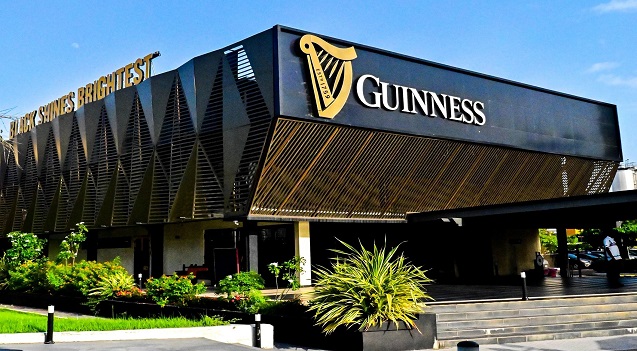
Guinness Nigeria has officially begun rewarding consumers under its nationwide ‘Open For More’ National Consumer Promotion (NCP), with an impressive ₦17 million in rewards to 107 winners during the campaign’s first live draw held on July 31, 2026.

The inaugural draw instantly transformed the fortunes of consumers across the country, producing seven new millionaires, who each received ₦1 million, alongside 100 additional winners, who each walked away with ₦100,000. The milestone marks the beginning of a series of weekly live draws that will see hundreds more Nigerians rewarded throughout the promotion.
The seven ₦1 million winners are Marcus Barieepie, Ani Valentine Ogochukwu, Okafor Sochima, Taiwo Adebola, Zubair Rukayat, Oluwatobi Femi, and Ebubechukwu Okolo.
The live draw was conducted under the supervision of the Federal Competition and Consumer Protection Commission (FCCPC) to ensure transparency and fairness. Representatives of the commission present included Dr. Olubunmi Otti, Zonal Coordinator, FCCPC Southwest, and Mrs. Abosede Ogundeji, Surveillance and Investigation Officer.
Speaking during the draw, Ramanathan S, representing Guinness, said the promotion reflects the brand’s enduring commitment to celebrating and rewarding the consumers who have supported Guinness over the years.

“For decades, Nigerians have made Guinness a part of their milestones and celebrations. Today, we are proud to give back by putting ₦17 million directly into the hands of 107 consumers in our very first draw. This is only the beginning. Over the coming weeks, many more Nigerians will experience life-changing rewards as we continue to celebrate the loyalty of the people who have made Guinness part of their stories.”
He added that all weekly draws will continue to be streamed live across Guinness Nigeria’s official platforms, enabling consumers to witness the winner-selection process in real time and reinforcing the transparency and credibility of the promotion. He also encouraged eligible consumers nationwide to participate, noting that every valid entry presents another opportunity to win.
The ‘Open For More’ National Consumer Promotion offers consumers the chance to win ₦1 million every day, ₦100,000 cash prizes for 1,000 winners, and a Toyota Land Cruiser Prado as the grand prize. Altogether, the promotion will reward consumers with more than ₦400 million in cash and prizes.
To participate, consumers simply need to purchase specially marked bottles of Guinness Foreign Extra Stout or Guinness Smooth, locate the unique code beneath the crown cork or can lid, and enter the code via the designated campaign platform.
With ₦17 million already won in its opening draw, the campaign is off to a remarkable start, reinforcing Guinness Nigeria’s commitment to rewarding consumer loyalty through transparent processes and unforgettable experiences that go beyond the product. Consumers are encouraged to look out for specially marked promotional packs and follow Guinness Nigeria’s official communication channels for updates, winner announcements, and details of upcoming draws.

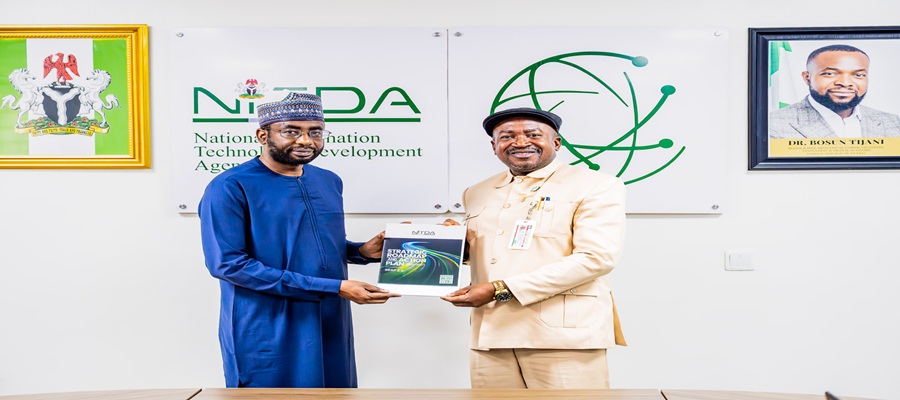
National Information Technology Development Agency (NITDA) has expressed readiness to deepen collaboration with Nigerian universities to promote research, innovation and technology-driven solutions to local challenges.

NITDA, UniAbuja
NITDA’s Director-General, Kashifu Inuwa Abdullahi, stated this when the management of Yakubu Gowon University, formerly the University of Abuja (UniAbuja), led by its Vice-Chancellor, Prof. Hakeem Fawehinmi, paid a familiarisation visit to the agency’s headquarters in Abuja.
Abdullahi said stronger collaboration between NITDA and tertiary institutions was essential to building a robust innovation ecosystem, developing practical skills and positioning Nigeria for technology-driven economic growth.
He stressed the need for increased investment in research, particularly in emerging technologies such as Artificial Intelligence (AI), Internet of Things (IoT), blockchain, cybersecurity and cloud computing.
“We need to invest more in in-depth research with universities to build a robust research ecosystem that will help us develop solutions.
“Research will focus on harnessing AI, IoT, blockchain, cybersecurity and cloud technology, among other emerging technologies, to improve our lives and grow our digital economy,” he said.
The DG described universities as critical talent factories required to achieve Nigeria’s digital transformation aspirations.
“NITDA has a vision to make Nigeria a digitally empowered nation. You (UniAbuja) are the talent factory, and we cannot achieve our vision without talented Nigerians.
“The only way to achieve that is by working with institutions like yours. So, we need to build talent,” he said.
Abdullahi also advocated the integration of AI education across disciplines in tertiary institutions, saying students needed practical digital skills to remain relevant in the evolving world of work.
“We can work together to explore ways of introducing AI across the board as a general study course in tertiary institutions.
“Elements of AI should be included in every field of study to equip our students with the hands-on skills for navigating the real world,” he said.
According to him, NITDA is already collaborating with key education sector stakeholders, including the Federal Ministry of Education, National Universities Commission (NUC), National Board for Technical Education (NBTE) and National Commission for Colleges of Education.
He said the agency was also working to promote digital literacy programmes across all levels of education to ensure that graduates acquire skills relevant to industry requirements.
Earlier, Fawehinmi said the university’s visit was aimed at seeking NITDA’s partnership and support in strengthening digital infrastructure and technology-based training at the institution.
He expressed appreciation for NITDA’s contributions to the Digital Geoscience Centre at the university.
The Vice-Chancellor said the university was willing to collaborate with NITDA on joint research, capacity-building initiatives and innovation programmes capable of contributing to Nigeria’s socio-economic development.
“We could go into partnership with you to provide data, collaborative engagements, staff exchanges and joint research hubs, so that we can produce high-level human resources.
“The university is committed to serving as a strategic academic partner to NITDA by providing academic expertise required to advance your national digital transformation initiatives,” he said.
The proposed collaboration is expected to strengthen the link between academic research and industry needs while creating opportunities for technology innovation, skills development and practical solutions to Nigeria’s socio-economic challenges.

A New Mexico court has ordered Meta, the parent company of Facebook and Instagram, to pay $567 million to address the alleged harms caused to young people by its social media platforms.

Meta
The ruling by Judge Bryan Biedscheid came in the second phase of a landmark trial concerning the impact of Meta’s platforms on children and teenagers.
The judge said $420 million of the amount would be dedicated to treatment services for young people, while the remaining funds would support awareness and prevention programmes, screening services and other related costs over the next five years.
The latest financial order comes on top of $375 million in civil penalties awarded against Meta in March after a jury found that the company knowingly harmed children’s mental health and concealed information about child sexual exploitation on its platforms.
During the second phase of the trial, prosecutors asked the court to order fundamental changes to Meta’s platforms, including measures to reduce addictive features, improve age verification and prevent child sexual exploitation through stronger privacy settings and increased oversight.
The court subsequently ordered Facebook and Instagram to introduce banner notifications and informational screens explaining their safety features, recommended practices and tools for addressing inappropriate comments.
The platforms must also regularly display the information, while an educational campaign in New Mexico will be subject to review by the state.
New Mexico Attorney General Raúl Torrez said the ruling sent a clear message that technology companies could be held accountable when their product designs knowingly exposed children to risks.
“Today’s decision is a victory for every parent who has worried about what social media is doing to their child and every child who deserves to grow up safer online,” Torrez said in a statement.
Meta said it would appeal the ruling.
“We work hard to keep people safe on our platforms and have been transparent about the challenges of identifying and removing bad actors and harmful content,” the company said.
The company said it remained confident in its record of protecting teenagers online and would continue to defend itself against what it described as claims that misrepresented the facts.
On age verification, the court said federal children’s privacy laws restricted Meta’s ability to apply certain verification tools to children under 13.
The court cited the Children’s Online Privacy Protection Act (COPPA), which limits the collection of personal information from children under 13.
Rather than imposing a blanket age-verification requirement exclusively on Meta, the judge ordered the company to continue improving its age-assurance tools in New Mexico.
The tools include the use of artificial intelligence to estimate users’ ages based on signals such as their social connections and the type of content they post and consume.
Meta was also ordered to attempt to develop a dedicated model for predicting whether users are under 13 within the next two years.
Additionally, the company must request proof of age from Facebook and Instagram users in New Mexico whom it estimates to be under 13.
Where Meta determines that a user is under 13, or under 18 but cannot determine a specific age, it must treat the user as being under the applicable age threshold until the user verifies their age.
The court further ordered Meta to partner with schools or a child-safety organisation to establish a reporting portal through which school officials can flag users suspected to be under 13.
Meta must also delete personal information it has collected from users under 13 and submit progress reports twice a year detailing its compliance with the court-ordered measures.
The ruling comes as Meta faces thousands of lawsuits from families alleging that children have been harmed by social media use.
The company is also preparing for another trial in California amid the growing litigation over the impact of social media platforms on young people.

World Bank Debars United Aviation Services, Owner over Fraudulent Activities

NITDA Introduces Cloud Certification Boost Data Localisation Compliance

Enugu State Approves Land for ITF’s Digital Fabrication Centre

BOI Opens N250Bn Bond Offer to Fund Businesses

Guinness Rewards Consumers with ₦17 Million in First Week of ‘Open for More’ Promo Draw

From Scarcity to Scale: What Africa Can Learn from India’s Agricultural Transformation

BON Establishes Six Ad Hoc Committees to Modernize Broadcasting

EFCC Busts NIS Visa Overstay Racket, Uncovers N700m in an Account

Fact-Check: Elon Musk’s “Tesla Pi Phone” is Internet Rumor

NBC Tasks Broadcasting Stations over 2028 DSO Global Deadline




 E-Financial2 days ago
Access Holdings Deepens Sustainable Finance Impact, Expanding Green Assets to ₦92.14 Billion

 News2 days ago
Ogbaga, Abuja Lawyer to Sue Telcos, DStv over Alleged Unfair Practices

 Telecom2 days ago
MTN Moves Closer to Full IHS Takeover

 Telecom2 days ago
Airtel Nigeria Unveils Hundreds of Retail Shops in Wide Expansion of Customer Touch Points

 E-Financial2 days ago
NAICOM Revokes Nigeria Reinsurance’s Licence over Failure to Meet MCR

 News2 days ago
NAICOM Issues New Licences to 43 Recapitalized Insurers

 E-Financial2 days ago
SEC Begins Full e-Registration for Capital Market Services

 E-Financial2 days ago
TeamApt, Awabah Partner to Bring Micro-Pension Contributions to POS Terminals Nationwide