

General News
List of Biggest Political Casualties of the General Elections

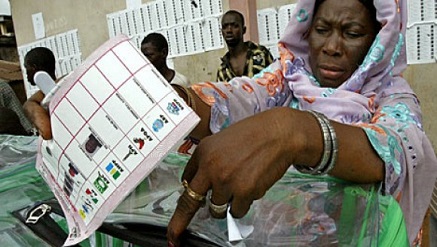
The April 11 Gubernatorial and State Assembly elections have come and gone, bringing to an end over 12 months of rigorous electioneering and scheming.
Winners have emerged and the also-rans are counting their financial and political loses. Some losers, however, were obviously worse affected than others.
Carlhz Chinedu, a sociopolitical commentator and a social justice activist in this compilation, lists the biggest casualties of the March 28 and April 11 political hurricanes.
Mua’zu Babangida Aliyu:
The Niger State “Chief Servant’s” woeful performance at both the March 28 and April 11 elections has called into question his supposed status as a force to be reckoned with in the Nigerian political equation.
The long-serving Chairman of the Northern States Governors’ Forum (NSGF) not only failed to “deliver” his state to the PDP’s Goodluck Ebele Jonathan in the Presidential Polls and in his bid to ensure that his anointed candidate, Umar Nasko, succeeds him at the Minna Government House, but he also fluffed in his quest to represent the Niger East Senatorial Zone in the 8th Senate.
It’s really been a season of reality checks for the once-influential governor, a politician who was reportedly being groomed by some power brokers in the North to succeed Goodluck Ebele Jonathan come 2019.
He was even widely quoted in the local press few weeks ago as saying that he intends to “mark time” in the Senate while he awaits the 2019 General Elections when he would take a shot at the country’s top job. All that is up in the air now.
As it stands, instead of waiting in the senate, he will be marking time at home while he counts his loses and plans his next political move.
Lagos PDP:
These are not the best of times for the PDP nationwide, more so in Lagos state. The party’s huge losses at the polls is made much worse by the fact that Lagos state is the de facto nerve center of the APC.
Depending on how the APC goes about governing both the country and the state, the once-dominant PDP may be reduced to oblivion.
The PDP’s sudden loss of prominence will definitely instigate a flurry of realignments and defections into the new ruling party.
The losses will be asphyxiating no doubt, but the PDP’s continued survival and robustness in Lagos state is crucial for the democracy over there, else the “Center of Excellence” runs the risk of becoming a one-party state where no-one dares question or check the excesses of the ruling party. Four years is not eternity; 2019 is not as far as it seems. There’s enough time between now and then for the party to rediscover itself and mount a greater challenge.
David Mark and Gabriel Suswam:
Not even the combined might of a two-time Senate President and an incumbent governor could stop the APC from snatching a hard-fought victory in Benue state.
The PDP’s latest defeat in Benue didn’t come as a surprise to many this time around, following its shock loss in the state at the presidential polls.
The party’s overall poor showing at the National Assembly elections will almost certainly cost David Mark the presidency of Nigeria’s Upper Legislative Chamber — a position which he has held since 2007 — while Governor Suswam’s running battle with the Benue state civil servants has cost him both a ticket to the 8th Senate and a governorship ticket for his anointed candidate, Terhemen Tarzoor.
What becomes of both men in the Nigerian political arena come the next administration is anyone’s guess.
Nuhu Ribadu:
The revered former anti-corruption boss’ sojourn into the murky waters of politics has so far not been fruitful. He contested and lost the 2011 Presidential elections on the platform of the ACN to the PDP’s Goodluck Jonathan.
In 2014, he controversially defected to the PDP from what had morphed into the APC with hopes of contesting on the platform of the PDP and probably winning the Adamawa state gubernatorial election. However, it was not to be.
He was gifted the opportunity of running for the office, but he was always doomed to fail, following alleged anti-party activities and sabotage by members of his own party.
This culminated in a comprehensive defeat on April 11, where he finished in an embarrassing third place.
Chibuike Amaechi:
His party may have been victorious at the Presidential polls, but it’s been a pyrrhic victory for the APC chieftain.
His failure to “deliver” his state to the All Progressives’ Congress a fortnight ago was partially overlooked and forgiven amidst the euphoria surrounding their triumph at the national level, but April 11’s heavy defeat will not go unnoticed.
The Director-General of the APC Presidential Campaign Council could do little as his party was trounced in a state where he is the governor, at the hands of the his arch rival, the Dame Patience Jonathan-backed Nyesom Wike of the PDP. Amaechi may be an integral part of the incoming APC-led federal government, but back home in the South South, his influence has been significantly whittled down.
Namadi Sambo:
Even his status as the incumbent Vice President and a one-time governor of Kaduna could not ward off a heavy loss for his party in his home state.
Though no-one really expected him to “deliver” the North — or even the North West — to the PDP, the low-key and ever-smiling Vice President should have brought much more to the table in the March 28 and April 11 elections than he ended up doing.
Adamu Mu’azu:
This has been the People’s Democratic Party’s worst performance since its inception in 1998, prior to Nigeria’s return to civilian rule. Every organization has a leader whose responsibilities are to manage its affairs and accept culpability for the outcomes of his managerial decisions and tactics, especially when they are negative.
In this instance, Mu’azu (branded the “Game Changer” by his PDP colleagues) must shoulder the blames for his party’s disastrous outing in the just-concluded polls, though it was not entirely of his own making. Under his watch, the PDP lost several states where it was once dominant, including Plateau, Niger, Adamawa, Benue, Katsina and Kaduna (Abia will also likely be lost to APGA), and it put up a limp performance in Opposition-controlled states where it was expected to do much better, including Oyo, Ogun, Nasarawa, Kano, Kwara, Sokoto, Lagos and Bauchi, his home state. Considering the amount of resources that was poured into the 2015 general elections by the PDP, the end product has been nothing short of disastrous.
Goodluck Ebele Jonathan:
He’s, without a doubt, the biggest loser here, yet the manner in which he quickly conceded defeat and saved the country another round of senseless bloodshed has made him victorious in defeat.
His political miscalculations, faux pas, misguided appointments and perceived leniency towards corruption all conspired to make him the first incumbent Nigerian Head of State to lose a presidential election.
That notwithstanding, His Excellency deserves our dispassionate commendation for overseeing one of the most peaceful and successful elections in Nigeria’s history, even in the face of intense pressure to manipulate the process.
Carlhz Chinedu is a sociopolitical commentator and a social justice activist.


Federal government has directed all Ministries, Departments and Agencies (MDAs) to suspend the introduction and rollout of new policies, regulations, or major regulatory changes until full compliance with the Regulatory Impact Analysis (RIA) Framework is achieved.

The directive, issued by Princess Zahrah Mustapha Audu, director general of the Presidential Enabling Business Environment Council (PEBEC), is part of efforts to strengthen regulatory quality, ensure policy coherence, and improve the ease of doing business in Nigeria
According to the statement, the RIA Framework, which was formally implemented in January 2025, requires that all new policies or amendments introduced after the date must undergo review and approval in line with its provisions.
She noted the framework has already been circulated to MDAs by the Office of the Secretary to the Government of the Federation and is also accessible on the PEBEC website.
MDAs are therefore expected to familiarise themselves with the framework and align their policy development processes accordingly.
Audu emphasised that while the government remains committed to working collaboratively with regulatory institutions, no new reform or policy would be allowed to proceed without being backed by clear and verifiable evidence.
She explained the directive aims to prevent policy shocks that could negatively affect businesses, investors and citizens, eliminate inconsistencies and frequent policy reversals, and institutionalise evidence-based policymaking across government.
The directive also seeks to enhance transparency, improve predictability, and boost stakeholder confidence in public policies, while ensuring adequate engagement to minimise resistance prior to implementation.
Consequently, all MDAs have been instructed to suspend any planned policy rollouts that have not yet been implemented, ensure that new policy proposals are supported by comprehensive RIA and necessary approvals, and integrate the RIA process into their internal policy formulation procedures.
They are also required to undertake structured and inclusive stakeholder engagement as part of policy development to improve acceptance and implementation outcomes.
The PEBEC boss added that MDAs can access the RIA Framework through its website or seek technical support from the council’s secretariat.
She, however, noted that exceptions would only be granted in cases of urgent national interest, subject to appropriate approval.
Audu stressed that cooperation from all MDAs is crucial to building a stable, consistent and business-friendly regulatory environment capable of driving sustainable economic growth and boosting investor confidence.


The Federal Government has unveiled a new digital platform, NITOUREY, aimed at showcasing Nigeria’s rich cultural heritage and tourism destinations to global audiences.

The initiative, introduced at a press conference organised by the Nigerian Tourism Development Authority, was described as a public-private partnership designed to project Nigeria’s diverse cultural assets.
Speaking at the event on Tuesday, the Minister of Arts, Culture, Tourism and the Creative Economy, Hannatu Musawa, said the platform marked another step in repositioning Nigeria as a leading global destination for tourism, culture and creative excellence.
She explained that the digital project would harness the power of the creative economy and technology to amplify Nigeria’s cultural narratives while creating opportunities for young Nigerians, filmmakers, content creators and tourism operators.
Musawa said, “Today marks yet another significant step in our collective journey to reposition Nigeria as a leading global destination for tourism, culture and creative excellence.
“The initiative aligned with the administration’s economic diversification drive, noting that tourism had the potential to contribute significantly to national growth.
“President Bola Tinubu has a vision to use tourism as part of economic diversification and expansion, and NTDA can play a vital role in achieving that goal”.
She emphasised that NITOUREY would not only showcase destinations across the country but also create economic opportunities within the creative industry.
“Through this initiative, we are not only showcasing destinations across Nigeria but also creating opportunities for the creative industries, including filmmakers, content creators, tourism operators and young Nigerians within the creative economy,” she added.
The minister also stressed the importance of collaboration between government agencies, state governments and the private sector, noting that the platform was a PPP initiative designed to unlock the full potential of Nigeria’s tourism and creative sectors.
“This is a commendable PPP initiative that demonstrates the collaboration required to unlock the full potential of Nigeria’s tourism and creative industry,” she said.
She further assured stakeholders that the Ministry of Art, Culture, Tourism and the Creative Economy would continue to support initiatives that enhance Nigeria’s visibility, attract investment and create jobs.
In his remarks, the Director General of NTDA, Ola Awakan, described NITOUREY as a transformative platform that will redefine how Nigeria is presented to the world.
He emphasised that tourism thrives on perception, visibility, and storytelling, noting that the platform will collaborate with key institutions, including the Nigerian Film Corporation, National Film and Video Censors Board, and the National Information Technology Development Agency, to deliver high-quality content.
Awakan added that the initiative is powered by a strong public-private partnership involving TOURCLIQ Creatives Limited and JM MiSA International Limited, underscoring the importance of collaboration in unlocking the full potential of Nigeria’s tourism and creative industries.
He further revealed that NITOUREY will spotlight iconic destinations across Nigeria’s six geopolitical zones, including Zuma Rock, Yankari Resort and Safari, the Argungu Fishing Festival, Ngwo Pine Forest and Cave, Obudu Mountain Resort, and Olumo Rock, projecting them to a global audience.
The platform is expected to serve as Nigeria’s premier tourism streaming platform, projecting the country’s culture, creativity and destinations to both domestic and international audiences.


Nigerian Communications Commission has announced that its directive requiring telecom operators to compensate subscribers for poor service quality will take effect from this month.

NCC
In an FAQ released on Tuesday, April 7, the Commission clarified that the directive applies specifically to Mobile Network Operators (MNOs) that fail to meet their Quality of Service (QoS) Key Performance Indicators (KPIs).
These include major operators such as MTN, Airtel, Globacom, and 9mobile, although the NCC did not specify which of them fell short of the required standards.
The Commission explained that the compensation framework covers service failures affecting voice calls, data services, and SMS. It also applies to both individual and corporate subscribers.
According to the NCC, subscribers will qualify for compensation if they experienced poor network service in an affected Local Government Area and carried out at least one revenue-generating activity, such as a billed call, SMS, or data session, during the relevant period.
The regulator emphasised that subscribers do not need to apply for compensation, as operators are mandated to automatically identify affected users and provide compensation directly. It added that only service failures falling below defined thresholds under the QoS Regulations will qualify, while brief or quickly resolved disruptions may not be eligible.
The NCC also noted that a separate compensation framework already exists for Internet Service Providers (ISPs). The directive was earlier announced in a statement by the Commission’s Head of Public Affairs, Nnenna Ukoha, as part of efforts to prioritise consumer protection within Nigeria’s telecommunications sector.
The Commission highlighted the critical role of telecom services in economic activity, communication, and access to digital opportunities, noting that poor service quality can negatively impact productivity, business operations, and public confidence.
It added that the compensation policy complements existing regulatory measures aimed at monitoring service delivery and enforcing performance standards across the industry.

Multichoice Bleeds Customers in South Africa, Loses 580,000 Subscribers

FG Asks MDAs to Halt New Policies Until Full Compliance with RIA

Broadcast Station Owners Reject IBAN’s Threat to Boycott Wike’s Media Engagements

BVN Database hits 68.6m – NIBSS

How Unethical Deals Triggered CBN Takeover of Union Bank -Forensic Report

Spotify’s Loud & Clear Report Reveals Over ₦60Bn Revenue for Nigerian Artists in 2025

Madonna University Taps Tech Guru Adote for Strategic Board Role

China Threatens to Shut Nigeria’s Satellite Over $11.44m Unpaid Debt

Healthcare Under Attack: Why Cybersecurity is Now Critical Care

Why JustMarkets Is a Strong Choice for Gold Trading




 E-Business3 days ago
FG to Strengthen Cybersecurity Coordination as NDPC Probes Alleged Data Breach

 Telecom3 days ago
Compensation for Poor Service Quality is Automatic- NCC

 Telecom3 days ago
FG Moves to Strengthen Cybersecurity Coordination as NDPC Probes Alleged Data Breach

 E-Business3 days ago
Offset Communications Slams N50m Suit against Qore Technologies for Alleged Copyright Infringement

 General News3 days ago
Tinubu Approves N3.3 Trillion Payment Plan to Boost Power Supply

 News3 days ago
Beware of Fake Cerelac Products – NAFDAC

 General News3 days ago
SERAP Sues CCB over Electoral Act, New Tax law

 E-Business2 days ago
Nigeria Cyberattacks: Stronger Collaboration as a Panacea