

General News
Looking in to 2014: Need for Speed in e-Commerce World


As we are leaving 2013, heading for 2014, e-commerce is under heavy expansion in Nigeria and the rest of Africa.
A growing number of online consumers will put pressure on e-commerce sites’ functionality. Web performance expert Sven Hammar, CEO of Apica, gives his best advice on how to avoid being the e-retailer who throws the customers out on the street in 2014.
New technology has put e-commerce in a constant growth. Feeling more secure and accustomed to shopping online, more consumers are turning online for their essential shopping. Increased creativity and the rapid development among e-commerce retailers with expanding loyalty programs and promotions also play an important role in this process.
Forrester predicts that the average shopper will spend $1,738 annually by 2016, compared with $1,207 in 2011.
The same institute also claims that the estimated increased figures in sales will largely be contributed from existing online shoppers.
Increased promotional sales and the fact that each consumer makes more transactions will not reduce the pressure on the e-commerce sites.
On the contrary. This leads to increased pressure on e-commerce sites. E-commerce companies really need to take in to consideration what impact on the web sites’ performance and functionality a sudden growth of visitors and transactions may result in. An ill-prepared e-shopping site could lose customers very quickly.
Picture yourself doing a supposedly quick online shopping errand during lunch. When something that should take a few minutes ends up taking your entire lunch hour because of a slow website, you lose patience quickly. You would probably regard it as unacceptable, as probably most of your customers. But that situation can easily be avoided. Here are six ideas on how ro to optimize desktop and mobile website performance:
1. Minimize or remove Flash. Flash is bulky and is often not worth the added limited benefits. Flash is also incompatible with most mobile devices so a big chunk of your visitors may be unable to view the content anyway. If you cannot eliminate it completely, minimize it.
2. Optimize images. Keeping images in their full size consumes a lot of bandwidth as they load so resize them whenever possible.
Also, change the format and optimize them for the web. Sometimes there is extra space or padding around graphics to separate it from text or other elements, but consider cropping that out and using CSS to create the padding.
Fine-tune image settings in programs with that option because reducing the colour palette from 256 to 32 greatly reduces file size. And finally, decrease the quality setting, since reducing them to 80 or 90 percent will not show any significant difference from the original.
3. Do not embed external media. Eliminate links to videos hosted on other sites because your pages will only run as fast as theirs.
If it is really good and beneficial to reference, host it on your own site whenever possible so you are not relying on another website’s performance.
4. Consider utilizing a content delivery network. A CDN is a system of servers networked across the Internet and designed to serve up content closer to end users, shortening the delivery cycle and decreasing page load times.
This improves scalability and efficiency but more importantly, it provides a better user experience for your site visitors. When users abandon sites after waiting a mere two seconds or less, it is an option worth considering.
5. Choose the best web host for your business. Do not stick with a host provider overloaded with thousands of other sites, slowing yours down, just because you have been with them for a long time.
Your host needs to understand your organization and its requirements, including performance, availability, security and more, so in order to keep up with business demands and continually evolve, make sure they are continually delivering on their promises.
6. Conduct load testing and monitor your site regularly for performance dips and spikes. Address the dips with code and content changes.
If you have a proactive load testing and monitoring plan in place, you have a better chance of avoiding the site abandonment issue described earlier.
by Sven Hammar, CEO, Apica
Sven Hammar is founder and CEO of Apica, a provider of load testing and performance monitoring for cloud and mobile applications and one of Europe’s fastest growing technology companies (Deloitte’s ”Fast 500” list). Mr. Hammar is a serial entrepreneur who has founded several successful IT companies. See http://www.apicasystem.com/



Senate on Tuesday approved the fresh $6 billion loan request forwarded to the lawmakers by President Bola Tinubu.

Lawmakers approved the fresh loan on the same date the request letter was read by Godswill Akpabio, senate president.
The Senate approved the loans following the presentation and consideration of the report by Senator Aliyu Wamakko, chairman, Senate Committee on Local and Foreign Debts.
President Tinubu had written to the Senate seeking approval to borrow a total of $6 billion to finance key government projects and address budgetary gaps.
The requests were contained in two separate letters addressed to Godswill Akpabio, president of the Senate, and read during Tuesday’s plenary.
In the first letter, the President requested approval to obtain a $5 billion loan from Abu Dhabi Bank.
According to the President, the facility will be used to cover the nation’s budget deficit and support debt financing, among other fiscal obligations.
The request forms part of the Federal Government’s efforts to stabilise public finances and sustain ongoing government programmes.
In a separate communication, Tinubu also sought approval to secure a $1 billion UK Export Finance loan facility from London Citi Bank.
The loan is intended for the rehabilitation of key port infrastructure, including the Lagos Port Complex and Tin Can Island Port.
The President said the project aims to address critical infrastructure deficiencies in the country’s maritime sector
According to him, the rehabilitation will help improve efficiency, enhance safety standards, and support Nigeria’s efforts to diversify its economy beyond oil.
He added that the initiative would also strengthen Nigeria’s position as a regional trade hub.
Both requests have now been considered and approved by the Upper Legislative Chamber.
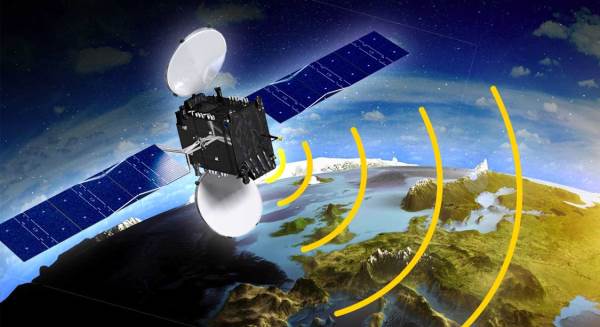
Federal government has fixed 2028 and 2029 for the launch of two communication satellites, NIGCOMSAT-2A and NIGCOMSAT-2B, as part of efforts to strengthen security and expand digital connectivity.

The government will be committing over $22 billion on the ambitious space-led growth agenda focused on new satellite launches, increased industry revenue and expanded broadband access in underserved communities.
At the opening of the 2026 Nigerian Satellite Week in Abuja, Dr Bosun Tijani, minister of Communications, Innovation and Digital Economy, confirmed the government’s approval for the acquisition of two new satellites—NigComSat 2A and 2B, describing the move as a “defining commitment” to national development, digital sovereignty and economic competitiveness.
Also, Mrs Jane Nkechi Egerton-Idehen, managing director of Nigerian Communications Satellite Limited (NigComSat), noted that the projects have moved beyond procurement to the execution stage.
She said the satellites are designed to enhance intelligence gathering, surveillance, and connectivity across Nigeria and neighbouring countries, particularly in support of security operations.
“For 2A and 2B, we have started the process. We have closed the tender and are now back into the financing and implementation stage. 2A is built to come up in 2028, and 2B for 2029.
“When they are up and running, they are expected to provide security within the borders and neighbouring countries. They will support the security agencies because data collection and intelligence in real time is important. Satellites like communication satellites allow that, irrespective of where they are,” she said.
On his part, Tijani, said the satellite programme forms part of a broader government strategy to deepen digital infrastructure nationwide.
According to him, the initiative complements ongoing investments in fibre-optic expansion and telecommunications infrastructure, while extending connectivity beyond Nigeria’s borders.
“The President’s approval of NIGCOMSAT-2A and 2B demonstrates a clear commitment to building the future. These satellites will enhance security, connect remote communities, and extend our fibre-optic network into neighbouring countries.
“Some of these neighbouring countries pay up to ten times more for internet capacity than Lagos. Extending our fibre network will not only improve connectivity but also enhance border security and regional collaboration.
“Satellite technology affects everything, from how a child in a rural community accesses the internet to how farmers make critical decisions and how businesses operate across distance,” he said.

Federal government has announced the launch of CLHEEAN, an artificial intelligence-powered mobile application designed to improve interactions between citizens and public institutions.

It is also a civic education and community engagement app.
Developed under the National Orientation Agency (NOA), the platform functions as a virtual assistant accessible via mobile devices.
It allows users to access information on public policies, ask questions, and interact directly with government services.
The app includes features such as instant messaging, voice recognition, and multilingual support, including several local languages, to reach a wider audience.
With CLHEEAN, users can also submit feedback, report concerns, and take part in discussions on public policies. The approach is intended to strengthen citizen participation and improve communication between the government and the public.
Lanre Issa-Onilu, director general of the NOA, said the initiative addresses a long-standing gap between citizens seeking to be heard and systems that do not always respond effectively, adding that the platform marks a step toward closing that gap.
The launch comes as Nigeria continues to face challenges in citizen engagement and the dissemination of public information.
By leveraging artificial intelligence, authorities aim to make public services more accessible while improving transparency and responsiveness.
The initiative also reflects a broader trend across Africa, where governments are increasingly exploring the use of AI to modernize public services and strengthen ties with citizens.

How Recycled SIM Card Linked to N50m Kidnapping Nearly Landed me in Jail – Businesswoman

Senate Gives Tinubu Nod to Borrow Fresh $6Bn

FG Earmarks $2Bn to Launch 2 Satellites in 2028, 2029

CBN Directs Banks, Fintechs to Complete Cybersecurity Audit Tool

FG Launches CLHEEAN to Streamline Access to Government Services

Spotify’s Loud & Clear Report Reveals Over ₦60Bn Revenue for Nigerian Artists in 2025

Madonna University Taps Tech Guru Adote for Strategic Board Role

China Threatens to Shut Nigeria’s Satellite Over $11.44m Unpaid Debt

Jumia Tech Week 2026 Begins with Tech Deals on Smartphones, Electronics, and Everyday Technology

FCCPC Bans Lagos ‘No Refund’ Policy, Vows Fines and Shutdowns for Traders




 E-Financial2 days ago
CBN bars large‑ticket loan defaulters from banking services in tough new crackdown

 General News2 days ago
ARN Rejects Medical Bill over Attempt to ‘Scrap’ Profession

 Telecom2 days ago
NIGCOMSAT Supports Startups Growth with the Launch of Accelerator 3.0

 News2 days ago
Meningitis Kills a Quarter Million People a Year -Study

 Telecom2 days ago
FG Unveils Digital Economy Research Fund Scheme

 News2 days ago
Stakeholder says AI is Crucial to Nigerian Data Centres Amid Persistent Grid Collapse
- General News2 days ago
Nigeria Advances Digital Governance as NITDA takes over NGEA Portal

 General News2 days ago
Zarttech Reflects on Its Role in Changing Global Perceptions of Africa