

E-Financial
Mixed Oil Markets and Q2 Slowdown Signal Economic Warnings to Nigeria


By Lukman Otunuga, Senior Research Analyst at FXTM,
Another recent escalation in the trade dispute between the US and China has punished crude Oil prices and set off warning signals for Oil-producing countries like Nigeria.
At the same time, Nigeria’s GDP slowed down to 1.94 percent in the second quarter from 2.1 percent in the first quarter, following the trend seen in several economies such as Germany and the UK.
It is becoming quite clear that as long as oil dependence remains one of Nigeria’s biggest risks, this will continue weighing heavily on the economy for the rest of 2019. While the GDP data should nudge the Central Bank of Nigeria (CBN) to cut interest rates for the second time this year in September in an effort to stimulate growth, this is a temporary fix to a bigger problem
What trade disputes mean for Nigeria’s economy
Persistent trade disputes between the world’s two largest economies is set to fuel fears over a global slowdown or even recession. Oil prices declined on the basis that a decelerating global growth may result in lower demand for the commodity Nigeria relies on for 90% of its export earnings.
In the context of a trade dispute, tariffs are like bombs exploding on trading relationships, supply deals and eventually on company profits.
Trade tensions also remain a direct threat to Nigeria’s economy. The risk factors are escalating along with the probability that the world may see an economic slowdown in the short-to-medium term.
Under the current circumstances, there are three main challenges Nigeria must navigate. They are China’s slowdown, lower oil prices, and the need for fast and adaptive monetary policy to handle local and external shocks.
Will China impact Nigeria’s growth prospects?
China’s growth slowed to 6.2% in the second quarter, its weakest expansion in three decades.
Most recently, China’s backing in the form of loans reached $16 billion and its vested interest is seen as a key support for the current production level of 1.85 million barrels per day.
However, Nigeria aims to reach three million barrels per day and needs more investment from China, which may prove to be more difficult going forward if China’s economy continues to decline.
The high level of debt to China is also proving to be a weight on fiscal revenues because Nigeria spent 50% of its 2018 government revenues on debt repayment.
Indeed, the IMF has urged Nigeria to curb its large appetite for Chinese loans as the country struggles with a €70 billion debt burden. That’s up from €62 billion in 2017, representing a year-on-year rise of 12.25 percent.
Lower oil prices remain a threat to Nigeria’s recovery
The prospect of high debt levels to China amid lower oil prices is something that must not be overlooked.
At the time of writing, Oil benchmarks come under continuous pressure from demand-side concerns, including recession fears stemming from trade disputes.
The money from Oil sales is the lifeblood of the Nigerian economy. In the worst-case scenario, if Oil prices start drifting lower there could be unwelcome consequences such as even slower GDP growth, job losses, sovereign debt defaults, less money in the fiscal budget for development, and constrained consumer spending.
Reduced crude Oil sales would affect government revenues and reserves, meaning the capacity to fund projects will be weakened. Stock markets together with investor sentiment domestically and externally would be impacted and possibly even trigger capital outflows.
Can Monetary policy handle downside shocks?
One would have expected economic momentum to pick up from Q1 after CBN cut interest rates in March and forced lenders to dish out more credit in a bid to boost growth.
While lower rates have the potential to keep the economy running, the answer to Nigeria’s woes can be found in diversification. The level of progress the nation has made in breaking away from the shackles of oil reliance remains a question for many with even the International Monetary Fund urging the nation to diversify revenues.
Another concern is friction over a recent UK court decision allowing a natural gas company to take over nine billion USD worth of Nigerian sovereign assets in London. The government has refused to accept the ruling and plans to appeal but the CBN may still need to step in to defend the Naira.
There is still some light at the end of the tunnel for the Nigerian economy if the right steps are taking in breaking away from oil reliance to other sustainable sources of economic growth. However, if Oil prices continue to send warning signals to Nigeria’s economic policy makers by trading sideways or declining, fiscal measures combined with monetary policy easing measures may become urgently needed to accelerate economic diversification.


E-Financial
#IWD2026: Kuda MFB Offers Millions In Grants To Women-Led Food And Hospitality Businesses

As part of its Kuda for Her campaign for this year’s Women’s Month, Kuda Microfinance Bank (MFB) is inviting Lagos-based women entrepreneurs in the food and hospitality sector to pitch their businesses for a chance to receive ₦1 million in funding.

Kuda MFB
The Kuda for Her Pitch Challenge, which launched on March 10, 2026, will award ₦1 million each to four women-led businesses, giving them capital to scale.
According to the Small and Medium Enterprises Development Agency of Nigeria (SMEDAN) and the National Bureau of Statistics (NBS), women own about 43% of micro and small enterprises in Nigeria, many of which are in the food, catering, and hospitality sectors. Yet, women entrepreneurs continue to face barriers to growth, particularly in accessing capital, with only about 23% of women-owned businesses in Nigeria currently having access to formal credit.
Women who run food or hospitality businesses can submit a pitch outlining their business and how the funding will help them grow. Applications are open until March 15, 2026.
The four grant recipients will be announced on March 27, 2026.
Emmanuel Femi-Adejobi, Senior Brand Manager at Kuda, mentioned that the campaign is designed to recognise and support women whose businesses shape everyday life in Nigerian cities.
“Many of the food and hospitality businesses that Nigerians rely on every day are built and run by women,” he said. “Through Kuda for Her, we’re supporting these hardworking entrepreneurs directly while also shining a light on the ambition and creativity behind the businesses they’ve built”
Women entrepreneurs who run food or hospitality businesses in Lagos can submit their pitches before March 15, 2026, at kuda.com/kuda-for-her/.

Thrifto, a new Nigerian fintech, is modernizing age-old group savings like ajo (Yoruba), esusu (South-West), and adashe (North) with a bank-integrated web app, slashing risks of defaults, disputes, and lost funds.

Sulaimon Biodun Durojaiye
Founded by Sulaimon Biodun Durojaiye, media entrepreneur, Thrifto lets users create or join groups, set contributions, cycles, and payouts.
It tracks records transparently, preserving cultural collaboration while adding tech accountability. “We’re providing structure and transparency without replacing the spirit of ajo,” Durojaiye said.
Early users—salary earners, entrepreneurs, small businesses—form groups for school fees, rent, or capital. The platform eliminates friction like poor bookkeeping and payout fights, driving organic growth nationwide.
Launching next week, a self-saving feature lets users automate fixed amounts (e.g., ₦5,000 daily or ₦50,000 weekly) toward goals, enforcing consistency solo.
A Trust Rating Score, based on participation history, rewards reliable users, aiding smarter group choices and fostering responsible behavior.
Tailored for Nigerian realities, Thrifto taps informal savings to expand inclusion. Observers see it strengthening networks and discipline in Nigeria’s fintech landscape.

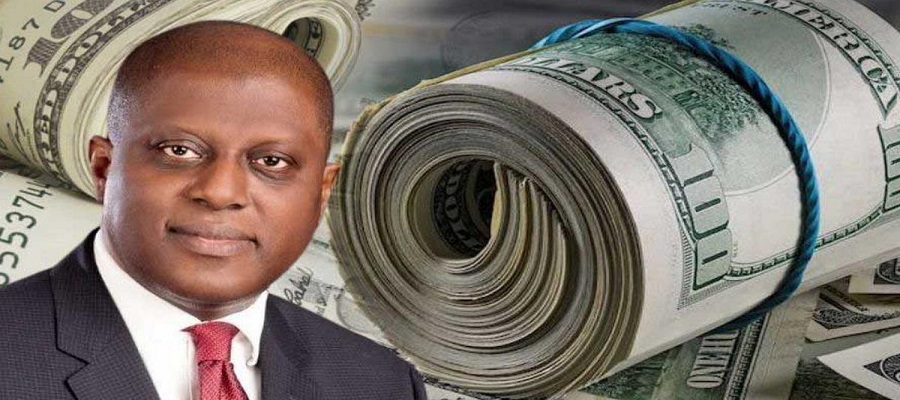
Central Bank of Nigeria (CBN) has issued new baseline standards requiring banks and other financial institutions to deploy automated anti-money laundering systems capable of detecting suspicious transactions and financial fraud risks in real time.

The directive, contained in a circular released yesterday, mandates banks, mobile money operators, international money transfer operators and other regulated institutions to implement automated solutions that strengthen monitoring, detection and reporting of suspicious financial activities.
According to the apex bank, the framework establishes minimum technical, governance and operational standards for automated systems used to combat money laundering, terrorism financing and proliferation financing within Nigeria’s financial system.
CBN said the move was necessary as the financial services sector becomes increasingly digital and complex, making manual monitoring methods inadequate for managing evolving financial crime risks.
Under the new framework, deposit money banks (DMBs) are expected to achieve full compliance within 18 months from the date of issuance, while other financial institutions will have 24 months to comply.
Institutions are also required to submit detailed implementation roadmaps to the CBN’s compliance department within three months.
The standards apply to all institutions operating under the CBN’s regulatory purview, although the depth and sophistication of implementation will depend on each institution’s size, transaction volumes, operational complexity and risk exposure.
The framework outlines several minimum capabilities that automated anti-money laundering (AML) systems must possess, including customer identification and verification, sanctions screening, transaction monitoring and case management for suspicious activities.
Financial institutions are also expected to ensure their systems integrate customer data with transaction patterns so that suspicious behaviour can be assessed in the context of a customer’s risk profile.
The CBN said institutions should strengthen identity verification processes by integrating onboarding systems with national databases such as the Bank Verification Number (BVN) and National Identification Number (NIN) platforms to support real-time identity checks.
The framework permits the use of emerging technologies such as artificial intelligence and machine learning to improve the detection of unusual financial patterns.
However, the regulator said such technologies must operate under strict governance frameworks, including independent validation and human oversight.
Institutions deploying AI-based monitoring models will be required to conduct periodic validation to ensure accuracy, reliability and fairness in the detection of suspicious transactions.
The standards also require financial institutions to maintain secure data protection controls, including encryption, role-based access and multi-factor authentication, in compliance with Nigeria’s data protection regulations.
In addition, the systems are to maintain comprehensive audit trails of transactions, alerts, investigations and system activities to support regulatory supervision and forensic investigations.
The CBN said compliance with the framework will be monitored through off-site surveillance, on-site examinations and thematic reviews, warning that institutions that fail to implement the standards may face regulatory sanctions under existing banking and financial crime laws.

Court Freezes Bank Accounts of Petrocam, Founder over Alleged N9Bn Zenith Bank Debt

FG Approves First National Policy on Cosmetic Safety, Health

FCCPC Says Telcos, Energy Firms Lead Consumer Complaints in Nigeria

Microsoft Expands Africa AI Push while DeepSeek Gains Users

Mobile Phones Used by Food Vendors Could Spread Infections- Experts

Dr. Cairo Ojougboh Foundation Bolsters Nigeria’s Education Drive with ₦2.7m Student Support

Kaspersky Brings more Transparency to Threat Detection with New Hunt Hub

Kaspersky Discovers New Phishing Campaign Exploiting Google Tasks Notifications to Steal Corporate Credentials

esentry 2025 Report Shows Healthcare, Financial Services and Telecoms as Staging Grounds for Increased Cyberattacks in Africa

AfDB, UNDP Launch $10Bn AI Initiative for Africa




 Telecom3 days ago
China Threatens to Shut Nigeria’s Satellite Over $11.44m Unpaid Debt

 Telecom3 days ago
US Court Dismisses All Claims Against Binance in Major Anti-Terrorism Lawsuit Victory

 Telecom3 days ago
TikTok Pumps $200k into AI Media Literacy for Sub-Saharan Africa at Nairobi Summit

 General News3 days ago
More Nigerians Emerge Millionaires in Week 9 of NIVEA’s Consumer Campaign

 E-Business3 days ago
NITDA, Nkenne AI Seek to Localise AI for Nigerians

 E-Business2 days ago
FG Moves to Strengthen Children’s Online Safety

 Telecom3 days ago
NCC Orders Telcos to Report Cyberattacks Within 4 Hours from 2027

 E-Business3 days ago
Meta to Charge Location Fees on Ads to Six Countries from July 1, 2026