

General News
N328.5Bn Billing: How Political Patronage Built Lagos’ Agbero Shadow Tax Empire


By Blaise Udunze
Lagos prides itself as Africa’s commercial nerve centre. It markets innovation, fintech unicorns, rail lines, blue-water ferries, and billion-dollar real estate. Though with the glittering skyline and megacity ambition lies a parallel state, a shadow taxation regime run not from Alausa, but from motor parks, bus stops, and highway shoulders. They are called “agberos.” And for decades, they have functioned as Lagos’ unofficial tax masters.

What began as loosely organised transport unionism mutated into a pervasive and often violent system of extortion. Today, tens of thousands of commercial buses, over 75,000 danfos according to estimates by the Lagos Metropolitan Area Transport Authority, ply Lagos roads daily. Each bus is a moving ATM. Each stop is a tollgate. Each route is a revenue corridor.
Looking at the daily estimate from their operations, at N7,000 to N12,000 per bus per day, conservative calculations show that between N525 million and N900 million is extracted daily from drivers. Annually, that balloons toward N192 billion to N328.5 billion or more, money collected in cash, unreceipted, unaudited, unaccounted for. This illicit taxation on an industrial scale did not emerge in a vacuum.
The reality today is that to understand the scale of the problem, one must confront its political history. It was during the administration of Bola Ahmed Tinubu as Lagos State governor from 1999 to 2007, who is now the President, that the entrenchment of transport union dominance and motor park patronage deepened.
Under his political machine, transport unions became not just labour associations but mobilization structures, formidable grassroots networks capable of crowd control, voter turnout engineering, and territorial enforcement. In exchange for political loyalty, street influence translated into operational latitude.
Motor parks became power bases. “Area boys” became enforcers. Union leadership became politically connected. What should have been regulated associations morphed into revenue-generating franchises with muscle.
The system outlived his tenure. It institutionalised itself. It professionalised. It embedded into Lagos’ political economy.
And today, it thrives in broad daylight. Endeavour to visit Ajah under bridge, Ikeja under bridgeor Mile-2 along Ojo at 6:00 a.m. Watch drivers clutching crumpled naira notes. Observe men in green trousers and caps marked NURTW weaving between buses, collecting what drivers call òwò àrò, or evening as òwò iròlè money taken from passengers.
A korope driver shouts, “Berger straight!” His bus fills. The engines rumble. But before he moves, he must pay. If he refuses? The side mirror may disappear. The windscreen may crack. The conductor may be assaulted. The vehicle may be blocked with planks, and if they resist, the conductor or driver may be beaten. Movement becomes impossible. It is not optional.
This is common across Lagos, especially amongst drivers in Oshodi, Obalende, Ojodu Berger, Mile 2, Iyana Iba, and Badagry, and describes a three-layered structure ranging from street collectors, area coordinators, and union executives at each location. Daily targets flow upward. Commissions remain below.
One conductor disclosed he budgets at N8,500 daily for louts alone, excluding fuel, delivery to vehicle owners, and official tickets. Another driver says he parts with nearly N15,000 in total daily levies across routes.
Of N40,000 collected on trips, barely N22,000 survives before fuel. Sometimes, drivers go home with N3,500. Working like elephants. Eating like ants. The impact extends far beyond drivers.
Every naira extorted is transferred to commuters. An N700 fare becomes N1,500. A N400 corridor becomes N1,200 in traffic, and this is maintained even after fuel prices fall; fares rarely decline. The hidden levy remains.
Retail traders reduce stock purchases because transport eats profits. Civil servants watch salaries stagnate while commuting costs climb. Market women complain that surviving Lagos costs more than living in it.
This is not just a transport disorder. It is inflation engineered by coercion. Economists call it financial leakage, money extracted from the productive economy that never enters the fiscal system. Billions circulate annually without appearing in government ledgers. No roads are built from it. No hospitals funded. No schools renovated.
It is taxation without development. Small and Medium Enterprises form nearly half of Nigeria’s GDP and employ the majority of its workforce. In Lagos, they are under assault from informal levies layered on top of official taxes. Goods delivered by bus carry hidden transport premiums. Commuting staff face higher daily costs. Inflation ripples through supply chains.
The strike by commercial drivers in 2022 exposed the depth of resentment. Under the Joint Drivers’ Welfare Association of Nigeria (JDWAN), drivers protested “unfettered and violent extortion.” Lagos stood still. Commuters trekked. Appointments were missed. Businesses stalled.
Drivers alleged that half of daily income vanished into motor park collections.
Some who protested were attacked. Yet the collections continued.
Drivers insist daily collections at single corridors can exceed N5 million. Park chairmen allegedly control enormous cash flows. Uniformed collectors operate with visible confidence.
Meanwhile, Lagos State Government denies sanctioning any roadside extortion. Officials describe the tax system as institutionalised and structured. They promise reforms through Bus Rapid Transit, rail expansion and corridor standardisation. Yet the shadow toll persists.
Contrast this with Enugu State, where Governor Peter Mbah introduced a Unified e-Ticket Scheme mandating digital payments directly into the state treasury. Paper tickets were banned. Cash collections outlawed. Revenue flows traceable. Harassment criminalised.
Drivers in Lagos say openly that they should be given a single N5,000 daily ticket paid directly to the government, and end the chaos. Instead, they face multiple actors, agberos, task forces, and traffic officials, each demanding settlement.
The difference is in governance philosophy. One digitises and centralises revenue to eliminate leakages.
The other tolerates fragmentation that breeds shadow collectors. The uncomfortable truth is that the agbero structure is politically sensitive. Transport unions are not just labour bodies; they are political instruments. They mobilise during elections. They maintain territorial presence. They command street loyalty. In return, they are allegedly tolerated, protected, or absorbed into broader political structures as they turn into war instruments and a battle axe in the hands of the government of the day. The underlying reality is that the agbero who are the street-level power structures and the government authorities benefit from each other; the line between unofficial influence and official governance becomes unclear, making reform politically sensitive.
The issue is not merely about street disorder; it is about economic governance. Illicit taxation distorts pricing mechanisms, reduces productivity, discourages formalization of businesses, and weakens public trust. If citizens are compelled to pay both official taxes and unofficial levies, compliance morale declines. Why comply with statutory taxation when parallel systems operate unchecked?
Dismantling them is not merely administrative; it is political. Perhaps unbeknownst to the people, the cost of inaction is immense. Lagos aspires to be a 21st-century smart megacity under such an atmosphere. But investors notice informal roadblocks. Businesses factor in unpredictability. Commuters absorb unofficial taxes daily. Across Lagos roads, the script repeats “òwò mi dà,” meaning, give me my money.
Passengers plead with collectors to reduce levies so they can proceed. Conductors argue over dues before departure. Citizens feel hostage to a system they neither elected nor authorised.
Taxation, constitutionally, belongs to the state. It must be legislated, receipted, audited and deployed for the public good.
Agbero taxation is none of these. It is coercive. It is not transparent. It is extractive. Lagos has launched rail lines and BRT corridors. The Lagos Metropolitan Area Transport Authority continues transport reforms. Officials promise that bus reform initiatives will eliminate unregistered operators. But reform cannot be selective. You cannot modernise rail while medieval tolling persists on roads. You cannot preach digital governance while cash collectors flourish at bus stops. You cannot aspire to global city status while informal muscle dictates movement.
The solution is not episodic arrests. It is a structural overhaul: mandatory digital ticketing across all parks; a single harmonised levy payable electronically; an independent audit of union revenue; protection for drivers who resist illegal collections; and political decoupling of unions from patronage networks.
The agbero empire is not merely about bus fares. It is about how patronage systems, once empowered, metastasise into parallel authorities. What may have begun as strategic alliance-building two decades ago has matured into a shadow fiscal regime embedded in daily life.
The challenge is that Lagosians are left with no choice as they now pay twice, once to the government, once to the streets. And unlike official taxes, shadow taxes leave no developmental footprint. No bridge bears their name. No hospital wing testifies to their billions. No classroom is built from their collections. Only inflated fares. Broken windscreens. Frustrated commuters. And drivers who sweat under the sun, calculating how much will remain after everyone has taken their cut.
The agbero question is ultimately a governance question. Is Lagos governed by law, or by tolerated coercion? Is taxation a constitutional function, or a roadside negotiation? Is political convenience worth permanent economic distortion? What is absolutely known is that the structure has a political backing and what politics created, politics can dismantle.
Unless meaningful reform takes place, Lagos will continue to remain a megacity with a shadow treasury, where movement begins not with ignition, but with payment to men who answer to no ledger without any tangible returns. This is to say that every danfo that moves carries not just passengers, but the weight of a system that taxes without law, collects without accountability and punishes the very people who keep the city alive.
Blaise, a journalist and PR professional, writes from Lagos and can be reached via: [email protected]



Nigeria Centre for Disease Control and Prevention (NCDC) has warned of an imminent cholera outbreak in 10 states following forecasts of heavy rainfall and possible flooding across parts of the country.

The agency said flood predictions issued by the Federal Ministry of Environment and the Nigerian Meteorological Agency (NiMet) indicated that parts of Adamawa, Enugu, Kaduna, Kogi, Niger, Osun, Oyo, Plateau, Taraba and Kwara states may experience heavy rainfall and flooding between April 13 and 17, 2026.
In a public health advisory signed by Dr Jide Idris, director-general, the NCDC noted that the alert was coming at a critical time as Nigeria enters the seasonal period when cholera cases typically begin to rise.
The agency explained that recent national surveillance data already showed increasing cholera activity in multiple states, warning that flooding could rapidly worsen the situation through contamination of drinking water sources and disruption of sanitation systems.
According to the NCDC, flooding during this period may increase the risk of cholera and other diarrhoeal diseases, malaria and other mosquito-borne infections, as well as illnesses linked to contact with contaminated floodwater.
It also warned of possible injuries, including drowning and snakebites, as well as disruption of access to healthcare services in affected areas.
The agency stressed that the risks were preventable with early action, urging residents in at-risk communities to use only safe water for drinking and cooking by boiling, chlorinating or using bottled water.
It also advised regular handwashing with soap and clean water, avoiding contact with floodwater, and maintaining proper sanitation including safe disposal of waste and avoiding open defecation.
The NCDC further urged Nigerians to store and handle food safely to prevent contamination, sleep under insecticide-treated nets to reduce mosquito bites, and seek immediate medical attention if they experience diarrhoea, vomiting, fever or any symptoms of illness.
The agency said community leaders and local authorities must support sanitation activities and drainage clearance, promote hygiene practices and access to safe water, encourage early reporting of suspected illness, and ensure accurate public health information is widely shared.
On its part, the NCDC said it was working closely with State Ministries of Health and relevant partners to strengthen surveillance, enhance preparedness and support rapid response efforts in affected states.
It added that state governments were being supported to activate multisectoral response mechanisms, especially in water, sanitation and emergency management.
The agency maintained that early action, community vigilance and prompt care-seeking could prevent outbreaks and save lives.

By Bidemi Oke
There is a quiet misconception in many growing companies that vision alone is enough to sustain momentum. Founders are often the engine because they are decisive, driven and deeply involved. But what happens when the engine steps back?

That question is where real companies are separated from fragile ones. Building something that outlives a founder is not about removing their influence; rather, it is about translating that influence into systems, repeatable, observable and transferable structures that do not rely on constant presence. Without this, growth becomes personality-dependent, and scale becomes inconsistent.
At the early stage, founder-led execution works. Decisions are faster, direction is clearer, and there is less friction. But as the company grows, that same model becomes a bottleneck. Every approval, every escalation, every strategic shift begins to orbit one person. The business does not slow down because of external pressure; it slows down because its internal architecture cannot carry its own weight.
Usually, “system” is often misunderstood. It is not just about tools, dashboards or policies. It is about designing how decisions are made, how information flows and how accountability is structured. It is about making sure that the logic behind actions is visible, not assumed.
For example, a strong system answers questions before they become problems. What triggers a decision? Who owns it? What data informs it? What happens if it goes wrong?
When these are unclear, teams default to escalation. When they are clear, teams operate with autonomy.
This is where many founders hesitate. System-building feels like losing control. In reality, it is the only way to extend control without being physically present. It shifts leadership from being reactive to being embedded.
One of the most overlooked aspects of building enduring systems is Documentation.
Now, not as a formality but as a strategic asset. Decisions that are not documented become opinions. Processes that are not documented become inconsistent.
Over time, this creates invisible friction. Teams solve the same problems repeatedly but differently each time.
Documentation, when done well, becomes institutional memory. It ensures that the company remembers even when individuals move on.
Another critical layer is Feedback Loops. Systems should not be static; they must evolve with the business. This requires structured ways to capture what is working, what is failing and what needs refinement. Without feedback loops, systems become outdated. With them, systems become adaptive.
There is also a cultural dimension to it. Systems do not operate in isolation; people execute them. If the culture rewards speed over clarity, systems will be bypassed. If the culture values accountability, systems will be strengthened. The goal is alignment where systems reinforce behaviour and behaviour reinforces systems.
In fast-moving industries, this becomes even more important, take fintech, for instance. The pace of regulatory change, market volatility and user expectations demands consistency under pressure.
Companies that rely solely on founder instinct struggle to keep up, while those that invest in structured decision-making, risk management frameworks, and operational clarity are better positioned to adapt.
This is something we are increasingly seeing in companies like FlashChange, where the focus is not just on growth, but on building operational resilience. The emphasis is shifting from “who is making the decision” to “how decisions are made.” That shift, while subtle, is very powerful. It creates a foundation that can support scale without losing direction.
Ultimately, building systems that outlive founders is about redefining leadership. It is not measured by how many decisions a founder makes, but by how many decisions the organisation can make without them.
The strongest companies are not those where the founder is always present. They are the ones where the founder’s thinking is quietly embedded, shaping actions, guiding priorities and influencing outcomes, even in their absence. That is how legacies are built.
Not through constant control, but through systems that carry intent forward.
Bidemi Oke is the Chief Executive Officer of FlashChange, a fintech platform focused on secure digital asset exchange. He is an entrepreneur and vibrant leader, recognised for driving innovation and redefining access in the financial technology industry.
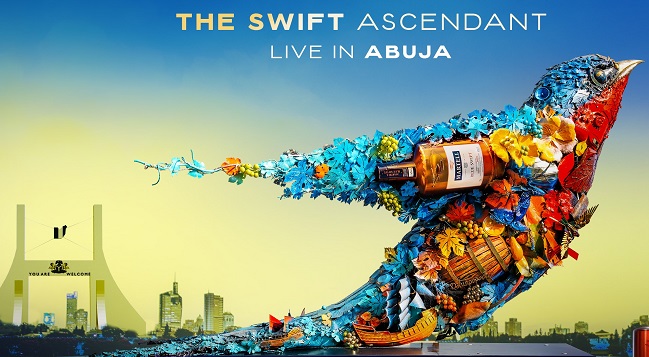
After kicking off in Lagos, Martell’s nationwide campaign, Martell On The Move, has officially arrived in Abuja. The road trip features The Swift Ascendant, a monumental 14 foot art installation that is traveling across the country to connect with people through local art and nightlife.

The installation is a physical tribute to the Swift, Martell’s iconic sigil and a symbol of freedom and constant motion. This bird represents a spirit that never stands still, much like the “Standout Swift”. A Standout Swift is anyone who embodies that same drive, rising above the ordinary to redefine their own path.
The Swift Ascendant is the result of a collaboration with celebrated Nigerian artist Dotun Popoola. What makes this piece truly stand out is its soul: it was built entirely from discarded and scrap metal.
By giving new life to old materials, Popoola and Martell have created a physical reminder that reinvention is a choice. It is a nod to a more conscious kind of luxury, one that finds beauty in what has been left behind and proves that great things can be built sustainably.
The Abuja leg of the journey hit a major milestone on March 21st at Fuego Lifestyle. It wasn’t just another event on the calendar; it was a full immersion into the Martell world. Guests at Fuego experienced the brand’s energy through curated music, signature cocktails, and a vibe that matched the industrial, edgy aesthetic of the sculpture itself.
The event served as the perfect introduction for Abuja’s social scene to see exactly how Martell is blending heritage with a modern, gritty edge. “We brought The Swift Ascendant to Abuja because the city understands ambition, audacity, and what it means to push boundaries,” said Evane Chenuet, Marketing Director at Pernod Ricard Nigeria.
“Working with Dotun Popoola allowed us to create something that feels raw and real, reflecting the House of Martell’s three hundred year legacy of challenging the status quo. Seeing it at Fuego Lifestyle showed that when art and atmosphere align, the experience isn’t just visual, it becomes something people truly feel”.
The campaign is far from over. Martell is now challenging Abuja residents to keep their eyes peeled as the installation moves through the city. If you happen to come across the 14 foot metal swift during your commute or a night out, the brand wants you to be part of the story.

Lagos Targets Vulnerable Residents in Expanded Social Register

CBN Proposes 30-Member Mediation Panel for Loan Disputes

CAC Urges Users to Secure Accounts after Cyberattack Scare

NCDC Predicts Cholera Outbreak in 10 States as Heavy Rains Loom

NDIC Seeks Court Nods to Liquidate 89 Failed Banks

Kuda MFB Increases Kuda for Her Business Grants to ₦10 Million

Canal+ to Cut Jobs as Part Sweeping Restructuring

Nigeria tops global rankings for USDT, USDC ownership

NBC Boss Urges Content Ceators to Participate in DSO

NITDA Takes Over National Digital Architecture System




 E-Financial2 days ago
Fidelity Surges Ahead in Recapitalisation Drive with ₦564bn Capital

 General News1 day ago
Guinness Nigeria Surpasses ₦1Trillion Market Capitalisation, Signalling Strong Investor Confidence and Sustained Value Creation

 Telecom2 days ago
Qualcomm Unveils Startup Selection for Qualcomm Make in Africa 2026

 Telecom2 days ago
AfDB Grants Project BRIDGE $200m Facility for Nationwide Internet Access

 E-Financial2 days ago
Digital “Pickpockets” Compromise Over a Million Banking Accounts – Kaspersky

 Telecom2 days ago
Nigeria Seeks Stronger Digital Sovereignty, National Software Infrastructure

 E-Financial2 days ago
EFCC Warns Banks against Loans without Credible Collateral

 E-Business2 days ago
Nigeria Needs Some 480,000 Local DPOs for Data Protection