

Telecom
National Security via Satellite: (3 of 3; Concluding)

By Andrew Aroh
Satellite communications can play an important role in national security.

The role of this technology is better understood today on the front lines in particular where the following prefer to have robust and redundant communication links close at hand:
- Law enforcement personnel
- Incident commanders
- First responders
The committee on national security has many priorities but need to begin to examine the role that Satellite technology plays in our economy and Security.
The question is:
Has the National Security Team and its affiliated agencies already use satellite technology and commercial satcom for a range of national security related mission?
The answers are:
- An approach that is more focused and coordinated across agencies and authorities would allow a better and more cost-effect use of satellite across the national security establishment.
- The government should create a forum where its needs and the private sector’s capabilities can be examined on a regular basis.
- Lately, the National Emergency management Agency (NEMA) has became n enthusiastic use of satellite communications.
- In NEMA’s disaster field office operations, Satellite based voice, data and video-including full motion video-can be uplink to remote offices in effect matching a fixed facility NEMA office.
- NEMA is familiar with the cospa-sarsat for voice services and a data only satellite capability is available with virtual private Network tunneling, but this system is very limited in terms of bandwidth and does not provide digitized voice or video.
- NEMA needs to upgrade its communication facilities:
MERS:
This is a Mobile Emergency response support involving transportable C-/Ku/Ka-band system in additional to NEMA’s vehicle mounted systems.
This system allows us the flexibility of supporting more independent locations simultaneously, and greatly reduces response time to distant locations due to the ease of air transport versus driving.
NEMA needs to provide L-band capabilities to its earth stations for up to date requirements.
NEMA needs to acquire several DBS system that will be used to provide network connectivity to co-located disaster support staff other than NEMA, including state and local government personnel along with the support staff from other agencies such as the Environmental protection Agency.
An independent body once conducted a lengthy assessment of the nationwide Emergency Alert System (EAS) and the possible use of satellite technology emerged as a key component in the list of recommendations. This recommendation has come about because satellite technology:
- Can be used to deliver an EAS message very quickly (within seconds).
- Is very reliable
- Has available high levels of security.
- Does not have the geographical limitations of today’s EAS system.
Satellite delivery of EAS alerts will be the preferred delivery methods within the next few years. What measures are necessary to provide the required facilities?
Satellite facilities currently exist in nearly all radio, television and cable system for the purpose of delivering network feeds. These systems with proper coordination could easily be configured to carry EAS traffic.
Once enough broadcasting facilities are provided, state emergency management agencies and other agencies convert to satellite delivery, the Nigerian communication commission (NCC) will act accordingly.
Professionals lead the way in working with public television stations in development of a hybrid system using satellite and IP data casting technology.
The National Security Team need to evaluate Satellite-based messaging and alert system such as EMNET (Emergency Management Networking) to be deployed all over the 36 states in Nigeria.
- Satellites: Enabling ports and ocean’s offshore links when it comes to protecting seaports and coastal zones, the nation’s maritime administration and safety agency and authorities are routinely in touch via satellite with vessels under way and remote shore-based users using both voice and data links.
- Satellite plays an important role in navigation and the maritime agencies search and rescue operations as well.
- The maritime agency is constantly in search of smaller mobile terminals for ships less than 30 meters in length.
- IP demand-oriented networks is a direction in which the maritime authorities and agencies are trying to head.
- Satellites are a must setting up response centers until more permanent means of communications can be put in place, if any.
- Satellites are a must for remote, disadvantaged users for access to critical information.
- The maritime authorities and agencies need to frequently demonstrate how they can use satellite technology effectively in a variety of emergency response scenarios, sometimes acting as a facilitators in order to assist other agencies.
- Response teams need satellite during emergencies to facilitate other state department and agencies with accessing databases and with the integration of various non-interoperable radio communications.
CREATING ADVANCED TECHNOLOGY RESEARCH CENTER:
With the growing emphasis at the presidency and elsewhere on a rapid response squad to emergencies and terrorism, projects such as:
- Disaster response and emergency medical services (DREAMS) are meant to explore ways to use Satellite links to meet a number of needs.
- This advanced mobile medical communications and remote treatment concept revolves around the availability anywhere of two-way video, audio and data communications in ambulances, military vehicles and remote hospitals.
- The project involves using Ku-band/Ka-band hub terminals, commissioned and fully operational to plan a series of experiments that will operate between facilities at different hubs.
- Those experiments will operate IP over DVB bi-directionally.
- The end goal is to deliver IP over DVB to the ambulance (mobile) node in order to dramatically reduce the cost, footprint and power requirements of the data receiver on the ambulance. A typical configuration supports fully duplex data rate of 2.048Mbps
- Testing need to be conducted on the ambulance terminal with the hub in various configurations such as 2.048Mbps (E1).
- Another role of Satellite equipped specialized vehicle involves rapid telecom infrastructure restoration at remote locations.
- This may involves hub terminal addiction of the office of Emergency Management and Communications. Purchasing a small slice of dedicated Satellite bandwidth to support the vehicle and subsequently buying a larger slice in coordination with other entities is ideal.
Satellite Technology enabling Airport Emergency Communications:
- A new Satellite equipped mobile command post (MCP) supports an operating team of a dozen people which can remain on scene for as long as a week with Satellite based video conferencing and remote database access, among other things.
- The vehicle is intentionally designed with some generic components to allow responders from various departments including national security team to be able to use the vehicles capabilities.
- Dual Satellite phones are onboard the vehicles in case cellular phone services crashes or degrades.
- Via IP date transmissions over Satellite, MCP personnel can maintain contact with the fixed facility Emergency Operations Center (EOC), beaming back everything including:
- Photos
- Closed-circuit television feeds
- A forward looking infrared camera feed in instances where visibility on scene is impaired by smoke, for example.
LAW ENFORCEMENT NEED TO WARM UP TO SATELLITE:
The Nigerian Law Enforcement community needs to be on the frontline when it comes to national security.
- In large rural border state in particular, the use of Satellite technology is becoming increasingly common and widespread.
- A state police for a start may begin by equipping about 150 vehicles with Satellite delivered data communications. Through this means a state police stands to slash its data cost by 50 percent by ending the routine use of messaging from officers in the field.
- And as for new Satellite based solutions impacting operations for national security agents, the use of remote video feeds are required.
- The Satellite industry in Nigeria is watching and evaluating how to implement those for national security as time progresses.
- Definitely, at a time when an organization is not able to replace equipment at one time, any changes will have to be phased in to improve services.
- 1At the state level, the state patrol can begin to use trucks/vans equipped with two-way Satellite terminals to perform commercial vehicle enforcement tasks.
- The national security teams need to look at replacing its current systems with systems that will allow communications while a vehicle is in motion. The cost of purchasing and maintaining the systems is easily offset by the benefits in terms of improved communications, and the sharing of valuable data with out-of-state personnel.
- At the senate, many experts see the role of Satellite technology as a work in progress that for numerous reasons does not necessarily occupy a top slot on the national committee priority list. While I am sure that satellite technology has a role to play in national security, it is probably not a special role that the senate committee on national security should go out of its way to support just for the sake of going high tech. This is because most of what we need are:
- SENSORS
- Good computer databases
- Such hands-on technologies
- Patience
- Taking full advantage of Satellites to date.
- Taking full advantage of numerous capabilities across a very broad spectrum that could be very helpful.
- National security via satellite should not be a surprise to anyone judging by the events of today. This should be seen as the biggest reorganization in our 61years as a nation as well as the most complex problem requiring a very complex integrated set of solutions that the nation has ever had to face.
- As you can see, there is urgent need for the national security team and other state and local agencies to start using satellite technology more frequently along with other telecom and emergency response assets. The Nigerian Communications Commission (NCC) need to act fast to facilitate these involvement.
- When all is said and done, given the need for rapid access to vast information resources that can be updated in real-time. It is the incident commanders on scene who probably benefit the most by having a varidly of communications link close at hand. In many instances, a fixed mobile Satellite link should be viewed as a necessity, where the emerging global mobile personal communications (GMPCS) by satellite terminals are compulsory for national security.
CONCLUSION:
With the recent occurrences in Nigeria, including manmade and natural disasters, the National Security should be seeking Satellite solutions for its various agency needs for:
- Border patrol
- Command operations
- Control activities
- Emergency response operations
This is because Satellite enables those in a crisis situation or ones that are preventing one, to execute directives as soon as possible.
There are three areas where commercial satellite technology can significantly play a role:
- Communications
- Remote sensing
- Data information services such as weather
- Andrew Aroh is President SSPI Nigeria


Nigerian Communications Commission (NCC) has blamed the actions of the National Oil and Gas Suppliers Association (NOGASA), for the recent telecom blackout experienced in the Abuja area.

NCC
A statement issued on Friday by the Head, Public Relations, NCC, Mrs. Nnenna Ukoha, while acknowledging the challenges and impact of the degraded Quality of Service (QoS) in the area on subscriber experience, stated: “The challenges are a result of the activities of the National Oil and Gas Suppliers Association (NOGASA), which disrupted diesel supplies to sites with the attendant telecommunications services outages in Abuja.”
She however disclosed that the telecommunications sector regulator is committed to ensuring restoration of seamless communication services to the affected area, and all Nigerians at large, and recognizes the importance of reliable power supply for the provision of optimal telecommunication services.
“The Commission is collaborating with major stakeholders and licensees to address these challenges, largely caused by disruption to diesel supply affecting IHS Nigeria Limited, the colocation provider responsible for powering Airtel and MTN base stations in the affected areas.
“The NCC is actively engaging with relevant stakeholders to address the diesel supply issues and explore sustainable solutions.
“The Commission urges all parties to work together to collaboratively resolve these challenges swiftly by removing the diesel supply bottlenecks affecting critical telecommunications infrastructure, arising from NOGASA’s actions.
Ad image
“In the face of these challenges, we reiterate our commitment to fostering a conducive environment for the growth and sustainability of telecommunications services in Nigeria.
“We are taking proactive steps to facilitate dialogues between the impacted service providers and other stakeholders to promptly resolve the diesel supply concerns that have negatively impacted service quality.”
While assuring that the Commission remains dedicated to effectively managing the situation and will keep the public updated on progress towards restoring full telecommunication services in Abuja, Mrs. Ukoha appreciated subscribers for their patience.
“We thank telecommunications subscribers for their understanding and patience during this period and reaffirm our commitment to delivering high-quality telecommunications services nationwide,” she said.
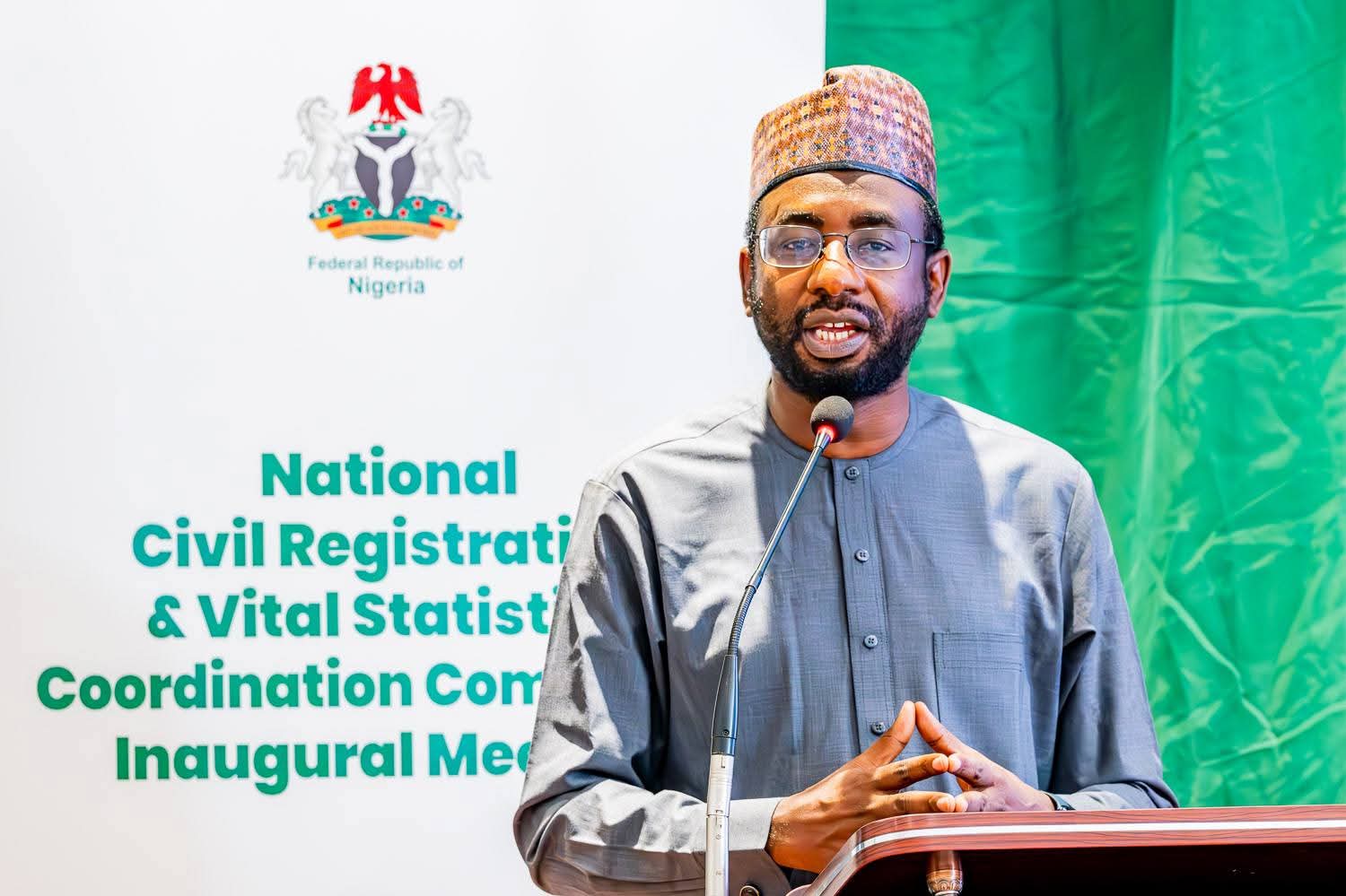
Mallam Kashifu Inuwa Abdullahi, Director-General of the National Information Technology Development Agency (NITDA), has called for a fundamental shift in Kano State’s economic strategy, urging stakeholders to embrace innovation, technology and collaboration as the drivers of growth in the 21st century.

Mallam Kashifu Inuwa Abdullahi, Director-General of the National Information Technology Development Agency (NITDA)
This is contained in a press statement e-authored by the Director of Corporate Communications & External Relations at NITDA, Hajia Hadiza Umar.
Speaking at the Kano Startup Weekend, Mallam Abdullahi acknowledged Kano’s long-standing reputation as the commercial nerve centre of Northern Nigeria and the wider Sahelian region, noting that its history of trade, enterprise and human capital provided a solid foundation for future growth.
Abdullahi emphasised that while these strengths powered Kano’s success for centuries, the modern economy now offered even greater opportunities through innovation and technology.
He described innovation as the process of transforming ideas into impactful solutions through commercialization, stressing that when ideas were effectively deployed, they created value, solved societal challenges and generated sustainable economic growth.
He noted that Kano’s large market, strategic location and vibrant entrepreneurial culture placed it in a strong position to take advantage of innovation-driven opportunities.
According to him, “Innovation is the process of taking an idea from inception to impact. Invention on its own is a cost centre, but when you commercialise an idea, when you turn it into a product or service that solves a real problem and creates value, that is when you begin to drive economic growth and inclusion.”
He noted that the state hosted numerous degree-awarding institutions across federal, state and private ownership, providing a strong base for human capital development.
However, the NITDA DG expressed concern that these institutions often operated in isolation from industry, with research outputs rarely translating into commercial or industrial applications.
He explained that innovation did not happen in silos and stressed the need for a strong, interconnected ecosystem that brought together academia, industry, startups, entrepreneurs and government.
According to him, universities should conduct research informed by industry needs, industries should leverage research to improve productivity and competitiveness, and startups should serve as the bridge that converted ideas into market-ready solutions.
The NITDA boss further encouraged entrepreneurs to leverage technology to build businesses that could grow beyond local markets, explaining that innovation-driven enterprises had the power to scale rapidly, create jobs and position Kano competitively at both national and global levels.
According to him, digital platforms and emerging technologies now made it easier for startups to reach wider markets and develop solutions that were previously unimaginable.
“You can start your business here in Kano, but your thinking must be global from day one. Technology has removed barriers. With the right skills and platforms, a startup in Kano can build solutions that serve not just Nigeria, but the world,” he noted.
Highlighting NITDA’s ongoing interventions, its Director-General outlined the Agency’s commitment to building national innovation capacity through targeted human capital development programmes.
He cited the Digital Literacy for All (DL4ALL) initiative, which aimed to equip Nigerians across all segments of society with essential digital skills, and the 3 Million Technical Talents (3MTT) programme, designed to produce a pipeline of globally competitive technical professionals in areas such as software development, data analysis and emerging technologies.
He said, “Through DL4ALL, we are ensuring that Nigerians at all levels have the basic digital skills needed to participate in the digital economy, while 3MTT is deliberately building a pipeline of globally competitive technical talents who can drive innovation, create jobs and attract investment.”
Abdullahi explained that these programmes were key pillars of President Bola Ahmed Tinubu’s Renewed Hope Agenda, which prioritised skills development, innovation, job creation and inclusive economic growth as pathways to national prosperity.
According to him, empowering Nigerians with digital and technical skills was essential for building a resilient economy capable of competing in the global digital landscape.
“President Tinubu’s Renewed Hope Agenda is about investing in people, empowering them with relevant skills and creating opportunities for inclusive growth.
“At NITDA, we are using digital skills and innovation as tools to translate that vision into real economic impact for Nigerians,” he said.
The NITDA boss urged all stakeholders in Kano to work together to build a functional innovation ecosystem that could unlock the state’s vast potential and expressed confidence that with the right mindset, strong collaboration and sustained investment in digital skills and innovation, Kano could reclaim its historic leadership role and emerge as a major innovation and entrepreneurship hub in Nigeria and beyond.

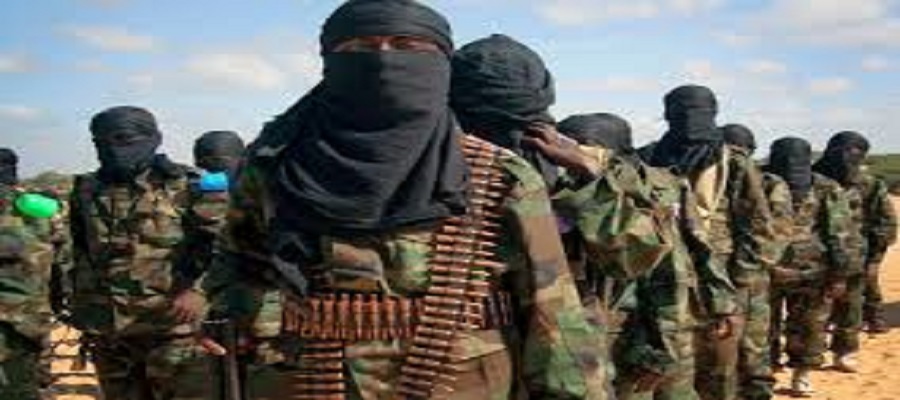
Bosun Tijani, minister of Communications, Innovation and Digital Economy, yesterday claimed that bandits and terrorists are able to communicate and coordinate their activities with ease because they exploit gaps in the country’s telecommunications network.

Bosun Tijani, minister of Communications, Innovation and Digital Economy,
Tijani, who spoke Politics Today, a Channels Television’s programme, on Friday, Tijani said the criminals exploit gaps in the country’s telecommunications network.
He also claimed the bandits use advanced technology to bounce calls across multiple towers in areas with poor connectivity.
“They weren’t using the normal towers; they bounced calls off multiple towers, which is why they favor areas that are largely unconnected,” he said.
When asked about reports that unregistered or fraudulently registered SIM cards are still in use despite the Bank Verification Number (BVN) and the National Identification Number (NIN)–Subscriber Identity Module linkage policies, Tijani said the issue is technically complex and the reports are not fully verified.
“Whether it’s fact or not, I do not know where you’re getting that from, and I do not know who has evidence that there are people with unregistered SIMs,” he added.
The minister stated that the federal government is investing in telecom towers in underserved regions, upgrading the country’s communication satellites to improve coverage, and expanding fiber-optic networks to strengthen the country’s digital infrastructure.
“If our towers are not working, our satellites will work. Nigeria is the only country in West Africa with communication satellites, and we are bringing new satellites to upgrade their capabilities,” Tijani said.
He added that these initiatives aim to ensure better connectivity for Nigerians while closing loopholes that criminals exploit, thereby enhancing national security.
The minister’s comments come amid rising concerns over insecurity in several parts of the North, where banditry, kidnapping, and terrorism have escalated in recent years.
There are also reports of bandits flaunting ransom payments on social media platforms such as TikTok, raising alarm among authorities and the public

SiBAN New Executive Council to Champion Vision for Nigeria’s Digital Economy

NITDA DG Calls for Innovation-Led Economic Rebirth @ Kano Startup Weekend

Sterling Bank Renewable Energy Colloquium Urges Stakeholders to Unlock Nigeria’s Clean Energy Potential

Tax Reform or Financial Exclusion? The Trouble with Mandatory TINs

APC National Chairman Appoints Mr. Abimbola Tooki as Special Adviser on Media

Nigeria Records Highest Weekly Cyberattacks in Africa — Report

Hackers Breach Phones of Dangote and Otedola, Demand Ransom

Cyber Tsunami Hits Nigeria as Breaches Surge 1,047%, esentry Q3 Report Reveals

MTN Nigeria Has Invested Over ₦32.23 Billion in National Priorities Through Its Foundation

FG Lists Bank Charges Nigerians Will Stop Paying from January 2026




 E-Financial1 day ago
Preventing Financial Crimes Amid Mounting Insecurity: Why Following the Money is Now a Survival Imperative

 E-Financial1 day ago
Supreme Court Clears Fidelity Bank in ₦225bn Sagecom Saga

 E-Financial1 day ago
Union Bank Clinches Top Workplace Practice Honour at Sustainability Awards

 Telecom1 day ago
NITDA Charts Path for Kano as Innovation Hub

 Broadcasting21 hours ago
Davido, Babajide Sanwo-Olu, Karl Toriola, Others To Be Honoured At The Most Influential People of African Descent Awards In Lagos

 General News1 day ago
Cellulant Taps Freddie Oduro to Lead Enterprise Payments Expansion in Ghana

 Telecom10 hours ago
NCC Blames NOGASA for Abuja Outage
 News9 hours ago
SiBAN New Executive Council to Champion Vision for Nigeria’s Digital Economy