

News
NCS Strengthens Symbiotic Ties with MTN, MainOne, Sidmach

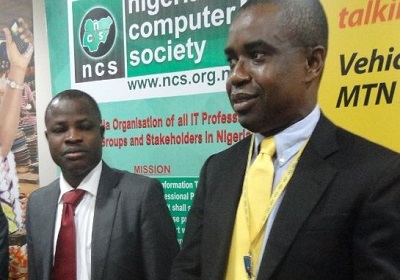
Nigeria Computer Society (NCS) recently visited three key players in Nigeria’s technology space – MTN Nigeria, MainOne Cable Company and Sidmach group, in furtherance of its policy of strategic partnership and stakeholder engagement
The NCS delegations were led Professor Sola Aderounmu, NCS’ Deputy President, who represented, Professor David O. Adewumi, the President.
At MTN Nigeria, the team was warmly received by Mr. Akinwale Goodluck, Corporate Services Executive, representing the CEO, Mr. Michael Ikpoki. Nigeria’s premier IT professional association and advocacy group commended MTN for its role inspearheading of the mobile revolution in Nigeria, while appreciating MTN’s position as the biggest mobile operator in the region.
Adewumi stated, “The GSM revolution in which MTN played and still plays a major role has created jobs in significant numbers as well as a value chain of suppliers, while providing the backbone for other major areas of the Nigerian economy”.
At MainOne, according to Jide Awe, chairman, Publicity and Events Committee, Nigeria Computer Society, the team was received by Ms. Funke Opeke, CEO, MainOne and other top management officials.
NCS congratulated the MainOne for building and owning the first wholly African privately funded license submarine cable along the West African coastline.
NCS President also saluted MainOne on its ongoing investment and commitment to setting up one of Africa’s largest data centres.
Professor Adewumi further thanked the MainOne CEO for her presence at the last NCS conference at Iloko Ijesa, Osun State, support of the conference and the strong presence of MainOne staff at the conference.
At Sidmach Group, Mr. Hassan Alao, CEO and other top management staff welcomed the NCS delegation. NCS congratulated Sidmach on its unique achievements in the development and deployment of wholly indigenous enterprise IT solutions, most especially in the educational sector.
NCS identified with the innovative and entrepreneurial initiatives of Sidmach. The President noted that the visit of the NCS team was also an opportunity to thank Sidmach for its commitment to NCS through the organization’s consistent support over time for NCS events and activities.
During each visit, Professor David Adewumi emphasized that the visit was to identify with the progressive and inspiring impact of the particular organizations and to explore ways in which the organizations could work with NCS to accelerate the pace of IT development in Nigeria. He stressed the urgent need to support advocacy in the sector.
According to Adewumi, “Despite the progress made, the sector still faces major challenges of “right of way” barriers, low broadband penetration rate, multiple taxation, ongoing power supply and security issues, inadequate local capacity and low awareness of innovation opportunities. The need to accelerate the pace of ICT development in Nigeria and ensure long term sustainability is both massive and glaring”.
He therefore proposed strategic partnerships in programs and projects relating to research and development, Cybersecurity, IT enabled employment generation, promotion of Excellence and Professionalism in Industry and the Profession, and IT Policy Formulation that are of immense benefit to the country.
The need for the organizations to play key roles in the upcoming National Information Technology Merit Awards (NITMA) was highlighted.
Akinwale Goodluck of MTN noted that the visit was quite timely as MTN is no longer just a GSM Company but is now a full-fledged ICT Company that is one of the biggest in Sub-Saharan Africa. And according to him MTN works with Nigerian IT providers and is very passionate about local content.
He also highlighted the fact that had been a significant drop in the number of foreign personnel employed by MTN Nigeria. According to him MTN is ready to collaborate with NCS but will get back on specifics, especially with regard to the NITMA program and the NCS Scholarship Fund.
In responding, Funke Opeke appreciated the visit and commended NCS for its laudable advocacy efforts. She mentioned the need to address the challenges faced in the industry, especially those militating against widespread and improved broadband availability.
Noting that MainOne had been active in most NCS events during the tenure of the last executive, she assured the NCS delegation that MainOne would build on the existing relationship through the mentioned strategic partnership opportunities specifically showing interest in NITMA and the proposed 2014 NCS Conference sub-theme on Broadband. She also requested for more details of the IT Park and Centre of Excellence projects.
Michael Olajide of Sidmach appreciated the presence of NCS in their organisation, which was the first time the NCS Council was visiting Sidmach.
He informed delegates that though Sidmach had made its mark in software in education through solutions provided to JAMB, WAEC, NECO, NERDC, it was diversifying into providing solutions in agriculture and insurance as well as into the provision of telecom infrastructure services.
The Sidmach group agreed to deepen its engagement with NCS through strategic partnering.
NCS is the nation’s foremost network of Information Technology (IT) practitioners comprising IT professionals, Interest Groups and Stakeholders.
The visits were strategically undertaken to signify intent on the part of NCS to ensure industry collaboration and Professionalism are placed high on the agenda of the entire IT community.
Members of the NCS delegations on the visits include: Mr. Jide Awe, Chairman, NCS Publicity and Events Committee, Mr. Moses Braimah, Chairman, Conference Committee, Dr. Adesina Sodiya, Chairman, Education and Manpower Development Committee, Sir. Obi Okonkwo, Ex-Officio (South East), Dr. Martins Akinseye, Secretary, NCS Lagos Chapter, Dr. Gani Adegboyega, NCS Lagos Chapter, Mr. Chinedu Onuoha, Executive Secretary, Mr. Iyiola Ayoola, Director, Corporate Affairs, Mr. Taiwo Oyesanwo, Ass. Manager, Corporate Affairs and Mrs. Ijeoma Nwanaju, Ass. Manager, Corporate Affairs.


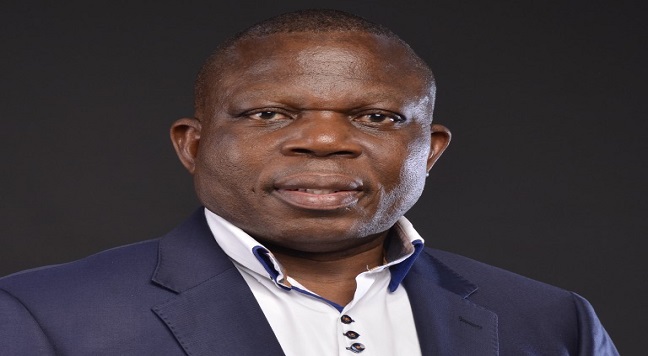
New Horizons Nigeria has launched a N50 million initiative aimed at transforming 21 Almajiri children into skilled computer technicians within 90 days, to tackle youth unemployment and harness human potential.

The Almajiri-to-Tech programme, officially launched in Abuja on Monday, provides participants with full training, meals, clothing, tools, and logistics support, all fully funded.
Speaking at the launch, the Chief Executive Officer of New Horizons, Tim Akano, said the programme represents a new journey in the history of Nigeria by restoring the original purpose of the Almajiri system, which he described as “children sent out to seek knowledge.”
“The word Almajiri comes from an Arabic term meaning emigrant and seeker of knowledge. Historically, children were sent to learn morals, responsibility, and skills to add value to society,” Akano said.
He added that the disruption of this system during colonial times forced many children onto the streets, a challenge that persists today.
Akano highlighted the urgency of addressing the Almajiri issue, noting that there are an estimated 15 million Almajiris in the country, with a population growth rate of around three per cent annually.
“If we do not solve this problem as a country, we are sitting on a time bomb,” he warned.
According to him, the programme focuses on hands-on technical skills rather than theory. Trainees will learn to repair mobile phones, laptops, televisions, radios, standing fans, and other electronic devices, as well as build inverter batteries using recycled electronic waste.
“We are not teaching theory. We are teaching practical skills you can use to earn a living,” Akano said, stressing that the programme will not interfere with the participants’ Quranic education.
“We are still going to allow you, within the period of learning. Your learning computer here is not stopping your Quranic education.
“You still have time within our space here. Whenever you want to go and pray, you can pray, then come back to class,” the CEO stressed.
He added that participants will also receive daily meals, water, T-shirts identifying them as technicians-in-training, and access to all necessary tools and equipment throughout the 90-day programme.
Akano said the initiative is part of a larger mission by New Horizons Nigeria, which has spent the past 21 years training about 100,000 Nigerians annually in IT and related skills.
He said the new programme aims to “take human genius off the streets and convert it into human capital, enabling these youths to contribute meaningfully to the economy.”
He added that equipping Almajiris with skills could add 15 million people to Nigeria’s workforce and potentially increase the country’s GDP by as much as $20 billion, stressing that productivity depends on practical skills and opportunity.
“Everything that can be taught can be learned. If someone can memorize the Quran cover to cover, there is nothing that cannot be done. What they lack is information, opportunity, and infrastructure, and we are providing all of that,” Akano said.
Akano also stressed that the initiative is designed to inspire other organizations and government agencies to replicate similar programmes across the country.
“This is not just about 21 children; it is about showing Nigeria what is possible when resources meet intention and planning.
“If we succeed in empowering these Almajiris, we demonstrate that the country can turn social challenges into economic opportunities. It’s a blueprint for Nigeria’s future,” he said, noting that the initiative combines social reform, technical education, and economic empowerment.
Also speaking, one of the trainees, Fatima Umar, appreciated the organisers and promised to maximise the opportunity.
“We’ll make you proud of us. We have nothing to say here but to thank and appreciate you. May Almighty Allah continue to guide and protect you,” Umar said.


International Monetary Fund has upgraded Nigeria’s 2026 economic growth projection to 4.4 per cent, reflecting improved macroeconomic stability and sustained reforms.

IMF
The January 2026 World Economic Outlook Update forecasts Nigeria’s growth trajectory at 4.1 per cent in 2024, 4.2 per cent in 2025, and 4.4 per cent in 2026—a 0.2 percentage point increase from the October 2025 estimate.
This aligns with sub-Saharan Africa’s projected 4.6 per cent expansion in 2026 and 2027, driven by regional stabilisation efforts.
Globally, the IMF anticipates 3.3 per cent growth amid resilient conditions tempered by trade policy shifts and technology investments. For Nigeria, declining energy prices—expected to fall seven per cent due to weak demand—pose risks, though OPEC+ coordination and China’s stockpiling provide support.
Despite the optimism, downside risks persist from Middle East and Ukraine tensions, protectionism, high debt, and fiscal deficits. The Fund recommends rebuilding fiscal buffers, ensuring central bank independence, and limiting temporary fiscal measures to maintain stability.
Nigeria’s success hinges on consistent reforms and resilience against domestic and global shocks, the IMF concluded.

Organisation of Petroleum Exporting Countries (OPEC) reports that Nigeria’s crude oil production, excluding condensate, dropped by 0.7 per cent to 1.486 million barrels per day (mbpd) in November 2025 from 1.496 mbpd in October.

OPEC
The figure, drawn from secondary sources in OPEC’s December 2025 Monthly Oil Market Report, fell short of Nigeria’s 1.5 mbpd quota. Direct communication data showed output at 1.436 mbpd, up from October’s 1.401 mbpd, but still below target.
Nigeria produces around 196,028 bpd of condensate, excluded from quota calculations per Nigerian Upstream Petroleum Regulatory Commission figures. Year-on-year, November’s output marked a slight gain over 1.417 mbpd in November 2024.
Expert Cites Insecurity, Governance Gaps
Petroleum economics expert Wumi Iledare described the quota miss as unsurprising, blaming persistent insecurity, an ageing oil basin lacking new finds, and unoffered hydrocarbon blocks. Governance shortcomings and policy uncertainty further erode investor confidence, he noted.
Selective implementation of the Petroleum Industry Act worsens the situation, with Nigeria needing a single authoritative leader for the sector rather than multiple proxies, Mr Iledare stressed. The country has struggled to consistently hit OPEC targets for years.

Cybersecurity Firm Detects a Wave of Crypto Phishing Following BlockFi Bankruptcy

NCC Unveils Spectrum Roadmap to Power Nigeria’s $1tr Digital Economy

Universal Insurance to Raise N15bn to Meet Capital Rules

New Horizons Invests N50m to Empower Almajiris with Skills

IMF Upgrades Nigeria’s 2026 Growth Projection to 4.4%

Banks quietly move to enforce new ₦50 transfer levy from Jan. 1

FIRS says NIN, CAC Numbers to Serve as Tax IDs from 2026

FIRS Declares NIN, CAC Numbers as Tax IDs from 2026

US Begins Partial Visa Ban on Nigerians January 1

Galaxy Backbone Tops FG’s Website Performance Ranking




 E-Financial1 day ago
Here Are Nigerian Banks That Have Secured Their Licences

 E-Financial1 day ago
Zenith Bank Top Nigerian Bank Pick Ahead of GTCO, AccessCorp

 Telecom1 day ago
MTN CEO Toriola Hails Nigeria’s Telecom Transformation at MIPAD

 News1 day ago
ICPC Charges Ozekhome with Forgery, Corruption Over London Property

 E-Financial1 day ago
Nigeria Processed $92.1Bn Crypto Transactions in 12 Months — PwC

 Telecom1 day ago
Lebara Launches Agent Registration Portal

 E-Financial1 day ago
How Crypto Criminals Stole $700m from People – often Using Age-Old Tricks

 E-Business1 day ago
Elon Musk Seeks $134Bn from OpenAI, Microsoft for ‘Wrongful Gains’