

General News
Nigeria ends 2018 on a cautious note; 2019 elections in focus


By Lukman Otunuga,
It has been another monumental year for the Nigerian economy which continued to display resilience against domestic and external headwinds.
The healthy combination of easing inflationary pressures, foreign exchange stability and rising commodity prices initially stabilized Nigeria’s macro fundamentals. With domestic conditions clearly improving and foreign investor appetite increasing, expectations were elevated over the Central Bank of Nigeria (CBN) cutting interest rates to stimulate further growth. The outlook for Nigeria looked highly encouraging up until mid Q2 2018 when economic growth slowed for the first time since the end of the recession. The deceleration in growth acted as a critical wakeup call to speed up efforts in diversifying away from oil reliance.
However, sentiment was dented further by the repeated delay of the 2018 budget which was finally passed in June 2018. Although Nigeria managed to hold its ground during the first half of 2018, it must be kept in mind that the nation found itself vulnerable to external shocks – namely an appreciating Dollar and oil price volatility. An appreciating Dollar, global trade tensions and prospects of higher US interest rates punished many emerging markets in 2018 with Nigeria falling into the category. Although the Naira witnessed stability despite an appreciating Dollar, this came at a heavy price to the CBN in the form of falling external reserves.
Global trade tensions presented a significant risk to Nigeria, especially when considering how the United States and China remain its biggest trading partners. With a trade war threatening global economic growth and demand for commodities, this presented challenges to Nigeria which remained heavily depended on earnings from oil exports. While there was scope for the CBN to cut interest rates to boost growth, this window of opportunity was missed when inflationary pressures returned.
Focusing on macro fundamentals, the picture looks somewhat encouraging with GDP expected to rise 2% in 2018. Signs of Non-Oil sectors contributing to growth will be a welcome development that highlights how Nigeria remains on a quest to break away from oil reliance. With Nigeria’s economic resilience potentially stimulating investor risk appetite, the Nigerian Stock Exchange has the opportunity to rebound in 2019. Although manufacturing production decreased 1.7% in September, a rebound could be in the cards as increased government spending ahead of the presidential elections boosts economic growth.
In regards to CBN policy, falling oil prices are seen weighing on the Naira’s peg against the Dollar on the official exchange. This may complicate the CBN’s effort to defend the Naira on the parallel markets in 2019. While a weaker Dollar could limit capital outflows, falling oil prices are poised to shave government revenues.
Focusing on oil prices, the outlook remains tilted to the downside amid oversupply fears and concerns over weaker oil demand. With markets struggling to find signs of the oil market rebalancing following OPEC and Russia’s deal to cut production by 1.2 million barrels per day and global growth fears fuelling concerns over falling demand, oil prices remain fundamentally bearish. Severely depressed oil prices have raised concerns over Nigeria’s ability to move forward with the 2019 budget which pegged oil prices at $60 per barrel. With falling oil prices eroding government revenues, Nigeria’s Excess Crude Account (ECA), which has already depleted by roughly 73% in three weeks, is seen falling further.
Although the short-term outlook paints a gloomy picture, as we enter the New Year there is still some light at the end of the tunnel. With diversification in motion, government spending expected to increase and infrastructure developments in the pipeline, the longer-term outlook remains bright.



Okpi Bernard Adaafu, a legal practitioner, has dragged the federal government of Nigeria before the Federal High Court in Abuja, challenging the legality of a controversial health data sharing agreement between Nigeria and the United States of America.

The suit names the President of Nigeria, the Attorney-General of the Federation and Minister of Justice, the Federal Ministry of Health and Social Welfare, the Senate President of Nigeria, and the Speaker of the Nigerian House of Representatives as defendants.
In the originating summons filed before the court, Adaafu is asking the court to determine whether the bilateral health cooperation Memorandum of Understanding signed between Nigeria and the United States violates the constitutional rights of Nigerian citizens, particularly their rights to privacy and protection of personal data.
According to court documents, the agreement, signed on December 19, 2025, permits the collection and transfer of sensitive health information of Nigerians to the United States.
The data reportedly includes medical records, blood samples, pathogen testing information, and DNA or genetic sequencing data.
The plaintiff argued that while only a summarized version of the agreement has been made public, a related Specimen Sharing Agreement allegedly obliges Nigeria to provide biological samples and related data to the United States within five days of request and could remain in force for up to 25 years.
He contended that such an arrangement, if implemented, would violate the National Health Act 2014, which guarantees the confidentiality of patients’ medical records, as well as the Nigeria Data Protection Act 2023, regulating the processing and cross-border transfer of personal data.
The suit further argued that the agreement breaches Section 37 of the Constitution of the Federal Republic of Nigeria 1999, which guarantees the privacy of citizens.
Adaafu also raised concerns about statements suggesting that the programme would provide substantial support to Christian faith-based healthcare institutions.
According to him, the inclusion or perceived emphasis on religious affiliation within a national healthcare framework is unnecessary, constitutionally questionable, and capable of triggering avoidable social tension in a multi-faith society such as Nigeria.
He argued that healthcare interventions funded through international cooperation must remain neutral, inclusive, and accessible to all Nigerians regardless of religion, ethnicity, or social background.
Another issue raised in the suit is the alleged exclusion of the National Assembly of Nigeria from the process.
The plaintiff maintained that international agreements with significant national implications must undergo legislative scrutiny and approval before implementation.
Among the reliefs sought, Adaafu asked the court to issue an order prohibiting discriminatory agreements based on religion, ethnicity, or other protected characteristics.
He also requested a declaration that the agreement violates both the National Health Act 2014 and the Nigeria Data Protection Act 2023.
In addition, the plaintiff is seeking an order suspending the implementation of the agreement, which is scheduled to commence on April 1, 2026.
Explaining the reason for filing the suit, Adaafu said he decided to approach the court because of the potential implications of the agreement on the privacy, sovereignty, and constitutional rights of more than 200 million Nigerians.
He noted that the issues raised in the suit deserve public awareness and national discourse, stressing that transparency and accountability are necessary in matters involving citizens’ sensitive medical and genetic information.

Nigeria’s leading instant noodle brand, Indomie, is backing a cross-country cycling journey by 15-year-old autism advocate Kanyeyachukwu Tagbo, who is embarking on a Guinness World Record-bound ride from Enugu to Lagos to raise awarenessabout autism and promote inclusion.

Tagged “Journey of Possibility, #RideWithKanye,” the expedition will see the young cyclist travel across several Nigerian cities as he advocates for greater understanding and support for individuals living with Autism Spectrum Disorder and their families.
The initiative represents an official attempt to set a milestone with Guinness World Records as the youngest autistic individual to complete a cross-country cycling journey.
The ride is scheduled to conclude in Lagos on World Autism Awareness Day, reinforcing the global call for empathy, acceptance, and opportunity for people on the autism spectrum.
Speaking on the brand’s involvement, Temitope Ashiwaju, Group Corporate Communications and Events Manager, said the initiative reflects Indomie’s enduring commitment to celebrating courageous Nigerian children and amplifying stories that inspire hope.
“At Indomie, we believe every child deserves the opportunity to dream boldly and achieve extraordinary things,” he said. “Kanyeyachukwu’s journey is a powerful reminder that determination and talent can transcend limitations. We are proud to support his mission to inspire understanding, acceptance, and hope for individuals living with autism.”
Kanyeyachukwu first captured national attention when he was recognised at the Indomie Heroes Awards, an initiative by Indomie that celebrates courageous Nigerian children who have demonstrated exceptional bravery, resilience, and impact in their communities.
Since receiving the recognition, he has continued to use advocacy, creativity, and public engagement to reshape perceptions about autism and inspire conversations around inclusion.
Through the “Journey of Possibility,” Kanyeyachukwu hopes to demonstrate that individuals on the autism spectrum possess extraordinary potential when given the opportunity and support to thrive.
As a key supporter of the initiative, Indomie will provide branded cycling kits and support materials for cyclists accompanying him throughout the route, alongside financial support and brand activations at designated stops along the journey.
These engagements will include community interactions aimed at educating the public, encouraging dialogue, and fostering broader participation in autism advocacy.
To ensure the young cyclist’s safety and well-being throughout the expedition, a dedicated safety, medical, and logistics team will accompany the ride.
Host communities along the route are also expected to organise welcome receptions and awareness activities as the team passes through their cities.
The journey will culminate in a celebratory reception in Lagos, bringing together supporters, advocates, community leaders, and partners to mark the completion of the ride and reinforce the call for greater awareness and inclusion for people on the autism spectrum.
Through initiatives like the Indomie Heroes Awards and its support for the “Journey of Possibility, #RideWithKanye,” Indomie continues to champion young Nigerians whose courage, determination, and achievements demonstrate the limitless possibilities that emerge when children are empowered to pursue their dreams.
General News
Interswitch Advocates Trust-Driven Infrastructure as Cornerstones of Africa’s Cross-Border Capital Future

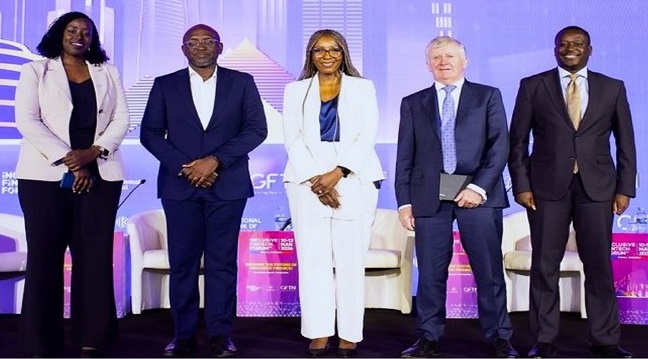
Interswitch Group, one of Africa’s leading integrated payments and digital commerce companies, has reaffirmed its commitment to advancing a seamless and inclusive financial ecosystem across the continent at the recently concluded Inclusive Fintech Forum 2026, which held at the Kigali Convention Centre, in Rwanda from 10 -12 March 2026.

Speaking during a high-level session themed “Financial Centres & the Future of Cross-Border Capital” Akeem Lawal, Managing Director, Payments Processing & Switching (Interswitch Purepay), highlighted the critical factors shaping the next phase of financial integration across Africa.
He noted that while rapid advancements in digital technology have made it possible for capital to move across borders at unprecedented speed, the ultimate destination and impact of such capital flows are determined by trust, robust infrastructure, and strategic collaboration.
According to Lawal, as Africa’s economies continue to digitize and integrate, stakeholders must prioritize building resilient payment systems and fostering partnerships that enhance transparency, interoperability, and shared prosperity.
He emphasized that sustainable growth in cross-border financial flows will depend not only on technological innovation but also on the collective ability of institutions to inspire confidence and enable seamless transactions at scale.
Throughout the forum’s engagements, Interswitch, as one of Africa’s leading and pioneering digital technology enablers reiterated its long-standing vision of fostering a prosperous and interconnected Africa. The company continues to champion the development of a secure, technologically advanced digital payments ecosystem designed to connect and empower individuals, businesses, governments, and communities across the continent.
Participation at the Inclusive Fintech Forum underscores Interswitch’s strategic focus on driving thought leadership, strengthening regional collaboration, and supporting initiatives that accelerate financial inclusion and economic resilience.
As Africa navigates the evolving landscape of digital finance and cross-border commerce, Interswitch remains committed to delivering innovative solutions and partnerships that unlock opportunities for growth and shared value creation.

Crypto Transactions Hit $96Bn in Nigeria -SEC

PwC Warns Nigeria Telcos of AI Fraud Risks

Lawyer Drags FG Court over Controversial Health Data Sharing Agreement with US

Elumelu Tags Elon Musk, Disowns AI-Generated Scam Video

FG Determined to Protect Rights, Privacy Online- NITDA

Kaspersky Discovers New Phishing Campaign Exploiting Google Tasks Notifications to Steal Corporate Credentials

esentry 2025 Report Shows Healthcare, Financial Services and Telecoms as Staging Grounds for Increased Cyberattacks in Africa

AfDB, UNDP Launch $10Bn AI Initiative for Africa

Mutual Benefits Assurance Settles ₦5.9bn Claims in January 2026

MultiChoice Suspends Yearly DStv Price Hike as Canal+ Pushes Growth




 Telecom3 days ago
VDT Communications Achieves Two Prestigious Certifications ISO /IEC 27001:2022, ISO/IEC 27032:2023 Reinforcing its Leadership in Broadband Service Provision

 E-Financial1 day ago
CBN Rolls Out New Rules for Safer Instant Payments, More Customer Control

 News1 day ago
NIMMME Inaugurates Engr. Michael Orekyeh as 13th National Chairman in Abuja

 Telecom1 day ago
MTN Nigeria Races Ahead in Fibre Broadband Market

 E-Financial1 day ago
Nova Bank Appoints Jude Anele as Managing Director/CEO

 E-Financial1 day ago
CBN Tightens BVN Rules to Curb Fraudulent Banking Transactions

 E-Business1 day ago
Tech Expert Unveils BAT-BOT AI App to Curb Fake News ahead of 2027 Elections
- Broadcasting5 hours ago
Spotify’s Loud & Clear Report Reveals Over ₦60Bn Revenue for Nigerian Artists in 2025