

Telecom
Nigeria Still World’s Most Mobilized Country, Traffic Hits 81%- Twinpine


Nigeria has retained its position as world’s most mobilized country, a new report released by Twinpine has shown.
The Twinpine’s 2017 “Nigeria Mobile Trends Report”, shows Nigeria gained 5% from the previous report in its mobile traffic.
Recall in a similar report in 2016, Nigeria was placed ahead as the most mobile telecommunications induced nation, with 76% of the internet traffic comes through mobile.
The latest report indicates the country maintains its lead as statistics by Worldometer, NCC, Stat Counter put the total (human) population at 192 million (estimated); 142.6 active lines mobile at 74% mobile penetration; 91.5million mobile internet users at 47% mobile internet mobile penetration; 30% smartphone penetration; Nigeria is now head of India and South Africa with 79% and 78% internet traffic coming through mobile, respectively.
Multi-Sim Phones Usage
Nigeria is also notable as the destination for the usage of multi-sim phones in the world at 66%, followed by Bangladesh (63%) and Tanzania (53%), while India and Phillipines at the least on the table with 48% each.
Share of Desktop versus mobile traffic
In Nigeria, mobile traffic overtook desktop traffic since 2012, and has continued to dominate since then. From the study, it was established that Mobile Traffic grew from 73% in 2014 to 81% in 2017 while the Desktop Traffic decreased from 25% to 13% during the period.
Web Usage by Device Vendors
According to the report, Samsung leads “Web Usage by Device Vendor” accounting for 25% of the market; Apple (20%), Tecno (13%), Infinix (9.5%), Blackberry (9.5%), Gionee (5%), Nokia brands account for 4.5%, Microsoft (4.5%), HTC (4%) while other brands put together account for remaining unknown (7.5%).
Web Usage by OS
Android is clearly still the preferred mobile operating system used in Nigeria. Other operating systems selling in the market are iOS, RIM, Windows Phone, Nokia OS, Symbian, LG proprietary and Samsung proprietary.
Market Share by Mobile Operator as at June 2017
According to the report which reflects NCC’s statistics showing MTN accounts for 37% of the market share followed by Glo 26%, Airtel 24% and 9Mobile 13%.
Meanwhile, on the growth of Active Mobile Subscribers by Operator from 2014 – 2017, Glo and Airtel have remained most gainers, while MTN and 9Mobile have had their subscriber base reduced over time.
According to the report, Glo grew its customer base from 28,486,530 in 2014 to 37,411,407 as at June 2017; Airtel 27,989,580 (2014) to 34,656,605 (2017); while MTN has a decline from 60,493,053 (in 2014) to 53,093,756 in 2017 (June) likewise 9Mobile from 21,559,667 in (2014) to 18,022,674 as at June 2017.
Top 5 States with Active Voice Subscription (VS)
The Twinpine report quotes the National Bureau of Statistics which identified Lagos state as leading with 20 million the highest voice subscription in Nigeria amounting to 12% of the total VS, followed by Ogun State, Kano, Oyo and Kaduna States.
Also, Lagos leads the active internet subscription but Abuja enters the top 5 in terms of states internet subscription in Nigeria.
Market Share Of Mobile Browser
Opera is still the preferred mobile; it leads the table with 53.28% of the market share; Chrome 20.18%; UC Browser 13.8%; Blackberry 3.57%; Android 2.92%; Safari 1.75%; IE Mobile 1.73%; Samsung Internet 1.05%; Puffin 0.98% and others 0.75%.
Nigerian behavioural studies hinted on the future opportunities of other sectors outside apps and entertainment in Nigeria; 48% of the people surveyed indicated that they use mLearning apps.
From the respondents, 35% have used reading app; 42%- banking app; 35%- healthcare related app; 32%- taxi/booking app and 32%- food delivery.
What online activities do Nigerians do on their smartphones & computer at least weekly?
Social Media is the most popular activity performed by Nigerians weekly on their mobile phones as 70% of the respondents use smartphones, while 9% visit social networks using destop computers; 5% use smartphone to listen to music, 1.5% use desktop; 2% look up for maps on smartphone; 9% use smartphone to search for product information while 3% use desktops; only 3% use smartphone to make online purchases; 19% use smartphone to watch online videos, 7% use desktops; 5% play games on smartphones, only 2% use desktops; 28% check their mails on smartphone, 8% use desktop computers; 37% use smartphone to visit search engines, while 7% resort to desktops.
mCommerce
63% of all M-Commerce orders in Nigeria come from mobile. Nigerian customers who use mobile phones to shop online buy a wide range of products, the top three are: mobile phone, beauty and perfumes and women’s clothings.
Average price of smartphones have dropped significantly between 2014 and 2016, and sale of smartphones have gone up.
Average price of smartphones reduced from $165-$216 (2014) to $99-$117 in 2016; booming smartphone sales (2014-2016) recorded over 394% growth. More men at 61% shop online than women 39% in Nigeria.
Mobile Purchase Interest Of Nigerians
Fashion items (26.3%) and mobile apps (22.8%) top the list of things people buy with their mobile phones. Others are, music (15.8%); games (13.2%); Ebooks (5.3%); videos (7.9%); electronics (14%) and home appliances (14%).
Interestingly, the report shows 66.9% of Nigerians have bought an item with their mobile phone.
As 33.1% haven’t bought things using their mobile phone, 38.7% cited fear of buying fake items as the major reason; 7.5% delivery delays; slow internet 7.5%, delivery changes account for the remaining percentage.
However, 58.5% of Nigerians have paid for a mobile app before, though Nigerians are not too keen on in-app purchases, only 42.6% have made an in-app purchase.
Main Reasons Why Nigerians Uninstall Apps
Large size (28%) and too many notifications (17.5%) top the chart of reasons Nigerian uninstall apps. Other reasons are, too slow (9%); too complex (7.9%); too many ads (15.9%); privacy (11.1%) and not the expected value (10.6%).
Mobile Money
71.5% of Nigerians, the report says, use a mobile banking app. Out of the number, 12.7% use it as option for saving money; 63.6% for money transfer; 42.7% to check balance; 36.4% pay bills with mobile money apps; 47.3% for airtime purchases and 17.3% don’t use mobile apps.
Payments Made Directly To Mobile Phone Bill
Nigeria tops the chart with carrier billing (paying for items directly from the phone bill) at 42%. Twinpine quoting Mobile Money Report, MEF 2017 report said that 9% of Nigerians have made an in-store mobile payment; increasing from its previous value of 6% in 2014.
Also, average monthly transactions in mobile grew from a transaction value of 5millionUSD in 2011 to 142.8millionUSD in 2016, according to KPMG Fintech in Nigeria Report, 2016.
Number of transactions performed using the USSD service has more than doubled the number of transactions on mobile banking platforms for banks offering USSD- Mobile Money Report, MEF 2017.
Mobile Video
Many Nigerians prefer to watch short online videos, especially when via smartphones as 29% prefer to watch short online videos via their smartphone.
The report also shows the frequency at which online videos are watched shows that 27% of Nigerian watch videos online daily; 25% weekly; 12% less than monthly; 12% monthly and 23% never watched videos online.
“Last year, we released our 2016 Mobile Trends Report which highlighted key stats and analysis of the Nigerian mobile space to celebrate our 5th Anniversary.
“This year, the Nigerian economy has taken a different turn and as a result, there has been a significant shift in the market trends and behaviour of end users. This report which is downloadable via http://twinpinenetwork.com/2017-nigeria-mobile-trend-report/, serves as a mobile trend and advertising behaviour guide for marketers to find effective ways to continually deliver maximum ROI,” said Chika Umeh, Insight Lead, Twinpine in an email to Nigeria CommunicationsWeek.


Telecom
VDT Communications Achieves Two Prestigious Certifications ISO /IEC 27001:2022, ISO/IEC 27032:2023 Reinforcing its Leadership in Broadband Service Provision

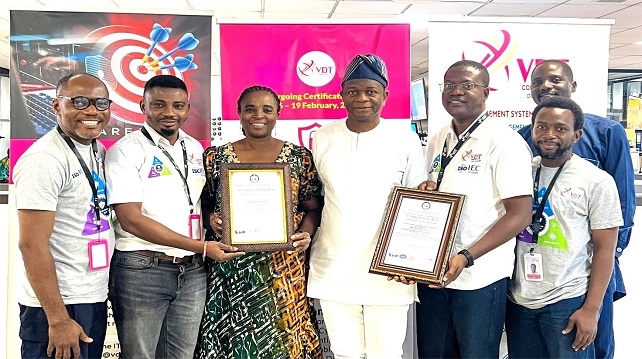
VDT Communications Limited, a provider of Enterprise communication solutions, is proud to announce that it has been awarded the ISO/IEC 27001:2022 Information Security Management System (ISMS) and ISO/IEC 27032:2023 Cybersecurity Management System certifications.

These prestigious certifications demonstrate VDT’s commitment to maintaining the highest standards of information security and cybersecurity, ensuring the protection of sensitive customer data and maintaining the trust of its clients.
These certifications are a testament to VDT’s dedication to implementing robust information security and cybersecurity measures, aligning with international best practices.
The ISO/IEC 27001:2022 certification recognizes VDT’s ability to establish, implement, maintain, and continually improve its ISMS, ensuring the confidentiality, integrity, and availability of customer information. The ISO/IEC 27032:2023 certification highlights its commitment to protecting its customers’ information assets and preventing Cyber threats.
VDT Communications Limited has consistently demonstrated its commitment to excellence, previously earning and maintaining ISO 9001:2015 Quality Management System and ISO 20000-1:2018 IT Service Management certifications. These certifications have enabled the company to deliver high-quality services, ensuring customer satisfaction and loyalty.
“We are thrilled to receive these two prestigious certifications, which reinforce our commitment to information security and cybersecurity. These certifications demonstrate our dedication to implementing robust security measures that ensure confidentiality, integrity and availability of customer data” said Engr. Abiodun Omoniyi, GMD of VDT Communications Limited.
The ISO/IEC 27001:2022 and ISO/IEC 27032:2023 certifications bring numerous benefits to VDT’s customers, including:
- Enhanced information security and cybersecurity posture
- Protection of sensitive customer data
- Compliance with international standards and regulations
- Improved risk management and incident response
- Increased trust and confidence in VDT’s services
“We are proud to serve our customers with the highest level of security and quality,” Bimbo Ikumariegbe, Chief Operating Officer (COO) of VDT. “These certifications demonstrate our commitment to excellence and our dedication to delivering innovative communication solutions that meet the evolving needs of our customers” – Olufemi Akinola, Head, Information Technology.

Nigeria Data Protection Commission (NDPC) has issued a stern warning to content creators filming and sharing videos of unsuspecting citizens on social media, describing such practices as direct violations of citizens’ rights to informational self-determination.

NDPC
The Commission drew attention to individuals capturing pictures and footage of the general public without consent, breaching Section 37 of the 1999 Constitution of the Federal Republic of Nigeria (as amended) and the Nigeria Data Protection Act, 2023 (NDP Act).
NDPC specifically flagged a content creator in Lagos State who films unsuspecting passersby at roadsides for a “reality show”. The Commission stressed that processing personal images in this manner demands explicit consent or a justifiable lawful basis under the NDP Act.
Preliminary investigations revealed no public or legitimate interest served by this “wilful invasion of privacy”. Data subjects, the Commission noted, have no reasonable expectation that their images would be captured and broadcast globally by an unknown individual.
National Commissioner/CEO Dr Vincent Olatunji has instructed social media platform owners—including TikTok, X (formerly Twitter), and Meta—to intensify enforcement of community guidelines to prevent harm from unlawful and unfair personal data processing.
Platforms failing to act promptly face sanctions under the NDP Act. Individual creators remain personally liable for violations, potentially facing criminal prosecution for infringing citizens’ and data subjects’ privacy rights.
The advisory was signed by Babatunde Bamigboye, Esq. CDPRP, Head of Legal, Enforcement and Regulations.
NDPC emphasised that abuse of rights under the guise of entertainment will not be tolerated, urging compliance to safeguard Nigerians’ data privacy in the digital age.
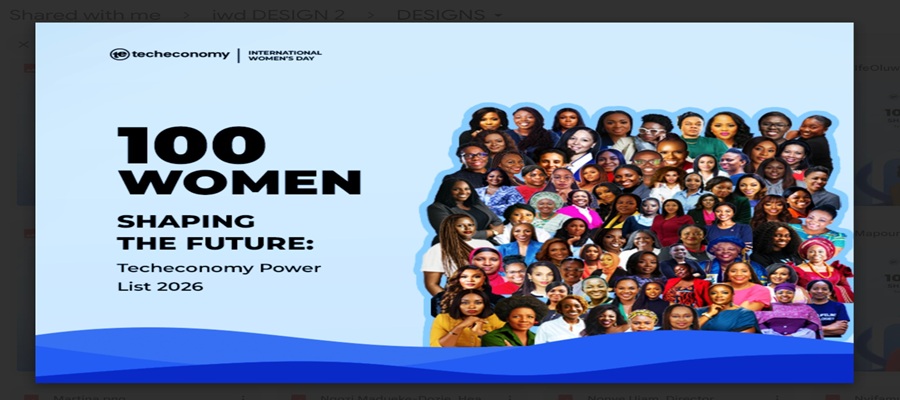
In celebration of International Women’s Day (IWD) 2026, Techeconomy, a leading business news platform in Nigeria, has unveiled its “100 Women Shaping the Future: Techeconomy Power List 2026,” recognizing exceptional women driving innovation, leadership, and impact across technology and the broader digital economy.

Techeconomy
The annual recognition spotlights women who are transforming industries through entrepreneurship, policy leadership, digital innovation, financial inclusion, media, education, and emerging technologies.
The initiative is part of Techeconomy’s commitment to promoting gender inclusion and highlighting female leadership shaping Africa’s technology ecosystem.
The Techeconomy IWD Power List features a diverse group of women, from corporate executives and startup founders to policymakers, ecosystem builders, and social innovators, whose work continues to influence the future of technology, business, and digital transformation in Nigeria and across Africa.
Speaking on the initiative, Joan Aimuengheuwa, the Managing Editor at Techeconomy, noted that the recognition goes beyond celebrating titles, focusing instead on impact, resilience, and the ability to shape the future through innovation and leadership.
According to her, “the women on the list represent different sectors including fintech, banking, healthcare, agriculture, education, communications, and the creative economy, demonstrating the growing role of women in advancing technology-driven development.
The unveiling aligns with the global celebration of International Women’s Day, which highlights the achievements of women and calls for accelerated progress toward gender equality. Across the world, the technology sector continues to push for greater female representation and leadership as part of efforts to build more inclusive digital economies.
Also speaking, Oluwatosin Aloba, the Brand Manager at Techeconomy, said: “Techeconomy IWD 2026 Power List is specially designed to inspire the next generation of female innovators and leaders by showcasing role models who are breaking barriers and redefining possibilities in the technology landscape.
“Techeconomy encouraged industry stakeholders, institutions, and the broader public to celebrate the achievements of these women while continuing to support policies, programs, and investments that expand opportunities for women in technology”, she added.
The full list of the “100 Women Shaping the Future: Techeconomy Power List 2026” is available on the Techeconomy website or visit: https://techeconomy.ng/techeconomy-iwd-2026-power-list-celebrates-100-women-shaping-the-future-of-tech/.

VDT Communications Achieves Two Prestigious Certifications ISO /IEC 27001:2022, ISO/IEC 27032:2023 Reinforcing its Leadership in Broadband Service Provision

CBN Orders Banks to Restrict Access to Banking Services for Loan Defaulters

NLNG Advances Media Excellence with Change Your Story Workshop

Interswitch Advocates Trust-Driven Infrastructure as Cornerstones of Africa’s Cross-Border Capital Future

Why JustMarkets Is a Strong Choice for Gold Trading

Kaspersky Discovers New Phishing Campaign Exploiting Google Tasks Notifications to Steal Corporate Credentials

esentry 2025 Report Shows Healthcare, Financial Services and Telecoms as Staging Grounds for Increased Cyberattacks in Africa

AfDB, UNDP Launch $10Bn AI Initiative for Africa

Pheelz Shares His Journey on Glo-Sponsored African Voices

Mutual Benefits Assurance Settles ₦5.9bn Claims in January 2026




 General News2 days ago
Court Freezes Bank Accounts of Petrocam, Founder over Alleged N9Bn Zenith Bank Debt

 General News2 days ago
FCCPC Says Telcos, Energy Firms Lead Consumer Complaints in Nigeria

 Telecom2 days ago
Techeconomy Unveils IWD 2026 Power List Celebrating 100 Women Shaping the Future

 E-Business2 days ago
Kaspersky Uncovers a New Android Malware Campaign Disguised as Starlink Application

 News2 days ago
Easybuy Sales Talent Program to Empower 10,000 Nigerians to Become Millionaires

 News2 days ago
FG Approves First National Policy on Cosmetic Safety, Health

 News2 days ago
Mobile Phones Used by Food Vendors Could Spread Infections- Experts

 E-Business2 days ago
Microsoft Expands Africa AI Push while DeepSeek Gains Users