

E-Financial
Sanusi Says $20Bn Leakages in NNPC May Ground Economy

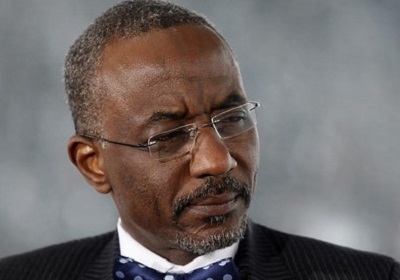
Sanusi Lamido Sanusi , governor of the Central Bank of Nigeria (CBN) has stated that his decision to take part in the joint press briefing called by Dr Ngozi Okonjo-Iweala, minister of finance, last December was in order to avert a crisis and calm nerves in the polity, according to a report by Leadership Newspaper.
Sanusi also insisted that the persistent leakages in the amount of oil revenue remitted to the federation account if not stopped on time would ultimately bring the entire economy to its knees.
In an executive summary of his presentation to the Senate Committee on Finance, according to Leadership,, the apex bank governor regretted that his letter to the president which was leaked last year was published in a highly politically-charged atmosphere leading to the Central Bank being practically accused of involvement in politics.
“In December it was clear to me that no tempered and positive discussion would take place. In order to calm nerves and avert a major crisis, I agreed to the joint press conference with the Finance Ministry, the Petroleum Ministry, and also to present a common front at the National Assembly.”
At the said press conference which held on December 18, 2013, jointly addressed by Okonjo-Iweala, Sanusi, and minister of petroleum Mrs Diezani Alison-Madueke, Sanusi had said he was wrong in his earlier allegation that $49.8 billion was missing and that the actual unremitted amount was $12 billion. Okonjo-Iweala said her record indicated that only $10.8 billion could not be accounted for.
The CBN governor stressed that Nigeria cannot sustain the current trend in oil revenue leakages, adding that if not stopped it is capable of bringing the entire nation to its knees.
“The amount in 19 months may be $10.8 billion or $12 billion or $19 billion or $21 billion; we do not know at this point. But if we extend the period the amount will increase anyway, since this has been going on for a long time. The first priority is to stop it. It is unsustainable, and it will ultimately, if not stopped, bring the entire economy to its knees.”
Sanusi who appealed to Nigerians not to disregard the alarm he raised as spurious or baseless also noted: “Since December, however, there has been an orchestrated campaign aimed at undermining our credibility and misleading Nigerians into believing that all monies due to the federation account have been either remitted or adequately accounted for.”
He said that the decision on what to do with the situation at hand rests entirely with the government.
“My task is limited to raising an alarm over what I think is a development that is harmful to the economy, and establishing that the alarm was neither spurious nor baseless. I still insist that an investigation is needed to establish the extent of the losses and nature of offences committed.”
In related development, Sanusi also spoke at an investors’ dinner in Lagos on Tuesday night, saying the revelation of the missing and unaccounted monies would help in ensuring good governance and accountability in the governing of the country.
Sanusi, who had made fresh allegations at a public hearing organised by the Senate, said that the NNPC was yet to account for $20 billion oil proceeds, an amount higher than the initial $10.8 billion that was in contention.
He stated that “a lot of the noise that is happening in the country today around me and the oil sector is good for the country because, at the end of the day, if it leads to improved governance over oil revenue, if it leads to increased transparency or people having to be called to explain what they have done with the money, that is good for the system. People must not see controversy and noise as necessarily bad. I love controversy”.
“If you think there has to be change and if you think a system needs to be improved and if you get too comfortable in a system, you should ask yourself what has happened to you. You need to step on a few toes, annoy a few people, have your own toes stepped on; you will be annoyed once in a while. Of course, they will slap you once in a while,” he stated.
Stressing that the current market price of oil is in favour of the country, the CBN governor noted that revenue shortfalls arising from oil theft and illegal bunkering are the major challenge for the country, noting that if the problem of oil theft and illegal bunkering was solved, issues around reserves, currency stability and fiscal deficit would be a thing of the past.
“We have tried to build a stable environment, and, for us at the Central Bank, we have been very lucky to have had a very good partner in finance. If you look at government spending in 2013, it really wasn’t much higher than in 2012 and fiscal policy is not in itself loose on the basis of government spending. The real challenge is that there are things that we can do to block some of the revenue shortfalls that are causing the problem – oil theft and bunkering — because we’ve good oil price, we’ve got the output and if you fix that, the issues around reserves, around currency stability, around fiscal deficit would simply disappear.”
He also blamed lack of fiscal discipline on the part of the government, saying “government spending itself has not been the problem. It is largely because of the fiscal discipline in the last few years that our tight monetary policy has been able to work. We have been able to bring down inflation to single digit and it has been below 10 per cent since January 2012. It would remain 10 per cent throughout 2014.
“I know there is speculation about how much money will come into the economy during elections, but how much money is there anyway? It’s $2.5 billion in the Excess Crude Account. So even if people want to spend money, the money won’t be available. So the risk from that end is not as high as people might think. The greater risk is if we continue to have deterioration in the revenue profile, and that can be addressed because it is really in our control.”


Central Bank of Nigeria (CBN) has introduced stricter Bank Verification Number (BVN) enrolment and data access rules to prevent suspected fraudulent transactions, effective May 1, 2026.

This was disclosed in a statement issued over the weekend and titled “Addendum to the Revised Regulatory Framework for Bank Verification Number (BVN) Operations and Watchlist for the Nigerian Banking Industry 2021.”
The statement was signed by Musa Jimoh, director of the Payment System Policy Department.
The CBN said it introduced the ‘Revised Regulatory Framework for Bank Verification (BVN) and Watchlist for the Nigerian Banking Industry 2021’, to promote a stable financial system.
The apex bank reiterated that enrollment for the BVN be limited to individuals aged 18 and above, while amendments to phone numbers linked to a BVN will be restricted to a one-time change only.
Financial Institutions are mandated to establish and maintain a temporary watchlist for BVNs implicated in suspected fraudulent transactions reported by a financial institution.
“A BVN may remain on this temporary Watchlist for a maximum period of twenty-four (24) hours. During this period, the BVN owner shall be contacted to clarify the identified transaction(s).
Enrolment for BVN is restricted to individuals who have attained the age of eighteen (18) years and above. Amendments to phone numbers linked to a BVN shall be allowed only once,” the statement read.
The CBN insisted that it maintain an exclusive right to access BVN databases and to approve access to them by financial institutions.
“Access to the BVN databases shall be exclusively granted to Central Bank of Nigeria (CBN) licensed financial institutions. Notwithstanding this provision, the Central Bank of Nigeria (the Bank) reserves the right to approve access to the BVN databases in extenuating circumstances and in accordance with the provisions of extant laws,” the statement said.
The directive was part of the CBN’s recent regulatory amendments in combating fraudulent activities.
On Tuesday, the bank issued new regulations, “Baseline Standards for Automated Anti-Money Laundering (AML) Solution for Financial Institutions in Nigeria’, to all financial institutions, in a bid to automatically counter money laundering and terrorism financing.

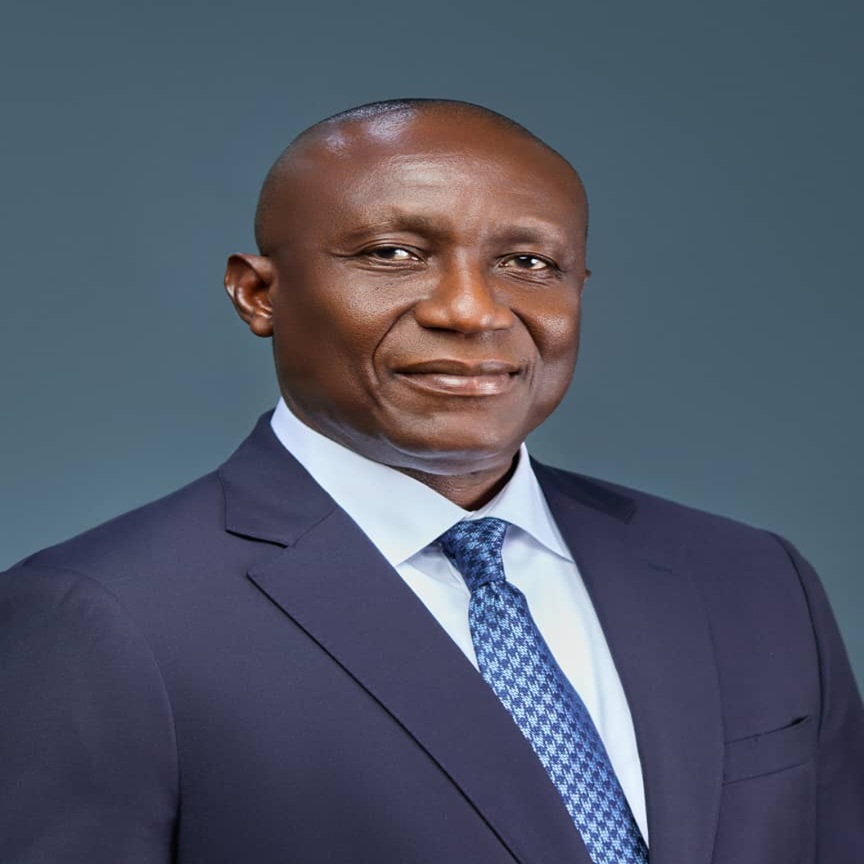
NOVA Bank Limited has announced the appointment of Jude Anele as its Managing Director and Chief Executive Officer, following the approval of the Central Bank of Nigeria.

Jude Anele
The appointment comes at a pivotal moment in the Bank’s evolution, following its transition from merchant banking to commercial banking and the successful completion of its recapitalisation programme ahead of the March 31, 2026, regulatory deadline.
Anele brings more than 33 years of banking experience across West and Central Africa, with deep expertise in retail / commercial banking, corporate banking, risk management, institutional transformation and executive leadership.
Over the course of his career, he has led complex banking operations, strengthened governance frameworks, delivered sustainable revenue growth and built high-performance teams.
The appointment reflects the Board’s strategic commitment to consolidating NOVA Bank’s commercial banking platform while accelerating growth across its Corporate, Commercial and Retail segments, as well as priority markets.
Speaking on his appointment, Anele said he was honoured to assume leadership of the Bank at a defining stage of its growth.
“Nova Bank has built a strong institutional foundation defined by regulatory compliance, capital strength, disciplined governance and a clear commercial mandate.
“Our focus now is execution — deepening customer relationships, expanding responsibly across priority markets, strengthening risk discipline and delivering sustainable value to our shareholders,” he said.
The Bank’s Chairman, Phillips Oduoza, also expressed confidence in the new leadership.
“The Board is pleased to welcome Mr. Jude Anele as Managing Director and Chief Executive Officer. His depth of experience, strategic clarity and proven leadership record align strongly with NOVA Bank’s growth ambitions,” Oduoza said.
He added that with recapitalization completed ahead of the regulatory timeline, the Bank is entering a new phase defined by scale, stability and structured expansion.
NOVA Bank also confirmed that it has met the recapitalization requirements set by the Central Bank of Nigeria ahead of the regulatory deadline, reinforcing its capital adequacy and long-term financial stability.
The capital raise, supported by new and existing shareholders, further strengthens the Bank’s balance sheet and positions it for disciplined growth.
In 2025, Global Credit Rating reaffirmed NOVA Commercial Bank’s national scale long- and short-term issuer ratings of BBB(NG) and A3(NG) respectively, while Agusto & Co. reaffirmed the Bank’s “Bbb” rating with a stable outlook, reflecting its strong capital base, sound liquidity position and resilient asset quality relative to its risk profile.
NOVA Bank currently maintains operations in Lagos, Abuja, Owerri and Port Harcourt, with plans to open eight additional branches across key commercial hubs in 2026 as part of its expansion strategy.
The commissioning of the Bank’s regional office in Owerri marked a significant milestone in its South-East and South-South growth strategy.
The event attracted government officials’ business leaders and Nigerians in diaspora and underscored NOVA Bank’s commitment to supporting enterprise development and economic growth.
NOVA Bank Limited is a commercial bank licensed and regulated by the Central Bank of Nigeria. Commencing operations in 2018 as a merchant bank, the institution transitioned to a commercial bank in 2024 and provides retail, SME, corporate and commercial banking services through its Phygital model—an integrated approach combining physical branch presence with digital banking infrastructure.

Central Bank of Nigeria (CBN) has asked commercial banks to restrict loan defaulters, specifically large-ticket obligors, from accessing credit facilities.

A large ticket obligor is a borrower (an individual or company) that owes a very large amount of money to a bank.
The directive is coming a week after the CBN asked financial institutions to stress test.
It is uncertain if the two directives are connected or what may have triggered the loan-related instruction, but the apex bank said it furthers its mandate to protect Nigeria’s financial system.
“In furtherance of its mandate to promote a sound financial system, protect depositors, and enhance prudential compliance within the banking sector, the Central Bank of Nigeria (CBN) hereby directs all banks to restrict non-performing large ticket obligors, whose activities pose systemic risk to the financial system, from accessing specified banking services,” the circular reads in part.
“Any large-ticket obligor with a non-performing facility recorded in the CRMS and/or any licensed private credit bureau shall not be granted additional credit facilities. For the purpose of this restriction, credit facilities include loans and other forms of direct credit.
“In addition, such obligors shall not be granted banking facilities or contingent liabilities such as bankers’ confirmations, letters of credit, performance bonds, or advance payment guarantees.”
On strengthening collateral coverage, the CBN asked financial institutions to obtain additional realisable collateral from such obligors to adequately secure existing exposures.
The CBN said large ticket obligors are borrowers whose exposures are as defined under Clause 3.2 (d) of the prudential guidelines for deposit money banks in Nigeria 2010, or a customer with a combined exposure across banks, as shown in the credit risk management system (CRMS), and/or as shown in the reports of a licensed private credit bureau, “that exceed the Single Obligor Limit (SOL), which materially affect a bank’s Capital Adequacy Ratio (CAR) or otherwise pose a systemic risk to the financial system”.
“This directive reinforces earlier measures, particularly the circular titled “Prohibition of Loan Defaulters from Further Access to Credit Facilities in the Banking System” issued on June 30, 2014 (Ref: BSD/DIR/GEN/LAB/07/015). This is to ensure consistency and effectiveness in curbing credit abuse by large-ticket obligors,” the circular further reads.
The regulator said it will monitor compliance with the directive to ensure consistent implementation across the banking industry.
The CBN warned that noncompliance would attract appropriate regulatory sanctions in line with the provisions of the Banks and Other Financial Institutions Act (BOFIA) 2020.
Nigerian banks are undergoing a recapitalisation programme, slated to end by March 31.
So far, about 30 banks have met the minimum capital requirements announced in March 2024.

Tech Expert Unveils BAT-BOT AI App to Curb Fake News ahead of 2027 Elections

MTN Nigeria Races Ahead in Fibre Broadband Market

CBN Tightens BVN Rules to Curb Fraudulent Banking Transactions

Nova Bank Appoints Jude Anele as Managing Director/CEO

VDT Communications Achieves Two Prestigious Certifications ISO /IEC 27001:2022, ISO/IEC 27032:2023 Reinforcing its Leadership in Broadband Service Provision

Kaspersky Discovers New Phishing Campaign Exploiting Google Tasks Notifications to Steal Corporate Credentials

esentry 2025 Report Shows Healthcare, Financial Services and Telecoms as Staging Grounds for Increased Cyberattacks in Africa

AfDB, UNDP Launch $10Bn AI Initiative for Africa

Mutual Benefits Assurance Settles ₦5.9bn Claims in January 2026

Pheelz Shares His Journey on Glo-Sponsored African Voices




 General News2 days ago
Interswitch Advocates Trust-Driven Infrastructure as Cornerstones of Africa’s Cross-Border Capital Future

 News2 days ago
NLNG Advances Media Excellence with Change Your Story Workshop

 E-Business2 days ago
Why JustMarkets Is a Strong Choice for Gold Trading

 E-Financial2 days ago
CBN Orders Banks to Restrict Access to Banking Services for Loan Defaulters

 E-Financial2 days ago
UBA Business Series Celebrates ‘Gen.W: The Evolved Woman’ in Push for Female Empowerment

 Telecom2 days ago
NDPC Warns Content Creators Against Privacy Violations in Viral Videos

 General News2 days ago
FCCPC Launches Fuel Price Surveillance, Probes Airline Price Gouging, Resolves N10bn Complaints

 E-Financial2 days ago
Recapitalisation Without Transformation is a Risk Nigeria Cannot Afford