

Broadcasting
To realise the promise of AI in Africa, we need to make AI work for workers

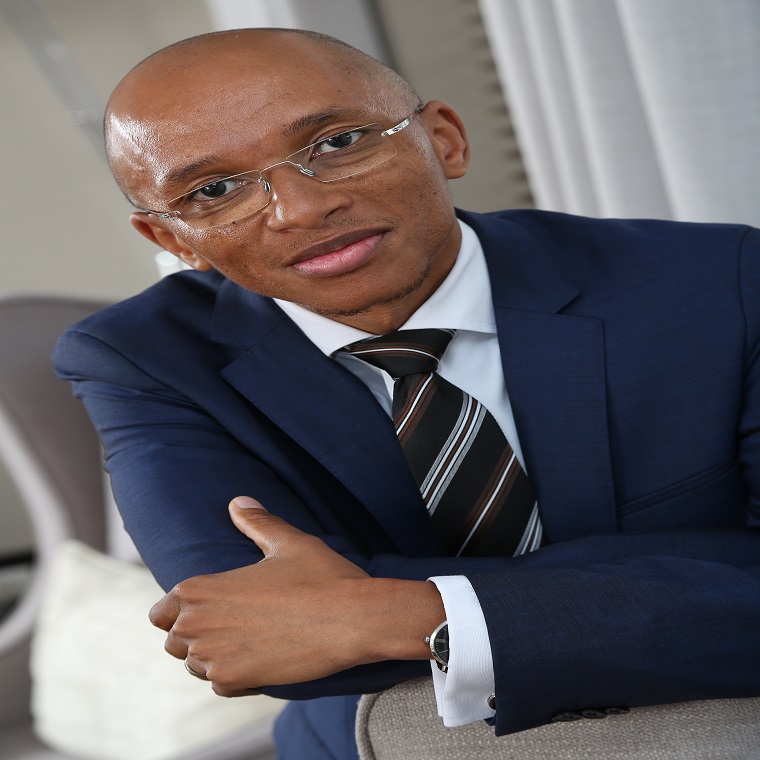
By Zuko Mdwaba,
Just as generative AI continues to open opportunities for businesses in Africa to change customer experiences and increase revenue, the benefits for workforce strategies and employees can be significant.

Indeed, executive urgency to incorporate AI tools into business operations has increased seven times over the past six months, according to Slack research.
The AI-powered future of work isn’t just about efficiency, it’s about employee experience – and it promises to redefine everything from careers to culture. But to make this future a reality, AI has to work for workers. Businesses need to create a workplace where humans and AI agents work successfully side-by-side.
To help employees understand where they are on their AI journey – and leaders know how best to support them -Slack’s Workforce Lab identified five distinct AI personas in the workplace today.
The biggest group currently are ‘Maximalists’ (30%), who use AI multiple times a week to improve their work. Next are ‘Undergrounds’ (20%), those who use AI often, but are hesitant to share with their colleagues that they are doing so.
Whereas ‘The Rebels’ (19%) avoid using AI and consider it unfair when coworkers engage with these tools, Superfans (16%) are excited, but aren’t yet making the most use out of it at work. Observers (16%) have yet to integrate AI into their work. They are watching with interest and caution.
By not adopting AI now, companies and employees alike risk missing out on tangible benefits — from improving efficiencies, to overall performance and productivity, to wellbeing.
Empowering employees to leave repetitive tasks to bots, so they can focus on more meaningful work isn’t just good for employees, it’s also good for business.
At Salesforce, we prioritised four enterprise-wide solutions designed to help enhance goal-setting, automate daily tasks, find information faster, and streamline support — all while freeing up our employee success and IT teams to focus on more complex tasks.
Making AI work for workers requires leaders reimagining how they develop and train every part of their organisation. With perspectives and experiences of AI among desk workers varying so widely, a tailored approach to AI enablement is essential to setting every employee up for success.
Three key actions leaders can take to encourage AI adoption are: creating a culture of continuous learning, giving visibility to use cases of AI, and encouraging experimentation.
Clear permission, guidance and training are critical to fostering AI adoption. Only 15% of desk workers say they have the education and training necessary to use AI effectively.
Those who are trained to use AI are up to 19x as likely to report that AI is improving their productivity.
Sharing how others are using and benefiting from AI tools, and troubleshooting AI use cases, will help clarify AI norms and encourage more employees to share their own AI learnings.
Thirdly, the benefits of creating a trusted environment where teams feel supported to try new technologies are clear. Desk workers who feel trusted by their employers are 94% more likely to have tried AI for work-related tasks.
This explains why at Dreamforce 2024, Salesforce announced plans to expand access to skilling opportunities with free AI training for anyone.
The company will waive all fees for its paid instructor-led courses and credentialing through the end of 2025, totaling an anticipated $52 million investment.
To support these efforts, Salesforce will open new spaces at its San Francisco headquarters, including a pop-up AI Center for in-person community AI training courses, and dedicated floor for employees to skill up on AI tools and agents.
Salesforce’s new offerings will help skill up the workforce to address this AI skills gap and set up workers for success now — and in the future.]
Across the company, Salesforce is helping upskill its 72,000 employees by introducing global quarterly AI learning days to give employees hands-on time with the latest AI innovations.
As we build a culture of experimentation and encourage people to find ways to improve work with AI, we also have to change how we measure impact.
Rather than measuring productivity through the lens of activity or input metrics—such as time spent on a task, focusing on defining clear outcomes—such as customer satisfaction or developing new product offerings—will encourage employees to shift from mere busywork to using their time to be creative and employing whatever tools they have to achieve those outcomes.
As AI innovation and workplaces continue to change fast, employers must evolve to help employees — and ultimately their customers — be successful.
Ensuring employees collect different experiences, skills, networks, and expertise with AI will allow them to thrive in the AI-driven future.



MultiChoice has said that it will not implement its customary yearly price increase on DStv and GOtv subscriptions.

This is the first time the Pay-TV company will not be adjusting its price in April, as it has in previous years, signalling a clear shift in direction under its new owner, Canal+.
The decision, confirmed by David Mignot, group chief executive,MultiChoice in an interview with TechCentral, comes as the pay television operator grapples with steep subscriber losses across its markets.
For many households accustomed to annual April tariff adjustments, the announcement will be a welcome break.
Responding to questions about whether DStv prices would rise in April as they have in previous years, Mignot gave a firm response: there will be no increase.
He explained that the company’s immediate focus is on rebuilding its subscriber base, making this an unsuitable period to adjust prices upward.
He added that while there are no current plans for a price hike, the company has not completely ruled out adjustments later in the year, especially if economic conditions demand it, such as significant currency movements.
MultiChoice has historically reviewed and raised DStv subscription fees in April, often citing inflationary pressures and rising content costs. As recently as April 2025, bouquet prices were adjusted upwards by between 2.1 per cent and 7.9 per cent.
The DStv Premium package rose from R929 to R979 per month, while DStv Access, the entry-level satellite package, recorded one of the steepest increases.
This year’s pause represents a break from that pattern and forms part of a broader reset following Canal+’s acquisition of MultiChoice in September 2025.
Mignot, who brings three decades of experience in the pay television industry, summed up his mission in simple terms: halt subscriber losses and return the business to growth.
The urgency behind the move is evident in MultiChoice’s recent performance.
The group has lost 2.8 million linear broadcasting subscribers in the two years ended 31 March 2025, with roughly half of those losses occurring in South Africa.
In the financial year to end-March 2025 alone, MultiChoice shed 1.2 million subscribers, representing an eight per cent year-on-year decline and leaving the group with 14.5 million active customers.
The previous year saw an even steeper drop of 1.6 million subscribers. By June 2025, Canal+ indicated that the pace of decline had intensified further.
The financial impact has been significant. Revenue for the year ended 31 March 2025 declined by R4 billion to R52 billion, while trading profit fell sharply by 49 per cent to R4 billion.
According to Mignot, the company’s difficulties stem less from its programming slate and more from weaknesses in its commercial execution.
He argued that in subscription businesses, a churn rate of between 12 and 15 per cent annually is inevitable as customers relocate, experience job losses, adjust household budgets, or change priorities. Without attracting a comparable number of new subscribers each year, losses accumulate.
Mignot maintained that the content offering remains strong, particularly in sport and general entertainment. He cited flagship brands such as SuperSport, M-Net and Africa Magic as evidence of sustained investment in programming. However, he stressed that content strength alone cannot offset a weakening subscriber acquisition engine.
He noted that MultiChoice’s commercial machinery had performed robustly across Africa until around 2022, describing the current challenges as relatively recent.
Drawing on Canal+’s experience in French-speaking African markets, Mignot pointed out that pricing there has remained largely unchanged for close to 14 years, supported by a volume-driven approach. He described his strategy as one focused on growing subscriber numbers while maintaining profitability.
While he did not dismiss the possibility of reviewing prices downward in future, he indicated that no such decision has been taken.

Spotify marked five years in Nigeria since its February 2021 launch with dramatic year-on-year listening growth averaging 163.5% through 2025, featuring triple-digit surges early on and sustained momentum, propelled by Afrobeats streams rocketing +5,022% alongside booming genres like Amapiano (+10,330%), Gospel/Praise (+5,499%), Hip-hop/Rap (+3,020%), and R&B (+2,602%).

Spotify
Indigenous language music listening surged +554% in Nigeria in 2024 and +87% in 2025, with global growth at +141% and +41% respectively, underscoring rising demand for local storytelling sounds.
The platform’s Nigerian artist roster expanded +158%, fueling a discovery boom where average listeners (aged 26) streamed 150 different artists recently; users created over 25 million playlists, logged 1.4 million play hours in 2025 alone, and streamed 59 billion podcast hours total.
Top Artists (2021-2025): Asake, Wizkid, Seyi Vibez, Burna Boy, Davido.
Top Songs: “Remember” (Asake), “Dealer” (Ayo Maff & Fireboy DML), “Awolowo” (Fido), “Kese (Dance)” (Wizkid), “Lonely At The Top” (Asake), “Joy is Coming” (Fido), “With You” (Davido feat. Omah Lay), “Terminator” (Asake), “MMS” (Asake feat. Wizkid), “Doha” (Seyi Vibez).
Nigeria’s debut stream was Shiga Lin’s Cantopop epitomizing borderless discovery from day one.


Nigerian singer, songwriter and producer Pheelz (Phillips Kayode Moses) is set to feature this weekend on African Voices Changemakers, the flagship magazine programme on CNN International.

The 30-minute episode, sponsored by digital solutions company Globacom, premieres on Saturday, February 21, 2026. In a candid sit-down with host Larry Madowo, Pheelz opens up about his journey from church musician to global hitmaker, reflecting on the intersections of faith, fame and the expanding influence of Afrobeats on the world stage.
Now 31, Pheelz began his musical path as a multi-instrumentalist in church before earning widespread acclaim in 2012 as the producer behind the hit tracks “First of All” and “Fucking with the Devil” on Olamide’s YBNL album. His rapid rise saw him named among NotJustOk’s Top 10 Hottest Producers in Nigeria in 2013.
He further solidified his reputation by producing nearly every track on Olamide’s Baddest Guy Ever Liveth, earning nominations at The Headies 2013 and in the Producer of the Year category at both The Headies 2014 and the Nigeria Entertainment Awards. In 2020, he clinched The Headies Producer of the Year award, and in 2021 secured the Soundcity MVP Award for Best Collaboration for “Finesse,” his smash hit with Bnxn (formerly Buju).
On the programme, Pheelz reflects on the experiences that shaped his sound and creative philosophy, discusses landmark collaborations, shares his perspective on artificial intelligence and artistry, and explains why sound, storytelling and culture remain central to African music’s global resonance.
The show airs on DSTV Channel 401 at 8:30 a.m. (WAT) on Saturday, with repeat broadcasts at 12:00 noon the same day; Sunday at 4:30 a.m. and 7:00 p.m.; Monday at 4:00 a.m. and 6:45 p.m.; and Tuesday at 6:45 p.m. The broadcast schedule continues through Monday of the following week.

Kaspersky Discovers New Phishing Campaign Exploiting Google Tasks Notifications to Steal Corporate Credentials

NITDA Equips Federal Character Commission with Data Tools to Drive Public Sector Reform

Telecom Giant MTN Injects N1.0 Trillion CAPEX into Network Expansion

History is Watching: Tinubu’s Moment to Rescue Nigeria’s Stolen Future

Samsung Unveils Galaxy S26 Series, Powered by Smarter, Background AI

Kaspersky Launches OT Calculator to Align Cybersecurity Investments with Business Goals

Accidental Billionaire Opts for Jail Instead of Returning Money Credited Him by Mistake

Why the Future of PR Depends on Healthier Client–Agency Partnerships

New Horizons Nigeria Breaks Ground: First to Fuse Mandarin into ICT Curriculum

Kaspersky Brings more Transparency to Threat Detection with New Hunt Hub




 E-Business3 days ago
AfDB, UNDP Launch $10Bn AI Initiative for Africa

 Telecom3 days ago
Grey Expands Cross-Border Banking with USD Accounts, USDC Support

 General News2 days ago
KPMG Strengthens Africa Leadership to Support Long‑term Growth Across the Continent

 News3 days ago
Obasanjo, Vanguard’s Amuka Lead Prayers for Zinox Chief Leo Stan Ekeh @70

 News3 days ago
DG NITDA Reaffirms FG Commitment to Responsible, Inclusive AI

 News3 days ago
Lotus Bank, REA Seal N100Bn Deal to Power Rural Nigeria

 E-Financial3 days ago
CBN Cuts MPR by 50bps to 26.50% as Inflation Eases for 11th Month

 E-Financial3 days ago
Kuda Bank Teams Up with Lovers & Frnds for Inclusive Valentine’s R&B Bash