

General News
What the Recent Oil Disruption Means for Nigeria


By Lukman Otunuga, senior,Research Analyst,FXTM
The unprecedented Oil disruption in Saudi Arabia in September shocked the markets and triggered multiple financial reactions for investors across the globe.
Oil prices exploded 20 percent higher on Monday September 16 after attacks on Saudi Oil fields caused disruptions of 5.7 million barrels per day, roughly five percent of global Oil supplies. Oil later gave back gains after Saudi Arabia pledged that Oil production would be up and running by the end of September.
However, there are doubts that the damage – which is thought to run into the hundreds of millions of Dollars – will be fixed so quickly.
Dynamic influencing Oil market swing back and forth
The uncertainty is also disrupting Oil prices, which spike intermittently before calming on data like the US Energy Information Administration’s (EIA) report about a 2.4 million barrel build in Crude oil inventories on September 25.
On top of that, geopolitical tensions in the Middle East add more concerns for the short-term future of Oil markets.
Going forward, Oil prices are expected to be more sensitive to negative supply shocks, at least in the short term. If the serious tensions between Iran and the US escalate, Oil prices may be supported with a degree of upside potential.
OPEC continues with its quest to stabilize markets
Another factor to consider is OPEC’s reaction and possible change of mind over its supply cut policy. As recently as September 12, OPEC persuaded Nigeria to join supply cuts to prevent a global glut from drastically undercutting prices and Oil revenues for Oil-producing countries. The supply-side circumstances have changed considerably since then.
Recent reports have revealed that OPEC’s oil output fell to an eight-year low in September, pumping 28.9 million barrels per day (bpd) which was down 750,000 bpd from August’s revised figure and lowest monthly total since 2011.
Should Saudi Arabia experience more attacks or take longer than expected to restore normal Oil production from the damaged facilities, OPEC may need to reconsider supply cuts and increase production so its members can meet global supply demand.
At the time of writing, Nigeria’s Light Sweet Crude Oil Kwa Ibo and Bonny Light are trading at their normal level of $3 above the Brent Crude benchmark because Saudi Arabia has pledged to be back to normal light Crude oil production levels by the end of September. In the meantime, Saudi Arabia has restored output to 11.3 million barrels per day but is relying on sales of heavy Crude oil. Should Saudi Arabia disappoint the market’s expectations, light sweet Crude oil prices may change in Nigeria’s favour.
Overall, given how Oil sales account for roughly 70 percent of government revenues and 90 percent of Nigeria’s foreign exchange earnings, if the recent disruption results in a net rise in Oil prices, it could offer short-term support to the nation.
Impact on Nigeria’s economic growth
As an emerging market energy exporter, the prospects of rising Oil prices should feed back into Nigeria’s economic growth. Higher Oil prices would boost the nation’s foreign exchange reserves, promote foreign exchange stability and boost government spending in economic infrastructure which in turn would be positive for growth.
On the other hand, Nigeria’s fiscal and monetary policy makers must always be on the lookout for inflationary pressures. In August, inflation in Nigeria fell to 11.02 percent, a 43-month low. But higher Oil prices may squeeze company and consumer transportation budgets, re-igniting inflation.
Higher Oil price could hit consumer spending
The flip side of higher Oil prices is the risk of rising inflation. This would likely drag on consumer spending and complicate central bank efforts to ease monetary policy, which may end up pressuring economic growth.
On a larger scale, the threat of a global recession lurks around the corner. Rising Oil prices could also threaten global growth with higher running costs.
While Nigeria and energy producers would welcome higher Oil prices, everyone will lose if unaffordable costs tip the global economy into recession.
Diversification remains the cure to Nigeria’s oil dependence
In September, the Central Bank of Nigeria (CBN) left interest rates unchanged at 13.5 percent. Movements in the Oil markets have a direct impact on CBN’s rate decisions, so I am closely watching developments in this area. Especially when considering how the CBN Governor wants inflation to slow to 9% or less before he considers cutting interest rates further.
Long term, for Nigeria to reduce exposure to Oil volatility, the quest for diversification needs to build momentum. Nigeria could source growth from non-Oil sectors like Agriculture and Services.
In conclusion, until diversification reduces Nigeria’s dependence on Oil revenues, the economy remains vulnerable to Oil price volatility and an uneven demand-supply equation.


General News
PalmPay Strengthens Data Protection Culture with Employee Privacy Workshop and Privacy Champions Programme

PalmPay has reinforced its commitment to responsible data governance and customer information protection through a specialised two-day data protection workshop for employees and the launch of its internal Privacy Champions Programme, an initiative designed to strengthen awareness, accountability, and responsible data handling across the organisation.

The initiative comes at a time when data protection is increasingly critical following recent reports of recorded 281,500 compromised user accounts in the first quarter of 2026, ranking 34th among the world’s most breached countries, according to a new quarterly data breach analysis by cybersecurity firm, Surfshark.
Facilitated by the Nigeria Data Protection Commission (NDPC) and leading Data Protection Compliance Organisation (DPCO) TechHive Advisory, the two-day workshop equipped employees with practical knowledge on privacy governance and data protection obligations, incident awareness, and the role each employee plays in protecting personal data.
The initiative forms part of PalmPay’s ongoing efforts to advance compliance with the Nigeria Data Protection Act (NDPA) 2023. It also reflects the company’s continued investment in safeguarding customer information and fostering a culture where privacy remains everyone’s responsibility.
The Privacy Champions Programme establishes a network of employee representatives across business functions who will support awareness, promote best practices and help strengthen the organisation’s privacy culture. By integrating privacy considerations into day-to–day activities the initiative aims to further enhance accountability and reinforces customer trust.
Speaking on the initiative, Managing Director of PalmPay, Chika Nwosu, stated: “At PalmPay, protecting customer information is fundamental to maintaining the trust our customers place in us everyday, and remains central to our operations. Statistically, 10 out of 100 Nigerians have been affected by data breaches.
Hence, we have a greater responsibility to ensure that personal information is collected, processed, stored, and protected responsibly. This specialised training reflects our continued investment in strengthening internal awareness and ensuring our teams remain equipped to uphold the highest standards of data privacy and protection.”
As a digital financial services platform serving millions of users, PalmPay reaffirmed that privacy and data protection remain embedded in its operational culture, with continuous investments in data governance practices.
PalmPay also encourages customers to remain vigilant and adopt safe digital practices, including protecting account credentials, exercising caution when sharing personal information online, and reporting suspicious activities promptly. The company maintains that building a secure digital ecosystem requires a shared commitment from organisations, regulators, and users alike.

The Gathering on 100 made its latest stop in Enugu over the weekend, bringing together hundreds of young Nigerians for a day of networking, fun, entertainment, and business opportunities.

The event, previously held in Lagos and Aba, arrived in Enugu as the city gains recognition as one of Nigeria’s emerging innovation and startup hubs. Recent ecosystem reports rank Enugu among the country’s leading startup cities. The South-East region now accounts for more than half of identified startups across the South-East and South-South, highlighting the region’s growing role in Nigeria’s entrepreneurial landscape.
A major highlight of the Enugu edition was the Pitch-a-thon competition, where three entrepreneurs received a combined ₦5 million in grants to support their business growth. More than 100 entrepreneurs applied for the competition, with 10 finalists selected to pitch before a panel of judges. At the end of the contest, Velas Global Nutrition Limited emerged as the overall winner, securing ₦2.5 million. Werxio, founded by Donatus Prince, received ₦1.5 million, while Whipcare Company was awarded ₦1 million.
These grants address a persistent funding challenge. According to the Small and Medium Enterprises Development Agency of Nigeria (SMEDAN), the country is home to over 39 million MSMEs, contributing nearly half of Nigeria’s Gross Domestic Product and accounting for about 84 per cent of employment nationwide. Despite this, access to finance remains a significant obstacle to business growth.
For Chizoba Osuji, founder of Velas Global Nutrition Limited, the funding facilitates the expansion of a business built on years of research. Her company processes indigenous crops into shelf-stable blends, supporting nutrition and local women smallholder farmers. “This is motivation to keep making Nigerians healthier through better food,” she remarked, noting the grant will fund semi-automated equipment to increase production capacity to 20 tonnes monthly.
She added that the ₦2.5 million grant would be used to acquire semi-automated equipment capable of increasing production capacity to about 20 tonnes monthly. Beyond increasing output, the expansion is expected to create additional opportunities for women smallholder farmers across the South-East who supply many of the raw materials used by the company.
Speaking on the initiative, MTN’s Regional General Manager (Sales), Callima Inino, represented by Peter Kajovo, said The Gathering on 100 was designed to provide young Nigerians with platforms to connect, learn, showcase their talents and access opportunities that can help them grow.“We want to encourage youths to live their best lives and have fuller expressions of themselves,” he said.
As the Enugu edition concludes, the energy of the South-East’s startup scene remains evident. The Gathering on 100 continues its nationwide tour, connecting more young founders with the visibility and support they need. Stay tuned to discover where the tour will land next as it moves to its next exciting location.
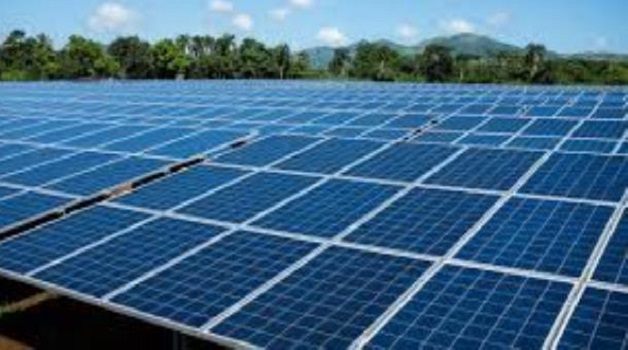
Renewable energy firm Daystar Power Group has expanded its installed solar capacity across West Africa through a partnership with Nestlé, bringing total deployments to 6,884 kilowatt-peak (kWp), or nearly 7 megawatts (MW), in what the company describes as one of the largest commercial and industrial solar partnerships in the region.

Four manufacturing facilities across Nestlé sites in Côte d’Ivoire, Ghana and Senegal are now operational, with installations located in Abidjan, Tema and Dakar.
Daystar Power has installed 3,447 kWp across two sites in Abidjan, Côte d’Ivoire. In Ghana, a 2,547 kWp system powers Nestlé’s Tema factory, while in Senegal an 890 kWp installation operates at the Dakar facility.
The company said each system is designed to deliver measurable environmental impact, including reduced greenhouse gas emissions and improved energy resilience.
The installations are tailored to local operational and grid conditions to ensure reliable renewable energy supply while supporting Nestlé’s net-zero ambitions and its commitment to reducing greenhouse gas emissions.
“Nearly 7MW across four Nestlé facilities is a number we are proud of, but what it represents matters more than the figure itself. It means that one of the world’s most demanding manufacturers has tested our model, trusted it, and come back. Our job now is to keep earning that across every market where industry needs energy it can count on,” said Yischai Beinisch, CEO of Daystar Power Group.
Samer Chedid, CEO of Nestlé Central and West Africa Region, said: “This investment reflects our commitment to building a business that not only grows but does so responsibly.
“By advancing solar energy projects in Ghana, Côte d’Ivoire and Senegal, we are embedding sustainability into our growth, reinforcing our role as a force for good, creating long-term value for communities and ensuring that our footprint actively contributes to a cleaner, more resilient future.”

FCMB Turns Normal Banking into Rewards with New Mobile App Upgrade

Despite Warnings, FG Draws Down $1.5Bn as First Tranche of FAB $5Bn Loan Deal

PalmPay Strengthens Data Protection Culture with Employee Privacy Workshop and Privacy Champions Programme

Paystack Unveils AI-powered Payments Tools

NRS, CITN Deepen Partnership to Strengthen Tax Awareness

CBN Extends PoS Geo-Fencing Enforcement Deadline to August 2026

London Strengthens Global Investment Ties with Africa @ First Ever London-Africa Business Summit

FG Targets Alleged N3tn Capital Flight, Opens Airtime Credit Market to Nigerian Fintechs

Mobile Internet Gender Gap Widest in Africa – GSMA

Japan, UNESCO Boost Digital Learning in 15 CoEs with Donation of ICT Equipment




 Telecom2 days ago
NITDA Unveils Bold Vision to Make Nigeria an AI Powerhouse

 E-Business2 days ago
Privacy Crisis May Undermine Local Hosting of Data by Banks, Fintechs

 Telecom2 days ago
GSMA Launches Global Satellite Regulatory Playbook to Help Policymakers Build Future-Ready Connectivity Frameworks

 Telecom1 day ago
6 Easy Ways to Enjoy the 2026 World Cup with Google and Gemini

 E-Business2 days ago
How to Build a Safer Cyberworld for People, Business, and Society

 General News2 days ago
Nestlé Commits to Boosting West Africa Solar Rollout Through Partnership

 Telecom2 days ago
Airtel Africa Foundation Launches Airtel Green Schools to Promote Sustainability Education in Nigeria

 General News2 days ago
NCGC, SMEDAN Partner on MSME Financing Support