

Telecom
Current and New Dimensions for SATCOM Network Services Driving IoT & IoE for 5G

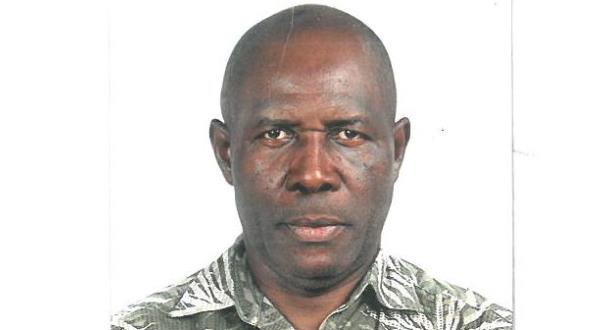
By Andrew Aroh
- Today Access to the Satellite resources is as simple as pointing the dish and transmitting/receiving: This is because Satellite Coverage is Ubiquitous, the bandwidth is instantly available and it can be directed /redirected without any last mile issues.

- Satellite communications enhances economic, educational and health standards more than any other form of technology. In turn, higher economic and social standards are attracting foreign investment, which creates employment opportunities which leads to increased exports, which yields stronger hard currency earnings.
- Increasingly, there is a recognition by regulators, operators and service providers that new job opportunities, foreign investment, and digital economic strength are counted among the many advantages of permitting the provision of effective broadband communications.
- In SATCOM digital realization, we are looking at payload with high-speed and low power characteristics, whilst having radiation hardness.
- The frequency spectrum for broadband (Ka-band/V-band) has higher power and therefore will be used for high-bandwidth interactive services such as high-speed internet, video conferencing and multimedia applications.
- Note that NGN is expected to integrate wired/cabled and wireless networks into an all-IP network. Based on the above, a rejoinder to WRC-19 has shown that the following characteristics are vital for essential communications operation of NGNs:
- Coverage
- Capacity/throughput
- Flexibility/scalability
- Interoperability
- Access & control
- Quality-of-service
- Protection/Security
- The required increases in spectrum will provide the following:
- Continuous connection
- Greater capacity
- More data
- More users
- Faster speed
- Faster response time (latency) for connections.
- 5G is accompanied with development of Architectures leveraging Network Function virtualization (NFV) and software defined networking (SDN) both at the core and edge of the network providing:
- Increased computing power
- Scalability
- Reduced operating cost
- Business models to enable differentiation
- 5G will push the boundaries of throughput and capacity further beyond that of 4G to enable newer types of applications and services in the domain of:
- Health
- Transport
- Entertainment
- Machine-to-machine communications
- Security etc.
- 5G is virtually instantaneous opening up a new world of connected applications/devices (IoTs) leading to a huge shift towards a landscape dominated by WIRELESS CONNECTIVITY
- ITU SATELLITE CORE DESIGN PRINCIPLES (Development philosophy) which drives innovation in ICT:
- Make it simple, efficient, scalable, work anyplace, anytime no matter what the connectivity requirements
- The Technology is developed to a universal set of requirements (outlined below) to enable service providers to meet any customer need no matter the application, bandwidth, or satellite network topology:
- Everything is integrated
- Efficiency rules
- Scalability pays
- Flexibility matters
- Intuitive management prevails
- How do you prorate a new ICT device/product:
- Allows customers to generate new revenues
- Enhance Network performance
- Reduce Operating Cost
- Can operate with multiple carriers of different bandwidths.
- A new dimension in efficient satellite network solution:
- Features:
- Multi-frequency TDMA (MF-TDMA)
- Full mesh, star or hybrid (virtual network)
- Bandwidth on demand through DAMA
- Based on IP suite for internet
- Delivers cost-effective VoIP, Data, Video, DVB/DVB-S/DNB-S2/Extension
- From 105Mbps to 50Mbps or more to the Gbps range
- Multimedia
- True Broadband Triple-play:
- The emerging true broadband services are a combination of:
- Voice (making calls)
- Data (social media; email, browsing)
- Video (news, sports, entertainment, TV and broadcast; training, movies.)
- Most of these streaming and file-transfer based services have converged towards IP. Through a multiservice platform the different service over IP can be combined either in the Hub or the remote into a single carrier for efficient transfer at optimal service availability over a combination of fiber + terrestrial wireless + space wireless using ochestrantion.
- For true broadband (broadband 2.0) experience over satellite, the satellite MODEMs and terminals in the network implement the most efficient technologies:
- Adaptive code modulation (ACM) in the forward link.
- Adaptive return technologies using automatic in-route-selection (AIS)
- Embedded IP traffic enhancement software (aka cross-layer-optimization) through
- TCP acceleration
- Pre-fetching
- Compression/decompression
- The emerging true broadband services are a combination of:
- SEAMLESS INTEGRATION TO CREATE TRANSPARENT LAN SERVICES (TLS)
- With convergance in ICT we need integrated BROADBAND ACCESS & NETWORK PLANNING which provides high-speed data service that allows for the inter connection of different LANs across an extended campus, metropolitan area or nation network.
- Using VLANs Gigobit range LAN interface (such as 11011000Mbps Ethernet), TLS provides a much simpler solution to the customer for connection of disperate sites than other forms of WAN, such as frame relay or ATM.
- We need products and solutions that enable:
- Information exchange
- Accelerate information flow
- Ensure information delivery
- To make data communications systems:
- Faster
- More reliable
- More interoperable
- Standards-Based Satellite & Terrestrial RF Network Gateway Applications include:
- IP-over-Satellite Links
- IP over tactical/terrestrial wireless links
- IP over wired/cabled terrestrial links
- End-to-end communications over wireless links, with mobile nodes implementing space communications protocol standards by extending TCP/IP to maximize throughput and link utilization in the lossy, high-latency, asymmetric bandwidth environment typical of space and tactical/terrestrial RF communications links.
- Seamless integration with existing IP and Satellite/wireless RF network infrastructure transparent to most network functions.
- Support for BGP routing protocol for integration with existing IP network infrastructure and migration to IPV6.
INTERNET OF THINGS:
- The Internet of Things (IoT) refers to machine-to-machine communications.
- The IoT continues to grow as devices proliferate.
- Cisco estimates that 50 billion devices will be connected to the internet by 2020 and those connections will communicate data to analyze, plan, manage and make intelligent decisions autonomously.
- Connected IoT device like UAS sensors will keep soldiers and commanders connected to data needed to respond to the ever-changing battle field.
- When combined with collaboration and analytics, IoT data becomes part of a broader IoE (Internet of Everything) environment that promises to create a real-time information advantage.
- As the multitude of CONNECTED SENSORS and DEVICES grows while at the same time video surveillance and applications leverage the internet, the importance of physical and network security becomes even more critical.
THE INTERNET OF EVERYTHING
- The internet of everything (IoE) is a catalyst to take IoT to the next level by combining people, processes and technology with connected devices, sensors and other machines. This integration of IoT with human communications collaboration and analytical elements enables real-time decision advantages.
- The opportunity with IoE comes from its ability to link components via intelligent, programmable network.
- IoT is a critical part of this evolution, in which physical objects like vehicles, weapons and unmanned vehicles are connected to secure networks to create information dominance.
- The IoE is serving as a catalyst to change the landscape of the IT industry while transforming how to leverage network-based solutions.
- For defense, IoE holds the power to connect the battlefield with the digital world in ways that promise to fundamentally change military operations.
- An integrated architecture for IoE creates interconnected physical and virtual environments that combine IoT devices with secure virtualization, mobility, unified communications and other advanced technologies.
- The proliferation of unstructured imager and video data from a variety of sensors is creating new:
- Capture
- Storage
- Computing
- Exploitation opportunities
- To accommodate an influx of new devices without sacrificing security, they must be managed as part of an integrated architecture for IoE.
- The framework should leverage commercial product to avoid unnecessary government-modified devices that are more expensive to field manage and support.
- Security measures will be critical for protecting data on classified networks.
- Architecture suited to support IoE will include:
- Compute
- Storage
- Virtualization assets in the data center
- Secure network fabric for connectivity
- Voice and video-enabled secure mobile infrastructure
- Battlefield sensors
- Virtualization combined with advanced security from the network to application levels are essential to allowing high secure access to sensitive and classified information on multiple networks while lowering the risk of vulnerabilities.
- When properly designed and deployed, IoE will help to realize the vision of net-centric warfare while proving technology advantage for our connected war fighters.
- INTERNET OF EVERYTHING COULD TRANSFORM THE BATTLEFIELD: EVERYTHING CONNECTED.
- Today’s military is adapting to asymmetrical warfare and an evolving real-time threat matrix that require new approaches to military operations.
- In the midst of a technological shift from the fixed location work models of the PC era to the mobile, social, virtual and collaborative models of today, information advantage has become more important than overwhelming force.
- To address those needs the military is taking a leap forward by adopting new technologies and incorporating them into existing environment – all without sacrificing security and the ability to manage complex systems.
- The integration of military technology also unification of computing, storage and networks with sensors, devices and collaborative application.
- Security concerns surrounding IoE will be particularly important for military operators connecting to classified networks. Hence, network-aware intelligence and end-to-end physical security for video and all networked sensors must be at the heart of any military IoE solution.
- Today’s missions require ongoing, untethered interactions between soldiers, decision makers, subject matter experts and machines.
- Unification of sensors, video, voice, data collaboration and secure mobile computing is delivering next-generation battlefield capabilities.
- The potential exists to combine IoE technologies with big data analytics, trusted multilevel security capabilities, software-defined networks and virtualization – aware network infrastructure to deliver an integrated architecture for the battlefield.
- THE PROMISE AND CHALLENGE OF THE NEW CENTURY HIGH OVERHEADS.
- Advanced Satellite systems make vital contributions every day to:
- Science
- Connecting citizens and business for Internet of Things (IoT) as well as Internet of Everything (IoE).
- Gathering weather data for aviation, weather forecasting & climate change.
- Sending navigational signals for tracking, monitoring & control.
- Mapping earth, the planets and deep space & sea for information and security
- Defense
- Etc
- Advanced Satellite systems make vital contributions every day to:
- CURRENT AND NEW GENERATION SATELLITE NETWORKING TECHNOLOGY INCLUDES:
- Data networking constellations using LEOs & MEOs.
- New Generation Commercial Satellites with onboard processing (OBP) systems.
- New Military Satellites, such as SBIRS
- Next Generation Smaller Terminals
- CONCLUDING REMARKS: MAJOR TECHNICAL TRENDS COMMON TO COMMERCIAL AND MILITARY USERS:
- More powerful satellites are emerging
- More bps per Hertz
- Larger antennas onboard the Satellites
- More power are produced from the satellites
- Use of Ka-band, V-band and mmW increases bandwidth availability for mass market broadband
- Adaptive coding and Modulation to get even more bps per hertz (most of the time!)
- Standards are reducing the size and cost of earth station baseband equipment
- Continued move towards use of IP networking over satellite.
- More powerful satellites are emerging
- Andrew Aroh is President of SSPI Nigeria


ntel, has officially moved away from its traditional voice and data business, unveiling a major transformation that will see it focus on digital infrastructure, artificial intelligence and technology-driven services.

As part of the consolidation process, ntel unveiled The Next Frontier, a transformation agenda planned to see the firm transform into an integrated digital infrastructure, connectivity and real estate enterprise.
Its new focus is a now BET Agenda – anchored on three growth pillars, Beam, Eden, and Titan and the drivers said that the strategy reflected ntel’s commitment to creating new opportunities through technology innovation, infrastructure development, and strategic asset optimisation.
The launch comes as ntel continues its journey towards regaining spectrum assets, while actively leveraging strategic partnerships to redefine innovation in the telecommunications industry and unlock new pathways for growth.
Built on the company’s BET Agenda – anchored on three growth pillars, Beam, Eden, and Titan – the strategy reflected ntel’s commitment to creating new opportunities through technology innovation, infrastructure development, and strategic asset optimisation.

The launch comes as ntel continues its journey towards regaining spectrum assets, while actively leveraging strategic partnerships to redefine innovation in the telecommunications industry and unlock new pathways for growth.
The company also showcased a portfolio of initiatives designed to strengthen its position as a future-focused infrastructure platform.
Under Beam, ntel announced the launch of WakaGo, a global e-SIM solution that delivers seamless connectivity for international travellers, alongside AirFibre, a high-speed fixed wireless broadband service designed to provide reliable internet access for businesses.
Under Titan, the company highlighted its growing infrastructure business focused on tower development, fibre connectivity, duct infrastructure, colocation services, and infrastructure sharing solutions that enable operators, enterprises, and technology providers to expand efficiently and sustainably.
A major highlight of the launch was Eden, ntel’s real estate development platform, which is transforming NatCom’s extensive property portfolio into high-value commercial and residential developments.
To further push its transformation, the company unveiled three flagship projects. They are Eden Place, a premium multi-storey commercial development in Lagos’ prime business district.
There is also Nova Place, a modern commercial development strategically located within Port Harcourt’s growing technology and business hub.
Terenna Court, a premium multi-storey residential apartment development in Abuja.
Together, these projects demonstrate ntel’s ambition to unlock the full potential of its real estate assets through strategic partnerships, innovative design, and long-term value creation.
Speaking at the unveiling of The Next Frontier, Soji Maurice-Diya, managing director/chief executive officer, NatCom Development and Investment Limited (trading as ntel), described the initiative as far more than a business transformation strategy.
According to him, it represents the company’s commitment to building an integrated ecosystem that connects people, empowers businesses, drives digital inclusion, and creates sustainable economic value for Nigeria.

Airtel Africa Foundation, through Airtel Nigeria, has reaffirmed its commitment to developing Nigeria’s future workforce with a high-impact virtual masterclass designed to equip young people with the practical skills required to thrive in an increasingly technology-driven economy.

The Initiative, held to commemorate World Youth Skills Day 2026, themed “Skills for a Shared Future – The NextGen Advantage,” presented a platform on which experienced Airtel professionals provided mentorship and coaching to undergraduates, interns, and recent graduates for the current realities of formal work environments.
Organised on the auspices of the Airtel Employee Volunteer Programme (EVP), by which staff donate their time and expertise towards social programmes, the 90-minute virtual masterclass, which was attended by over 400 undergraduates and young professionals, extended the reach of the Foundation’s education and youth development programmes.
Speaking on the initiative, Chief Executive Officer of Airtel Nigeria, Dinesh Balsingh, said investing in young people remains one of the most impactful ways to build Nigeria’s future economy.
He said, “The future of work is changing faster than ever before, and success will increasingly belong to those who are equipped with the right skills, the right mindset, and the confidence to adapt. As an organisation, we believe that empowering young people with practical digital and professional capabilities is an investment in Nigeria’s future competitiveness.
Through our Employee Volunteer Programme, our people are sharing not just knowledge, but real industry experience to help shape careers, unlock opportunities, and prepare the next generation to lead in a digital world.”
Unlike traditional career seminars, the masterclass adopted an interactive learning model that offered participants the option to select specialised breakout sessions aligned with personal interests and career aspirations.
In his keynote remarks titled The Next Gen Advantage, Director, Corporate Communications and CSR, Airtel Nigeria, Femi Adeniran, noted that the future will be shaped by the skills to transform great ideas into impactful solutions.
He summed up the pathway to a future-ready career into five actions, namely learning continuously, solving problems, building a digital reputation, embracing Artificial Intelligence, and developing human skills.
“Technical knowledge remains important, but employers today are equally looking for adaptability, collaboration, communication, digital confidence, and the ability to learn continuously,” he said.
In the first general session titled Your Network is Your Net Worth, Adebimpe Ayo-Elias, Director, Human Resources and Administration, Airtel Nigeria, charged attendees to build character. The second general session themed Your Money, Your Future, delivered tips on budgeting and financial discipline was facilitated by Olakunbi Osigbesan, Head, Treasure, Smartcash PSB.
Following the general sessions were five breakout rooms, in which attendees were offered curated guides designed to develop contemporary workplace competencies.
The first session, Digital Transformation and Growth, led by Oyebowale Akideinde, General Manager, Digital and Innovation, Airtel Nigeria, presented a mechanism to leverage digital platforms for visibility and opportunity creation.
The CV Clinic and Interview Masterclass, which was led by Chidera Okoye, HR Outsourcing Lead, Airtel Nigeria, discussed practical recruitment strategies, including applicant tracking system (ATS)-friendly CVs, and the STAR interview framework.
A third session on Communication and Personal Branding, delivered by Sam Adeoye, Head, Public Relations, Airtel Nigeria, focused on value presentation, executive communication, and earned visibility, built on “V.I.R.A.L.”, a mnemonic device created for the attendees by the facilitator.
The programme also featured a dedicated session titled AI as Your Superpower, presented by Ezenwa Agbanusi, IT Governance Executive at Airtel Nigeria, in which participants discussed prompt engineering and AI-powered tools for enhanced learning, creativity, and workplace performance.
Corporate Social Responsibility Lead at Airtel Nigeria, Victoria Ndu, led the fifth breakout room on Emotional Intelligence, with a guide on building a high emotional intelligence quotient (EQ) for improved workplace and business performance.
By connecting future professionals directly with industry experts, the company continues to support the development of a workforce equipped to participate meaningfully in Nigeria’s rapidly evolving digital economy and contribute to shared prosperity.


U.S. ride-hailing giant Uber has agreed to acquire German food delivery company Delivery Hero in a deal valued at €12.7 billion ($14.6 billion), marking one of the largest transactions in the global food delivery industry.

Uber
The companies announced the agreement on Thursday, with Uber offering €41.50 per share for Delivery Hero, a Berlin-based company that has grown into one of the world’s largest online food delivery platforms.
Despite the announcement, Delivery Hero’s shares declined by 0.5 per cent in Frankfurt trading to €37.90.
Founded in 2011, Delivery Hero operates in more than 60 markets across Asia, Europe, Latin America and the Middle East.
The company has expanded beyond traditional restaurant delivery services into quick commerce, providing rapid delivery of groceries and other consumer goods.
Under the agreement, Uber will acquire Delivery Hero’s operations in 50 markets globally.
As part of the transaction, U.S.-based investment firm SSW Partners will acquire Delivery Hero’s businesses in 14 additional markets where the German company and Uber currently compete. The transaction is valued at approximately €1.4 billion.
Delivery Hero Chief Executive Officer and co-founder, Niklas Östberg, said the partnership would strengthen the company’s long-term growth by combining its local market expertise with Uber’s global technology and delivery platform.
“Uber’s global mobility and delivery platform and our shared commitment to innovation make this the right partnership to build on Delivery Hero’s strengths in local food delivery and quick commerce,” Östberg said.
Uber Chief Executive Officer, Dara Khosrowshahi, said the acquisition would expand the company’s delivery operations while creating new opportunities for merchants, consumers and delivery workers.
“A merger would extend affordable, reliable delivery to many millions more people in some of the world’s most dynamic economies, while creating more opportunities for merchants and couriers,” he said.
Delivery Hero’s management has unanimously recommended that shareholders approve the offer.
The companies said the transaction remains subject to shareholder approval and regulatory approvals, with completion expected in the second half of 2027.

FAAN to Replace Physical ID Check with V-Pass Biometric Verification

World Bank Says 79 Percent of Nigerians Still Trapped in Poverty despite Reforms

SEC Begins Drive to Recover Unclaimed Dividends

ntel Plays Down Calls and Data Services, Moves to BET Agenda

Nigeria Facing Rising Cybercrime Losses – Report

NRC, Ponzi Scheme Collapses Resulting Loss of Billions of Naira

Nigeria Launches FreeTV Nationwide

NASENI Moves to Digitize CCB’s 5m Assets Declaration and Operations

Lebara Nigeria Launches Lebara Play, Africa’s First Telecom-Owned Micro-Drama Platform

CANAL+ Partners Samsung to Pre-Load DStv Stream on New Samsung TVs In Nigeria, Other African Countries




 E-Business2 days ago
TD Africa Sponsors Check Point Secure 360 Summit to Boost Cybersecurity in Nigeria

 Telecom2 days ago
MTN Foundation, MUSON Celebrate Emerging Music Talents at 2026 Graduation Ceremony

 Telecom2 days ago
NITDA Calls for Digital Infrastructure Expansion to Drive Nigeria’s Industrialisation

 E-Financial2 days ago
Next Currency Crisis May Turn $300Bn in Stablecoins into National Currencies

 News2 days ago
Guinness Rolls Out Nationwide Consumer Rewards Promotion

 General News2 days ago
First Trustees Advocates Estate Planning as an Essential Tool in Every Wealth Creation Strategy

 E-Financial2 days ago
Gigbanc Nigerian Fintech Startup Closes Shop after 3 Years

 Broadcasting2 days ago
Mbunabo, Nigerian Filmmaker Accuses Ghana TV Stations of Pirating Nollywood Films