

Broadcasting
Is Your Work From Home Office Harming Your Health?

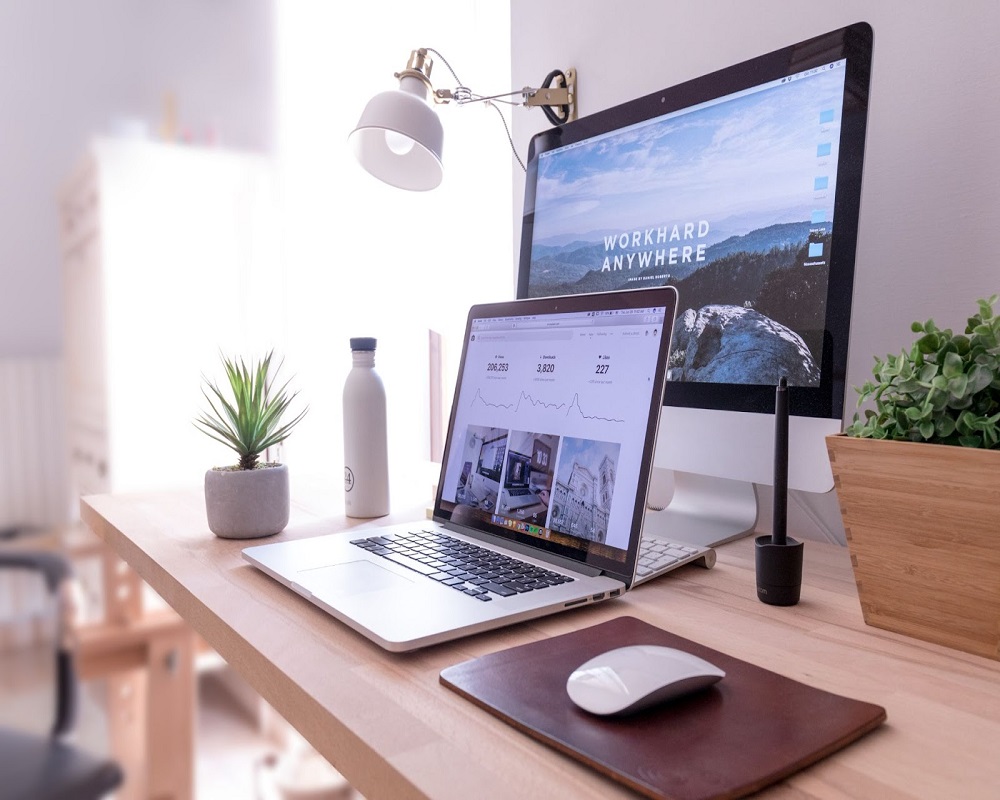

Working from home offers many comforts, such as your work commute being reduced to a few short steps and the “canteen” only as far away as your fridge, but there are health risks associated with it that you may not have considered.
Offices feature furniture specially designed for long hours of sitting, expertly placed overhead lighting, and computer screens set up at the correct height. Cleaning staff also regularly wipe down desks, vacuum and mop floors, and sanitise kitchens areas and bathrooms.
If your WFH office is a more casually set up affair, and you don’t have a regular cleaner coming in to help you, Aisha Pandor, CEO of home-cleaning service SweepSouth suggests taking these steps below to help mitigate health risks associated with WFH offices.
Don’t eat lunch at your desk
Most of us don’t think twice about eating at our desks, but research shows that it can be detrimental to our health. A study done by microbiologist Dr. Charles Gerba of the University of Arizona to measure bacterial levels in offices shows that personal work areas contain alarmingly high levels of bacteria.
Desks, in particular, are teeming with germs, and eating at your desk can turn it into a bacteria super fest. It’s not the fact that you’re eating at your desk that’s unhealthy, it’s crumbs and tiny food particles left behind that bacteria feast on. In fact, Dr. Gerbera says, the average desk harbours 100 times more bacteria than a kitchen table!
Your WFH desk can support 10 million bacteria, and without proper cleaning, even a small area may contain bacteria that can make you ill. Keep your work surface hygienic by regularly cleaning it with an antibacterial product.
Wipe germs off your keyboard
During the pandemic, we all became aware of the importance of washing our hands thoroughly, especially after being out in public spaces. But, says Aisha, it’s important to practise good hand hygiene throughout the day, even if we don’t leave our homes.
According to British microbiologist Professor Sally Bloomfield, our hands and the surfaces we touch are the superhighways for bacteria. And, because we touch our phones and keyboards so often, they top the list of the dirtiest items on our desks. Wipe them down weekly to keep them clean. It’s impractical to think you can turn your home into a sterile zone, but you can stop your WFH space from becoming a bacterial battleground. If it feels exhausting balancing work, home duties and cleaning, hire a domestic worker through SweepSouth Connect to help tidy and clean for a few hours each week.
3. Vacuum your workspace
Any bits of food or biscuit crumbs that fall onto the floor or into hard-to-reach areas behind your desk can attract rats and cockroaches, bringing even more germs into the fray. Clean the floor around your desk regularly, especially if you have carpets. Carpets feel great underfoot, but they act as a trap for dirt, hair and dust mites, warns Aisha. Humans lose around 1 million skin particles and between 50-100 strands of hair every day, which means that as you sit at your WFH desk quietly typing away, you’re also busy being a human shedding machine! Even air pollutants like pollen, fungi and cigarette smoke get trapped in carpet fibres, and can trigger allergies, asthma and eczema attacks. It’s best, say the experts, to vacuum carpets and rugs at least twice a week, and more in high traffic areas.
4. Sitting is the new smoking
We’ve all heard that sitting is the new smoking, with warnings that sitting at a desk all day can be a major health hazard. According to a study in the Annals of Internal Medicine, sedentary behaviour can raise the risk of developing a disease like heart disease or Type 2 diabetes. Even if you exercise every day, sitting for long periods can still be problematic. It’s key to get up every hour and do a quick stretch or walk for at least a minute or two. A longer walk will be even better, boosting your circulation and helping to keep your joints, muscles, and ligaments loose.
5. Is your chair hurting your back?
The chair you sit in is very important. Most WFH chairs are dining room or kitchen chairs, suited only for short sitting sessions. A good chair — ideally an ergonomically designed office chair — will support your back and reduce aggravation to the spine. It’s also vital to be aware of your posture. We tend to slouch without even noticing it when we’ve been sitting in a chair for too long, which places a lot of pressure around the hips and back and strains the spine. It’s not just slouching that’s bad, though — sitting up straight and curving your back too much can put strain on it, too. Lastly, add abdominal strengthening exercises to your exercise routine. Having strong abdominal muscles helps with proper spine alignment and can relieve the pressure that sitting puts on your lower back.
6. Try to minimise eye strain
With remote working, everything happens via your screen, from the work you’re doing to Zoom meetings held with colleagues and clients, to the lunch you eat while checking emails on your phone.
Straining your vision can lead to blurry, overly sensitive eyes, watery or too-dry eyes, headaches, and Computer Vision Syndrome (CVS). CVS is characterised by blurred vision, acute headaches and severe eye irritation, caused by hours of looking at rapidly flickering screens, where eye muscles are unable to recover from the constant tension required to maintain focus on a close object. It’s a reversible condition, but symptoms may become more severe if you don’t change the way you use screens.
Make sure your computer monitor is placed slightly below eye level and about 60cm from your eyes, adjust the screen’s glare so that it’s not too bright, and reduce the amount of light that falls onto your monitor. If your desk is close to a window, use blinds or curtains to eliminate brightness.
Most importantly, take frequent breaks. Our eye muscles contract when we look at something close by, and relax when we look away, so every 30 minutes, try to look away from your screen for a short period of time.
Working from home offers so many perks, but it can be intense. Make it both productive and enjoyable by taking regular breaks to lessen the stress on your body and health.


Socio-Economic Rights and Accountability Project (SERAP) and the Nigerian Guild of Editors (NGE) have jointly sued the National Broadcasting Commission (NBC) over what they described as an “arbitrary, unconstitutional, and unlawful” threat to sanction broadcast stations and presenters.

The development was disclosed in a Sunday statement signed by Kolawole Oluwadare, deputy director, and Onuoha Ukeh, general secretary of the Nigerian Guild of Editors.
According to the statement, SERAP and NGE challenged a recent directive by NBC, warning presenters and journalists against “expressing personal opinions as facts,” “bullying or intimidating guests,” and failing to maintain neutrality.
The statement reads, “SERAP and the Nigerian Guild of Editors (NGE) have filed a lawsuit against the National Broadcasting Commission (NBC) over the arbitrary, unconstitutional, and unlawful ‘Formal Notice’, which threatens to sanction broadcast stations and presenters for allegedly ‘expressing personal opinions as facts, bullying or intimidating guests, or failing to maintain neutrality.’
“The NBC had recently threatened to sanction broadcast stations and presenters who ‘express personal opinions as facts’ or ‘bully and intimidate guests,’ claiming it had ‘identified a sustained increase in breaches of the 6th Edition of the Nigeria Broadcasting Code across news, current affairs, and political programmes.’”
In the suit marked FHC/L/CS/854/2026 filed last Friday at the Federal High Court in Lagos State, SERAP and NGE asked the court to determine whether the various provisions of the Nigeria Broadcasting Code relied upon by the NBC in the directive are inconsistent with the Nigerian Constitution 1999 (as amended) and the country’s international human rights obligations.
According to the statement, the groups disclosed that Femi Falana (SAN), human rights lawyer, would lead a team of senior lawyers to represent SERAP and NGE in the lawsuit.
SERAP and NGE asked the court to declare that the provisions of the 6th Edition of the Broadcasting Code used by the NBC are vague and constitute a fundamental breach of press freedom guaranteed by the Nigerian Constitution and international human rights standards.
The statement added, “SERAP and NGE are asking the court for a declaration that the provisions of the 6th Edition of the Broadcasting Code used by the NBC are vague and overly broad and constitute a fundamental breach of freedom of expression and media freedom guaranteed by the Nigerian Constitution and international human rights standards.”
The groups also sought an interim injunction to restrain the NBC, its agents and other authorities from imposing sanctions on broadcast stations and presenters based on what they described as “unlawful provisions of the 6th Edition of the Broadcasting Code”, pending the hearing and determination of the motion.
“SERAP and NGE are also seeking an order of interim injunction restraining the NBC, its agents or privies, whether jointly or severally or any other authority, from imposing sanctions on broadcast stations and presenters based on the patently unlawful provisions of the 6th Edition of the Broadcasting Code, pending the hearing and determination of the motion on notice filed simultaneously in this suit,” the statement concluded.


Globacom continues to celebrate African creativity as its sponsored programme African Voices on CNN International features London based photographer and multidisciplinary artist Ejatu Shaw this week. The episode highlights her journey, her art, and the stories behind her work.

Ejatu Shaw’s journey into photography began in 2013 during a family trip to Sierra Leone, a moment that sparked a passion which has since shaped her creative path. Born in 1996, the British Sierra Leonean artist later went on to earn a master’s degree in photography arts from the University of Westminster in 2020.
Her work explores identity in a personal and expressive way, drawing from her Islamic faith and African heritage. She is inspired by classic African studio photographers such as Malick Sidibé, Sory Sanlé, and Omar Yahia Barram. Through self-portraits and visual storytelling, she brings her memories and experiences to life.
Shaw’s talent continues to gain global recognition. In 2025, the British Fashion Council named her a New Wave Creative.
She has also photographed top names including Angela Bassett, Cynthia Erivo, and Usain Bolt, and worked on projects for major platforms like EBONY, The Guardian, The Sunday Times, and Vogue. She also designed the album cover for Craig David.
The programme will air on Saturday at 7:30 a.m. and 11:00 a.m. On Sunday, it will show at 3:30 a.m. and 6:00 p.m., with repeats on Monday at 3:00 a.m. and 5:45 p.m.

QEDNG Creative Powerhouse Summit will hold its second edition on August 11 in Lagos, bringing together leaders across the creative, business and policy spaces.

Convened by Mighty Media Plus, publishers of online newspaper QEDNG, the summit brings together conversations at the intersection of creativity, enterprise and influence, with a focus on strengthening Nigeria’s creative economy.
Reflecting on the inaugural edition, Iyanda said the summit drew participation from respected figures across sectors, including group managing director of SO&U Udeme Ufot as chairman and founder of The Africa Soft Power Group Dr Nkiru Balonwu as keynote speaker, alongside panellists such as filmmaker Kunle Afolayan, All Africa Music Awards (AFRIMA) founder Mike Dada and executive director of the National Film and Video Censors Board (NFVCB) Dr Shaibu Husseini who contributed to discussions on the direction of the creative economy.
“The first edition showed that there is a strong interest in serious engagement around the creative economy. We had contributions from experienced voices who helped set the tone for the kind of platform we are building,” Iyanda said.
Building on the success of its inaugural edition, the summit continues to expand its scope, attracting a diverse mix of industry leaders, entrepreneurs, policymakers and emerging talents.
“This summit is designed as a meeting point for ideas, influence and execution. It is not just about conversations, but about outcomes that strengthen the creative economy,” Iyanda added.
He noted that the timing of the summit is significant as the country’s creative sector continues to evolve.
“Nigeria’s creative sector has grown in visibility, but the structures that support it are still evolving. The QEDNG Creative Powerhouse Summit is part of the effort to bring clarity, direction and serious engagement to that growth,” he said.
The 2026 edition will feature keynote addresses, panel discussions and curated sessions addressing themes around innovation, growth, funding and the global positioning of Nigerian creative talent.
According to Iyanda, the long-term goal is to build a platform that remains relevant across generations.
“Our goal is to build a platform that remains useful over time, one that documents progress, connects stakeholders and contributes meaningfully to policy and practice,” he said.
Further details on speakers, partners and the full programme will be announced in the coming weeks.

Buhari, SSG’s Signatures Forged to Defraud Nigeria of $6.2m in CBN – EFCC

EFCC Declares Tejuosho, City Boys Movement’s Women Leader Wanted over “419”

Angst as FG Drops $32.8m Fine on Meta for Data Breach

Afreximbank to Fund 3 New Refineries in Nigeria

CSCS Targets Market Leadership Through Technology, Diversified Revenue

FG to Gift Nigerians over 100 Free TV Channels from May 15

Microsoft Revamps Copilot in Workplace AI Push

Dangote Refinery Debunks Speculations on IPO

What Adekunle Gold’s Support Means for ‘The Gathering on 100

NRS Takes Over Mineral Royalties Collection Under New Tax Laws




 Telecom1 day ago
Elon Musk Launches XChat with Video Calling to Take on WhatsApp, Messenger

 Telecom1 day ago
MTN-Backed Pitchathon Awards ₦45m to Startups @‘Gathering on 100’ in Lagos

 Telecom1 day ago
How NITDA Is Transforming Corps Members into Digital Millionaires

 Telecom1 day ago
Globacom Unveils Two New TVCs Showcasing the Future of Connectivity

 Broadcasting1 day ago
SERAP, NGE Sue NBC over Threat to Sanction Broadcasters

 E-Financial1 day ago
CRMI Backs CBN’s New Measures to Curb Fraud

 E-Financial1 day ago
Systemically Weak Banks Put Nigeria’s $1Trillion Ambition at Risk

 News1 day ago
BOI MD, Olasupo Olusi, Charts Tech-Driven Path to Growth for Nigeria