

General News
Ex-Governors Have N172Bn Cases of Fraud- Punch

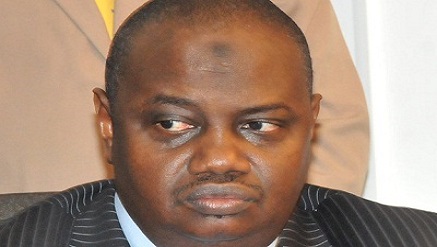
Saturday Punch has revealed that over N172 billion fraud cases are pending against some senators-elect who were formerly governors.
Over 15 ex-governors won senate seats in the March 28 election with many of them having cases of corruption ranging from misappropriation of public funds to money laundering hanging over their necks.
Some ex-governors have been in the senate before the last elections while a fresh set of former governors will be joining them when the new legislature is inaugurated on June 6, 2015 by the President-elect, Gen. Muhammadu Buhari (retd).
According to Saturday Punch, the list of the ex-governors elected as senators, who allegedly have fraud cases against them, whether old or new, include Bukola Saraki, Theodore Orji, Adamu Aliero, Sam Egwu, Joshua Dariye, Danjuma Goje and Abdullahi Adamu.
The immunity clause in Nigeria’s constitution protects the President, vice-president, governors and their deputies from prosecution while in office but even after these public office holders leave office, findings show that anti-graft agencies including the Economic and Financial Crimes Commission(EFCC) have failed to pursue their cases to logical conclusions.
Former Ebonyi State Governor, Dr. Sam Egwu, recently won the parliamentary election to represent Ebonyi North Senatorial District in spite of the corruption charges levelled against him.
Egwu allegedly misappropriated close to N80bn while in office as governor between 1999 and 2007.
He was also said to have left a debt profile of N10bn for his successor.
Also, the former Governor of Nasarawa State, Senator Abdullahi Adamu, who was in office between 1999 and 2007, became a senator four years later. Since that time, Adamu has been returned to the position after subsequent elections.
However, his record with the EFCC is also allegedly unclean but that is as far as it goes.
In February, 2010, Adamu was arrested by the EFCC for alleged embezzlement of public funds. On March 3 of the same year, he was arraigned in court alongside 18 others on a 149-count charge of fraud involving over N15bn, but the case has continued to drag in court with no headway.
Interestingly, in an interview in February 2011, as the Peoples Democratic Party’s candidate for Nasarawa West Senatorial seat, Adamu dismissed the EFCC case against him, describing it as “mere allegations.”
He boasted that the EFFC case would not affect his candidature and truly after the poll, Adamu emerged winner, beating his closest rival, Gen. Ahmed Aboki (retd).
Similarly, the former Gombe State Governor, Senator Danjuma Goje, and four others, were first arraigned in court on October 17, 2011 on conspiracy, fraud and money laundering charges. He allegedly embezzled N52bn public fund.
Senator Bukola Saraki, who is currently vying for the seat of the Senate president, has been a subject of investigations by the Special Fraud Unit of the Police following allegations of an N11bn loans scam preferred against him.
The said loans were allegedly secured by Saraki between 2004 and 2009 when he was the governor of Kwara State.
The SFU said the loans were used to purchase shares of blue chip companies and choice property in Lagos and Abuja, some of which were used to secure the loans.
In addition, Saraki has allegedly been receiving N100m monthly as an illegal pension from the current government of Kwara State.
Adamu Aliero was the Governor of Kebbi State between May 1999 and May 2007. Between December 2006 and August 2008, the EFCC and the Independent Corrupt Practices and Other Related Offences Commission received three petitions asking the anti-graft agencies to investigate Alierio over N10.2bn fraud. It was, however, learnt that the allegations were not investigated.
But following an ex-parte application by an indigene of the state, Alhaji Sani Dododo, for an order of mandamus compelling EFCC and ICPC to investigate the allegations, Justice Adamu Bello summoned Aliero to appear before it. The judge also summoned the two anti-graft agencies to explain why they failed in their statutory duties to investigate Aliero for alleged fraud.
Aliero will be one of the 109 senators that will be inaugurated on June 6.
On July 13, 2007, the EFCC arraigned a former Plateau State governor, Joshua Dariye, on a 23-count charge bordering on money laundering and other corruption charges.
The EFCC accused Dariye of diverting about N1.2bn of the state’s ecological funds into the account of Ebenezer Ratnen Venture, one of the companies through which the former governor allegedly siphoned public funds.
In spite of the allegations against Dariye, he won a senatorial seat in the 2011 polls. He also pleaded not guilty to the charges and went ahead to challenge the competence of the charges instituted against him and the jurisdiction of the Federal Capital Territory High Court to entertain the suit.
But in a unanimous judgement by a five-man Supreme Court panel on February 27, 2015, the court ordered the accused to return to the FCT High Court in Gudu, Abuja, to face his trial. Dariye’s interlocutory appeal had stalled the trial for eight years.
Justice Sylvester Ngwuta, who delivered the lead judgement, described the scenario played out in the entire case as a “sad commentary” on the nation’s fight against corruption.
The outgoing Governor of Abia State, Theodore Orji, was elected on May 29, 2007 and re-elected on April 26, 2011. He was formerly a career civil servant, serving as the Chief of Staff to his predecessor, Chief Orji Uzor Kalu.
Meanwhile, during his first tenure as governor, there were petitions to the ICPC to investigate Orji for money laundering allegations brought against him.
Since Orji could not be prosecuted at the time, ICPC detained the Accountant-General of the state, Mrs. Bridget Onyema, for two days and later granted her administrative bail.
The arrest was in connection with a series of petitions sent to the commission to investigate the whereabouts of about N1.9632bn allegedly transferred under the guise of travel estacodes to the governor, his deputy, their wives and families, as well as 23 other persons who swelled the governor’s entourage to the World Igbo Congress held in Tampa Bay, Florida, the United States, in 2008.
In 2015, the Budget office approved a sum of about N9.4bn for the EFCC for the year.
The agency’s Chairman, Ibrahim Lamorde, according to reports, lamented that the budget was a decline from the about N12.2bn appropriated for the agency in 2014.
The budget covers capital expenditures, personnel cost and overhead cost.
In 2014, the agency allocated N284.6m to hire competent and reputable lawyers to pursue the trial of former governors being prosecuted to a logical conclusion.
It will be recalled that an Ijaw leader, Chief Edwin Clark, recently said the EFCC had lost focus in its fight against corruption in the country.
The former Federal Commissioner for Information stated this against the background of the claim by the President-elect, Gen. Muhammadu Buhari (retd.), that his fight against corruption would start from May 29, 2015 when he would have been sworn-in as the President.
Clark said the implication of Buhari’s statement was that those who were facing corrupt charges or accused of corruption before May 29 would be pardoned.
When one of our correspondents contacted the Head of Media and Publicity of the Economic and Financial Crimes Commission, Mr. Wilson Uwujaren, on Thursday, he said that it was not the practice of the commission to give notification to those to be investigated.
He said only those who are entitled to enjoy immunity as provided for in the constitution would be excluded from prosecution.
Uwujaren said, “It is not the commission’s practice to give public notice ahead of investigation of persons, alleged to have committed financial crimes.
“Be assured that only persons that are constitutionally vested with immunity from prosecution by virtue of the office which they hold are excluded from prosecution by the EFCC for the period they are in such offices.”
Orji, however, said he was not afraid of any anti-graft agency “whether the EFCC or the ICPC”.
Orji, who spoke through his Special Adviser on Political Matters, Chief Ama Abraham, said he was not losing sleep over petitions of money laundering allegations against him during his first tenure.
Abraham said, “The governor is not afraid to render account of his stewardship as the governor of Abia State. The governor believes in the rule of law.”
In a telephone interview with one of our correspondents, Egwu also denied that he misappropriated N80bn during his time as Ebonyi State governor. He also denied that he left a debt profile of N10bn for his successor.
The former governor said, “Whoever is making that allegation must be suffering from a mental problem, he must be suffering from malaria that has refused to be cured.
“Instead of making allegations in the media, they should know the appropriate places to go to. They should go to the police, or the EFCC, (or) to the ICPC.”
Asked if the allegations will affect his duties as a senator, Egwu said, “Let them go ahead – constitutionally I am not under immunity as a senator.”
The Special Assistant to Saraki on Media Affairs, Mr. Bankole Omishore, said on Friday that the police and the office of the Solicitor-General of the Federation had since 2012 absolved his boss of any criminal allegation.
He also said that there was no case currently involving Saraki and any anti -graft agency.
Omishore told one of our correspondents in Abuja that the allegation of financial fraud was being played up against Saraki by his detractors.
Efforts to reach other elected senators like Aliero, Dariye, Goje and Adamu mentioned in the report on their telephones were not successful. Text messages sent to their telephones were also not replied.
Meanwhile, some Senior Advocates of Nigeria on Friday urged the anti-corruption agencies and the incoming Muhammadu Buhari administration to follow through the pending corruption charges instituted against the former governors who are now senators-elect.
The SANs – Prof. Itse Sagay, Dr. Joseph Nwobike, Messrs Femi Falana and Yusuf Ali- said the anti-corruption agencies, particularly, the EFCC, had no excuse for failing to ensure that the cases were brought to logical conclusion.
Sagay said with the election of Buhari as President, EFCC should be encouraged to perform its duties without any fear of victimisation.
He said, “They (the corruption cases against the former governors) are EFCC matters. There are institutions set up to do certain jobs. So EFCC should do its job.
“Buhari cannot be doing everything. The election of Buhari should encourage them that when they are doing their job, nobody will victimise them.”
Falana said alleged impunity which was responsible for indefinite adjournment of the corruption cases against the former governors must stop.
On his part, Ali said the election of the former governors into the Senate did not confer any immunity on them.
He said the anti-graft agencies had no excuse not to proceed with the cases against such senators-elect.
Ali said, “A criminal offence does not die until the person accused dies. An allegation that you have committed a crime is going to be there until the person that is accused dies.”
According to Nwobike, the former governors now senators-elect with pending criminal charges against them deserve no special treatment from the anti-corruption agencies.
He said, “They do not deserve any special consideration. Being elected into the senate does not confer any immunity on them.”
The Publicity Secretary of the Pan-Yoruba organisation, Afenifere Renewal Group, Kunle Famoriyo, said nobody should be above the law.
He said, “It is only in Nigeria that we belabour things like this; once you run foul of the law in a modern society, you have to face the consequences. So, there is nothing special about this if we really want a corruption-free country.
“After all, they are no longer protected by immunity; it’s over. They should face the consequences like every other Nigerian. Nobody should be regarded as being more superior than the law of the land.”
He called for accelerated hearings on cases by the judiciary, saying, “It’s when cases are delayed for so long that people come to try to influence the law, knowing the African society where we see one another as brothers and sisters. Everything is in the hands of the judiciary.”



For many Nigerians, fintech apps are judged by one simple question: Can I trust the platform? For Happiness, a young Nigerian entrepreneur, the answer manifested in the most defining moments of her life.

Trust Built Through Everyday Use
In 2025, Happiness relied on PalmPay to run her business, from receiving customer payments, paying vendors, and managing daily transactions. During PalmPay’s Hustle Grant Campaign, she joined thousands of small business owners hoping to win the N500,000 funding.
While she didn’t make the shortlist, the campaign gave her business something just as valuable: visibility. New customers discovered her brand, enquiries increased, and sales followed.
PalmPay didn’t just host a campaign; it created an ecosystem where small businesses could be seen and supported.
Just days later, Happiness’ life changed. On August 30, 2025, she lost her father. With this loss came challenges, especially payments. They tried transferring money through regular banks but were met with declined transactions. Happiness suggested using her PalmPay account and it was successful.
In a moment defined by loss and urgency, PalmPay cut through the chaos, proving that reliability isn’t a feature, it’s a lifeline. Happiness’ relationship with PalmPay didn’t stop at transactions. Through other management tools on the app, she learned to build discipline around her finances.
More Than an App, a Financial Partner
Beyond transactions, PalmPay’s tools helped Happiness build better money habits and financial discipline. Today, the brand continues to reward reliability through initiatives like its ongoing Premier Cool campaign, reinforcing a simple message: consistency should come with value.
The idea is simple: Purchase a bar of soap and stand a chance to get ₦10,000cash and other cash benefits.
It’s PalmPay’s way of saying that smart money habits deserve real value in return.
Why PalmPay Earns Trust
Life doesn’t give warnings before it tests you. When it does, you need a platform that doesn’t just usually work but always works.
For many users, PalmPay proves to be more than a payment app. It is a trusted partner powering ambitions, supporting users through defining life moments, while helping them bank smartly.
When it mattered most, PalmPay worked. To watch the full testimonial visit: @palmpayapp_ng


Google Search data from the first two weeks of 2026 reveals Nigerians are prioritising ambition, self-growth, and entrepreneurial ventures as they embrace the new year with renewed drive for personal and professional excellence.

The data shows a 40 per cent spike in searches related to self-improvement and “becoming better”, reflecting a nationwide shift from mere resolutions to actionable plans across boardrooms, classrooms, and homes. Entrepreneurship leads the charge, with “how to start a business” topping “how to start” queries after an 80 per cent surge, alongside rising interest in blogging, podcasting, and YouTube channels to foster economic opportunities.
Personal development dominates, as searches for “how to be a better person” rose 20 per cent, extending to relationships with queries on becoming better lovers, partners, husbands, wives, and listeners. Health resolutions gain traction, with 40 per cent increases in “how to eat healthy”, “healthy diet”, and “how to meditate” underscoring commitments to physical vitality and mental wellness.
Skill mastery captivates diverse audiences, from “how to improve English” and communication skills to enhancing memory, credit scores, and even handwriting, while leisure pursuits spike in “how to get better at” chess, singing, running, Fortnite, and soccer. Top searches include “how to improve communication skills”, “how to be a better listener”, and entrepreneurial starters like “how to start a podcast”, painting a portrait of a nation honing edges for success.
Taiwo Kola-Ogunlade, Communications and Public Affairs Manager for West Africa at Google, described the trends as a “powerful reflection of Nigeria’s collective ambition”, affirming the company’s dedication to tools like Search and Gemini for guiding Nigerians toward prosperity
By Blaise Udunze
The latest in the Nigerian banking sector, as banks grapple with the recapitalization compliance deadline, is confronted with a familiar yet unsettling problem that stems from rising loan defaults amid expanding credit. Data from the Central Bank of Nigeria’s (CBN’s) latest macroeconomic outlook of 2025 showed that the banking industry’s Non-Performing Loans ratio climbed to an estimated 7 percent, pushing the sector above the prudential ceiling of 5 percent.

This deterioration has occurred even as banks report improved credit availability and strong loan demand across households and corporates. At first glance of the development, the narrative seems to defy logic in a real sense. However, below this lies a deeper story of macroeconomic strain, policy-induced shocks, and, most worryingly, persistent corporate governance abuses that continue to erode asset quality from within.
To be clear, Nigeria’s current wave of loan defaults cannot be blamed on reckless borrowers alone. The operating environment has become unusually hostile. Inflation, as reported by the National Bureau of Statistics (NBS), recently suggests that headline inflation is cooling and growth indicators show tentative improvement; regrettably, more Nigerians are slipping below the poverty line, eroding household purchasing power and raising operating costs for businesses.
Especially in the small and medium-sized enterprises, though, the economic growth appears positive, but has been uneven and insufficient to offset cost pressures in this space. This has heralded weak consumer demand that has squeezed revenues across retail, manufacturing and services, causing shrinking cash flows and also loan obligations remain fixed or, in many cases, rise. In such conditions, repayment stress is inevitable.
Tight monetary policy has compounded the problem. The CBN’s aggressive rate hikes, aimed at restoring price and exchange-rate stability, have significantly raised lending rates. Variable-rate loans have become more expensive mid-tenure, and businesses that borrowed under lower-rate assumptions now face repayment shocks. Even otherwise viable firms have found themselves pushed into distress as interest expenses consume a growing share of income. Going by the official survey for the last quarter of 2025, it shows that financial pressure on borrowers has intensified as more borrowers are failing to repay loans across all major categories for both secured loans, unsecured loans and corporate loans.
Exchange-rate volatility has delivered another blow. The naira’s depreciation and FX reforms have sharply increased the burden on borrowers with dollar-denominated loans but naira income. Import-dependent businesses have seen costs surge, while FX scarcity continues to disrupt production and trade cycles. For many firms, the problem is not poor management but currency mismatch. Loans that were sustainable under a more stable exchange regime have become unserviceable almost overnight.
Layered onto these macro pressures is Nigeria’s weak business environment, which has further worsened the situation, alongside chronic power shortages forcing firms to rely on costly alternatives, logistics challenges and insecurity disrupting supply chains, and regulatory uncertainty complicates planning. More on the burner that has continued to heighten the challenges is the multiple taxation and compliance burdens, further compressing margins. In survival mode, businesses naturally prioritise payrolls, energy, and raw materials over debt service. Defaults, in this context, are often a symptom rather than the disease.
Yet while these systemic pressures explain much of the stress, they do not tell the whole story. A critical and often underemphasised driver of rising loan defaults lies within the banks themselves, most especially corporate governance abuse, which emanates particularly from insider-related lending. This is the uncomfortable truth that Nigeria’s banking sector has struggled to confront decisively.
Corporate governance, at its core, is about discipline, accountability, and oversight. In the banking context, it determines how credit decisions are made, how risks are assessed, and how early warning signs are addressed. Where governance is weak, loan quality inevitably suffers. Nigeria’s history offers painful lessons, especially the banking failures of the 1990s to the post-2009 crisis clean-up, insider lending and boardroom abuses have repeatedly emerged as central culprits.
Recent evidence suggests that the problem has not disappeared. Industry estimates indicate that a significant portion of bad loans remains linked to insider and related-party exposures. Former NDIC officials have disclosed that, historically, directors and insiders accounted for as much as 40 per cent of bad loans in deposit money banks, with a handful of institutions holding the majority of insider-related NPLs. It would be said that governance frameworks have improved since then, but enforcement gaps still persist.
Insider abuse manifests in several ways. Loans are extended to directors, executives, or connected parties with inadequate due diligence. Credit decisions are influenced by relationships rather than repayment capacity, and this has been one of the critical problems as collateral is overvalued, covenants are weak, and stress testing is often superficial. When early signs of distress emerge, enforcement is delayed, restructuring is repeated without fundamental improvement, and recoveries are treated with undue caution to avoid internal embarrassment or exposure.
The result is predictable. These loans default faster and are harder to recover. Worse still, they distort bank balance sheets by crowding out credit to productive sectors. When insiders default, the signal to the wider market is corrosive. Here, credit discipline is optional, and accountability is selective, and it further fuels moral hazard, encouraging strategic defaults even among borrowers who could otherwise repay.
Governance failures also weaken loan recovery processes. Poorly empowered risk and audit committees miss warning signs or fail to act decisively because the system has been built to fail. Legal remedies are pursued slowly, if at all. In an environment where judicial delays already undermine contract enforcement, such reluctance turns manageable problem loans into fully impaired assets. Over time, NPLs accumulate not because recovery is impossible, but because it is poorly pursued.
Compounding these internal weaknesses are government policy shifts and fiscal stress, which have become major external shock absorbers for bank balance sheets. Policy inconsistency has made cash flow planning increasingly difficult for borrowers. For instance, the sudden tax changes or aggressive enforcement drives will definitely alter cost structures overnight. Delays in government payments to contractors starve businesses of liquidity, and this will surely push otherwise solvent firms into default. In theory, although removing fuel subsidies, while economically justified, have often occurred without adequate transition buffers, transmitting immediate cost shocks across energy, transport, and consumer goods sectors.
The banking sector, heavily exposed to government-linked projects and regulated industries, absorbs these shocks directly. Loans tied to this sector showed that the banks are hugely exposed to oil and gas, power, and infrastructure; they are particularly vulnerable when fiscal pressures delay receivables or alter contract economics. For instance, a total of 9 banks’ exposure to the Oil & gas sector increased to N15. 6 trillion in 2024, representing about 94.4per cent increase from N10. 17 trillion reported in 2023 financial year. It is therefore no coincidence that NPL concentrations remain high in these sectors. In effect, fiscal stress is being intermediated through bank balance sheets.
When the CBN ended the special leniency measures known as forbearance in 2025, the real extent of loan stress in the banking industry became much clearer. For a longer time, pandemic-era reliefs allowed banks to renegotiate stressed loans without immediately classifying them as non-performing. While this helped preserve surface stability, it also masked underlying vulnerabilities. With the end of forbearance, many restructured facilities have crystallised as bad loans, pushing the industry NPL ratio above the prudential ceiling. This does not mean risk suddenly increased; it means it is now being recognised.
To the CBN’s credit, transparency has improved as the industry witnessed stricter classification rules and reduced forbearance have forced banks to confront economic truth rather than regulatory convenience. And, despite the challenges, the financial system appears to be generally sound because banks have enough cash to meet obligations and sufficient capital buffers that still exceed regulatory floors, while these buffers are under pressure. Though the ongoing recapitalisation efforts are expected to provide additional buffers.
However, stability should not be confused with health. Rising NPLs, even in a liquid system, carry real consequences. Banks must set aside provisions, eroding profitability and capital. Credit supply tightens as lenders grow cautious, starving the real economy of funding. One known fact is that the moment governance and transparency concerns grow, investors, particularly foreign ones, become less willing to commit capital and this loss of confidence eventually slows down overall economic growth.
The policy response, therefore, must go beyond macroeconomic management. While stabilising inflation and the exchange rate is essential, it is not sufficient. Governance reform within banks must be treated as a systemic priority, not a compliance exercise. Insider lending rules must be enforced rigorously, with real consequences for violations. Boards must be strengthened, not merely in composition but in independence and courage. Risk and audit committees must be empowered to challenge management and act early.
Equally important is addressing the fiscal-banking nexus. The government must recognise that policy volatility and payment delays are not costless. They translate directly into higher credit risk and weaker financial intermediation. A more predictable policy environment, timely settlement of obligations, and credible transition frameworks for major reforms would significantly reduce default risk without a single naira of direct intervention.
The Global Standing Instruction framework, which the CBN continues to promote, can help improve retail and MSME recoveries. But frameworks cannot substitute for culture. Credit discipline begins at the top. When banks lend to themselves without consequence, the entire system pays the price.
Nigeria’s rising loan defaults are not merely an economic statistic; they are a governance signal. They reflect a system under stress, yes, but also one still wrestling with old habits. If recapitalisation is to be meaningful, it must be accompanied by recapitalisation of trust, through transparency, accountability, and consistent policy. Otherwise, the cycle will repeat the same strong balance sheets on paper, weak loans underneath, and another reckoning deferred, but not avoided.
Blaise, a journalist and PR professional, writes from Lagos and can be reached via: [email protected]

PalmPay User Shares Experience on Fintech Apps to Trust in Nigeria

Stakeholders Demand Stronger Governance and Infrastructure to Drive Tech Adoption @ Lagos AI Summit

Nigerians Target Self-Improvement, Business Startups in 2026 Google Data

35 Million Nigerians Face Acute Hunger in 2026, UN Warns

How Inside Jobs and Policy Shocks Trigger Nigeria’s Rising Loan Crisis

Banks quietly move to enforce new ₦50 transfer levy from Jan. 1

Jumia CEO says Black Friday Signals Nigeria’s E-Commerce Maturity

Galaxy Backbone Celebrates the Federal Government’s Paperless Civil Service Milestone

19 Nigerian Banks Meet CBN Recapitalization Targets Ahead of March Deadline

Nigeria’s Internet Usage Hits 1.24m Terabytes – NCC




 E-Business2 days ago
Firm Detected a Scam Exploiting OpenAI’s Teamwork Features

 Broadcasting2 days ago
DG NCC Tasks University Dons on Research Commercialization, IP Management to Build Global Competitive Ecosystems

 E-Financial2 days ago
MoMo PSB Expands Cross-Border Transfers Across Africa

 E-Financial2 days ago
Banks to Cut Fraud Response Times to Under 30 Minutes

 Telecom2 days ago
FG Expands 3MTT Programme Across the Country

 News2 days ago
Firms Face Gaps Between AI Ambition and Execution

 Telecom2 days ago
MTN Foundation Trains 2,000+ Young Nigerians in ICT for SME Growth

 General News2 days ago
Kuda Unlocks Instant Online Accounts for NGOs and Religious Bodies