

Broadcasting
FG’s Suspension of 15% Fuel Import Duty: A Holistic Step Toward Economic Relief and Market Stability


By Blaise Udunze
In a welcome display of policy sensitivity and economic rationality, the Federal Government has suspended the planned 15 percent ad-valorem import duty on petrol and diesel. This move, announced by the Nigerian Midstream and Downstream Petroleum Regulatory Authority (NMDPRA), is more than a technical adjustment, it is a timely intervention that reflects empathy for the prevailing economic realities confronting citizens and businesses alike.

Just weeks ago, in my earlier article titled, “Tinubu’s 15% Fuel Duty: Taxing Pain in a Broken Economy,” I had argued that the proposed import duty, though designed with reformist intentions, was ill-timed and risked compounding Nigeria’s inflationary crisis. The central message was simple, which is reform must not inflict further hardship on already struggling citizens. It is therefore commendable that the Federal Government heeded that call, demonstrating a rare responsiveness to constructive public criticism. The decision to suspend the 15 percent duty shows that this administration is willing to listen, to adjust, and to prioritise the welfare of Nigerians above bureaucratic rigidity.
Nigeria’s economy is still recovering from the inflationary aftershocks of subsidy removal, exchange rate harmonization, and fiscal tightening. Against that backdrop, any additional import tariff on fuel which is the single most critical commodity in the nation’s cost structure would have triggered a cascade of price increases across transportation, food, manufacturing, and logistics. The government’s decision to halt the policy therefore represents a holistic step toward economic relief and market stability.
When the import duty was first approved in October 2025, it was presented as a forward-looking reform. The Federal Inland Revenue Service (FIRS), led by Zacch Adedeji, proposed the measure to align import costs with local refining realities and discourage importers from undercutting domestic producers. In principle, the idea had merit. It sought to strengthen local refining, promote crude oil transactions in the naira, and ensure a stable, affordable supply of petroleum products.
Yet, good intentions alone cannot override economic timing. The implementation, scheduled for late November, risked amplifying inflation at a time when Nigerians were already grappling with high transport fares, shrinking disposable incomes, and rising living costs. It would also have widened the gap between policy aspiration and market readiness, given that domestic refineries, including the Dangote Refinery and several modular plants, are still ramping up to full capacity.
By suspending the policy, the Tinubu administration has demonstrated that economic reform is not about rigid adherence to plans but about flexibility and responsiveness to market signals. This decision not only stabilizes prices but also strengthens public confidence that government is capable of balancing fiscal goals with social welfare.
The economic logic of this suspension is straightforward that in an energy-dependent economy like Nigeria’s, any increase in fuel import cost transmits directly into inflation. Transport fares go up. Food distribution costs rise. Manufacturing inputs become more expensive. Even small scale traders in the street feel the pinch as diesel prices affect electricity alternatives. Therefore, by preventing an artificial rise in fuel prices, the government has effectively averted another wave of inflationary pressure. It has also given room for other economic stabilisers such as improved power supply, localized production, and currency management to take effect.
Moreover, the NMDPRA’s assurance of a robust domestic fuel supply underscores the government’s effort to ensure market stability while preventing hoarding or profiteering. Its commitment to monitor distribution and discourage arbitrary price increases is a critical safeguard for consumers and businesses alike.
However, while the suspension offers immediate relief, it also presents an opportunity to rethink the broader framework for achieving energy security and local refining growth. If the ultimate goal is to strengthen local refining, stabilize fuel prices, and secure energy independence, there are smarter and more inclusive alternatives than import tariffs. The government should guarantee crude oil supply to modular refineries through transparent contracts and fair pricing mechanisms. Many smaller refineries struggle not because they lack capacity, but because they face erratic access to feedstock. Ensuring predictable crude allocation will allow them to operate profitably and contribute meaningfully to domestic supply.
Instead of penalizing importers through duties, the government can offer targeted tax incentives and financing support for smaller refineries to expand capacity. Access to credit at concessionary rates and tax holidays for equipment importation would accelerate output growth, create jobs, and foster competition. Regulatory fairness is equally essential. The downstream sector must remain open and competitive. The government must ensure regulatory equity so that no single player, whether public or private, dominates the market. Fair competition, not favoritism, will drive efficiency, innovation, and lower prices for consumers.
Nigeria must also address the hidden costs embedded in its energy logistics. The government should invest heavily in energy infrastructure like pipelines, depots, and transport networks to reduce non-tariff costs that inflate fuel prices. Currently, poor infrastructure adds unnecessary layers of cost to the final pump price. Reforming the power sector remains pivotal. Many industries and small businesses rely on diesel generators due to inadequate grid supply. A more reliable electricity system would ease demand for diesel, freeing up supplies for transport and export, while improving overall energy efficiency.
The government should also adopt a transparent pricing mechanism that allows market participants and consumers to understand how fuel prices are determined. Transparency discourages manipulation, hidden subsidies, and monopolistic practices. When prices reflect actual costs, trust grows, and market discipline follows. Such reforms will not only strengthen local capacity but also build a foundation for competition, accountability, and long-term sustainability, which are the true pillars of a resilient energy economy.
As the government nurtures the growth of local refining, it must also guard against a creeping danger of monopolistic capture. Protecting Dangote’s investment as the largest single-train refinery in the world is understandable. The refinery represents national pride and an enormous private commitment to Nigeria’s industrialization. However, promoting a monopoly, even unintentionally, would undermine the very goals of competition and consumer protection. No single operator, however efficient, should control access to crude supply, dictate market prices, or influence import policy. The Petroleum Industry Act (PIA) empowers the government to create fiscal measures that promote investment, but these must be implemented with fairness, transparency, and a clear focus on public interest.
A healthy downstream sector requires multiple active players involving modular refineries, state refineries under revitalization, and independent marketers, all operating on a level playing field. The government must therefore guarantee open access to crude oil, enforce transparent pricing of both feedstock and finished products, and prevent any operator from cornering market advantage through political influence. Monopoly breeds inefficiency, stifles innovation, and ultimately hurts consumers. What Nigeria needs is a competitive ecosystem that rewards efficiency, not proximity to power. A balanced and inclusive market structure is the surest path to sustainable self-sufficiency.
Beyond economics, this policy reversal underscores a deeper truth showing that reform must be humane. Citizens are not fiscal instruments but human beings whose welfare defines the legitimacy of policy. The suspension of the 15 percent import duty shows that the government can still listen, learn, and adapt, which is a welcome shift from the top-down approach that has often characterized Nigerian policymaking. But this responsiveness must become institutionalized. Policymaking should be driven by data and dialogue, not decrees. Stakeholders from refinery operators to transport unions and consumer groups must be part of the conversation before policies take effect. Reform, to succeed, must be sequenced with empathy, not arrogance.
Economic transformation is not measured merely by revenue gains or fiscal alignment, but by how it improves the quality of life of ordinary citizens. A humane reform process ensures that no policy, however noble, becomes a burden too heavy for its people to bear. The reversal of the 15 percent import duty on petrol and diesel is more than a temporary reprieve; it is a course correction toward sustainable and inclusive growth. It demonstrates that reform, when guided by compassion and common sense, can build confidence rather than resentment.
But government must go further to institutionalize competition, prevent monopolistic dominance, and pursue energy self-sufficiency without sacrificing fairness. Only by balancing protection with competition, efficiency with empathy, and ambition with accountability can Nigeria achieve the promise of the “Renewed Hope” Agenda. If this new direction is sustained, the suspension will not merely be remembered as a fiscal decision but as a moment when government rediscovered its moral compass, proving that in economic policy, the best outcomes are those that serve both the market and the people.
Blaise, a journalist and PR professional writes from Lagos, can be reached via: [email protected]


Broadcasting
Dr. Cairo Ojougboh Foundation Bolsters Nigeria’s Education Drive with ₦2.7m Student Support
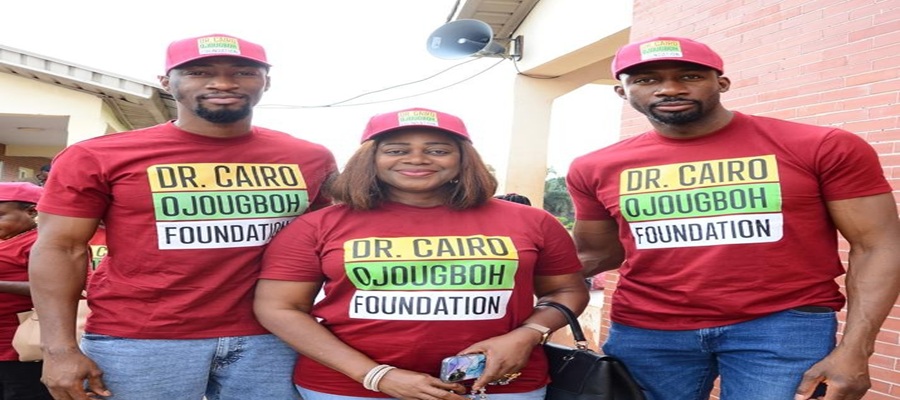
Dr. Cairo Ojougboh Foundation has reinforced government’s educational development efforts in Nigeria through a targeted initiative honouring the late medical doctor and House of Representatives member, Dr. Cairo Ojougboh.

L-R: Son of the late Dr, Cairo Ojougboh, Mr. Nkem Ojougboh; Chairperson, Dr. Cairo Ojougboh Foundation, Mrs. Bose Ojougboh and another son, Mr. Orieka Ojougboh, during the event in Agbor, Delta State recently.
The foundation recently hosted a programme themed “Your Future, Your Choice” at St. Columba’s Grammar School in Agbor, headquarters of Ika South Local Government Area, Delta State.
It presented a cheque of ₦2,700,000 to cover examination fees for students preparing for West African Examinations Council (WAEC), National Examinations Council (NECO), and Junior Secondary School (JSS) 3 exams.
Academic excellence received further boosts with cash rewards for top students across the school’s nine academic arms, alongside distributions of notebooks and writing materials to enhance learning.
Chairperson Mrs. Bose Ojougboh, joined by her sons Mr. Nkem and Mr. Orieka Ojougboh, urged students to view challenges as stepping stones, embrace discipline, consistency, and focus, and make intentional choices shaping their futures.
“The school that moulded Dr. Cairo’s values deserves our support,” she said, highlighting the foundation’s commitment to inspiring hard work and personal growth.
Old Boys of St. Columba’s Grammar School, led by Elder Ndudi Agholor, attended in force, sharing nostalgic reflections and praising the school’s sustained high standards under current leadership.
School Principal Rev. Fr. Joseph Ugboh and Ika South LGA Chairman Engr. Jerry Ehiwarior lauded the initiative as “commendable and impactful,” calling for its continuation to preserve Dr. Ojougboh’s legacy of discipline, excellence, and service.
They noted the support had motivated students to pursue their goals with renewed determination, ending the event on a hopeful note.

In a landmark educational innovation, New Horizons Nigeria has become the first institution to integrate the Chinese (Mandarin) language into its ICT curricular as an elective, thereby positioning Nigerian students for relevance in the rapidly changing world order.

Mr. Tim Akano, Managing Director and CEO of New Horizons Systems Solutions Limited
New Horizons Nigeria is a leading ICT training and solutions provider committed to provide individuals and institutions with future-ready skills. Through innovative program, global partnerships, and strategic foresight, the organization continues to redefine education, workforce development, and global competitiveness.
With over 80% of global consumer products manufactured in China and China’s growing dominance in global supply chains and labour markets, New Horizons Nigeria recognizes the urgent need for the current generation to understand, speak, and engage with the Chinese language and culture. As global economic power dynamics evolve, the labour market is increasingly tilting towards China, making Mandarin proficiency a critical competitive advantage.
According to Mr. Tim Akano, Managing Director and CEO of New Horizons Systems Solutions Limited, Nigeria, the program represents far more than a language course.
He asserted that very soon, the global labour market is likely to increasingly reflect China’s influence rather than the predominantly western orientation it currently exhibits. Language will be a major differentiator and the first Chinese-speaking technology experts in Nigeria will have a significant advantage, especially in integration into Chinese companies operating locally and globally.
Therefore, New Horizons Nigeria has officially launched a Mandarin Scholarship Program with China Advancement Opportunity, selecting 100 outstanding students from five prominent Nigerian secondary schools. This initiative marks a major milestone in Nigeria–China educational cooperation and reflects a forward-thinking response to shifting global economic realities.
Furthermore, the scholarship program has commenced with an intensive three-month online Mandarin training and at the end of the program, the top-performing students will be selected strictly on merit. 20 outstanding students will receive an additional scholarship valued at $2,500 per students to participate in a one-year pre-degree Mandarin and cultural immersion program in China. From this group, the best candidates will progress to fully funded admission scholarships into top universities in China. This initiative is designed not only to build language proficiency but also to enhance global competence, international exposure, and cultural intelligence among Nigerian students.
Also, to maintain international academic standards, participating schools are required to comply with strict guidelines. They will be obligated to join the online classes ten minutes earlier, they must have a minimum of 85% attendance throughout the program, and must ensure they have a stable internet connectivity, reliable power supply and a conducive learning environment.
Therefore, School owners and administrators have been formally congratulated and strongly encouraged to nominate their most disciplined, and committed students, as advancement to the China program will be strictly merit-based.
However, apart from students, internation business men are equally encouraged to attend New Horizon’s Mandarin executive lessons which will equip them with basic Chinese language to enhance their business communications.
Additionally, while the pilot phase begins with selected secondary schools which includes Startrite School, Lightway School, British Nigerian Academy School, Honeyland Schools and Great Heights School, the Mandarin program will be available as an elective ICT course at all New Horizons retail centers.
This is done to extend access to students and learners beyond its partner schools and within one year, committed learners will be able to communicate effectively in Mandarin, which will open doors to global employment, trade, and cultural exchange.
In conclusion, a Mandarin Cultural Fiesta will be hosted, bringing together educators, students, institutional partners, and distinguished guests from China and Nigeria. The event will celebrate outstanding performance, cross-cultural exchange, and the strengthening of bilateral educational ties.
For enquiries and participation details, interested individuals are encouraged to contact New Horizons Nigeria via 08125541750

By Moliehi Molekoa, Managing Director of Magna Carta Reputation Management Consultants and PRISA Board Member
The start of a new year often brings optimism, new strategies, and renewed ambition. However, for the public relations and reputation management industry, the past year ended not only with optimism but also with hard-earned clarity.

Moliehi Molekoa
2025 was more than a challenging year. It was a reckoning and a stress test for operating models, procurement practices, and, most importantly, the foundation of client–agency partnerships. For the C-suite, this is not solely an agency issue.
The year revealed a more fundamental challenge: a partnership problem that, if left unaddressed, can easily erode the very reputations, trust, and resilience agencies are hired to protect. What has emerged is not disillusionment, but the need for a clearer understanding of where established ways of working no longer reflect the reality they are meant to support.
The uncomfortable truth we keep avoiding
Public relations agencies are businesses, not cost centres or expandable resources. They are not informal extensions of internal teams, lacking the protection, stability, or benefits those teams receive. They are businesses.
Yet, across markets, agencies are often expected to operate under conditions that would raise immediate concerns in any boardroom:
Unclear and constantly shifting scope
Short-term contracts paired with long-term expectations
Sixty-, ninety-, even 120-day payment terms
Procurement-led pricing pressure divorced from delivery realities
Pitch processes that consume months of senior talent time, often with no feedback, timelines, or accountability
If these conditions would concern you within your own organisation, they should also concern you regarding the partner responsible for your reputation.
Growth on paper, pressure in practice
On the surface, the industry appears healthy. Global market valuations continue to rise. Demand for reputation management, stakeholder engagement, crisis preparedness, and strategic counsel has never been higher.
However, beneath this top-line growth lies the uncomfortable reality: fewer than half of agencies expect meaningful profit growth, even as workloads increase and expectations rise.
This disconnect is significant. It indicates an industry being asked to deliver more across additional platforms, at greater speed, with deeper insight, and with higher risk exposure, all while absorbing increased commercial uncertainty.
For African agencies in particular, this pressure is intensified by factors such as volatile currencies, rising talent costs, fragile data infrastructure, and procurement models adopted from economies with fundamentally different conditions. This is not a complaint. It is reality.
This pressure is not one-sided. Many clients face constraints ranging from procurement mandates and short-term cost controls to internal capacity gaps, which increasingly shift responsibility outward. But pressure transfer is not the same as partnership, and left unmanaged, it creates long-term risk for both parties.
The pitching problem no one wants to own
Agencies are not anti-competition. Pitches sharpen thinking and drive excellence. What agencies increasingly challenge is how pitching is done.
Across markets, agencies participate in dozens of pitches each year, with success rates well below 20%. Senior leaders frequently invest unpaid hours, often with limited information, tight timelines, and evaluation criteria that prioritise cost over value.
And then, too often, dead silence, no feedback, no communication about delays, and a lack of decency in providing detailed feedback on the decision drivers.
In any other supplier relationship, this would not meet basic governance standards. In a profession built on intellectual capital, it suggests that expertise is undervalued.
This is also where independent pitch consultants become increasingly important and valuable if clients choose this route to help facilitate their pitch process. Their role in the process is not to advocate for agencies but to act as neutral custodians of fairness, realism, and governance. When used well, they help clients align ambition with timelines, scope, and budget, and ensure transparency and feedback that ultimately lead to better decision-making.
“More for less” is not a strategy
A particularly damaging expectation is the belief that agencies can sustainably deliver enterprise-level outcomes on limited budgets, often while dedicating nearly full-time senior resources. This is not efficiency. It is misalignment.
No executive would expect a business unit to thrive while under-resourced, overexposed, and cash-constrained. Yet agencies are often required to operate under these conditions while remaining accountable for outcomes that affect market confidence, stakeholder trust, and brand equity.
Here is a friendly reminder: reputation management is not a commodity. It is risk management.
It is value creation. It also requires investment that matches its significance.
A necessary reset
As leadership teams plan for growth, resilience, and relevance, there is both an opportunity and a responsibility to reset how agency partnerships are structured.
That reset looks like:
Contracts that balance flexibility and sustainability
Payment terms that reflect mutual dependency
Pitch processes that respect time, talent, and transparency for all parties
Scopes that align ambition with available budgets
Relationships based on professional parity rather than power imbalance
This reset also requires discipline on the agency side – clearer articulation of value, sharper scoping, and greater transparency about how senior expertise is deployed. Partnership is not protectionism; it is mutual accountability.
The Leadership Question That Matters
The question for the C-suite is quite simple:
If your agency mirrored your internal standards of governance, fairness, and accountability, would you still be comfortable with how the relationship is structured?
If the answer is no, then change is not only necessary but also strategic. Because strong brands are built on strong partnerships. Strong partnerships endure only when both sides are recognised, respected, and resourced as businesses in their own right.
The agencies that succeed and the brands that truly thrive will be those that recognise this early and act deliberately.

Why I Stayed Away From Politics – Leo Stan Ekeh, Zinox Founder

Identy.io Targets Nigeria, Kenya in Its Africa Expansion Strategy

NDIC Moves to Boost Customers’ Confidence in Nigerian Banks

Adedeji, NRS Boss says Technology is Crucial to Tax Reform’s Success

Kaspersky Reports 15% Growth in Malicious email Attacks in 2025
Firm Detected a Fivefold Surge in QR Code Phishing Attacks in the Second Half of 2025

Nigeria Targeted with 4,622 Cyber-attacks Per Week in December 2025
Nigeria’s 9 Top FinTech Firms Valued at $10.6Bn in January 2026

Firm Detected a Scam Exploiting OpenAI’s Teamwork Features

DG NCC Tasks University Dons on Research Commercialization, IP Management to Build Global Competitive Ecosystems




 Telecom3 days ago
Inside Nigeria’s Telecom Exploitation Crisis Draining Household Budgets

 News3 days ago
NITDA Supports CAC AI Driven Transformation

 Telecom3 days ago
Sophos Expands AI Capabilities with Arco Cyber Acquisition

 News3 days ago
CAC Pushes Single National Register to Curb Corruption Loopholes
 E-Financial2 days ago
NDIC Intensifies Failed Banks Debt Recovery to Accelerate Depositors Payout

 News3 days ago
U.S. Slams Nigerians: Overstays Jeopardize All Visas

 E-Business3 days ago
Kaspersky Gives Advice on How to Make AI for Children Safer @ Safer Internet Day

 News3 days ago
NAFDAC Seizes N3Bn Fake Malaria Drugs, Cosmetics in Lagos Raid