

Telecom
Nerds Unite 2022 Highlights the Power of Global Interconnection for Businesses in West Africa

The critical role of infrastructure for the global interconnection of West African enterprises to achieve borderless growth’ was the main theme of the keynote address at MainOne’s Nerds Unite 2022.

Taking place last week, the event is MainOne’s flagship customer event, bringing industry experts together with MainOne customers to discuss trends and opportunities in the Digital economy.
In this year’s keynote speech by Judith Gardiner, Vice President Growth and Emerging Markets at Equinix, Judith said that Equinix will be a prime mover in interconnecting Africa with the rest of the world on its global digital infrastructure platform, enabling access to virtual network services through the MainOne data centers and network.
She emphasized the role that Equinix has played in other geographies as an industry leader and that the acquisition of MainOne is a key part of Equinix long-term strategy to become a leading African carrier-neutral digital infrastructure company in Africa.
“Businesses in Lagos, Accra, and Abidjan now have equal access to the power of Platform Equinix’s entire data center network, connecting into the same network as some of the biggest multinational companies in the world.” Said Judith Gardiner, Vice President Growth and Emerging Markets at Equinix.
“By supporting the growth and maturity of digital infrastructure in Nigeria and West Africa, we believe that the Equinix acquisition of MainOne will be transformational across several sectors of the economy including financial services, content and digital media and many of the enterprise sectors.” She added.
Globally, the Equinix Platform is comprised of over 240 data centers, providing digital infrastructure, colocation and interconnection services to over 10,000+ companies including more than half of the Fortune 500 and more than one-third of the Forbes Global 2000.
The two-hour virtual event featured two-panel sessions. The first panel included top executives from Meta, Tizeti, Lagos Free Zone, Eko Electricity Distribution Company discussing the theme “Unlocking Growth through an Interconnected Global Digital Infrastructure” – expanding on the opportunities that global digital infrastructure offers to Pan-African focused organizations.
The second panel focused on “Maximizing Business Efficiency and Minimizing Talent Drain and Rising CAPEX through IT Outsourcing” and included a discussion with executives from leading businesses such as HPE by Selectium, Access Bank, NIBSS, and Deloitte shed light.
Funke Opeke, CEO of MainOne, an Equinix company, maintained that with the pandemic induced recession and high rates of inflation, technology will be responsible for propelling the growth of many African economies.
MainOne will continue to drive this tech-fueled growth through the expanded capabilities now available to West African enterprises.
In her words, she highlighted the Equinix entry into Africa through MainOne, with the objective of integrating MainOne facilities into the global Equinix Fabric platform. Businesses can now enjoy borderless growth right here in our region through the power of global interconnection that Equinix brings.


Telecom
VDT Communications Achieves Two Prestigious Certifications ISO /IEC 27001:2022, ISO/IEC 27032:2023 Reinforcing its Leadership in Broadband Service Provision
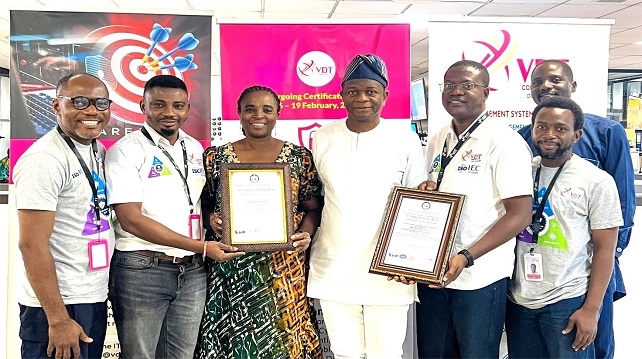
VDT Communications Limited, a provider of Enterprise communication solutions, is proud to announce that it has been awarded the ISO/IEC 27001:2022 Information Security Management System (ISMS) and ISO/IEC 27032:2023 Cybersecurity Management System certifications.

These prestigious certifications demonstrate VDT’s commitment to maintaining the highest standards of information security and cybersecurity, ensuring the protection of sensitive customer data and maintaining the trust of its clients.
These certifications are a testament to VDT’s dedication to implementing robust information security and cybersecurity measures, aligning with international best practices.
The ISO/IEC 27001:2022 certification recognizes VDT’s ability to establish, implement, maintain, and continually improve its ISMS, ensuring the confidentiality, integrity, and availability of customer information. The ISO/IEC 27032:2023 certification highlights its commitment to protecting its customers’ information assets and preventing Cyber threats.
VDT Communications Limited has consistently demonstrated its commitment to excellence, previously earning and maintaining ISO 9001:2015 Quality Management System and ISO 20000-1:2018 IT Service Management certifications. These certifications have enabled the company to deliver high-quality services, ensuring customer satisfaction and loyalty.
“We are thrilled to receive these two prestigious certifications, which reinforce our commitment to information security and cybersecurity. These certifications demonstrate our dedication to implementing robust security measures that ensure confidentiality, integrity and availability of customer data” said Engr. Abiodun Omoniyi, GMD of VDT Communications Limited.
The ISO/IEC 27001:2022 and ISO/IEC 27032:2023 certifications bring numerous benefits to VDT’s customers, including:
- Enhanced information security and cybersecurity posture
- Protection of sensitive customer data
- Compliance with international standards and regulations
- Improved risk management and incident response
- Increased trust and confidence in VDT’s services
“We are proud to serve our customers with the highest level of security and quality,” Bimbo Ikumariegbe, Chief Operating Officer (COO) of VDT. “These certifications demonstrate our commitment to excellence and our dedication to delivering innovative communication solutions that meet the evolving needs of our customers” – Olufemi Akinola, Head, Information Technology.

Nigeria Data Protection Commission (NDPC) has issued a stern warning to content creators filming and sharing videos of unsuspecting citizens on social media, describing such practices as direct violations of citizens’ rights to informational self-determination.

NDPC
The Commission drew attention to individuals capturing pictures and footage of the general public without consent, breaching Section 37 of the 1999 Constitution of the Federal Republic of Nigeria (as amended) and the Nigeria Data Protection Act, 2023 (NDP Act).
NDPC specifically flagged a content creator in Lagos State who films unsuspecting passersby at roadsides for a “reality show”. The Commission stressed that processing personal images in this manner demands explicit consent or a justifiable lawful basis under the NDP Act.
Preliminary investigations revealed no public or legitimate interest served by this “wilful invasion of privacy”. Data subjects, the Commission noted, have no reasonable expectation that their images would be captured and broadcast globally by an unknown individual.
National Commissioner/CEO Dr Vincent Olatunji has instructed social media platform owners—including TikTok, X (formerly Twitter), and Meta—to intensify enforcement of community guidelines to prevent harm from unlawful and unfair personal data processing.
Platforms failing to act promptly face sanctions under the NDP Act. Individual creators remain personally liable for violations, potentially facing criminal prosecution for infringing citizens’ and data subjects’ privacy rights.
The advisory was signed by Babatunde Bamigboye, Esq. CDPRP, Head of Legal, Enforcement and Regulations.
NDPC emphasised that abuse of rights under the guise of entertainment will not be tolerated, urging compliance to safeguard Nigerians’ data privacy in the digital age.
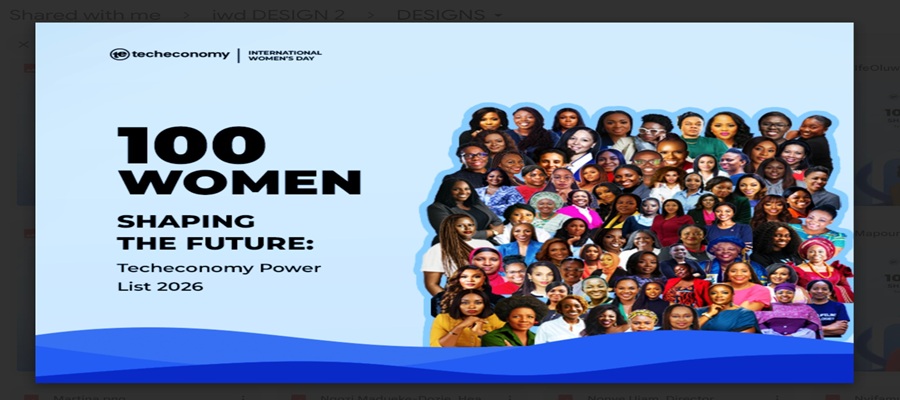
In celebration of International Women’s Day (IWD) 2026, Techeconomy, a leading business news platform in Nigeria, has unveiled its “100 Women Shaping the Future: Techeconomy Power List 2026,” recognizing exceptional women driving innovation, leadership, and impact across technology and the broader digital economy.

Techeconomy
The annual recognition spotlights women who are transforming industries through entrepreneurship, policy leadership, digital innovation, financial inclusion, media, education, and emerging technologies.
The initiative is part of Techeconomy’s commitment to promoting gender inclusion and highlighting female leadership shaping Africa’s technology ecosystem.
The Techeconomy IWD Power List features a diverse group of women, from corporate executives and startup founders to policymakers, ecosystem builders, and social innovators, whose work continues to influence the future of technology, business, and digital transformation in Nigeria and across Africa.
Speaking on the initiative, Joan Aimuengheuwa, the Managing Editor at Techeconomy, noted that the recognition goes beyond celebrating titles, focusing instead on impact, resilience, and the ability to shape the future through innovation and leadership.
According to her, “the women on the list represent different sectors including fintech, banking, healthcare, agriculture, education, communications, and the creative economy, demonstrating the growing role of women in advancing technology-driven development.
The unveiling aligns with the global celebration of International Women’s Day, which highlights the achievements of women and calls for accelerated progress toward gender equality. Across the world, the technology sector continues to push for greater female representation and leadership as part of efforts to build more inclusive digital economies.
Also speaking, Oluwatosin Aloba, the Brand Manager at Techeconomy, said: “Techeconomy IWD 2026 Power List is specially designed to inspire the next generation of female innovators and leaders by showcasing role models who are breaking barriers and redefining possibilities in the technology landscape.
“Techeconomy encouraged industry stakeholders, institutions, and the broader public to celebrate the achievements of these women while continuing to support policies, programs, and investments that expand opportunities for women in technology”, she added.
The full list of the “100 Women Shaping the Future: Techeconomy Power List 2026” is available on the Techeconomy website or visit: https://techeconomy.ng/techeconomy-iwd-2026-power-list-celebrates-100-women-shaping-the-future-of-tech/.

VDT Communications Achieves Two Prestigious Certifications ISO /IEC 27001:2022, ISO/IEC 27032:2023 Reinforcing its Leadership in Broadband Service Provision

CBN Orders Banks to Restrict Access to Banking Services for Loan Defaulters

NLNG Advances Media Excellence with Change Your Story Workshop

Interswitch Advocates Trust-Driven Infrastructure as Cornerstones of Africa’s Cross-Border Capital Future

Why JustMarkets Is a Strong Choice for Gold Trading

Kaspersky Discovers New Phishing Campaign Exploiting Google Tasks Notifications to Steal Corporate Credentials

esentry 2025 Report Shows Healthcare, Financial Services and Telecoms as Staging Grounds for Increased Cyberattacks in Africa

AfDB, UNDP Launch $10Bn AI Initiative for Africa

Pheelz Shares His Journey on Glo-Sponsored African Voices

Mutual Benefits Assurance Settles ₦5.9bn Claims in January 2026




 General News2 days ago
Court Freezes Bank Accounts of Petrocam, Founder over Alleged N9Bn Zenith Bank Debt

 E-Business3 days ago
FG Moves to Strengthen Children’s Online Safety

 General News2 days ago
FCCPC Says Telcos, Energy Firms Lead Consumer Complaints in Nigeria

 E-Financial3 days ago
CBN Directs Banks to Activate Anti-Money Laundering Systems

 Telecom2 days ago
Techeconomy Unveils IWD 2026 Power List Celebrating 100 Women Shaping the Future

 Telecom3 days ago
Canal+ Unveils €100m Rescue Plan to Revive MultiChoice after Subscriber Slump

 E-Business2 days ago
Kaspersky Uncovers a New Android Malware Campaign Disguised as Starlink Application

 E-Business3 days ago
How Africa Can Turn the AI Wave into Inclusive Growth