

E-Financial
Richer Banks, Poorer Economy: The Hidden Crisis in Nigeria’s Financial System


Blaise, a journalist and PR professional writes from Lagos, can be reached via: [email protected]



Securities and Exchange Commission (SEC) yesterday said that Nigeria’s digital finance ecosystem recorded about $96bn in cryptocurrency and other virtual asset transactions.

Emomotimi Agama, director-general, SEC,
Emomotimi Agama, director-general, SEC, revealed this during a Citizens and Stakeholders Engagement Session organised by the Federal Ministry of Finance in Abuja.
He noted the the size of transactions within the digital asset space makes regulation necessary in order to protect investors and ensure transparency.
According to him, the regulatory framework for the sector was strengthened following the enactment of the Investment and Securities Act 2025, which gives the commission powers to regulate digital assets and other emerging financial technologies.
He said the law also confirms the SEC as the apex regulator of the capital market while introducing provisions aimed at monitoring systemic risks and aligning Nigeria’s market operations with global standards.
Agama said the Nigerian capital market has continued to support investment activities across the economy, adding that the commission approved ₦3.68 trillion worth of new capital market issues in 2024, covering both equities and fixed income instruments.
He added that the market played a major role in strengthening the banking sector during the recent recapitalisation exercise, with more than 31 banks raising funds through the capital market to meet new capital requirements.
The SEC director-general said the performance of the market has improved significantly in recent years, with total market capitalisation rising from ₦55 trillion in 2024 to about ₦127 trillion currently.
He added that the capital market’s contribution to the economy has also expanded, with the market capitalisation-to-GDP ratio rising from about 13 per cent to roughly 33 per cent.
According to him, the commission has introduced several measures aimed at protecting investors and building confidence in the market.
He disclosed that the regulator has issued more than 90 advisory notices warning Nigerians about suspicious investment schemes and risky financial offers.
Agama also said the commission has intensified its actions against fraudulent investment schemes, including Ponzi operations, while working with the Nigeria Police Force to investigate and prosecute offenders.
He warned that many people who fall victim to such schemes often invest in unregistered platforms promising unrealistic returns, advising investors to verify whether any investment opportunity is approved by the SEC before committing funds.
The SEC boss said the capital market has also supported infrastructure development across the country through bond issuances by state governments.
He explained that several public projects including markets, stadiums and other infrastructure have been financed through subnational bond issuances raised in the capital market.
According to him, Nigeria protects investors in state bonds through the Irrevocable Standing Payment Order (ISPO) system, which allows loan repayments to be deducted directly from states’ allocations from the Federation Account.
Agama said the commission has also established an Office of Municipal Fund Development to help state and local governments access capital market financing for development projects at the grassroots level.
He added that the SEC supported the launch of the Ministry of Finance Incorporated Real Estate Investment Fund (MREIF) to help address Nigeria’s housing deficit by providing long-term funding that allows Nigerians access to mortgages at single-digit interest rates.
Looking ahead, he said the commission is working to deepen the market by raising the capital market capitalisation-to-GDP ratio from about 30 per cent toward levels seen in emerging economies such as India, where the ratio stands at about 92 per cent.
Also speaking at the session, Mr. Raymond Omenka Omachi, permanent secretary of the Federal Ministry of Finance, addressed concerns about the performance of the federal budget, explaining that several factors have affected implementation.
He said Nigeria has faced challenges meeting the oil production benchmark of about 2.1 million barrels per day, while fluctuations in global oil prices have also affected revenue.
The Permanent Secretary added that the budget benchmark was set at $75 per barrel, but oil prices at some point fell below $60 per barrel, reducing expected government revenue.
He noted that rising debt servicing obligations and increased salary commitments have also placed pressure on available funds.
According to him, the government is taking steps to improve the situation through regular monitoring of revenue and expenditure.
He said the ministry now holds weekly cash management meetings every Monday to review government finances and identify ways to boost revenue performance.
The Permanent Secretary added that the government expects improvements once Nigeria returns to operating a single budget cycle, noting that plans are underway to collapse overlapping budgets so that the country will run only one national budget from 2026 onward.

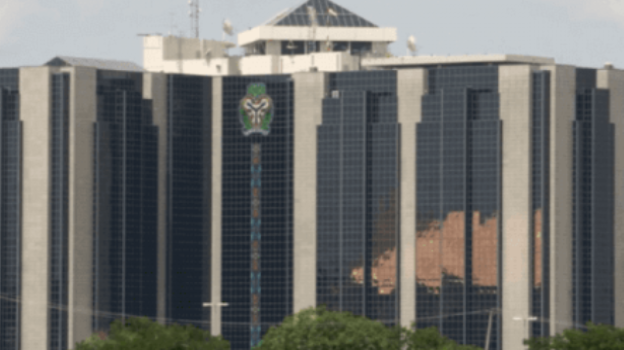
The Central Bank of Nigeria (CBN) has removed the requirement for customers to present affidavits when reactivating dormant bank accounts, a move aimed at simplifying the process of reclaiming inactive funds while maintaining safeguards against fraud.

In a circular issued to banks and other financial institutions, the apex bank said the decision followed representations from stakeholders who had raised concerns about the administrative burden associated with affidavit requirements.
The directive was contained in a circular titled “Guidelines on the Management of Dormant Accounts, Unclaimed Balances and Other Financial Assets in Banks and Other Financial Institutions in Nigeria”, dated March 12, 2026.
The new directive supersedes an earlier circular issued on February 17, 2025, and takes immediate effect.
According to the circular signed by Rita I. Sike, director of the Financial Policy and Regulation Department, the revised framework allows banks and other financial institutions to accept alternative channels for dormant account reactivation requests, provided adequate risk management measures are in place.
The CBN stated that the existing guidelines mandate banks and other financial institutions to implement specific measures and disclosures relating to dormant accounts, unclaimed balances and other financial assets in order to improve transparency and facilitate the reunification of funds with their rightful owners.
“The guidelines are designed to enhance transparency, facilitate the reunification of funds with their rightful owners, and ensure full compliance with applicable legal and regulatory frameworks,” the CBN said.
Under the new directive, banks must still maintain strict identification and verification processes when handling requests to reactivate dormant accounts.
“In addition to the in-person submission of reactivation requests required under Section 8.0(i) of the Guidelines, banks and other financial institutions shall adopt alternative channels for receiving requests for the reactivation of dormant accounts,” the circular stated.
However, the apex bank emphasised that institutions must implement appropriate risk management strategies, including robust identification and verification measures, to ensure that the individual making the request is properly authenticated.
“Following representations received from stakeholders, the CBN hereby rescinds the requirement under Section 8.0(ii) for the mandatory use of affidavits in the reactivation of dormant accounts,” the circular said.
Despite the removal of the affidavit requirement, the regulator directed banks to apply enhanced due diligence procedures when processing reactivation requests.
The CBN clarified that the removal of affidavits applies only to dormant accounts that have not yet been transferred to the Unclaimed Balances Trust Fund Pool Account.
“For the avoidance of doubt, affidavits are no longer required for reactivating dormant accounts that have not been transferred to the UBTF Pool Account,” the regulator said.
However, customers seeking to reclaim funds that have already been transferred to the Unclaimed Balances Trust Fund Pool Account will still be required to present affidavits in line with the provisions of the existing guidelines.
“This rescission does not extend to the reclaiming of funds already transferred to the UBTF Pool Account, where affidavits remain mandatory,” the circular noted.
Beyond the reactivation process, the CBN also strengthened disclosure requirements relating to dormant accounts and unclaimed balances.
Banks and other financial institutions have been directed to publish specific information relating to dormant accounts that have not yet been transferred to the UBTF Pool Account, as well as unclaimed balances already transferred to the fund, on their operational websites.
The information to be disclosed includes the names of authorised account holders, the type of account, the name of the financial institution and the branch where the account is domiciled.
Financial institutions that do not maintain operational websites are required to publish the information on the official websites of their respective industry associations.
In addition, the CBN directed banks and other financial institutions to publish the mandated information annually in at least two national daily newspapers.
Where such disclosures exceed two full pages, institutions may instead publish a single-page notice in at least two national newspapers directing customers to a dedicated and easily searchable section of their corporate websites containing the full list of dormant accounts.
The regulator, however, provided exemptions for smaller institutions. State and unit microfinance banks are only required to display the information at their business locations and are not mandated to publish the details in national newspapers.
The CBN also addressed concerns raised by financial institutions regarding compliance with Nigeria’s data protection framework.
The regulator explained that the disclosure requirements are consistent with the provisions of the Nigeria Data Protection Act, 2023, which permits the processing of personal data where it is necessary for compliance with a legal obligation or the protection of the vital interests of individuals.
It further cited Section 72(11) of the Banks and Other Financial Institutions Act, 2020, which empowers the CBN to issue guidelines on the administration of unclaimed funds in banks and other financial institutions.
“Accordingly, the required disclosures are legally justified and fully consistent with the applicable provisions of the NDPA and BOFIA,” the apex bank said.
Central Bank of Nigeria (CBN) has introduced stricter Bank Verification Number (BVN) enrolment and data access rules to prevent suspected fraudulent transactions, effective May 1, 2026.

This was disclosed in a statement issued over the weekend and titled “Addendum to the Revised Regulatory Framework for Bank Verification Number (BVN) Operations and Watchlist for the Nigerian Banking Industry 2021.”
The statement was signed by Musa Jimoh, director of the Payment System Policy Department.
The CBN said it introduced the ‘Revised Regulatory Framework for Bank Verification (BVN) and Watchlist for the Nigerian Banking Industry 2021’, to promote a stable financial system.
The apex bank reiterated that enrollment for the BVN be limited to individuals aged 18 and above, while amendments to phone numbers linked to a BVN will be restricted to a one-time change only.
Financial Institutions are mandated to establish and maintain a temporary watchlist for BVNs implicated in suspected fraudulent transactions reported by a financial institution.
“A BVN may remain on this temporary Watchlist for a maximum period of twenty-four (24) hours. During this period, the BVN owner shall be contacted to clarify the identified transaction(s).
Enrolment for BVN is restricted to individuals who have attained the age of eighteen (18) years and above. Amendments to phone numbers linked to a BVN shall be allowed only once,” the statement read.
The CBN insisted that it maintain an exclusive right to access BVN databases and to approve access to them by financial institutions.
“Access to the BVN databases shall be exclusively granted to Central Bank of Nigeria (CBN) licensed financial institutions. Notwithstanding this provision, the Central Bank of Nigeria (the Bank) reserves the right to approve access to the BVN databases in extenuating circumstances and in accordance with the provisions of extant laws,” the statement said.
The directive was part of the CBN’s recent regulatory amendments in combating fraudulent activities.
On Tuesday, the bank issued new regulations, “Baseline Standards for Automated Anti-Money Laundering (AML) Solution for Financial Institutions in Nigeria’, to all financial institutions, in a bid to automatically counter money laundering and terrorism financing.

Crypto Transactions Hit $96Bn in Nigeria -SEC

PwC Warns Nigeria Telcos of AI Fraud Risks

Lawyer Drags FG Court over Controversial Health Data Sharing Agreement with US

Elumelu Tags Elon Musk, Disowns AI-Generated Scam Video

FG Determined to Protect Rights, Privacy Online- NITDA

Kaspersky Discovers New Phishing Campaign Exploiting Google Tasks Notifications to Steal Corporate Credentials

esentry 2025 Report Shows Healthcare, Financial Services and Telecoms as Staging Grounds for Increased Cyberattacks in Africa

AfDB, UNDP Launch $10Bn AI Initiative for Africa

Mutual Benefits Assurance Settles ₦5.9bn Claims in January 2026

MultiChoice Suspends Yearly DStv Price Hike as Canal+ Pushes Growth




 Telecom2 days ago
VDT Communications Achieves Two Prestigious Certifications ISO /IEC 27001:2022, ISO/IEC 27032:2023 Reinforcing its Leadership in Broadband Service Provision

 E-Financial1 day ago
CBN Rolls Out New Rules for Safer Instant Payments, More Customer Control

 Telecom1 day ago
MTN Nigeria Races Ahead in Fibre Broadband Market

 E-Financial1 day ago
CBN Tightens BVN Rules to Curb Fraudulent Banking Transactions

 News1 day ago
NIMMME Inaugurates Engr. Michael Orekyeh as 13th National Chairman in Abuja

 E-Financial1 day ago
Nova Bank Appoints Jude Anele as Managing Director/CEO

 E-Business1 day ago
Tech Expert Unveils BAT-BOT AI App to Curb Fake News ahead of 2027 Elections
- Broadcasting3 hours ago
Spotify’s Loud & Clear Report Reveals Over ₦60Bn Revenue for Nigerian Artists in 2025