

Broadcasting
Cut Costs to Help Your Business


As price hikes continue to hit the economy, small business owners are fighting to keep their heads above water. Now, more than ever, it’s vital to cut unnecessary costs and examine all areas of a business to see where savings can be achieved. Overhead expenses, which take up a significant chunk of revenue, are an obvious place to start, but your most significant cost savings could come from making a series of smaller cuts and implementing innovative solutions.

1. Go paperless
The cost of paper and ink may seem insignificant, but it can add up to a big business expense over the course of a year. It’s a commonly recurring business cost that you can reduce by encouraging employees to be mindful of paper wastage and to stick to the following rules: Reuse waste paper for notes instead of throwing it away; set all work computers to print double-sided by default; print documents in a smaller font, and file important documents on your computer instead of in a portable file.
2. Flexible working arrangement
The cost involved in renting an office, coupled with furnishing and other daily and monthly overheads, is such an expensive affair, especially during these tough times. To help manage these costs, you may consider adopting a flexible working style where your team can either work remotely or in a hybrid model with frequent virtual meetings to keep the human interaction going. Using co-shared working spaces is another option where you only pay for the day that you need to be in an office environment. This way, you will not have to worry about office running costs as these spaces cater to all your office needs. Some even have an unlimited supply of coffee! Lastly, move to a smaller office and have your team come on a scheduled basis. For instance, have each department come in on a specific day of the week. This way, you get to maximise the small office efficiently.
3. Reconsider traditional services
A long-term contract for cleaning can result in expensive monthly bills and may not suit your small business’s needs. A cost-efficient alternative is to hire cleaners only when you need them to come in once or twice a week with pre-vetted, trustworthy cleaners.
Doing what you can to keep staff healthy makes good financial sense, too, as sick workers can slow down productivity. With August being Nigeria’s coldest month, Awazi Angbalaga, SweepSouth’s Country Manager, suggests a weekly clean of keyboards and desk phones to stop your office from becoming a germ-filled battleground. “Our hands and the surfaces we touch are the superhighways for germs, and because we touch our phones and keyboards so often, they top the list of the dirtiest items on our desks. A cleaner can wipe down frequently-touched objects with a disinfectant on a weekly basis to keep them clean,” she advises.
4. Leverage social media advertising
Truth be told, traditional advertising is so expensive that many small businesses can’t afford it. Paid social media advertising is much cheaper and will provide a savings opportunity, but if even that is too much for you to afford right now, you can build your company’s social media following organically on Facebook, Instagram, LinkedIn, Twitter, and YouTube. It is a much slower process, but it won’t cost you anything. You will also be able to authentically express your brand’s personality and build trust with your audience. The only cost will be your time, and a firm commitment to be regularly active and proactive on the accounts you’ve created.
5. Use freelancers and contractors for non-core work
Contracting out the jobs in your company that don’t require full-time employees can help cut overhead costs. Freelancers and interns are useful for one-off projects and non-core activities, such as data entry or document processing. They’re easier to hire and cheaper to employ, as you’re not expected to provide them with costly benefits like medical aid or leave. Make sure though, that you have proper contracts in place to set expectations and mitigate risks, for both parties. Bear in mind that freelancers may not share the same loyalty and passion for your business as full-time employees, so it makes for sound business practice to balance your staff complement by hiring a combination of both full-time employees and freelancers.
6. Switch off lights, machines and computers after hours
To help keep energy costs under control, make it a company policy to switch off air-conditioners, non-essentials lights, gadgets and equipment before staff head off home each day. Putting computer monitors into sleep mode will also cut down on unnecessary energy consumption and save money. If you run your business from a home office, make the switch to LED bulbs and opt for energy-efficient appliances to help reduce your monthly electricity costs. For a longer-term solution, consider a hybrid solar system that includes batteries for backup, while keeping a lifeline connection to the grid. This will make it possible to use essential appliances, such as a laptop and routers, in case of a power outage ; with minimal disruption to your business.
7. When in doubt, go without
If you’re struggling to allay costs, make it a practice to constantly ask: Do we really need to buy this? Do we really need to replace something? Think every purchase through instead of just spending the money on buying bigger and newer things. Even when times aren’t tough, it’s prudent to use what you already have until you are certain you need something new.
Cutting costs shouldn’t just be a periodic exercise to improve your bottom line. Good business practice dictates that you should regularly evaluate all operational expenditure. This will assist you in growing your bottom line and reducing the risk of cash-flow trouble in the future, as well as helping you become a more efficient business overall.


Broadcasting
DG NCC Tasks University Dons on Research Commercialization, IP Management to Build Global Competitive Ecosystems

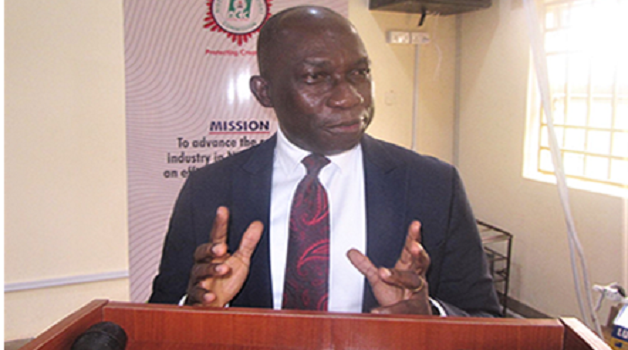
Dr. John Asein, director-general, Nigerian Copyright Commission (NCC), has charged universities to leverage Intellectual Property (IP), innovation management and research commercialisation to build vibrant, sustainable and globally competitive ecosystems.

The DG stated this while delivering a paper on: ‘’Research Commercialisation, IP Policy and Innovation Management’’ at the Committee of Vice-Chancellors of Nigerian Universities (CVCNU) organised Business Clinic themed: Unlocking University-Driven Business Ecosystems: Innovation, Partnerships and Sustainable Enterprise Models in Abuja.
The programme was targeted at engaging Vice-Chancellors, principal officers and other key officers in Nigerian Universities in a practical dialogue on how to transit their institutions into thriving business ecosystems through innovation, enterprise development and strategic partnerships.
In his presentation, Dr. Asein, disclosed that Universities are now recognised as engines of national development and innovation hubs that must connect scholarship to business.
He noted that with over 300 Universities in Nigeria, there is need for structured pathways to turn ideas into commercial outcomes while attention should be focused on IP assets in our universities in order to harness them in a safe, sustainable and satisfactory manner.
The DG NCC speaking further on leveraging resources from the creativity locked up within the university system, harped on the need to harness the soft power of our youth as Nigeria’s most valuable natural resources are its people.
Drawing demography from Nigeria youthful population, he observed that over 70 percent of Nigerians who are under the age of 30 are mostly in the university system studying. These youths, he noted, shape cultures, technology and innovation through creativity and digital skills.
He tasked universities to become innovation factories where young people can explore ideas, protect their IP and grow startups by integrating innovation culture, entrepreneurship training and IP awareness into its learning environment.
He equally urged Universities to look beyond the sciences to commercialize traditional knowledge-based innovations and harness the potentials in the creative arts disciplines like music, visual arts, theatre arts and others for commercial outcomes.
Dr. Asein, recommended that universities as centres of learning, should take the lead in using the IP system for promoting education and learning, wealth creation, revenue generation and institutional development.
Underscoring the need for all universities to have an IP Policy, he noted that the Model developed by the Nigerian Copyright Commission in partnership with the CVCNU is a good starting point.
The Secretary-General, CVCNU, Prof. Andrew Haruna, presented the welcome address at the event while the Director, Technology Innovation and Commercialisation, NOTAP, Mrs. Adah H.N. Mokolo-Oladunke represented the Director-General, NOTAP at the event.
The 2025 CVCNU Business Clinic witnessed attendance from representatives of Public and Private Universities across the 36 States in Nigeria.


Drone
The US Department of Homeland Security (DHS) will invest $115 million in counter-drone technology to safeguard the 2026 FIFA World Cup and events marking America’s 250th independence anniversary, creating a dedicated office for rapid drone system deployment.
Homeland Security Secretary Kristi Noem described drones as “the new frontier of American air superiority,” stressing the need to counter threats from drug cartels using unmanned aircraft for smuggling and surveillance, alongside incidents like a 2025 NFL stadium drone flight and 2024 New Jersey sightings.
The funding supports 11 World Cup host cities expecting over one million visitors, building on FEMA’s $250 million grants to those states and addressing risks heightened by cartels’ advancing tech, including a reported FBI tracking plot in Mexico.
DHS has conducted over 1,500 counter-drone missions since 2018, with the new Program Executive Office accelerating acquisitions amid President Trump’s border security push.
Broadcasting
Youth Talent Takes Center Stage as T2 Ignites High-Octane Rap Battles @ Carnival Calabar

The energy at the Carnival Calabar Music Concert reached a new high as T2 introduced a first-ever rap battle platform, giving young Nigerians an electrifying stage to showcase their talent, creativity, and self-expression while competing for exciting prizes.

Held at the U.J. Esuene Stadium, the activation blended pulsating music, vibrant culture, and youthful energy into a dynamic celebration that kept thousands of carnival-goers fully engaged from start to finish.
Eight fearless contestants stepped into the spotlight, going bar for bar in an intense lyrical showdown. Rappers fused local languages, pidgin, and sharp punchlines, creatively weaving the T2 brand into their verses.
Anchored by the energetic hosting duo MC Double I and MC Princess, the rap battles thrilled over 16,000 attendees, including the Governor of Cross River State, Senator Bassey Otu, delivering an unforgettable showcase of youth talent and cultural expression.
With prizes including fridges, gas cookers, sound systems, and airtime top-ups, the competition remained fierce throughout the night. After two high-energy rounds narrowed the field to a five-man final duel, Emmanuel Eye emerged as the overall winner, taking home the grand prize — a fridge.
“I never expected this at all,” Emmanuel said. “I came to the concert like anyone else, and hearing about the T2 rap battle was a surprise. When I got the chance to perform, I just went for it. Being named the overall winner is amazing, and I’m grateful to T2 for creating this platform to showcase our talent.”
Beyond the stage performances, T2’s presence added a digital layer to the carnival experience. As part of its role as Digital Technology Partner of Carnival Calabar, the brand introduced the MyT2 App as a lifestyle companion, while also enabling line reactivations, airtime top-ups, and instant rewards for hundreds of attendees, blending technology seamlessly into the live celebration.
Commenting on the activation, Chinelo Manefo, Specialist, Events and Sponsorship at T2, said:
“The energy from both the rappers and the crowd was incredible. This platform reflects exactly what T2 aims to create — a celebration of youth, creativity, and culture, enhanced by technology that connects people and experiences. Seeing the audience so immersed shows how music and performance can empower the next generation.”
The Carnival Calabar Music Concert, headlined by Tiwa Savage, Timaya, and top local performers, was further energized by T2’s interactive rap battle platform. By blending music, culture, youth expression, and digital innovation, T2 reinforced its commitment to championing Nigeria’s next generation, giving young creatives a stage to shine while enriching how they experience the festival.

PalmPay User Shares Experience on Fintech Apps to Trust in Nigeria

Stakeholders Demand Stronger Governance and Infrastructure to Drive Tech Adoption @ Lagos AI Summit

Nigerians Target Self-Improvement, Business Startups in 2026 Google Data

35 Million Nigerians Face Acute Hunger in 2026, UN Warns

How Inside Jobs and Policy Shocks Trigger Nigeria’s Rising Loan Crisis

Banks quietly move to enforce new ₦50 transfer levy from Jan. 1

Jumia CEO says Black Friday Signals Nigeria’s E-Commerce Maturity

Galaxy Backbone Celebrates the Federal Government’s Paperless Civil Service Milestone

19 Nigerian Banks Meet CBN Recapitalization Targets Ahead of March Deadline

DStv Offers Instant Package Upgrade for Customers from January to February




 E-Financial2 days ago
Zenith Bank Gets Regulatory Approval for Full Takeover of Paramount Bank

 Telecom2 days ago
MTN Nigeria Suffers 9,218 Fibre Cuts in 2025 as Vandalism, Theft Cripple Network

 E-Business2 days ago
Firm Detected a Fivefold Surge in QR Code Phishing Attacks in the Second Half of 2025

 Telecom2 days ago
New Investment Fund Targets Acceleration of Emerging Technology in Nigeria

 News2 days ago
NITDA Commits to Digital Inclusion for Persons with Disabilities

 Telecom2 days ago
NCC Licences Six New ISPs to Challenge Telcos, Satellite Giants
 General News1 day ago
PalmPay User Shares Experience on Fintech Apps to Trust in Nigeria
 News1 day ago
Stakeholders Demand Stronger Governance and Infrastructure to Drive Tech Adoption @ Lagos AI Summit